History
The Masochists Who Defend Sadists: The Regressive Left in Theory and Practice
John Pilger, Michael Moore, Tariq Ali, Arundhati Roy, and the Stop the War Coalition have shown their commitment to barbarism.

I.
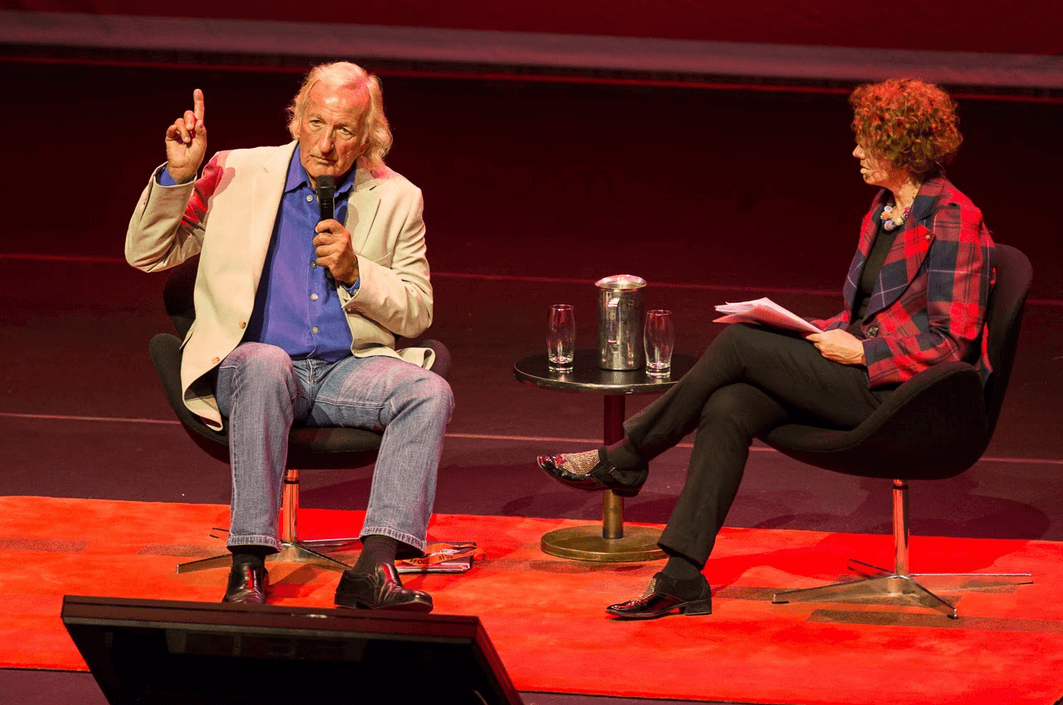
The most contemptible of John Pilger’s declarations of left-wing solidarity was made in an interview with Green Left Weekly in January, 2004. The Australian journalist was asked whether the Left should support the anti-occupation movement in Iraq. Pilger replied:
Yes . . We cannot afford to be choosy. While we abhor and condemn the continuing loss of innocent life in Iraq, we have no choice now but to support the resistance.
One must remember that in the ranks of the resistance were the Ba’ath party loyalists and the newly arrived jihadists of al Qaeda, who set out to foment sectarian war and leave Iraqi civil society in ruins. And they succeeded. For Pilger, the fascists and Islamists were the true friends of the Western Left.
Pilger had a lot of other friends, too. Radicals and populists such as Michael Moore, Tariq Ali, Arundhati Roy, and the Stop the War Coalition came out to support the resistance, oppose the United States, and demonstrate their commitment to barbarism.
There were many decent and moral ways to object to regime change in Iraq. Bernard Kouchner’s manifesto, Neither War Nor Saddam, still seems the best, although it was and is mostly ignored or forgotten. It was an argument for complexity and patience and discernment, but these things are difficult, and indignation and self-righteousness are easy.
It cannot be understated, though: the United States and its allies had just overthrown a sadistic and totalitarian regime, and the Iraqis and Kurds desperately needed help. And yet, leftists were called upon to support the maintenance of sadism and totalitarianism. Why did the Left do this?
They hated Bush, of course, and there were good reasons for that. They feared American ambitions in the Middle East, and there were good reasons to be fearful. I think they hated the idea of the West and of Empire, so they made a practical and intellectual alliance with people who shared their hatred. It must be remembered, too, that the resistance and its fighters and ideas served as the forerunner of the Islamic State. The Western Left’s solidarity with Islamism and fascism is, I would argue, the Western Left’s greatest shame, at least in my lifetime.
None of this is to excuse or defend a disastrous and mendacious US policy. I would have opposed the war, too, but I think I can look back and judge who my enemies are.
At the time, Pilger’s declaration was met with some mild outrage and criticism, but he didn’t concede anything. He gave another interview to Tony Jones on ABC Lateline, where he argued that Australian and Coalition troops and their Iraqi collaborators were legitimate targets for murder. Of course, Pilger said he disapproved of the murder of innocents, but then again, the resistance was crucial and the whole world depended upon it, so his answers were a bit confusing. Murder was condemnable, yes, but necessary. Left was Right. Fascism was noble resistance. A few viewers must have scratched their heads and wondered what was going on. The Iraq war unhinged a lot of people, the proponents and the objectors. Maybe Pilger was always a little unhinged. I don’t think anyone should have been surprised. Pilger’s support for the resistance was entirely in line with his thinking and view of the world. That world had changed a great deal in the last few decades, but all that change seemed to have passed him by.
II.
In the 1990s, it was swiftly recognised that History, after all, had not ended: Saddam Hussein invaded Kuwait; Somalia collapsed; Yugoslavia tore itself apart. The Serbian chauvinists’ gruesome addition to language, ethnic cleaning, forced the West to contemplate allowing genocide to take place again in Europe.
This was a challenging and confusing moment for foreign policy makers. There was much shuffling of feet, but eventually the West intervened and rescued the Bosnian Muslims, and then the Albanians in Kosovo, and Slobodan Milosevic and his cronies ended up in the dock.
Self-congratulation got underway, and some of that confusion lifted: Western intervention, often rightfully derided and feared, could be put to practical and humanitarian use, even when there was no self-interest for the intervening powers.
This case was strengthened not by a sterling record of success, but the greater record of failure. The shame of Srebrenica lingered, and the Western powers would have to remember that, yes, they had done the right thing, but they had done it too late. For the genocide in Rwanda, we still have to reach for a word like ‘tragedy’, even though its employment seems cheap and inadequate when we set it against what took place. Or perhaps it’s better to say what was allowed to take place, for the other moral crime had been non-intervention by the Western powers.
In these arguments, the neoconservatives and the liberal hawks united, and a consensus emerged on the necessity and morality of Western intervention, even if its legality remained a little murky.
At the same time, a contrarian argument emerged from a corner of the radical left, an argument that took issue with the consensus view of intervention in the 1990s. From here, the view was different: the standard Western narrative was a dangerous lie, and a few revered intellectuals and journalists were the holders of the truth. A vigorous debate ensued, and John Pilger’s name continued to crop up. At the height of these debates, he warned that humanitarian intervention would lead to “totalitarian world government”, and that Kosovo was nobody’s concern, not even the Serbs’. A strange argument; but no stranger than a few of the others.
In 2003, the writer Diana Johnstone published Fools’ Crusade: Yugoslavia, NATO, and Western Delusions, which, depending on your reading, was a brilliant and timely work of historical revisionism, or a second rate work of fiction.
In Johnstone’s view, the media had miscast the roles of those in the Balkan wars: the perceived victims, the Bosnians, were the true aggressors; the perceived aggressors, the Serbs, were legitimate and reasonable actors. Historian and genocide scholar, Marko Attila Hoare, summarised:
[S]he blames everything that happened there on the Muslims; claims they provoked the Serb offensive in the first place; then deliberately engineered their own killing; and then exaggerated their own death-toll. She denies that thousands of Muslims were massacred; suggesting there is no evidence for a number higher than 199 – less than 2.5% of the accepted figure of eight thousand.
Johnstone’s Swedish publisher, wary of associating itself with genocide denial, backed out. And suddenly, left-wing luminaries converged to denounce the decision and to demand that the book see publication. John Pilger, Noam Chomsky, Tariq Ali, and others signed a letter stating that Johnstone’s book was not, after all, fiction, but “an outstanding work, dissenting from the mainstream view but doing so by an appeal to fact and reason, in a great tradition.”
More scratching of heads. What was going on? Why was genocide denial, a trait of the lunatic Right, being pushed by the radical Left? And it was about to get worse.
 Aaron Sarin
In 2010, Edward S. Herman and David Peterson published The Politics of Genocide, another attempt at historical honesty that strayed into fiction. The authors doubled down on the myth of a massacre at Srebrenica, but this time they went further. The authors claimed that the Rwandan genocide was also a lie, or perhaps everyone had it wrong, and the Tutsis had really murdered the Hutus, or no one really knew and the truth was impossible to find. Such were the arguments. Not very good ones, I think. John Pilger, though, was quite impressed as his name appeared on the book’s cover alongside a warm endorsement: “In this brilliant exposé of great power’s lethal industry of lies, Edward Herman and David Peterson defend the right of us all to a truthful historical memory.”
At first glance, the position taken by Pilger and these left-wingers appears quite unusual. The brave writer, George Monbiot, certainly scratched his head and wondered about the claims of his comrades. He noted that if they were correct, we would have to pause to consider the very long list of those who must be incorrect: the journalists who covered the wars, the survivors who gave their testimony, the forensic investigators who uncovered the mass graves, the fact-finders of the UN and the international courts, and the perpetrators who confessed. Perhaps they were mistaken, or they were liars, or they were stooges of Western imperialism.
At second glance, it doesn’t appear unusual or surprising at all; it is exactly what one would expect. If genocides and massacres were taking place, then Western intervention would be morally and legally justified. But, for the radical left, intervention is always callous and criminal and unjustified. The Western media, forever represented by Evelyn Waugh’s Lord Copper, stirs up “a very promising little war” and the audience is deceived. And so, the enemies of the West are not enemies, but friends, and genocide is a lie, and Milosevic isn’t that bad, after all. John Pilger is rather fond of quoting George Orwell, but I think he should give it up. Pilger has a power of inventing unpleasant facts, not facing them.
And so, a careful observer watching this era of Western intervention should not have been surprised by the positions of John Pilger and the radical Left. It turns out that the defenders and excusers of fascism in the Balkans are the same people who defend and excuse fascism in Iraq.
III.
A reader or two might be thinking: why is the author wandering around a left-wing graveyard and disinterring John Pilger? Surely he doesn’t carry much influence anymore. Why breathe life into these old and decaying arguments?
I do so for two reasons. First, recent political events have given a freshness to these kinds of arguments. The former chairman of Stop the War is Jeremy Corbyn, the current leader of the UK Labour party and self-declared chum of Hamas and Hezbollah. His Shadow Chancellor of the Exchequer, John McDonnell, has a soft spot for Mao. Their Executive Director for Communications and Strategy, Seumas Milne, remains unconvinced of the demerits of Stalinism. All are unrepentantly anti-Western and anti-imperialist.If the ideas of John Pilger could be channelled into a political party, it would look like Labour under Jeremy Corbyn. Corbyn’s rise has energised and frightened the Left, probably in equal parts. So, I don’t think these arguments have gone away. I think they remain very important.
Second, John Pilger and his role in the recent history of left-wing disputation meet up with an intellectual trend that characterises the present moment. I am speaking of the regressive left, a term coined by Maajid Nawaz. The regressive left refers to the nominally liberal writers and intellectuals who have stopped defending liberal principles, and now expend considerable energy excusing and defending the Islamist movement and its vicious assault on secular and Muslim societies. The term has been stuck to writers like Glenn Greenwald, CJ Werleman, Chris Hedges, and a cluster of outlets like Salon, The Intercept, Alternet and countless others in the US and Britain.
What defines the regressive left? It is the same assumption of Western culpability and confusion between friends and enemies that led to left-wing support for genocide denial in the 1990s and for the resistance in Iraq. In his excellent collaboration with Sam Harris, Islam and the Future of Tolerance, Nawaz shows that the regressive left “leap(s) whenever any (not merely their own) liberal democratic government commits a policy error, while generally ignoring almost every fascist, theocratic or Muslim-led dictatorial regime and group in the world.”
In doing so, the regressive left has abandoned the people in the Muslim world it is supposed to be defending: the Muslim liberals, the Muslim feminists, the Muslim homosexuals, the ex-Muslims and atheists, the secular bloggers in Bangladesh, and the raped and tortured Yazidis, to name just a few.
Nawaz’s term also has an intellectual debt to writers like Nick Cohen, Bernard-Henri Levy, and post 9/11 Christopher Hitchens. A lively explication comes from the French philosopher Pascal Bruckner and his 2006 study of Western masochism, The Tyranny of Guilt. What we are nowcalling the regressive left is actually a natural condition of our philosophical make-up. Bruckner wrote: “nothing is more Western than hatred of the West, that passion for cursing and lacerating ourselves.”
The problem, however, and it is an intellectually crippling problem, is that this kind of masochistic thinking lends itself to nothingness in practical terms. Bruckner continues:
Thus we Euro-Americans are supposed to have only one obligation: endlessly atoning for what we have inflicted on other parts of humanity. How can we fail to see that this leads us to live offself-denunciation while taking a strange pride in being the worst? Self-denigration is all too clearly a form of indirect self-glorification.
The regressive left is a new term that encompasses a much older way of thinking about the world, our place in it, and what to do about it. It is a brilliant and evocative term: it brings to mind a Stalinist-left that has survived the twentieth century; it cleverly subverts the progressive label that such writers usually wear; perhaps most importantly, it is a term that will always be pejorative. When the socialist intellectual Michael Harrington called some of his ex-comrades neoconservatives, it was an insult that its targets transformed into a badge of honour. There is no risk of that here. It’s unlikely that the Art of Mentoring publishing house will commission Glenn Greenwald to write Letters to a Young Regressive. And that’s a good thing. The regressive left will discredit itself.
We can use this, among other arguments, to our advantage. When I say ‘we’, I refer to those who have noticed the regressive left and its intellectual and journalistic influence, and have worried about it. I’ll come to those other arguments, but first I want to return to John Pilger and introduce the Australian Left, which is regressive by default.
Benny Morris
IV.
In 2014, John Pilger was invited to the annual Festival of Dangerous Ideas in Sydney, a conference of free thought and debate. His discussion was titled Breaking Australia’s Silence, and he spoke about our ‘secret’ history, our colonial sins, and our collusion with Western imperialism and its depredations. Standard fare, really. The moderator invited questions from the audience. Here is the text of the first question and answer:
Audience member: Do you think that the West should ever get involved in wars overseas . . ?
Because it feels despite our misadventures in the 2003 Iraq war and despite the problems that we’ve caused . . it feels like you’re saying . . we should just let ISIS kill whoever they want to kill and commit genocide however they wish to . . . don’t we still have a moral responsibility to help the people who have been beheaded, killed and crucified on the streets of Syria and Iraq right now?
Pilger: It’s interesting about this hideous beheading, isn’t it? . . . How much do you know about the beheading of Aboriginal people in the early days of this country?
Can the reader imagine the reaction? Of course you can. The audience broke into rapturous applause. Pilger retorted that the Iraq war cost hundreds of thousands of lives, and he was right. He didn’t mention, though, that the primary cause of those deaths was the united forces of Ba’athism and jihadism, the thugs and fanatics and friends of John Pilger and the Western Left. The questioner was berated for being “very selective”, but the irony, like everything else, was at Pilger’s expense.
I wonder, though: why was the audience clapping so enthusiastically? What were they thinking? Were they thinking at all? Maybe they appreciated the attention redirected to Aboriginal affairs. Maybe they worshipped John Pilger and would have applauded no matter what he said. Still, I wonder.
The mistreatment of Aboriginals is a source of national shame, and this is seldom unacknowledged. But Pilger’s invocation of Aboriginal suffering was deliberate distraction, a rhetorical red herring.
I think this interaction between Pilger and the audience is a perfect example of the regressive left’s cast of mind: A tragedy is at work in the present, but we will ransack the past to find an inexpiable sin; we can hold that sin against us, and in doing so, we rid ourselves of moral authority and moral responsibility; remind us of our colonial guilt, and we offer applause, but what we’re really doing is offering ourselves up for flagellation.
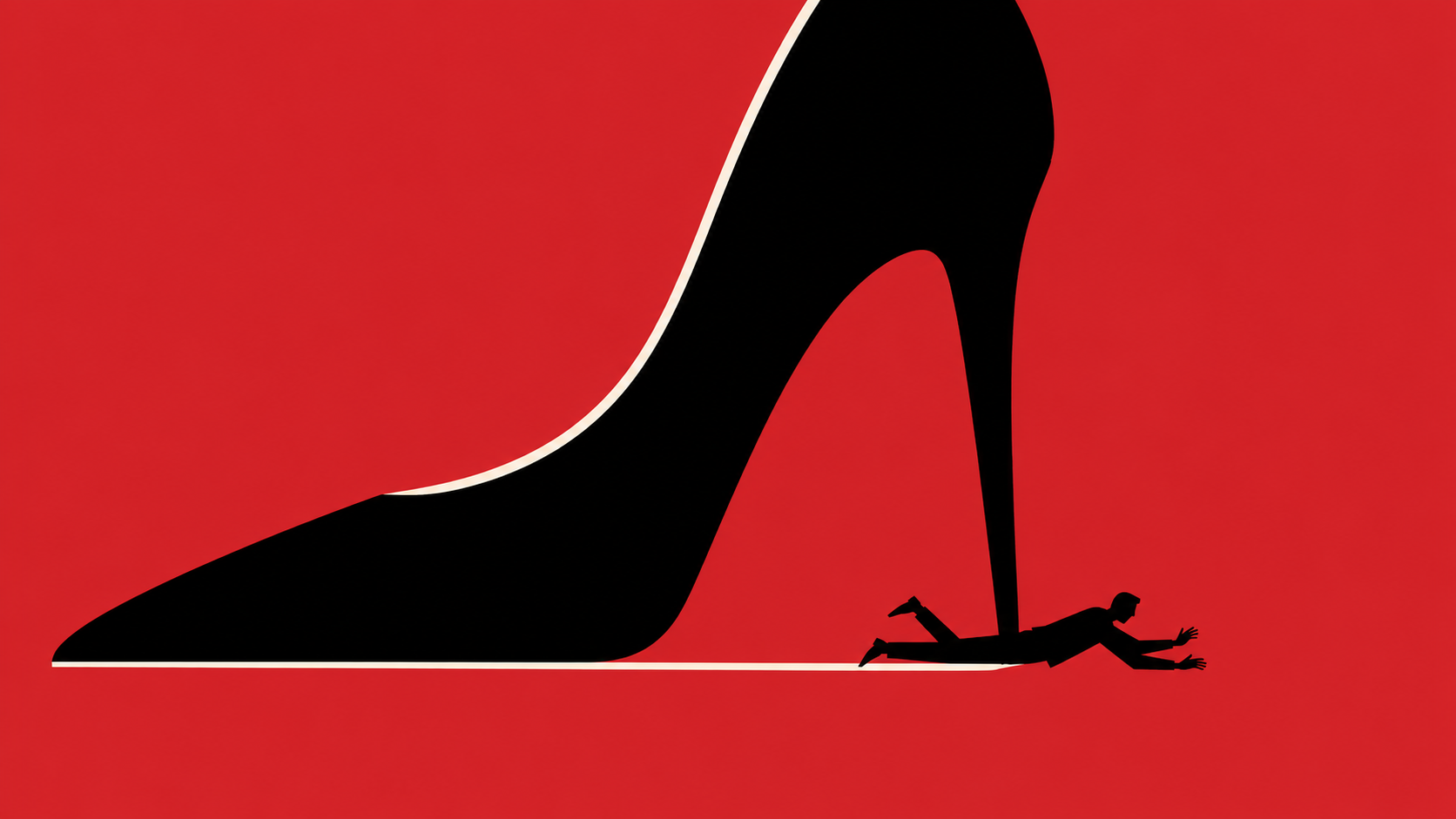
The regressive left is sinister and ahistorical; it is led by masochists who defend sadists; it is an attempt to make the world safe for fascism. It must be resisted and discredited.
Jonathan Anomaly
V.
John Pilger’s ideas, meagre though they are, as well as his style of arguing and posturing, have had an outsized influence on the Australian Left. This is most apparent at the independent news site, New Matilda. The editor and owner, Chris Graham, collaborated on Pilger’s documentary, Utopia, and he also republishes all of Pilger’s essays, usually with a laudatory introduction.
It’s hardly surprising, then, that almost everything else that New Matilda publishes seems to have been written by aspiring Pilgers. There is a pervasive sense of outrage accompanied by guilt: a synthesis that avoids the problem at hand by diminishing the West’s moral authority and its responsibility to act.
Take, for example, the Islamic State’s burning of a Jordanian pilot in February, 2015. At the very least, one might expect condemnation. Not New Matilda, which published an article by Chauncey Devega titled: Yes, ISIS Burned A Man Alive: White America Did The Same To Black People By The Thousands. Does this remind you of anyone?
Keep reading
How France Lost Control of Its Streets
How to Suppress Men’s Writing
Back to the Dark Ages

Prison or Peer Review

France’s Imaginary Austerity