Anthropology
Why Is the Society for American Archaeology Promoting Indigenous Creationism?
The most expansive interpretations of NAGPRA’s provisions now serve to place Indigenous oral traditions, which typically include religious stories, on equal footing with traditional forms of scientific evidence such as DNA analysis.


In April, one of us—Elizabeth Weiss—gave a talk, titled Has Creationism Crept Back into Archaeology?, at the 86th Annual Meeting of the Society for American Archaeology (SAA). The 87-year-old SAA identifies itself as “an international organization dedicated to research about the interpretation and protection of the archaeological heritage of the Americas.” The SAA board of directors includes professors, curators, and government archaeologists, all of whom presumably appreciate the importance of studying artifacts and human remains as a means to understanding the history of our species.
The subject of the April 15th talk, co-authored with James W. Springer (who also co-authored this essay), was the threat of religious literalism being used as a means to insist on the repatriation of human remains (mainly skeletons) and artifacts to presumed descendent populations—i.e., present-day Indigenous communities whose members live near the location where such remains are discovered. However, our use of the term “repatriation” more broadly encompasses the new laws, ideological claims, and policies that serve to give Indigenous claimants control over remains and artifacts, as well as over associated information pertaining to culture and science (along with the power to block research by others on these subjects).
In the United States, where we work, the repatriation movement took form in the Native American Graves Protection and Repatriation Act (NAGPRA), a 1990 federal law that requires that remains and artifacts should be turned over to affiliated present-day American tribes, if there exists a relationship of shared group identity that can reasonably be traced historically or prehistorically between the remains and modern community members. All federally-funded institutions, such as universities and museums (even private ones that accept federal funding) are required to follow NAGPRA. This includes the requirement that they create inventory lists so that American Indian tribes can request repatriation of previously discovered and curated items.
The most expansive interpretations of NAGPRA’s provisions now serve to place Indigenous oral traditions, which typically include religious stories, on equal footing with traditional forms of scientific evidence such as DNA analysis. And NAGPRA’s review committees often contain traditional Indian religious leaders who assist in repatriation decisions. While it is unfashionable to say so, we do not believe that this application of NAGPRA is correct. Contrary to the popular misunderstanding of NAGPRA, human remains and artifacts are not just repatriated to lineal descendants (such as a great-great grandchild), but are often repatriated to those who are deemed culturally affiliated. This kind of link can be established through orally transmitted creation myths that are analogous to what exists in the book of Genesis—tales of the origin of the universe and of people that are based on a series of miraculous events. (In 2007, the Department of the Interior went further by attempting to extend NAGPRA’s provisions to even those remains whose connections are “culturally unidentifiable.”)
In arguing against the perspective that oral traditions consisting of animistic creation myths should be used to determine repatriation decisions, we had hoped for an intellectually-driven debate over the scope of NAGPRA, and in regard to the treatment of knowledge more generally in our field. Instead, even before our talk aired, repatriation activists, both within the SAA and beyond, attacked it as racist, anti-Indigenous, colonialist, and even white-supremacist.
The attempt to cancel our talk (which, in keeping with COVID-19 protocols, was delivered by video) included the usual social-media campaign along with complaints to the SAA directly. For instance, one SAA member wrote to the organization’s ombudsman warning that our session was about to begin and so quick action was required to block it. But the talk was not blocked from the platform, and proceeded as scheduled. During the presentation, the chat bar was filled with derisive comments to the effect that the content consisted of “thinly veiled racism.”
Emailed the president, annual meeting email address, and the ombuds of @SAAorg to tell them to remove this talk. Let's see how long it takes to get a reply and some action. https://t.co/zhsv9zQYBv
— Dr Gillian Wong (@GillianLWong) April 15, 2021
At first, the SAA board addressed complaints in the way one would hope: The first official SAA statement on the issue stated that “as a professional organization, SAA hosts [its] annual meeting to provide a space to offer diverse viewpoints.” Outgoing SAA president Joe Watkins said that the SAA is an open forum, and that moving to silence one voice would make it easier to silence others.
Repatriation activists weren’t satisfied with this, and various sub-groups issued their own statements. For example, the SAA’s Queer Archaeology Interest Group (QAIG) claimed that we were deliberately seeking to “foment tremendous anger and pain among SAA members.” The Black Trowel Collective, a group of archaeologists committed to supporting “archaeology students from working class and historically looted communities,” argued that the SAA’s response to the complaints was “just one act in a long history, and ongoing present, of racist, misogynistic, and colonial discourse and action.”
The new SAA president, Deborah Nichols, subsequently contacted me to let me know that the video of our live talk would not be posted by the SAA for others to view, due to reports of hurt feelings. (We had previously relied on the SAA’s emailed assurance to presenters that “sessions will be available for viewing on demand within 24–36 hours after their original broadcast, until July 17, 2021.”) Furthermore, we learned, the SAA would not even provide us with the video. (And so we re-recorded the talk, which you can find here.) Another SAA statement was then put out to inform readers that “the SAA board finds the presentation does not align with SAA’s values,” and mentioned that “the board categorically rejects the Weiss-Springer position.”
However, SAA board members did not specify what, exactly, they were “rejecting.” Our talk aligned with important elements of the SAA’s mission statement (“promoting research, stewardship of archaeological resources, public and professional education, and the dissemination of knowledge”); and with the SAA’s education outreach guidelines, which indicate that “since many past cultures left no written records, they can only be studied by examining the physical evidence that they left behind.” Without saying so explicitly, the SAA now seems to have taken the position that past cultures should be presumptively understood through orally transmitted creation myths interpreted in a literal sense.
As for the claims of “racism,” our talk never mentioned race. Instead, we focused on the issue of creation myths, and the associated revival of simple-minded racial classifications that are now being employed (ironically, in the service of anti-racism) as a purported means to advance scientific inquiry. In this view, religious mysticism is an important (indeed, dispositive) fact-finding tool, but only if such mysticism is transmitted by certain kinds of racially defined groups.
Obviously, we have no objection to anyone, Indigenous or non-Indigenous, engaging in religious practices, or advancing their understanding of the cosmos according to their own spiritual viewpoint. In some cases, which of course deserve study, these myths may even have a symbolic connection to real historical events and scientific phenomena, such as floods and environmental shifts. But we don’t inhabit a theocratic society, and so these myths shouldn’t be used to trump evidence-based secular knowledge.

These are issues we cover extensively in our recent University of Florida Press book, Repatriation and Erasing the Past. While we will not attempt to summarize the contents of that volume, we will highlight several examples that demonstrate what can be learned from skeletal remains when they are studied by scientists in an atmosphere free of mob intimidation or faddish theories of racial essentialism.
* * *
In 1996, the discovery of “Kennewick Man,” an 8,400 year-old Paleoindian skeleton along the Columbia River in southern Washington State, gave rise to a struggle between scientists and Native American activists. The stakes were high, as such discoveries represent our best chance to refine our understanding of when and how the Americas were first peopled. (The term “Paleoindian” refers to human remains found in the Americas that are dated to at least 7,500 years ago. These remains are rare, numbering less than two dozen to date, and typically cannot be linked to any specific present-day Indian tribe. The oldest known American tribe, the Hopi, reliably dates its history to only about 2,000 years ago.)
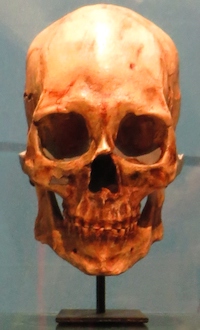
From the beginning, federal government agencies showed favoritism toward the Indian tribal claimants seeking to repatriate Kennewick Man before proper scientific study could be completed. The original anthropological researcher, James Chatters, who had received a Corps of Engineers permit to excavate the skeleton, had intended to transport it to the Smithsonian Institution, where other experts could examine it. However, the Corps seized the skeleton, announced its intention to turn it over to Indian tribal claimants, and buried the location of the find with 600 tons of rock and fill to prevent further discoveries. The Corps denied the scientists any further access to the skeleton, even as tribal claimants were allowed access to the remains to perform religious rituals. These included the addition and removal of bones, and the burning of organic materials such as sage around the bones, contrary to court orders. During the ensuing litigation, Department of the Interior officials collaborated with Indian claimants, though their effort to find a link between Kennewick Man and tribal claimants proved futile. In some cases, activists seeking to establish such a link relied on stories of supernatural creatures, such as a trickster coyote who had a big steamboat that he used to float down the Columbia River.
Based upon the notes, measurements, and photos supplied by Chatters, who did the initial examination, scientists opined that Kennewick Man did not fit within any known modern group, but had affinities with several modern and prehistoric populations of Eastern Asia. This conclusion was supported in later studies, such as those by anthropologists Richard Jantz and Kate Spradley. The federal district court judge consequently found that the government’s actions were arbitrary, biased, and unsupported by the available evidence; and furthermore that Kennewick Man was not “Native American” within the meaning of NAGPRA. He ordered that the scientists be granted access, a ruling upheld on appeal.

The greatly delayed scientific study was finally carried out, and the result was a magnificent peer-reviewed 2014 volume, edited by Jantz and Douglas Owsley of the Smithsonian Institution, titled: Kennewick Man: The Scientific Investigation of an Ancient American Skeleton. The studies revealed Kennewick Man’s age, sex, bone morphology, and bone chemistry, as well as modifications to the skeleton incurred during his life. This information, in turn, allowed inferences as to his food intake, food production, and other physical activities, and diseases and injuries he’d endured.
His affinities with other prehistoric and modern populations and individuals were also revealed by these studies. Kennewick Man’s dietary reconstruction from nitrogen isotopes (elements found in a variety of food sources that settle in bones and teeth, and which can be used to reconstruct eating and weaning patterns) revealed a diet composed mainly of marine foods. This differed from the previous view of Paleoindians as big game hunters. Kennewick Man also had bony growths in his ear canals called external auditory exostoses, which some have argued may have impacted his hearing and were related to chronic ear infections.
Kennewick Man had multiple injuries—including a projectile point (a spear head) in his pelvic bone. Chatters argued that this injury never healed properly and likely caused lifelong pain. Anthropologist Della Cook, on the other hand, suggested that the lack of reactive bone (which is evidence of bone healing from injury or infection) in the CT-scans suggests that Kennewick Man’s injury healed quickly. Interestingly, these two perspectives were both published in this 2014 book—an example of the open-minded manner in which science should be conducted and evaluated.
All of this information would have been lost had the repatriationists been successful. No other Paleoindian is as well studied as Kennewick Man, and many were reburied with just a simple osteological report. Such reports may include only the remains’ antiquity, sex, estimated age, and other basic information; and often are written up by undertrained students and marginal scholars who are not subject to peer review, and who do not report their findings in a way that contemporaries can validate. For example, in the write-up for the 8,700-year-old Browns Valley Man from Minnesota, repatriated in 1999, state archaeologist Barbara O’Connell mentioned that his shinbones were of a shape that suggested “strenuous walking on uneven ground, or a hunting and gathering lifestyle,” even though the remains, the data, the methods, and the analyses are not explained.
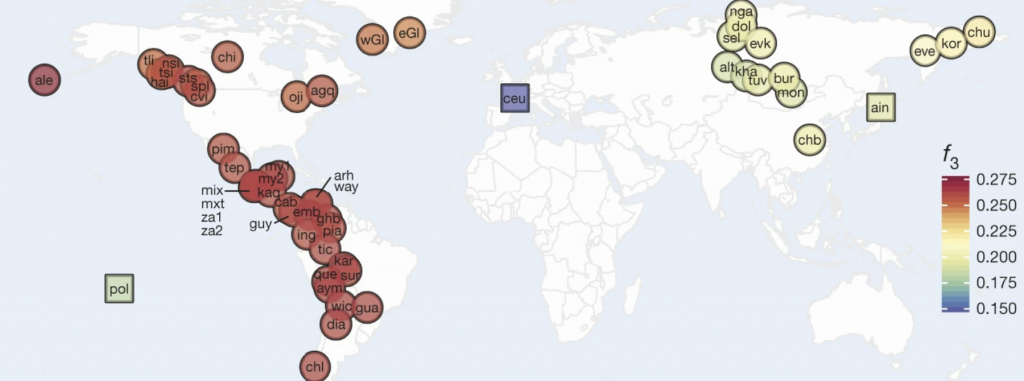
For several years, attempts to extract DNA from Kennewick Man were unsuccessful. However, in 2015, a team of geneticists led by Morten Rasmussen announced in the journal Nature that it had extracted DNA, had compared it to the DNA supplied from members of the tribal claimants, and had determined that Kennewick Man was “Native American,” with close affinities with tribal claimants. Following this finding, Congress passed a law, which then-President Barack Obama signed, giving Kennewick Man to the claimants. But this study was problematic, as it generally isn’t possible to distinguish one tribe from another using DNA; and our knowledge of the DNA of modern tribes is limited due to repatriationists’ own hostility to the scientific study of Native American biology more generally. (This objection is partially rooted in the fact that some DNA studies strengthen the case that Native Americans migrated into the Americas from Asia, a finding that runs counter to Native American religious claims that they have been in the Americas since the dawn of time.)
No doubt, the tribal claimants’ DNA overlapped somewhat with that of Kennewick Man. But the data contained in the published report actually shows that Kennewick Man’s closest affinities are with certain modern American Indian populations of Central and South America who are not “Native American” for the purposes of NAGPRA. (The same affinities were shown in DNA from a 12,600 year-old skeleton from Montana.) Despite Nature’s requirement that data underlying the conclusions of any publication must be provided to other researchers, the authors of this DNA study refused to do so when asked by geneticist David Reich.
The problem of withholding data in regard to ancient DNA (known as aDNA) studies has been well-documented by anthropologist Bruce Bourque in a recent Quillette article. Calls to stop collecting DNA from fossilized feces (coprolites), dental calculus (tartar), and soil to prevent the contradiction of Native American oral myths, for instance, have found their way into conferences for aDNA specialists. (Bourque also notes that although Kennewick Man’s aDNA may have linked him to North American Indian populations according to some analyses, DNA research on Paleoindians from 11,000-year-old Nevada remains show closer affiliation to South American Indigenous populations than to their North American counterparts.)
Paleoindians such as Kennewick Man are the main reason the NAGPRA controversy became known to the lay public—perhaps because Paleoindians are few in number, and are represented by single individuals who become scientific celebrities. However, the reburial and repatriation of Native American remains from more recent periods raises many of the same issues.
Keep reading
What the Navigators Knew
Gemma Tognini on Australia’s Political Revolt

Rubio in Athens

How France Lost Control of Its Streets
How to Suppress Men’s Writing