Books
The Impassable Road to Redemption
Not only is no-one allowed to change for the better anymore, no one is even allowed to be understood, much less forgiven.

Oops! That page can’t be found.
This is what I find when I click on the author link that says “Frank Sherlock—Bloof Books.” Before clicking, I catch a preview in my search results of what was once there. A photograph of the short-haired, bearded poet, wearing a white collared shirt and black blazer, pink background behind him, a partial bio: “Frank Sherlock is the author of Life Is to Blame for Everything, Space Between These Lines, Not Dedicated, Over Here, The City Real & Imagined (w/CA Conrad), and a collaboration with Brett—“
Nothing was found at this location. Try searching or check the links below.
Nothing may be found, but surely, something has been lost.
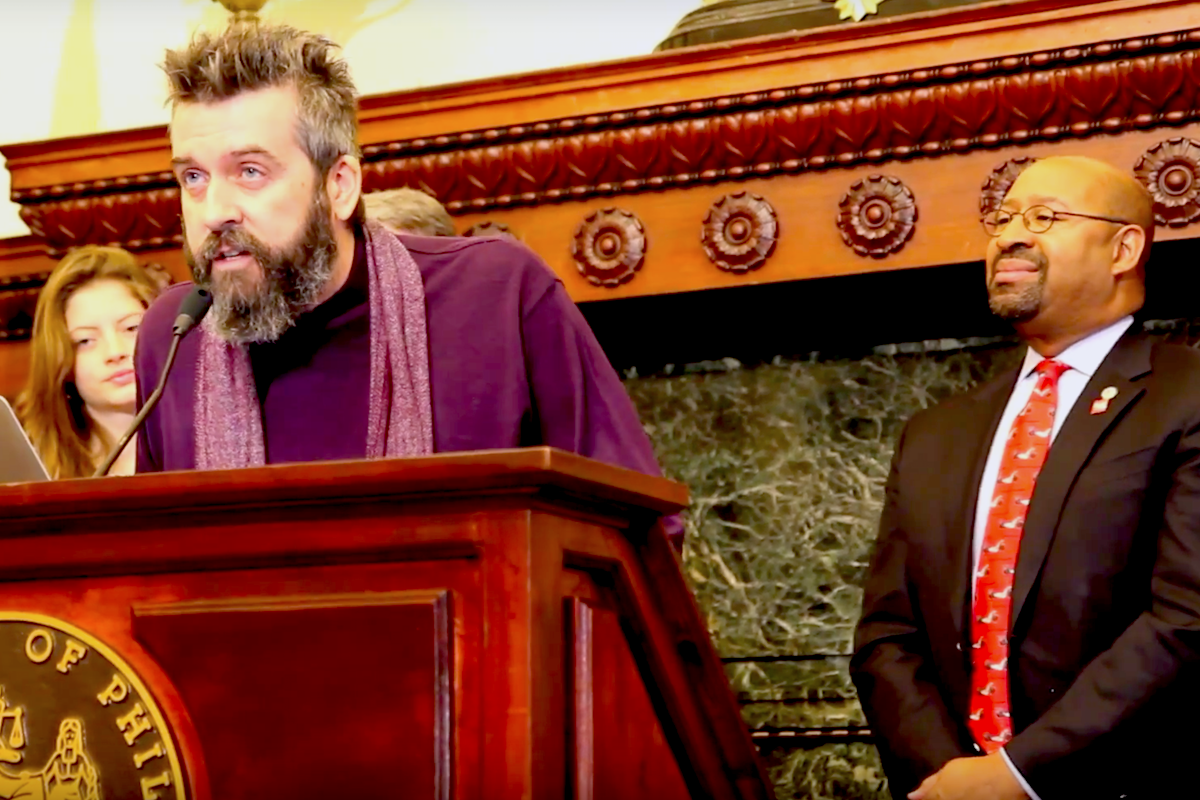
The former Philadelphia poet laureate had recently admitted on Facebook that he’d played in a racist skinhead band as a poor and misguided teenager back in the late 1980s, after he was outed by another poet. Sherlock was probably nervous about the risk he was taking. Would his followers understand? Was an artist required to disclose everything about his past to the world, even though this had happened 30 years ago? Why put himself through it? Why should he be forced to confess this ugly smudge in his personal history? After all, Sherlock has spent years redeeming himself.
As poet laureate in 2014–2015, he’d started a youth program called “Write Your Block,” which he described as “a way for Philadelphians to explore their neighborhoods via poetry, charting—and sharing—their communities through their own words.” This program was originally inspired by his book The City Real & Imagined, a collaboration between Sherlock and another poet, CA Conrad, in “which the two poets wandered the city, using poetry to map their path and articulate their interaction with urban space.” One of his more recent blog posts was about an event he’d put together called “An Immigrant Alphabet,” which he describes as “a series of workshops with kids from Northeast High School—the most diverse immigrant student population in the Philadelphia School District…” In a statement, he cites one of his favorite moments from the event, when a Palestinian poet who has published two books in Arabic wrote his first poem in English during the exercise. “It’s a beautiful poem,” he says. “It was a beautiful day.”
He might have thought that, by confronting the truth about his past, he could use his experiences to help others in the same way that Christian Picciolini, a former leader of the white power movement, has done. Another Philadelphia man, Frank Meeink, a former neo-Nazi, is now a vocal opponent of white supremacy. German novelist and Nobel laureate Günter Grass kept his Nazi past a secret for 50 years: Grass only revealed that he’d been a member of the Waffen-SS as a 17-year-old boy in 2006, nine years before he died. “The citizen’s first duty,” he had once said, “is not to keep quiet.” Maybe he thought it would be a relief to clear the air, and unburden himself of the shame he had carried all those years. After all, Grass had been an actual Nazi, which is much worse than playing in a skinhead band, and most of the world had forgiven him.
 Jonathan Kay
Maybe Sherlock thought his admission might be a teachable moment for others—to provide hope, especially to those alienated teenagers who were just like he was and who might likewise be susceptible to indoctrination. He might have even hoped to be commended for denouncing his stained past and correcting course, and maybe even given a little sympathy, compassion, and understanding. But that was too much to ask of the internet. Small press publisher, Called Back Books tweeted:
Frank Sherlock, poet, used to be a Nazi, remained in silence & deception, what kind of forgiveness is to be expected? None, for us, none at all. Warsaw uprising ethics. Hey Frank, fuck you.
(would he really admit if he beat down some Other or participated in acts of extremity?) pic.twitter.com/d1t3DhWjuL
— Called Back Books (@CalledBackBooks) April 11, 2019
Before long, the man who had once quipped to the The Philadelphia Citizen, “Believe it or not, poets can be terrible people too” was apparently regretting his candor. He deleted his Facebook post, and retreated into silence as his enemies continued to shower him with vitriol. Before publishing it, he had written to his old friend and collaborator, CA Conrad, to tell his fellow poet what he was about to do. On April 11, Conrad shared a public post with 5,000 Facebook friends, which stated:
…when he wrote to me just before posting it to Facebook, my mind was flooded with images of violence from that period in the city…My immediate question, especially after seeing the dates in question was, “Did you participate in the violence?” He assured me that he did not.
The following day, Conrad publicly announced the withdrawal of the book on which the two poets had collaborated, and which had been republished in 2018:
In light of Frank Sherlock’s revelation that he was a former skinhead, I have asked Shanna Compton (of Bloof Books) to please stop selling the book he and I wrote together.
At this point, I could write another essay about the growing censorship problem in the literary world or explaining that the art is not the artist (both of which I believe to be true). But something else is bothering me—something at the core of what is now referred to as “cancel culture”: the inability to redeem oneself. It seems to me that the word “former” in Conrad’s statement is the critical piece of context that Sherlock’s critics are apparently most eager to dismiss and deride. The poet Sara Bess was particularly unsympathetic:
I don't know the story and I don't need to but I will say that the question should never be "can a fascist change?" but "should a fascist be allowed to change?" and the answer is "no."
— Sara Bess (@achenesense) April 12, 2019
Is this what progressives imagine constitutes social justice these days? Willful ignorance and an insistence that everything a person is or will ever be can be gleaned from their very worst moment? Should a gang member be allowed to change? Should a drug addict be allowed to clean up? Should a drunk be allowed to get sober? If it were just the poetry community, I might have chalked this allergy to personal progress up to the usual performative melodrama. But it isn’t. It’s something infecting our whole culture. Not only is no-one allowed to change for the better anymore, no one is even allowed to be understood, much less forgiven.
“We need to think through the whole process of redemption for people in society,” Sam Harris recently remarked on Joe Rogan’s podcast. “We need to understand what the criteria are for successful apologies and forgiveness…We need to talk about how people can redeem themselves once something this unsavory is revealed about their past…The apology has to show intelligibly, how you are different from the person who committed that thing.” Harris also points out the irony that some of the people most vocal in calling for cancelling somebody, are often the biggest advocates for the rehabilitation of criminals. Should the goal of the justice system be to rehabilitate criminals wherever possible, or should they simply be condemned and left to languish in a cell until the end of their days?
Konstantin Kisin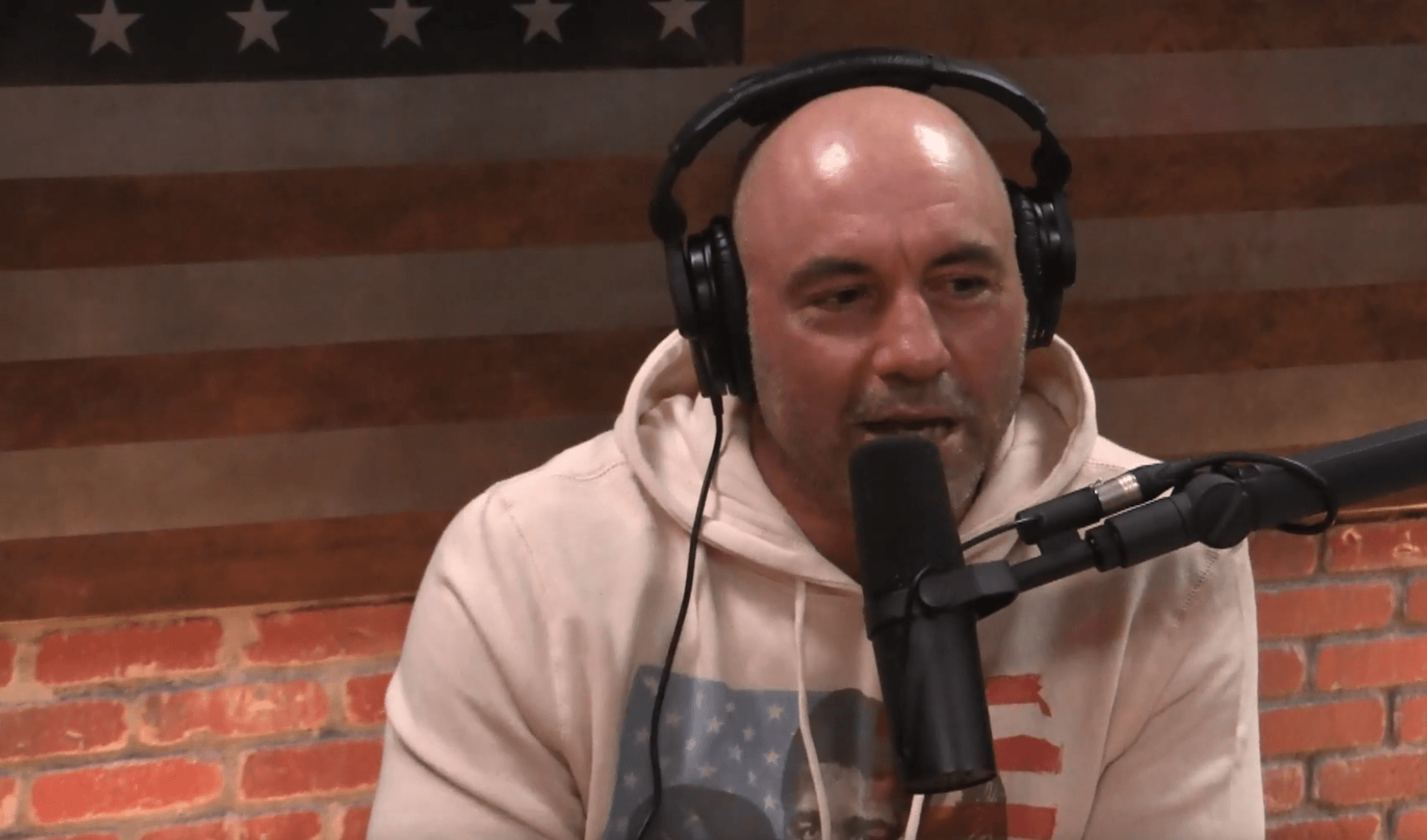
In a NYMag essay entitled, “America’s New Religions,” Andrew Sullivan likens this new zealotry to the old religious impulse, which manifests itself in our political movements today, whether in the cult that surrounds Donald Trump or in the “woke” social justice groups, both of which he says behave in the same way as religions do:
Like early modern Christians, they punish heresy by banishing sinners from society or coercing them to public demonstration of shame and provide an avenue for redemption in the form of a thorough public confession of sin…
But the avenue for redemption is full of roadblocks these days. Public confessions or apologies hardly ever lead to forgiveness, and almost always lead to a second round of shaming, if not banishment. Zealots are never satisfied with just an apology. No matter how small the infraction, a public apology almost always leads to further punishment. Think of the recent controversy over actor Liam Neeson’s admittance that he’d entertained violent and potentially racist thoughts after a close friend of his was raped by a black assailant. Here was a “sinner” trying to atone for his “sins” by denouncing his own vengeful impulses (and alluding to his own instability at the time), and still people were calling for the end of his film career.
What is most troubling about all this is how it freezes public discourse. You cannot change anything in society if you cannot first speak truthfully about it. The dirty laundry must be aired, not hidden in the closet, if you really want to get the stench out. But in an era in which people are canceled for the slightest infraction, it’s much more prudent to just keep your mouth shut. This kind of intimidation threatens our social contract. If we cannot atone for our mistakes in the past and speak truthfully about our human flaws, how can we ever make progress?
Keep reading
How France Lost Control of Its Streets
How to Suppress Men’s Writing
Back to the Dark Ages
Prison or Peer Review
France’s Imaginary Austerity