Economics
The Roots of Recession
As an energy shock looms, a new book reframes recession as the product of historical circumstance, not cyclical inevitability.

A review of Recession: The Real Reasons Economies Shrink and What to Do About It by Tyler Goodspeed, 320 pages, Basic Venture (March 2026).
As we may be heading that way, now seems the perfect time to consider what creates a recession. In his new book, Recession, economist Tyler Goodspeed dispels many of the more mechanical notions, such as the idea that there is a causal tie between expansions and downturns, embracing instead the view that most recessions are caused by sudden shocks to the system.
Goodspeed makes a strong case, citing specific historical recessions and showing why they should not be seen as the results of too much growth and greed, as many economists have asserted. Instead, Goodspeed sees recessions as driven by events that derive from natural disasters, wars, and resource scarcity, such as the one we may face as a result of the US–Israel war with Iran.
Goodspeed has little patience with the moralising that claims recessions are a nation’s just deserts for periods of greed and moral decrepitude. He disapprovingly cites Alan Greenspan’s description of periods of “irrational exuberance” for which Greenspan suggested that downturns and recessions were just punishments. Goodspeed compares much of this sort of discussion to “the parables of Jesus or Aesop’s fables”: fine for moral instruction, but not really the prime causes of economic downturns.
“Recessions,” Goodspeed writes, “occur and have always occurred in actual history. In which people endure war, weather, pandemics, strikes, and accidents of interminable variety, any of which can strike any given year.” He also rejects the idea that recessions are “cleansing” and, somehow, good in the long run, like a kind of economic enema. Instead, he believes recessions offer “pain without gain.”
This new approach to economics relies less on arcane statistics and monetary policies than on historical realities such as climate change and plagues as the drivers of recessions. Goodspeed picks up on a thread started by such writers as William H. McNeill, whose 1976 book Plagues and Peoples, demonstrates the key role played by diseases in shaping history. For instance, McNeill traces central Africa’s slow pace of development to the impact of the tsetse fly.
This approach was renewed in Kyle Harper’s brilliant The Fate of Rome: Climate, Disease, and the End of an Empire, published in 2017. Harper traces the Roman empire’s decline to changes in the climate—mostly from warm to cool and dry—and to diseases, the impacts of which were magnified by the resulting reduction in crop yields. It was not Rome’s sinfulness that did it in, but a changing physical world and the rise of lethal microbes. Harper describes his story as an “account of how one of history’s most conspicuous civilizations found its dominion over nature less certain than it ever dreamed.”
 Joseph Zeller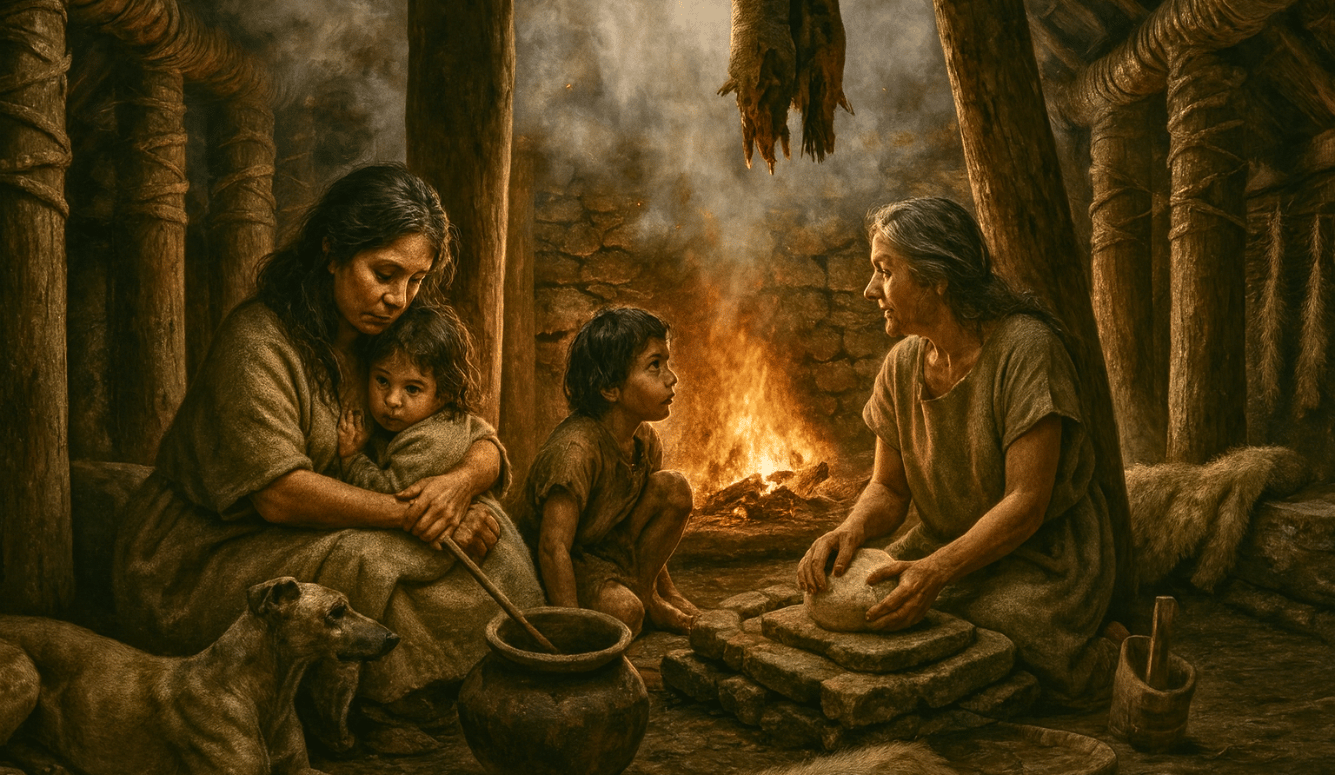
Like McNeill and Harper, Goodspeed makes his case well, and he does it with a deft literary hand that is rare among economists. This is not to say that he avoids getting into the statistical weeds beloved by the practitioners of his field, but he drives his case primarily by discussing the specific historical circumstances that lay behind economic disasters. “Recessions,” he writes, “are, and have always been, about shocks—costly interruptions of positive economic growth.”
Much of Goodspeed's work, like that of McNeill and Harper, is tied to natural causes. He attributes recessions in Great Britain and Western Europe in 1710, 1731, and 1740 to inclement weather and poor harvests. The same mechanism can be seen in later episodes. The 1815 eruption of Mount Tambora in Indonesia, the largest volcanic eruption in recorded history, is one such example. The "year without a summer" that followed the eruption devastated harvests around the world; temperatures dropped by as much as 3°C due to the materials ejected into the atmosphere impeding a significant proportion of sunlight from reaching the surface of the earth.
Goodspeed places particular emphasis on the US-led Panic of 1857, an event obscured by its proximity to the American Civil War. Rather than providing a moralistic reading that places the blame on greed, Goodspeed focuses on primary causes, such as a grasshopper plague that decimated land values in the West and the sinking, in a hurricane, of a ship carrying gold from California, a disaster that contributed to a reduction in liquidity.
In 1857, and in other downturns, the common assumption was that boom times had led naturally to recession. Often, Goodspeed notes, economists spoke as moral prophets, suggesting that the downturns were the natural results of “excitement” followed by “convulsion and stagnation.” Similar language was applied to busts like that which occurred in 1879, the disastrous Depression of the 1930s, and the more recent real estate-led busts, notably, the 2008 financial crisis.
Rather than describing them as being a part of a cyclical pattern, Goodspeed explains recessions as being tied more closely to phenomena such as droughts and crop failures that led to the 1930s Dust Bowl, which further devastated the US’s already depressed rural economy. In modern times, the prime causes of recessions—as we see today—revolve around energy shortfalls.
The history of energy shocks goes back well before the primacy of oil, and it predates even coal. Energy shocks are of particular interest for Goodspeed, a former acting chairman of the Council of Economic Advisors and now chief economist for Exxon Mobil, the US’s largest energy company. He also lives in Texas, where oil prices are followed as closely as the stock markets are in London and New York.
But long before Texas had its first gusher, shortages of other sources of energy, for example, peat, or “turf,” could upset economies. This occurred in Britain in 1879. At that time, peat was used as fuel for cooking, domestic heating, fertiliser, and even to coke steel; and in Scotland, it was used in the distilling process.
Prior to 1879, Britain had experienced two successive cool, wet summers, conditions that were perfect for incubating a fungus that was similar to the one that had devastated Ireland in the 1840s. The fungus reduced the wheat harvest by 50–70 percent, forcing Britain to use its gold reserves to buy staple goods. But it was also an energy crisis: the wet conditions had made it impossible to harvest peat, which, at the time, constituted nearly a third of all British energy consumption.
One result of this turf “shock” was that it pushed Britain, and from there, the world, to seek and exploit other energy sources—first, coal, and then oil and natural gas.
So, coal replaced peat as the primary fuel source. Major disruptions in the supply of coal proved disastrous, too. Coal’s recessionary effect, Goodspeed notes, can be seen in the impacts of strike actions; for example, the General Strike of 1926, called by the Trades Union Congress in support of Britain’s coal miners, who were in dispute with mine owners, “brought the UK economy to a standstill.” The general strike started in May and lasted nine days, but the miners continued. When their strike ended in November, largely due to the desperation of the miners, the economy rebounded quickly.
Earlier coal strikes, for example, in 1900 in the US, France, and Austria-Hungary, had also created “coal famines.” Another one in the US in 1902 caused a significant downturn and rising inflation that lasted until the following year. There were also strikes in the immediate post-First World War years, in 1919 and 1920.
In more modern times, of course, oil and gas are what matter most, and conflicts have often sparked over the control of this resource. By the Second World War, the dominance of coal had begun to fade, as oil became the prime commodity that drove national economies. The war, as historian Richard Overy has noted, was in large part, a battle over resources. Oil was much of the reason why Japan, Germany, and Italy, three oil-scarce nations, embraced an aggressive expansionist mode. At that time, the US was by far the largest oil producer, followed by the Soviet Union. Petroleum was the currency that created the bipolar world of the 1950s and ’60s.
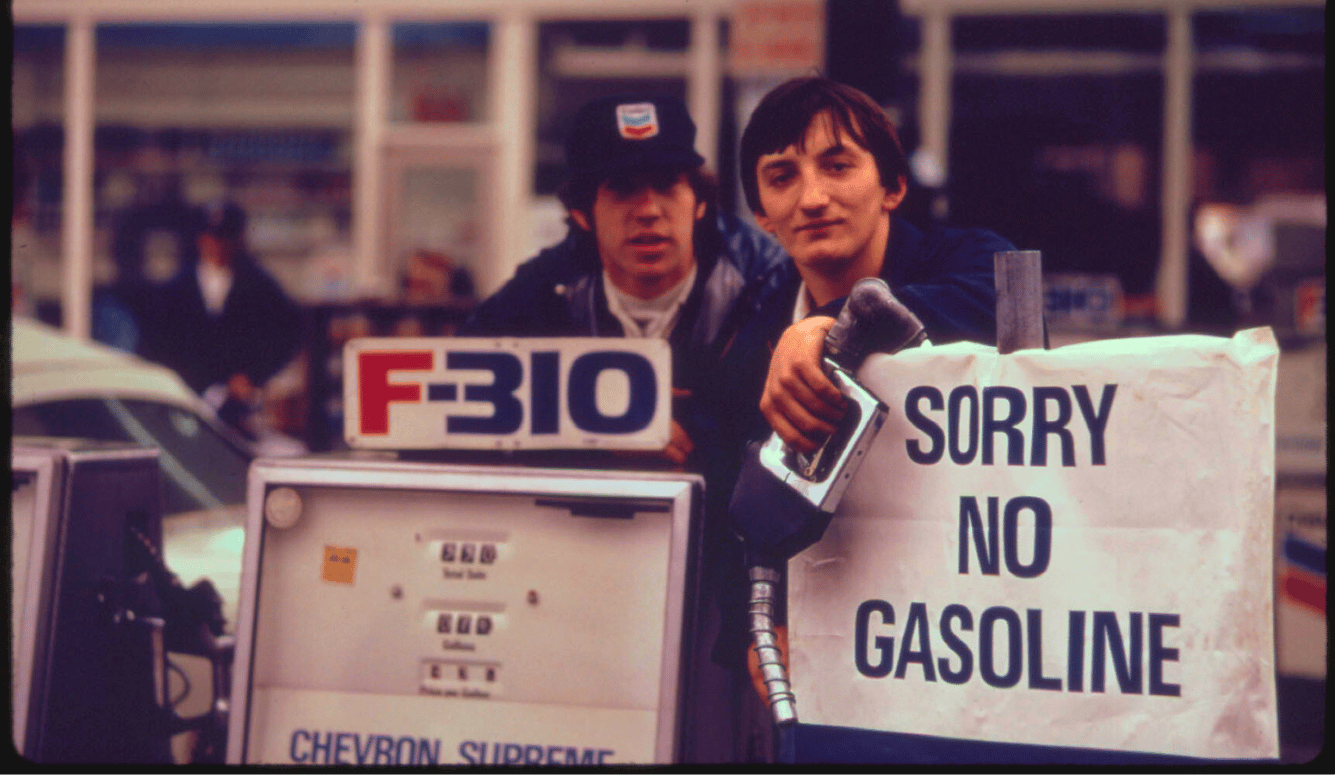
The next critical confluence of oil and economic disruption took place after the 1973 Yom Kippur War. The oil embargo imposed by the Arab oil-producing states quickly killed what had been robust expansions in Europe and America.
The embargo drove most of the capitalist world into a deep recession. Gas prices doubled, the lines of cars at service stations grew longer, and employment plummeted, resulting in an unemployment rate of nine percent. This happened at a time when the energy business had shifted, in Goodspeed’s words, from “a Gulf of Mexico oil market to a Persian Gulf-centric one.” US oil production fell, due to exhaustion of the fields as well as the implementation of strict environmental rules that had, within a decade, tripled the role of oil in electricity generation.
In 2005, the US economy was rocked by another oil supply disruption, this one tied to major hurricanes that had hit the Gulf of Mexico and the aftermath of the invasion of Iraq. Goodspeed sees the resulting energy price jump as a prime contributor to the recession known as the Great Financial Crisis. That year also saw US oil production hit its lowest level since the early 1950s and soaring prices for fertilisers, which drove up the price of food. Without this shock, claims Goodspeed, the 2008 disaster, usually largely attributed to the housing collapse, would not have happened, or, at least, it would not have been so severe.
Energy shocks can also spark wars, which themselves create enormous financial burdens on states. War debts undermine economies, as happened in Britain in the 1920s and in the US after the Vietnam War, leading to high inflation and sagging economic conditions. Today, with both reapers working in tandem, the US–Israel war on Iran clearly possesses the potential to create a deep recession. The most obvious parallel to today, of course, is the Arab oil embargo that was imposed in the aftermath of the Yom Kippur War.
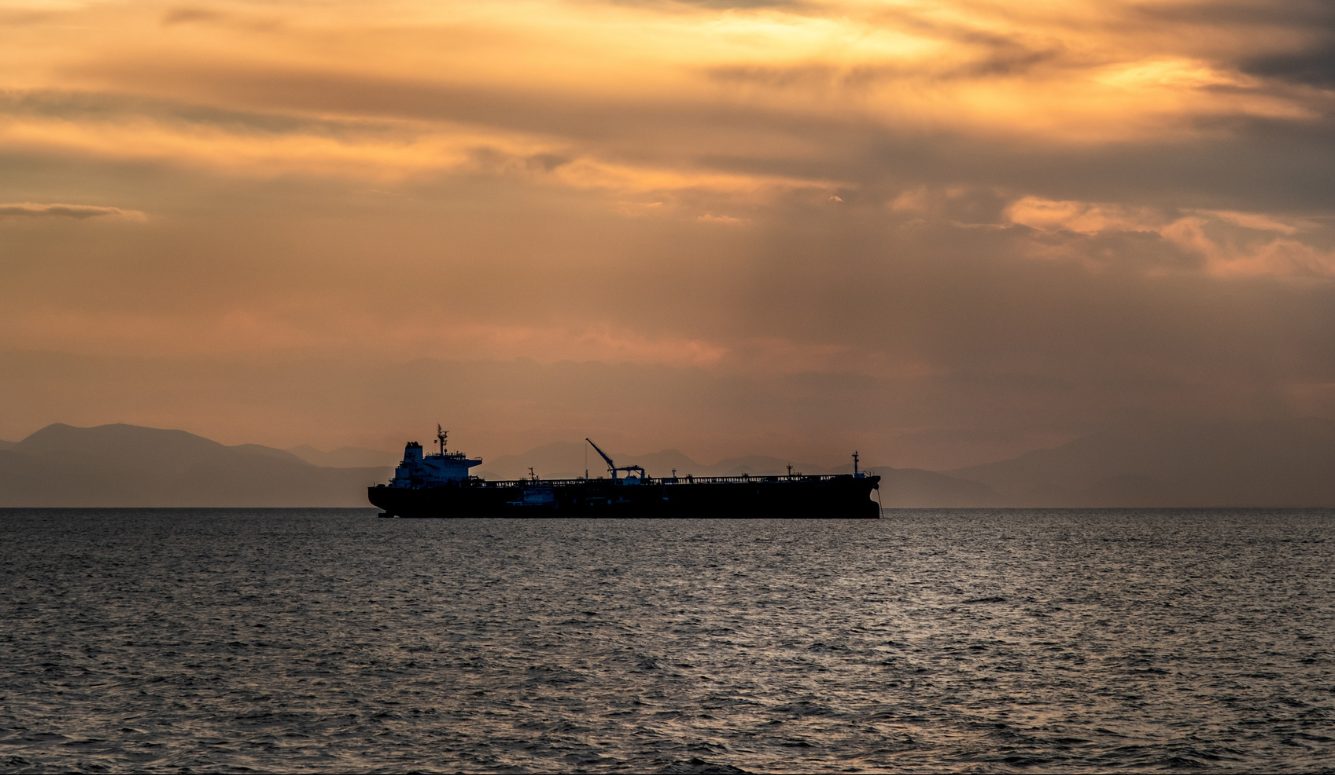
Today’s recessionary pressures, particularly those related to energy, have been exacerbated by the explosive growth of China and India. As these massive economies have grown, so, too, has their demand for fossil fuels, as well as fertilisers and helium, both of which rely on the oil and gas industry. The blocking of the flow of marine traffic through the Strait of Hormuz represents a recession threat not only to Europe, North America, and the West but Africa, Central and South America and particularly Asia, home of the two most populous countries on earth.
Joel Kotkin and Hügo Krüger
So what should policymakers and those who advise them do? Goodspeed is quite critical of many responses, notably the attempts at austerity that occurred during the Great Depression under Hoover and the bailouts used by George W. Bush during the financial crisis. In many cases, he suggests, it would be better not to intervene with monetary and fiscal stimuli. Unfortunately, Goodspeed doesn’t seek to explore strategies that may succeed at limiting disruptions to energy, food, and other key commodities.
Certainly, some action is needed. We could characterise Iran’s attempt to control the Strait of Hormuz and the Red Sea as more piratical than anything else; indeed, the Strait is a place where piracy and clashes of empires have long taken place. In the 17th and 18th centuries, pirates made global trade difficult. In 1718, the pirate captain Blackbeard led a blockade of the key port of Charleston, South Carolina, resulting in major losses to Britain of exports to its American colonies, as well as the items imported from them, notably pitch, tar, turpentine, and lumber—all critical materials at the time.
Keep reading
Gemma Tognini on Australia’s Political Revolt

Rubio in Athens

How France Lost Control of Its Streets

How to Suppress Men’s Writing
Back to the Dark Ages