Energy Policy
The Bronze Age Energy Crisis
How a supply chain failure brought down an ancient civilisation: a tale with disturbing implications for present day societies with their brittle energy logistics.
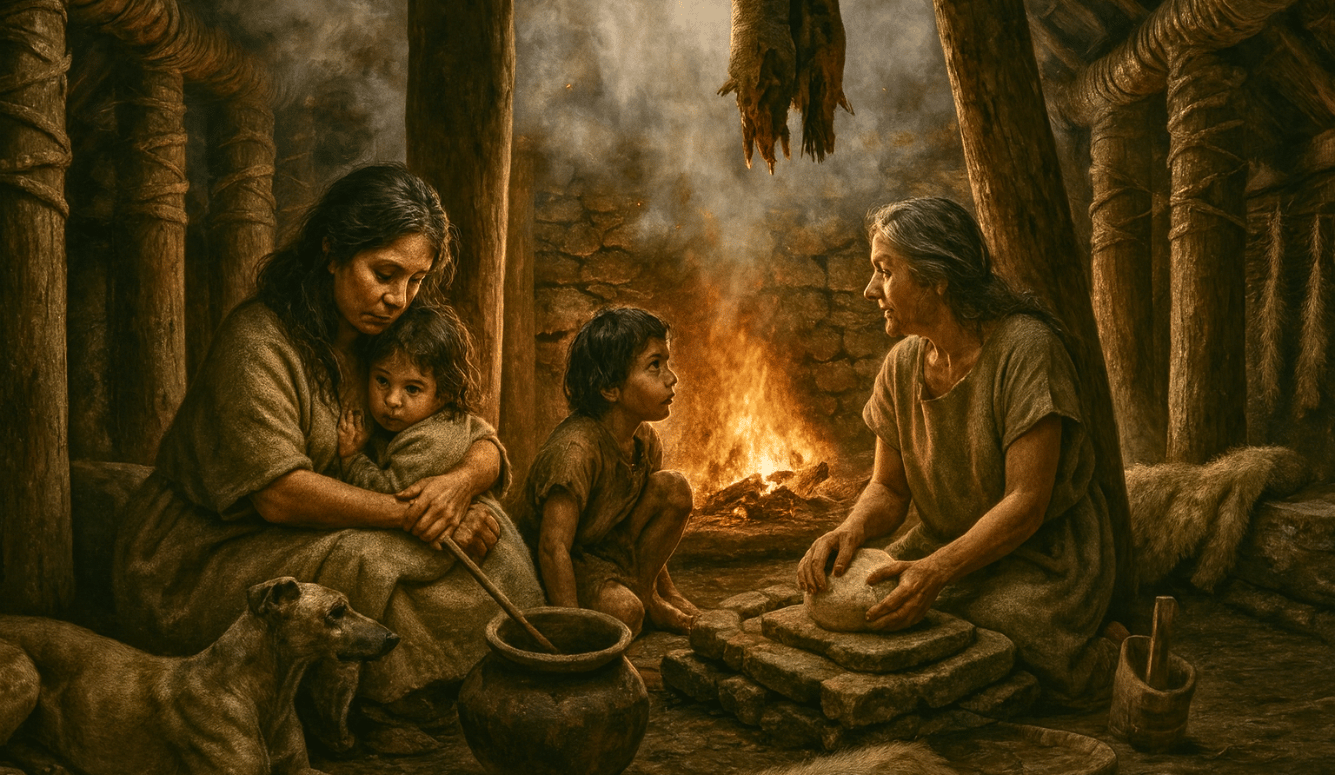

Civilisations seldom collapse because of a single drought, battle, or angry god. Such events dominate chronicles because they are spectacular, but they are more symptom than cause. What usually undoes a complex society is the loss of surplus energy—the margin that makes coordination across distance possible and that keeps interdependent parts working in sequence. When that margin narrows, systems fray first at the edges and then at the centre, until the framework that once held them together can no longer carry the weight of its own complexity.
The decline usually begins with smaller problems in daily life: first, deliveries arrive late; then they stop; then workshops fall idle for lack of fuel. In tightly coupled economies built on just-in-time logistics, one interruption can bring transport to a standstill and darken cities. The crisis is not only material—it touches institutions like law and bureaucracy, which also rely on steady flows of energy to function.
The Bronze Age Collapse, which occurred around 1200 BC, involved not only the fall of cities but the unravelling of an entire way of life, as palaces burned, trade networks across the Aegean and Near East dissolved, and populations fragmented into modest rural settlements. For centuries afterwards, much of the Eastern Mediterranean retained only a much smaller repertoire of skills and a more rudimentary set of institutions, which is why archaeologists have traditionally described the period as a “dark age.”
The collapse has been attributed to everything from climate shifts and earthquakes to revolts and invasions—but such explanations do not account for why palace economies across so many different regions collapsed at around the same time. A more persuasive view is that the crisis was energetic in its root, and logistical in its expression—it was the result of the first recorded energy shortage in history, driven by the exhaustion of wood and the breakdown of the maritime networks that had supplied it.
A Wood-Fired Civilisation
Before coal or electricity, the ancient world ran on fire, and fire meant wood. In the Late Bronze Age, heat was the hidden engine of daily life, turning clay into pottery, ore into metal, food into rations, and timber into fleets. This was not a low-energy world but a fuel-intensive one.
The production of bronze itself shows the scale of demand. To smelt copper and tin required sustained temperatures of above 1,000°C, which in practice meant converting timber to charcoal, a process that consumed staggering amounts of wood. Archaeometallurgical estimates suggest that a single tonne of bronze required ten to fifteen tonnes of timber, not including the additional fuel consumed in mining, refining, forging, and transport. The same pattern held across other industries, where kilns fired pottery for days, lime burning required a constant supply of heat, and construction depended on heavy timber. Even the written word required fire, as clay tablets survived only when baked in kilns.
The scale of dependence on wood is clear from the material record. The Hittite capital at Hattusa, perched on the Anatolian plateau, had long since stripped its immediate surroundings of usable forest. Surveys show that Hattusa’s walls and temples were supported by massive timber frameworks, and texts record expeditions to distant forest ranges for beams of suitable size. Hauled by cart and river across hundreds of miles, this timber made the city a fortress, built not only of stone, but of imported trees. Its reliance on long and vulnerable supply lines foreshadowed the brittleness of the entire Late Bronze Age system.
 Paul Brown
The palatial records of the Mycenaeans reinforce the point. Preserved in Linear B tablets, they show scribes recording allocations of firewood and construction wood for workshops and shipyards. At Pylos, tablets note distributions for carpenters and chariot-makers, revealing that without steady flows of timber even elite military production could not proceed. Wood was not background material but a rationed resource, administered like grain or oil—by the time supplies failed, the palace economy was already severely strained.
Early palace centres flourished near forests, but the lowland groves vanished quickly, and wood cutters were forced to press on into hillsides where regrowth was slow. The palaces did not scale down their ambitions when local supplies faltered—instead they looked outward, importing cedar from Lebanon and cypress from Anatolia. Timber became a strategic material moved along sea routes, but ships themselves were timber-hungry machines built and fuelled by the very resource they carried. As forests retreated and voyages lengthened, the costs of extraction and transport of wood gradually outstripped the resulting gains.
Modern energy economists describe processes like this using the concept of Energy Return on Energy Investment (EROEI) as the ratio of usable energy a system secures compared with the energy it must expend to obtain it. A healthy civilisation depends on a large surplus of energy, and as that ratio falls—whether because woodcutters have to go further and further to find usable forests or because it becomes more and more difficult to extract ores from the earth—less energy remains for the institutions that sustain civilisation. After the Bronze Age world crossed the threshold at which the cost of timber outstripped its energy returns, its institutions could no longer sustain themselves. The shortfall in energy caused civilisational breakdown.
The Maritime Bottleneck
By the thirteenth century BC, many urban centres could no longer rely on nearby woodlands and had turned to the sea, but the archaeological record shows the difficulties of that choice. The Uluburun Shipwreck, dated to around 1300 BC, is among the largest known cargo vessels of its age, yet it carried only about twenty tonnes, roughly the load of a modern semi-trailer. Ships of this size were adequate for compact and valuable cargoes such as metals and luxury goods, but they were unsuited to supplying bulk timber at the scale required by urban life and metallurgical production.
A Bronze Age city of forty thousand people, in which each household burned only two or three kilogrammes of wood per day for cooking and heating, would have still needed between 2,400 and 3,600 tonnes of timber every month, even before accounting for industrial uses such as kilns and smelting. Meeting even a fraction of that need by sea would have required more than a hundred ship arrivals each month, in all seasons, along often stormy routes where shipwrecks were common.
Seen in this light, the Sea Peoples appear less a conquering force than evidence of systemic failure, of groups displaced by the collapse of energy and trade flows. Egyptian scribes recorded them as enemies, yet their sudden arrival fits a broader pattern of migration that followed the breakdown of maritime provisioning, which may explain why their identity baffled the Egyptians—they were not one people but many, displaced from across the Mediterranean.
As energetic and logistical margins narrowed, knock-on effects multiplied—bronze production became intermittent as charcoal and timber ran short, and palaces that had once justified their authority through redistribution could no longer provide for their people. Legitimacy eroded quickly, and writing declined with the institutions that had sustained it—so what reads as a cascade of political defeats is also the record of a throughput machine grinding to a halt.
Quillette
Why Egypt Endured
Not all centres collapsed at once, however, and Egypt presents an instructive contrast. Egypt’s Levantine dependencies fell away, famine and unrest spread through the land, and it spent years battling seaborne coalitions that it regarded as existential threats. Yet Egypt endured while Mycenae and Hattusa disappeared—and geography explains much of the difference. The Nile served as a self-contained artery for transport and administration, binding the core provinces together and allowing the valley’s grain surplus to move by river without needing to rely on timber-hungry ocean fleets.
Institutions also mattered—temples continued to function and scribes kept the record system alive. Even when rations failed, the workers of Deir el-Medina appealed to officials rather than warlords. This shows that Egypt had established a bureaucracy that still clung on to legitimacy even as the state’s energy supplies faltered. Egypt’s energy profile also differed from those of its neighbours because it smelted less bronze and required less fuel for heating, given its warmer climate, and therefore was less reliant on imported timber—so although the state contracted and lost prestige, it did not disappear. The pattern suggests a rule–centralised systems tied to a single energy source and narrow logistical grid are brittle, while those with alternatives endure longer.
After the Bronze Age Collapse, what followed seemed, for a long time, smaller and poorer. Palaces were not rebuilt, Linear B and related scripts did not reappear, crafts narrowed in scope, and monumental building slowed. Yet later civilisations assembled complexity on an equal or greater scale without repeating the Bronze Age system-wide failure—and the difference lay in their more resilient structures.
By the Classical period, merchant ships carried cargoes that weighed in the hundreds of tonnes rather than a few dozen, while markets expanded, and overall throughput increased. Metallurgy became more efficient as iron working spread, since iron ore was more widely available than tin and could be smelted in smaller, distributed forges using a broader range of fuels. Production no longer depended on palace-scale infrastructure, so authority could fragment without depriving artisans of their tools. Politics also diversified as city-states, federations, and leagues created multiple centres of decision-making, ensuring that the fall of one city no longer triggered a region-wide crisis. Trade transformed to involve private merchants who absorbed risk and adjusted prices, providing adaptive feedback that redistribution economies lacked. Alphabetic scripts spread literacy beyond palace bureaucracies, and as texts were copied and preserved through successive regimes, cultural memory shifted from court institutions to schools and temples. In short, later civilisations created resilience in logistics and production by diversifying their inputs and maintaining wider margins for error.
Keep reading
How to Suppress Men’s Writing
Back to the Dark Ages
Prison or Peer Review

France’s Imaginary Austerity
The Limits of Perfectionism