Economics
A Baseless Attack on Friedrich Hayek’s Intellectual Legacy
Author Quinn Slobodian has won acclaim for his attempt to link the famed Austrian economist to right-wing extremists. But his arguments collapse under scrutiny.
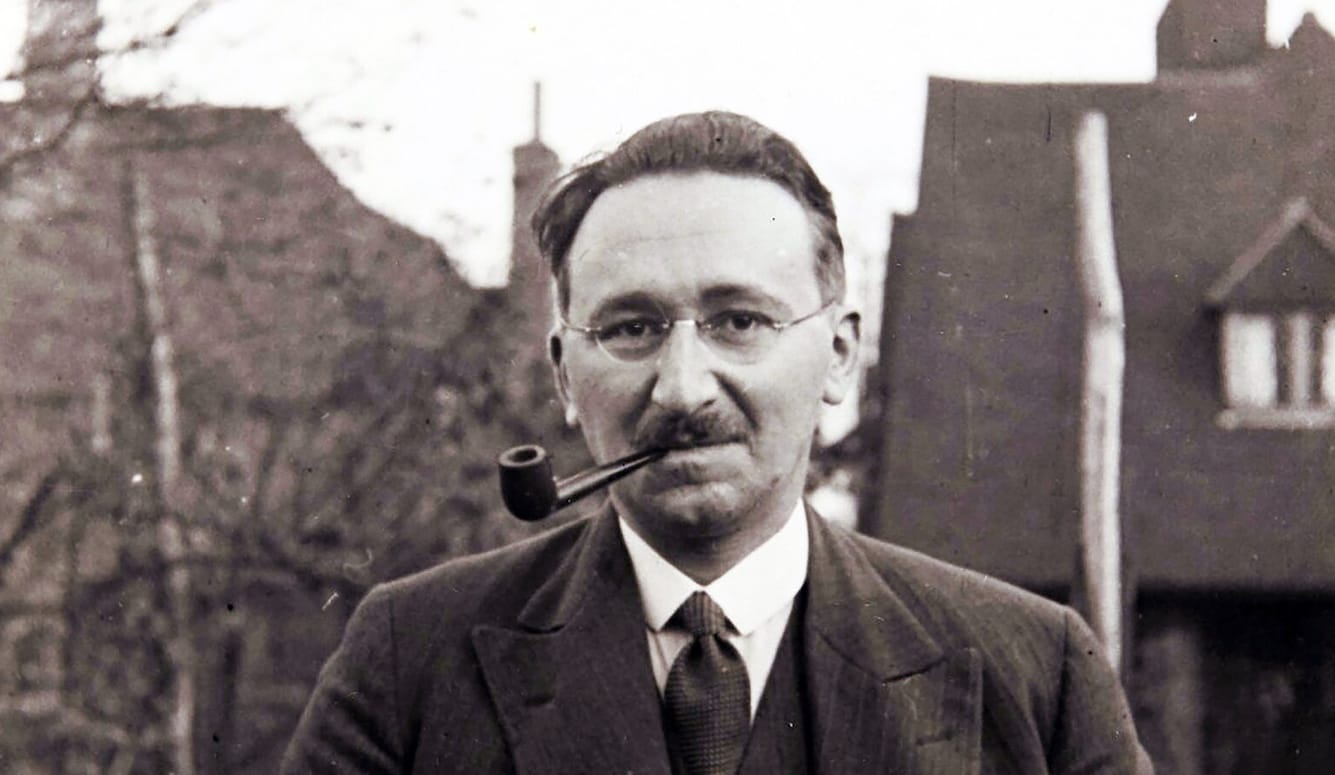

The popular reputation of Friedrich Hayek (1899-1992) is captured in a famous anecdote about Margaret Thatcher. Before becoming Britain’s Prime Minister, Thatcher attended a presentation by a Conservative Party researcher that struck her as too left-wing. She opened her purse and extracted a copy of The Constitution of Liberty (1960), one of Hayek’s central works, then slammed it onto a table and announced, “this is what we believe.”
The story (which comes in different versions) is likely a legend. Even so, it illustrates the widespread view of Hayek as a thinker whose chief legacy has been to provide intellectual cover to political enemies of the welfare state. This image of the Austrian economist and philosopher only gains support from Hayek’s flights of hyperbole. His remark that Social Security could lead to “concentration camps for the aged unable to maintain themselves” is only one of many unfortunate examples.
This may seem bad enough. But in a recently published book, Boston University history professor Quinn Slobodian argues that Hayek’s influence has been even more sinister. In Hayek’s Bastards: Race, Gold, IQ and the Capitalism of the Far Right, published by Zone Books, he presents Hayek as an inspiration to contemporary members of the extreme right. Prominent examples he cites include American neo-Nazi Richard Spencer, who infamously proclaimed “Hail Victory!,” the English translation of Sieg Heil!, in response to Donald Trump’s first election victory (an event that Spencer celebrated as white Americans “awakening to their own identity”).
 Quinn Slobodian
Slobodian is careful to characterise Hayek’s influence on Spencer and other white supremacists as the result of misreading, since Hayek’s philosophy ascribed no significance to race. According to Slobodian, however, Hayek often wrote about culture in an undisciplined manner, and this encouraged members of what later came to be called the alt-right to go further, and make irresponsible claims about race. In this way, Slobodian argues, Hayek’s ideas about culture were readily “instrumentalized, adapted, and weaponized” by right-wing extremists.
Slobodian’s thesis is revisionist. It challenges the standard view of Hayek as a defender of the free market, against which the alt-right is usually cast as a deformed backlash. It is also apparently a thesis that many people want to believe. Hayek’s Bastards has been warmly received in the prestige press, including by prominent critics at The Washington Post and The New York Times. The book’s publication coincided with Slobodian being named a Guggenheim Fellow, and in March it was awarded the National Book Critics Circle Award for Criticism.
This reception is misinformed. While Slobodian is insightful regarding some aspects of the far right, his attempt to trace its origin story to Hayek—even in part—is a failure. When one turns to the sources that the author cites to back up his argument, they fail to provide evidence that any of the extremists Slobodian describes owe their racist tendencies to Hayek.
In fact, Slobodian ends up giving white nationalists more intellectual credit than they deserve: Their bigoted views, rather than resulting from their exposure to theoretical texts such as Hayek’s, have more squalid origins that Slobodian overlooks.
Hayek’s Bastards has arrived at a moment when serious scholars are issuing an overdue corrective to the Hayek legend. These writers, who offer their own revisionist arguments, remind us that understanding complex and original thinkers sometimes requires getting past their cranky passages. This approach reveals Hayek to be an unambiguous defender of the welfare state, albeit one who did himself no favours when he famously called social justice a “mirage,” which obscured his real message. This understanding of Hayek has become increasingly prominent in the scholarly literature, in which one now can find references to “Hayekian social justice,” and warnings that politicians “in London or Ottawa who look to Hayek to provide principled support for their free-market fundamentalism are looking in the wrong place.”
Slobodian ultimately has the historical story backwards. Hayek, rather than providing anything to the far right, has long given nourishment to its intellectual enemies.
This brand of revisionism is more plausible than Slobodian’s. Not only is it based on a more accurate reading of Hayek, but it can explain his overlooked influence on egalitarian liberals and socialists who defend not only racial equality, but programs of distributive justice markedly different from that suggested by the Thatcher legend. Slobodian ultimately has the historical story backwards. Hayek, rather than providing anything to the far right, has long given nourishment to its intellectual enemies.
Hayek rose to fame in the 1940s and the early Cold War period by opposing certain kinds of government intervention in the economy. These were policies that required state planners to answer basic economic questions, such as how many goods should be produced, or how much someone should be paid, without relying on market prices. Familiar examples of measures that Hayek opposed range from municipal rent freezes to nationalisation programs in which governments apply price controls to entire industries, as Harold Wilson’s Labour government did in the UK in 1967, when it nationalised the country’s steel industry.
Hayek characterised all such attempts by the state to set prices as “socialism,” but his use of the term was often idiosyncratic, as it excluded many policies widely considered socialist. As Hayek wrote in a representative passage from 1976, “Sweden, for instance, is today very much less socialistically organised than Great Britain or Austria, though Sweden is commonly regarded as much more socialistic.”
Hayek famously dedicated one of his books to “the socialists of all parties.” In the 1970s, policies that qualified as “socialist” in his sense were so popular that even a Republican president, Richard Nixon, could feel compelled to introduce wage and price controls. Hayek thought it obvious that trying to set prices by decree would doom an economy to crushing inefficiencies. How then, he wondered, could such measures continue to attract intelligent defenders? Hayek attempted to answer this question with an argument that Slobodian labels the “savannah story.”
Hayek characterised modern human beings as caught between two evolutionary processes. Market economies, he believed, are the product of social evolution. They have survived over time not because some omniscient designer called them into being, but because much trial and error has shown them to be an efficient form of economic organisation. For Hayek, the transition from primitive tribe to modern society was due to “the gradual substitution of abstract rules of conduct for specific obligatory ends.” Abstract rules suitable for market economies, such as the laws of contract and property, make it possible for actors pursuing different ends to interact in mutually beneficial ways.
As a species, however, we evolved biologically to live in small tribes organised around a common purpose, such as (and this was Hayek’s point of emphasis) the need to hunt. In such an environment, he suggested, it made sense for resources to be distributed in accordance with an individual’s ability to contribute to the group’s shared end. So if a headman allowed his best hunter to take the first cut of, say, a freshly killed mastodon, he would be upholding an appropriate form of distributive justice.
We may no longer track mastodons, Hayek argued, but our moral psychology remains paleolithic. There is therefore a natural temptation to reject a rules-based approach to economic outcomes in favour of one that seeks to reorganise market processes according to merit. Hence Hayek’s conclusion that “socialists have the support of inherited instincts.” The policies of Wilson and Nixon, it turned out, were due to a glitch in our wiring.
One of the evolutionary trajectories described in the savannah story pertains to social institutions, the other to our species. Neither refers to race, let alone suggests that racial classifications are significant. But even so, Slobodian argues, Hayek’s story emboldened subsequent thinkers with grotesque racial views. This is because of the speculative nature of the savannah story, for which Hayek offered little evidence.
“A consequence of Hayek’s shift from genes to culture [as evolutionary phenomena] was to grant his followers a blank check for their own interpretations,” Slobodian writes. “What standards of veracity or empirical rigor might govern it were unclear. They had created a new subfield by analogy—a sandbox where they made their own rules.”
The savannah story is a minor aspect of Hayek’s vast corpus, one that attracts little attention from most Hayek scholars. For Slobodian, however, it is key to understanding Hayek’s impact on the far right. But Slobodian also argues that Hayek set a bad precedent in a further way, by including ethnocentric asides in his work, such as his remark that “the truth of morals is simply one moral tradition, that of the Christian West, which has created morals in modern civilization.” The image of Christendom having sole access to moral truth, to the exclusion of every other religious or cultural tradition, supposedly opened a door that Hayek’s illegitimate offspring were happy to rush through: On the other side of it, they purported to discover not just a cultural hierarchy, but also a racial one.
The bulk of Hayek’s Bastards is devoted not to Hayek but to thinkers Slobodian depicts as writing dark sequels to the savannah story. These extremists support both economic and racial inequality, particularly insofar as the latter involves ascribing differences in average measured intelligence across races to genetic causes.
Slobodian characterises the resulting doctrine as “new fusionism.” Whereas conservative fusionism of the 1950s sought to join free-market economics with religious traditionalism, the new version seeks to justify free markets with arguments drawn from evolutionary psychology, genomics, and other branches of the sciences—emulating Hayek, whose interests were interdisciplinary. Although these racists invariably bastardised Hayek, Slobodian concedes, “new fusionists” owe a debt to him and the larger economic tradition to which he belongs.
Hayek was a prominent representative of the Austrian school of economics, a heterodox school of free-market thought that originated with Carl Menger (1840-1921) and other nineteenth-century Viennese economists. After World War I, the movement’s leading thinker was Ludwig von Mises (1881-1973), who became Hayek’s mentor in the 1920s, and converted Hayek from a supporter of socialism to a critic.

Karl Marx had famously argued that the economic value of goods is determined by the amount and kind of labour required to produce them, which could in principle be objectively measured. Mises, the scion of a prominent Austrian-Jewish family, was an influential advocate of the rival view—that the value of goods is shaped by the desires of buyers and sellers, which are subjective.
Standard histories of the Austrian tradition say little about its representatives’ cultural views. But these are the ideas that most concern Slobodian—particularly the speculative account of psychological and social evolution offered in Hayek’s savannah story. According to Slobodian, not only did this strand of Hayek’s thinking inspire later Austrian thinkers to temper their previously expressed tendency toward individualism; it also eventually led to the 1990s emergence of “paleolibertarianism,” a fringe view that combines support for unregulated markets with a belief in the intellectual and cultural superiority of the white race.
“Hayek’s definition of culture became the chief route to move beyond methodological individualism and begin to understand collectives and institutions,” Slobodian writes. “The turn of some Austrians to culture had major repercussions, effecting a schism that led some members of the neoliberal camp to efforts at organising a ‘paleolibertarian’ faction and eventually to joining what became the alt-right.”
A prominent figure in Slobodian’s narrative is Murray Rothbard (1926-1995). In the 1990s Rothbard was affiliated with the Alabama-based Ludwig von Mises Institute for Austrian Economics, and co-editor of the Rothbard-Rockwell Report (RRR), a paleolibertarian newsletter. Rothbard, unlike Mises, but like other members of his namesake institute, was a self-described “anarcho-capitalist.” He opposed not only the welfare state but, among many other things, all forms of taxation, environmental regulation, labour rights, and gun control. He also embraced a crass racial chauvinism.

Rothbard’s economic and social views came together in his bizarre belief that racially and ethnically mixed states such as the United States should be broken up into segregated anarchist communities. “Beyond a small quantity, national heterogeneity simply does not work,” Rothbard wrote in RRR, “the ‘nation’ disintegrates into more than one nation, and the need for separation becomes acute.” Heralding South Africa as a model for other nations, he called this vision (without irony) “Grand Apartheid.”
In these racial and ethnic enclaves, Rothbard fantasised, the police would not just be defunded, but entirely replaced by for-profit security forces that would enforce the property rights of residents inhabiting “private contractual neighbourhoods.”
Hayek never endorsed racial segregation, let alone Rothbard’s dystopian blueprint for implementing it. Nevertheless, Slobodian argues, he helped shape Rothbard’s political philosophy.
More than two decades before calling for a new apartheid, Rothbard had participated in a Wisconsin symposium on human differentiation. The subject of Rothbard’s 1971 presentation was the “conscious rejection of civilization” that he detected in many precincts of the New Left, especially its environmental wing. Slobodian’s summary of Rothbard’s message is that “young radicals were shredding the lessons of Hayek’s savannah story.” In Rothbard’s eyes, the younger generation failed to appreciate the benefits of modern market economies and the abstract rules on which they depend. He caustically portrayed such leftists as “wish[ing] to live simply and in ‘harmony’ with ‘the earth’ and the alleged rhythms of nature … it is a conscious rejection of civilization and differentiated men on behalf of the primitive, the ignorant, the herd-like ‘tribe.’”
A younger new fusionist, the journalist Peter Brimelow (b. 1947), gets his own chapter in Hayek’s Bastards. Originally from Britain, Brimelow immigrated twice, first to Canada, then the United States, where he gained prominence as a shrill voice on immigration. In 1999, Brimelow created VDARE, a website named after the first white child born in North America, Virginia Dare. The site was a haven for racists until Brimelow suspended its publication in 2024, following a legal investigation into his alleged misuse of donations. As Slobodian notes, VDARE’s archive contains thousands of mentions of terms such as “white genocide,” “race realism,” and “Great Replacement,” and it routinely provided a platform to white supremacists. For Slobodian, Brimelow embodies new fusionism in an especially pure form.

Many attempts to explain the resurgence of the far right characterise it in purely cultural terms, as a movement rooted in racism and xenophobia. Insofar as economic analysis is invoked at all, it is typically suggested that the alt-right is “skeptical of global capitalism,” as one scholar quoted by Slobodian puts it. Brimelow, however, was a creature of the financial press, having spent much of his career writing for the Financial Post, Barron’s, and Forbes, in which capacity he published laudatory profiles of Milton Friedman and other free-market economists. For new fusionists such as Brimelow, Slobodian writes, “the economy was not a pristine space quarantined from matters of biology, culture, tradition, and race. Rather, these thought worlds overlapped and melded with one another.”
Brimelow sought to bring these worlds together by emphasising that the economy exists within a social framework. Given this, he maintained, markets can operate effectively only if the correct social conditions are in place, and “some degree of ethnic and cultural coherence may be among these preconditions.” On this reasoning, an immigration policy that restricts immigration in the name of ethnic “coherence” doesn’t violate laissez-faire principles; it actually follows from them.
Few writers have been more tireless in their efforts to popularise far-right views. In 1995, Brimelow reached a mainstream audience with Alien Nation: Common Sense About America’s Immigration Disaster, which was published by Random House and widely reviewed, often favourably. A nativist polemic, the book denounced the 1965 Immigration Act for abolishing quotas based on national origin.
Over the years, Brimelow’s reputation became more toxic. Yet as recently as 2018, employees at Fox News were shocked to discover that Brimelow had not only been hired by their network in an (ill-defined) advisory and editorial role, but reported directly to its owner, Rupert Murdoch. (Speaking to a reporter from The New York Times in 2022, a Fox spokeswoman said Brimelow no longer had any role with the company.)
Alien Nation retold Hayek’s savannah story, but with a twist. In addition to channelling our paleolithic moral psychology, Brimelow argued, socialist impulses are further triggered by the inequality that capitalism generates. “Thus, for example, an increase in rent provokes an irresistible urge to bash the greedy landlord with rent controls,” he wrote. “And, to extend Hayek’s argument, it is obviously easier to demonize a landlord if his features—language, religion—appear alien.” Economic transactions would be more efficient in an ethnically and culturally homogenous society, because conflict and mistrust would be less common. As ever, Brimelow concluded, an overtly racist immigration policy is just what a modern economy needs.
Similarly twisted thinking lay behind the founding of the Property and Freedom Society (PFS), an academic and intellectual group established two decades ago by Hans-Hermann Hoppe (b. 1949), an eccentric German-American economist who’d relocated to Bodrum, on Turkey’s Aegean coast. In a 2001 book called Democracy: The God That Failed, Hoppe argued for the reorganisation of society into covenant communities whose residents would be entitled to exclude black and gay people alongside “democrats and communists.” (If nothing else, Slobodian’s book does provide an interesting atlas of right-wing cranks.)
In the 1940s Hayek had founded the Mont Pelerin Society (MPS), named after the Swiss mountain that overlooked its first meeting, to provide an intellectual home for advocates of limited government. After attending MPS meetings in the 1990s, Hoppe was dismayed that fellow participants devoted scant attention to his own pet theory of cultural—that is, racial—hierarchy. “Under a regime of ‘separate but equal,’” he told the audience at a 1995 conference sponsored by the Mises Institute, “people must face up to the reality not only of cultural diversity but in particular also of visibly distinct ranks of cultural advancement.”
Needless to say, Hoppe’s PFS became very much focused on this so-called “reality,” serving as a forum for all manner of racists and right-wing extremists. These have included eugenics enthusiast Richard Lynn (1930-2023); and Spencer, who spoke at a 2010 meeting of the group on the subject of “The ‘Alternative Right.’”
According to Slobodian, a crucial but overlooked aspect of Hayek’s legacy was revealed during a question-and-answer panel that took place at the PFS after Spencer’s 2010 talk. A woman in the audience had challenged Spencer on individualist grounds. From her perspective, Spencer was too obsessed with group differences and nation-states, whose boundaries, she appeared to suggest, were artificial from a libertarian point of view. (“We’re like the astronauts,” she said, “we don’t even see these borders.”) Slobodian quotes Spencer’s reply, which he views as evidence of Hayek’s influence:
As an Austrian libertarian, value is subjective. It’s something that you can make. Groups are extremely important. You can't get away from the idea that identity and these kind of associations form a basis of authority for people, that they might very well want to choose. It might be economically inefficient for someone to have a community that they decide is going to be Jewish…I don't want to stop them from doing that. That is their subjective understanding of value.
The organiser of that conference, Hoppe, also had appropriated Hayek. Speaking at the PFS’s inaugural meeting in 2006, he described the spirit of the new organisation by quoting a long passage from Hayek’s 1949 essay, The Intellectuals and Socialism, which attributed socialism’s appeal to the appetite among intellectuals for ambitious and grandiose ideas. “We must make the building of a free society once more an intellectual adventure, a deed of courage,” Hayek wrote in his conclusion. “What we lack is a liberal Utopia.”
The traditional picture of the alt-right is that it exists in opposition to the economic right—which is to say that it downplays freedom in favour of hierarchy and top-down control. But according to Slobodian, the new fusionism of Spencer and Hoppe, like that of Rothbard and Brimelow, defies this compartmentalisation. Hence Slobodian’s revisionist conclusion: “the distinction between the vulgar race theory of the PFS and Hayekian subjectivism and cultural evolutionary thinking seems absolute. Yet the contributions of Spencer at the PFS meeting in 2010 suggested otherwise.”
Slobodian has a gift for synthesising archival and other material into flowing narrative. He also offers some strong but fair criticisms of his subjects. Hayek’s savannah story, Slobodian aptly notes, has little scientific support. Rather than presenting anthropological evidence that our institutional and biological evolutionary histories are misaligned, Hayek instead offered a just-so story: a hypothesis dressed up as a “more than probable” finding.
If our moral psychology is at bottom paleolithic, how did humans systematically transition from hunting bands to market economies? And how does a fact about the moral psychology of humanity explain one side in the debate over price controls but not the other? By implying that critics had risen above their instincts where their opponents had not, Hayek was indulging in self-flattery.
Slobodian is also persuasive in arguing that the far right, like the milieu in which it arose, cannot be fully understood without attending to economic considerations—including the expressed views of far-rightists themselves. New fusionists have long been welcome in organs of the respectable right, especially the Mont Pelerin Society. Not only Hoppe, but Rothbard and Brimelow have addressed the group, and Slobodian quotes other MPS presenters mongering fear of non-white immigrants.
Members of the MPS have expressed especially obnoxious views outside the organisation’s own meetings. In 1973, for example, the president of the group defended the “fundamental right” to engage in “discrimination in personal or business relations for racial and cultural reasons.” Slobodian’s criticism of the MPS would be stronger if he acknowledged that it eventually drew the line at Hoppe, who was disinvited from the MPS in the late 1990s. But the historical picture of the organisation that emerges is one that, for decades, was so fixated on platforming economically conservative voices, it hardly mattered if they expressed pernicious views on race and immigration.
Jamie Palmer
The virtues of Hayek’s Bastards, however, are outweighed by its conspicuous problems. An immediate one concerns the exaggerated significance that Slobodian ascribes to the savannah story. Hayek’s most influential ideas were his critique of central planning and his appreciation of “spontaneous order,” which he sometimes sloganised as the product of human action but not of human design. Hayek’s simplest version of the latter concept, which recalls the idea of “self-organisation” in the physical sciences, presents the emergence of complex systems as an unintended outgrowth of uncoordinated individual decisions.
Slobodian has little to say about either of Hayek’s signature notions. Neither makes it into the book’s index, despite the fact that both were central to its subject’s intellectual legacy. Instead, Slobodian keeps returning to the savannah narrative, even though his research appears to have turned up only two references to it in Hayek’s oeuvre. What’s more, even the evidence Slobodian does cite appears open to doubt. One of the texts he relies on is The Fatal Conceit: The Errors of Socialism (1988), the authenticity of which has long been disputed.
The Fatal Conceit was published when Hayek was 89 years old, three years before his death in 1992. The book’s cover credited W. W. Bartley III, a philosopher affiliated with the Hoover Institution, as its editor. A 1997 article by Bartley’s research assistant, Jeffrey Friedman, described Bartley transforming Hayek’s “confused and mostly unusable notes” into a completed manuscript, which Hayek ostensibly reviewed. According to Friedman, however, the book was written “apparently by Bartley, with little noticeable input from Hayek, who was mortally ill.” The editor of Hayek’s collected works, Bruce Caldwell, has similarly said that “the book was a product more of [Bartley’s] pen than of Hayek's.”
The controversy over the authorship of The Fatal Conceit is well known among Hayek scholars, but Slobodian shows no awareness of it. As a result, his interpretation of the savannah story rests on only one text that can be reliably attributed to Hayek. This is The Atavism of Social Justice, which Hayek first delivered as a speech in Australia in 1976 before publishing it two years later. Yet here again, Slobodian is not in command of his material. He seems unaware that Hayek, apparently unsatisfied with his treatment of the savannah story, soon published a revised version that tempered its historical claims.
Hayek revisited the savannah story in the epilogue to his three-volume work, Law, Legislation and Liberty. In that 1979 text, Hayek admitted that we are so ignorant of the prehistoric past that in attempting to derive modern lessons from it, “we are reduced to reconstruct it as a sort of conjectural history.” As he now put it, “though the conception of conjectural history is somewhat suspect today, when we cannot say precisely how things did happen, to understand how they could have come about may be an important insight” (my emphasis).
Hayek’s hedging admission that the savannah story was speculative suggests he came to realise that, as history, it was dubious. Perhaps Hayek was prompted to admit as much by feedback on his atavism essay. Whatever the cause, it reinforces just how misleading Slobodian’s handling of the story is. To be sure, Hayek’s acknowledgement that his prehistoric narrative was conjecture hardly makes it credible. But Slobodian depicts Hayek retelling an especially implausible version of the savannah story, one that inadvertently provided a model of irresponsible scholarship to the alt-right. Ironically, this criticism is itself the result of inferior scholarship on Slobodian’s part. A fatal conceit, one might say.
A second problem with Slobodian’s account is that it relies on a dubiously broad understanding of what it is for one intellectual to influence another.
Slobodian’s contention is that the far right “instrumentalized, adapted, and weaponized” ideas that were already present in Hayek’s work. But if this comes as a result of misreading, it seems fair to ask whether Hayek bears as much responsibility as the language of weaponisation would suggest (or, indeed, any responsibility). After all, no thinker can guarantee that their ideas will never be distorted or misused.
Slobodian attributes some responsibility for the bastardisation of Hayek’s ideas to Hayek himself on the basis that Hayek “left open” certain problematic extrapolations of his concepts. This line of argument seems to presuppose that Hayek is partially liable for any views that his work inspires, unless they are views that Hayek explicitly ruled out. But surely that is an untenable basis for evaluating a thinker’s legacy. Among other outlandish implications, it would make Slobodian’s subjects not just the bastard offspring of Hayek, but also of Marx.
If Hayek lapsed into undisciplined speculation about the distant past, Marx did something similar regarding the distant future. This is suggested by his scattered remarks about life after the arrival of communism. In that story, for which Marx does not (and arguably cannot) offer good evidence, the inevitable abolition of wage labour will free human beings from having to work out of economic necessity, thereby allowing us to perform only those tasks we find rewarding. Marx also had ethnocentric outbursts: “What is the worldly religion of the Jew? Huckstering. What is his worldly God? Money.” And as with Hayek, the orcs of the far right have had their uses for Marx’s ideas, “bastardized” or otherwise.
Richard Spencer, for example, aligned himself with Marx in a passage from his 2010 presentation to the PFS, which Slobodian fails to mention:
Marx, in his Gotha Programme, basically set out very explicitly that ‘equal rights’—these are basically bourgeois rights, and they are unequal rights in the sense that there is a natural aristocracy of talent…In some ways, Marx should be praised for his honesty…Marx actually very much acknowledged the natural aristocracy of talent and ability and he claimed that it must be crushed.
Rothbard, for his part, devoted much energy to the question of how anarchism could be made popular enough to reshape society. He praised “the Marxist-Leninist movement” as a sophisticated one from which the right had much to learn strategically. Brimelow also tipped his brim to Marx, writing that “the immigration debate really in some ways is a posthumous vindication of Karl Marx. It can be explained in crude class terms.” Hoppe has spoken about the affinities he sees between Marxism and Austrian economics, enough to fill a 48-minute YouTube video, “What Marx Gets Right.” If Slobodian ever writes a sequel on “Marx’s Bastards,” he will have plenty of material to work with.
Of course, it is hardly plausible that Marx influenced these figures’ doctrines on racial or economic inequality. It seems obvious rather that they rummaged through Marx’s texts for ideas that were compatible with their pre-existing ideology, much as they may have done with any number of thinkers. The fact that the new fusionists opportunistically referenced Hayek, Marx, or anyone else does nothing, in and of itself, to establish that these thinkers influenced their views on race or economics.
A third problem with Slobodian’s argument is more egregious: He ignores the fact that Hayek, rather than “leaving the door open” to the core elements of new fusionism, actually took pains to rule them out. Slobodian may not register this because he mischaracterises Hayek’s views. But his distortions can be understood by comparing Hayek’s thinking from that of his mentor, Mises, a recurring figure throughout Hayek’s Bastards.
Mises’s mature view of the proper function of the state was distinctively austere. In the 1920s, he’d endorsed a limited form of poor relief, restricted to those who were physically or mentally unable to work. A later influential work, Human Action: A Treatise on Economics (1940), rejected even this limited form of public welfare in favour of private charity, as part of his larger rejection of all forms of government “intervention” in the economy.
Mises justified his view by invoking an extreme version of the subjective theory of value. It was not just that the economic value of goods—their price—is determined by our desires and preferences: There are no values of any kind that can justify a welfare state changing our economic fortunes through redistribution.
“The notion of right and wrong is a human device, a utilitarian precept designated to make social cooperation [possible],” Mises wrote. “There is neither right nor wrong outside the social nexus.” As economic outcomes cannot be objectively ranked as more or less fair, he concluded, the only real question is whether people are free to pursue their individual goals as best they can, or whether their plans are frustrated by coercive redistribution and other government measures, which Mises further condemned as counterproductive.
Hayek shared some important beliefs with Mises, none more so than that any economy larger than a prehistoric hunting tribe required pricing mechanisms to function efficiently. (They also held broadly similar views of the business cycle and its booms and busts, though differing on specifics). But despite what the Thatcher legend may suggest, Hayek did not share Mises’ sweeping rejection of government intervention in the economy.
All of Hayek’s major works, from the 1940s to the 1970s, endorsed the need for a basic economic minimum. As he put it in 1976, the same year he delivered the original version on the savannah story, “there is no reason why in a free society government should not assure to all protection against severe deprivation in the form of an assured minimum income.”
In addition to a guaranteed economic minimum, government measures that Hayek sensibly endorsed included laws to address pollution and other externalities, legally enforced health and safety standards, occupational licensing, bans on the sale of dangerous goods, food labelling laws, prohibitions on fraud, state support for education, and other services that “for various reasons cannot be provided, or cannot be provided adequately, by the market.”
Hayek’s rejection of Mises’ minimalist view of the state reflected a deeper disagreement with his former mentor. As noted, Mises considered it axiomatic that all human purposes and desires are subjective. Although Hayek agreed that economic value is determined by the subjective preferences of buyers and sellers, he rejected the further, very different idea that all values are subjective. Hayek explicitly said there are “service functions of government a wealthy community may decide to provide for a minority, [including] on moral grounds” (my emphasis). It is hardly surprising that Hayek would reject Mises’s view, given that it not only rules out most arguments for redistribution, but any form of welfare economics.
A major shortcoming of Hayek’s Bastards is Slobodian’s failure to recognise how different Hayek’s views were from Mises’. He mentions in passing that the two thinkers are usually distinguished by “their relative commitment to ‘laissez-faire,’” only to dismiss this as irrelevant for his purposes. Slobodian emphasises the difference in their thinking on just one topic—concerning the possibility that science might someday confirm a genetic link between race and intelligence. Slobodian takes some parenthetical remarks by Mises to suggest that, unlike Hayek, he may have been open to such an outcome, Mises’ total rejection of Nazi race science notwithstanding. In other respects, however, Slobodian falsely suggests that Hayek and Mises were of like mind. At one point, for example, Slobodian misleadingly refers to “Hayekian subjectivism,” failing to acknowledge that Hayek was a subjectivist about prices, but not justice. The unqualified subjectivism that Slobodian attributes to Hayek is actually Mises’ version.
Similarly, Slobodian says that Hayek took the savannah story to show that the rise of modern society made it “even more necessary to be indifferent to those with whom one traded…The solidarity of the village was inappropriate and impracticable in a modern age of long-distance trade.” But Hayek did not advocate indifference or oppose solidarity.
Yes, he objected when solidarity and other values were invoked to justify measures that interfered with prices, such as wage and price controls. But when these same values are invoked to justify a social safety net for those in need—including “the weak or those unable to provide for themselves,” as Hayek put it—both the policy and its underlying justification align with his theory of justice. That Slobodian associates Hayek with a more radical scepticism, about distributive justice itself, again conflates his views with Mises’.
If Slobodian sees little difference between Hayek and Mises, this would explain why Mises features so prominently in Hayek’s Bastards. In drawing attention to Mises’ asides about race science, for example, Slobodian remarks that “Murray Rothbard and Hans-Hermann Hoppe took Hayek’s mentor as their lodestar rather than Hayek himself.” Slobodian may be happy to allow that some of his bastards were influenced more by Mises than Hayek because he presents the two thinkers as interchangeable emissaries of the same goblin-kingdom, “Austrian libertarianism,” whose economic message was essentially the same, trivial differences notwithstanding.
Slobodian’s failure to do justice to Hayek’s divergence from Mises has fatal consequences for his attempt to link Hayek to the far right. This is especially evident in Slobodian’s treatment of Richard Spencer, whose remarks to the PFS in 2010 provide no indication that the reviled anti-Semite owed anything to Hayek. Spencer never mentioned Hayek in his presentation; and the only evidence Slobodian cites to advance the claim that Spencer had Hayek in mind (“value is subjective”) suggests Mises’ unqualified subjectivism rather than Hayek’s.
Spencer’s use of the term “Austrian libertarian” in his PFS remarks also recalls a label, “Austro-libertarian,” which is normally used to describe Rothbard or Mises rather than Hayek, who preferred to be called an “unrepentant Old Whig,” or simply a liberal. (It is unclear from Spencer’s PFS remarks how much familiarity he even had with Mises, whom Spencer also never mentioned by name, and whose theory of value his comments touched on only briefly.)
Spencer does mention Rothbard in his PFS speech and shows familiarity with his writings. Given the nature of Rothbard’s views, it is not out of the question that Spencer might owe something to him. And if Hayek influenced Rothbard, this could mean that Hayek influenced Spencer indirectly, through a process of two-stage “bastardization.” But even this fallback theory collapses if we take a longer view of Rothbard’s career than Slobodian does.
Rothbard recounted his intellectual coming of age in a 1994 article, Life in the Old Right. It recalled New York in the 1930s and 40s, when his father was a rare conservative in an otherwise left-wing Jewish milieu. From a young age, Rothbard imbibed his father’s philosophy. It favoured repealing the New Deal, championed states’ rights, and construed the U.S. constitution strictly enough to rule out much of the federal legislation advanced during the FDR era. This led Rothbard to oppose anti-lynching laws, on the grounds that “the federal government is not supposed to have any police powers.”
Rothbard’s brokenness as a political thinker was a product not of misunderstanding Hayek, but of his time. In 1948, South Carolina governor Strom Thurmond ran for president on a platform defending the rights of segregationist states. As Thurmond put it in a campaign speech, “there’s not enough troops in the army to force the Southern people to break down segregation and admit the Nigra [sic] race into our theaters, into our swimming pools, into our homes, and into our churches.”
Rothbard’s response was to join a Students for Thurmond group at Columbia University, where he was then enrolled as a graduate student. The core element of “new fusionism,” an embrace of extreme inequality as it pertains to both race and economics, was already present in his thinking fifty years before the doctrine’s supposed rise in the 1990s. Regarding Rothbard, this fact alone defeats Slobodian’s attempt to trace blame to Hayek.
In the lead-up to World War II, Hayek was one of many intellectuals across the political spectrum who thought the risk of war was in part due to the unchecked power of states. In 1939, Hayek called for the creation of an interstate federation to ensure “the absence of tariff walls and the free movements of men and capital between the states of the federation.” Hayek argued that a single federation could join European nations with countries as far flung as Canada, Argentina or South Africa. Such a federation could not only resolve disputes between member states, but “prevent war between the federation and any independent states by making the former so strong as to eliminate any danger of attack from without.”
Hayek made the case for international federalism again in 1944, by which time various proposals for some form of European union were in the air. Hayek thought that existing models showed “the most complete disregard of the individuality and of the rights of small nations.” In pointing to the British Empire as a paradigm form of international organisation to avoid, he seemed to further suggest that the right kind of federation was one that bypassed the dysfunctions of colonialism.
After the 1940s, Hayek said little about international federations. Yet these early writings foreshadow the standard of justice that his mature work defends. As he summarised it three decades later, the proper goal of public policy must be to “increase equally the chances for any unknown member of society of pursuing with success his equally unknown purposes.” In other words, in assessing whether a law is just, we need to ask not how it favours this or that group, but an ordinary individual who, because they are unknown, could in principle be someone of any background. If Hayek’s ethnocentric passages were objectionable on their own, in a more fundamental sense, they violated the spirit of his theory of justice, which aimed to rule out all forms of bias on the part of political authorities.
In his writings on international federations, Hayek argued that a realistic first step would be to start with a federation of countries that are “more similar in their civilization, outlook, and standards,” as he put it in 1944, which calls to mind the European Union. But even as he made this concession to geopolitical realism, Hayek allowed for an even more ambitious arrangement. States everywhere, he wrote with approval, might eventually combine into “large federated groups and ultimately perhaps in one single federation.” This was a radical vision of international law, one that would extend impartial justice to the ends of the earth.
A global federation of states remains a controversial idea. But Hayek’s support for it reveals just how different his politics were from those of “new fusionists.” This intellectual distance defines Hayek’s relationship, or lack thereof, to the alt-right in general. But in the case of Rothbard, to whom Slobodian devotes so much attention, the scope of their differences is especially striking.
In his Old Right phase, Rothbard supported the same maximalist conception of property rights that Strom Thurmond had used to justify the exclusion of blacks from theatres and other private establishments. Although Rothbard may have later called for abolishing the state, he continued to argue that enforced property rights should allow political communities to exclude unwanted races. Where Hayek favoured the creation of a new level of government, one powerful enough to make states accept newcomers of any race, Rothbard always advocated some form of segregation.
Little wonder then that Rothbard was a hysterical critic of Hayek—a fact that, needless to say, is highly inconvenient for Slobodian. In 1958, Rothbard assessed the manuscript of The Constitution of Liberty at the request of the William Volker Fund, a charitable organisation based in Kansas City. His report, which was published in 2009, began by stating that it “is surprisingly and distressingly, an extremely bad, and, I would even say, evil book.”
Rothbard especially objected to the many forms of government regulation and redistribution that Hayek endorsed. Because Hayek was widely seen as the leading intellectual of the right, Rothbard feared that in debates about the proper role of government, proponents of welfare-state measures could say, “But even Hayek allows…”
Rothbard’s campaign against Hayek continued in The Ethics of Liberty (1982), in which he criticises what he saw as Hayek’s weak commitment to property rights. Hayek believed that it was appropriate to override such rights in emergency situations, such as when someone had a monopoly over a vital resource. Hayek gave the example of a person who controls the only oasis in a drought. When other people’s lives are at stake, Hayek argued, the owner of the oasis “should be under a moral and legal obligation to render the help in their power even if they cannot expect any remuneration.”
Rothbard took a different view. He claimed that in such a scenario, the oasis owner was entitled to withhold every last drop of water if they saw fit, even if this meant someone else would die. Such an action, Rothbard wrote, would only be “within [one’s] rights as a free man and as a just property owner. The owner of the oasis is responsible only for the existence of his own actions and his own property.” Rothbard’s deepest commitment was not to advancing freedom but to enforcing a dogmatic and extreme conception of property rights; he was less a libertarian than a “propertarian.”
Rothbard’s disagreements with Hayek were clearly enormous. So what evidence could there be that he was any kind of Hayekian, even a “bastard” one?
Slobodian has only two sources to offer. The first is a speech Rothbard gave in Poland in 1987, The Hermeneutical Invasion of Philosophy and Economics. In it, he attacked a group of “renegade Austrians” based at George Mason University, who sought to combine Austrian economics with European theories of interpretation that Rothbard found objectionable. According to Slobodian, Rothbard viewed such an approach as “an attempt to sully the school of Mises and Hayek with the theories of [Michel] Foucault, [Paul] Ricoeur, and [Jacques] Derrida.”
But when one turns to the speech itself, it barely mentions Hayek’s ideas. Rothbard refers in passing to “the Mises-Hayek business-cycle theory,” and observes that Mises and Hayek both rejected the neo-classical approach to economics favoured by Milton Friedman. Neither remark suggests that Hayek influenced Rothbard’s thinking on any issue related to economic or racial inequality. This is unsurprising given that the speech was about economic methodology, a more technical subject.
Slobodian’s only other evidence for Rothbard’s bastardry is his Wisconsin symposium presentation, mentioned above, in which he attacked the New Left. “Rothbard conscripted the Austrian economist and his mentor Ludwig von Mises for his argument,” Slobodian writes.
But Rothbard’s presentation never mentioned Hayek. Slobodian may have mixed up the original version of Rothbard’s text, which was published in 1971, with a later version, which was reprinted in a 2000 book that appears in Slobodian’s bibliography. Hayek’s name does appear in the second version. But it occurs only once, in a footnote, in which Rothbard criticises Hayek’s “blind adherence to traditional rules.” So much for the idea that Rothbard “conscripted” Hayek for his arguments.
Even the basic timeline that Slobodian relies on is hard to credit. Rothbard gave his symposium presentation in 1971, whereas Hayek wouldn’t hold forth with his savannah story until 1976. Given this, how could Rothbard—even in theory—criticise sixties radicals for not heeding lessons that Hayek wouldn’t articulate for another five years? The only possible answer would again seem to stem from Slobodian’s failure to differentiate Hayek from Mises.
Rothbard’s presentation quoted a cryptic passage from Mises: “Personality was not bestowed on man at the outset. It has been acquired in the course of evolution of society.” If Hayek was essentially repeating his mentor, then perhaps we are meant to assume that some version of the savannah story was already implicit in this and other remarks of Mises’, so that Rothbard could have had the story in mind after all. This method of interpretation, however, seems almost as speculative and doubtful as the original savannah story.
But even when it comes to Mises, Slobodian fails to show any connection with Rothbard’s views on race. Mises certainly influenced Rothbard’s economic and political thinking (even if Rothbard rejected Mises’ radical subjectivism). But it is notable that Mises is known to have first influenced Rothbard with his magnum opus, Human Action, which originally appeared in German in 1940. Rothbard didn’t read it until it appeared in English nine years later, by which time Rothbard’s racism was already florid. Given that Rothbard had already gone all the way to Students for Thurmond, it is not clear how much more racist he could have become.
Slobodian is on stronger ground with Brimelow, who did present Hayek’s savannah story as established fact in his 1995 anti-immigration book. But Brimelow’s polemic ran to over 300 pages, and the savannah story takes up only a single paragraph. This hardly suggests that Brimelow’s road to right-wing demagoguery was paved by Hayek. Hayek’s story appears as a decorative detail, one that could easily have been removed with no effect on Brimelow’s argument.
Moreover, like Rothbard, Brimelow showed himself to be perfectly capable of embracing xenophobia without Hayek’s help. As Brimelow wrote in 2018, “my own views about immigration and the nation-state were profoundly shaped when I was a student in England, by Enoch Powell’s great speech on the unprecedented immigrant influx into Britain, given fifty years ago.”
Enoch Powell delivered his infamous “rivers of blood” speech in Birmingham in 1968, when he was a Member of Parliament. Its immediate target was impending legislation that would make it illegal to discriminate on grounds of race or ethnicity in housing, employment, and public services. According to Powell, the bill was badly misguided. The real victim of injustice was the country’s native-born majority, which was being overrun by immigrants of colour.
In making his case, Powell quoted a “decent, ordinary fellow Englishman,” who had told Powell that he wanted to emigrate because “in this country in 15 or 20 years’ time, the black man will have the whip hand over the white man.” Powell also described a widow who owned a boardinghouse in a neighbourhood where so many black people had moved in, she was the last white person on her block. “The quiet street became a place of noise and confusion. Regretfully, her white tenants moved out,” Powell mournfully observed. “Immigrant families have tried to rent rooms in her house, but she always refused.”
“When she goes to the shops she is followed by children, charming, wide-grinning piccaninnies,” Powell continued, using an old slur for black boys and girls. “They cannot speak English, but one word they know. ‘Racialist,’ they chant. When the new Race Relations Bill is passed, this woman is convinced she will go to prison. And is she so wrong? I begin to wonder.” In Britain’s 1971 census, the black community made up less than one percent of the population. But in Powell’s mind, their presence already foreshadowed chaos: “like the Roman, I seem to see the River Tiber foaming with much blood.”
Powell came out against Britain joining the European Economic Community (EEC), a forerunner of the EU. In the years leading up to 1975, when the country held a referendum on whether it should pull out of the EEC (which it had joined two years earlier), the question of Britain’s relationship with Europe dominated political discussion (as it would again, of course, during the period leading up to the 2016 Brexit referendum). Brimelow has written admiringly of Powell’s “brilliant six-year guerrilla campaign as an unofficial opposition” during this period. Much of Powell’s opposition to Britain’s political establishment was related to its positive stance toward the EEC, which Powell viewed as a menace to Britain’s sovereignty.
In Brimelow’s mind, Powell delivered “one of the great speeches” in the English language. And Brimelow, in turn, also opposed Britain joining the EEC, and later favoured Brexit. In these ways, his politics could not differ more starkly from those of Hayek, who defended international federations precisely as a means of restricting state sovereignty, including by enforcing open borders with other federation members.
Hayek’s later writings admittedly say little about such federations, but he continued to insist that an impartial standard of justice must extend beyond national borders. As Hayek wrote in 1979, the year the European parliament elected its first members, his equal-chances-of-success test should inform “contemporary endeavours to create new supra-national institutions.” That standard did not give weight to whether someone was black or white. Brimelow, like his hero Enoch Powell, gave weight to little else.
Finally, there is Hermann Hoppe. Slobodian’s evidence connecting Hoppe to Hayek is very slender: a single quotation from Hayek that appears on the web site of Hoppe’s PFS—the Turkish-based Property and Freedom Society—referring to “liberal utopia.”
Slobodian never suggests that the quote is connected to the savannah story; but it also has no connection with race, immigration, or extreme conceptions of property rights. Rather, it is a call by Hayek to build a free society through “a truly liberal radicalism which does not spare the susceptibilities of the mighty.”
The purpose of the PFS is to promote the ideas of Mises and Rothbard. That the PFS does not promote Hayek is unsurprising given Hoppe’s history of denouncing Hayek as “contradictory and hence nonsensical,” and a “social democrat.” Rothbard, on the other hand, is Hoppe’s self-proclaimed “intellectual master.” As Hoppe’s views of race and property follow Rothbard’s, they are incompatible with Hayek’s for similar reasons.
Hayek’s savannah story does appear in Hoppe’s work, but only because Hoppe sought to refute it. ”Hayek’s ‘primordial bands,’” Hoppe has written, “are a myth…for which not a shred of anthropological evidence exists. And the transition from the face-to-face society to the anonymous, faceless economy was not at all a traumatic event which required fundamentally different motives and habits.” A careful scholar would have acknowledged that Hoppe, who is as extreme as any of Slobodian’s subjects, rejects Hayek’s story even as conjecture. That Slobodian does not do so is yet another sign that something has gone badly wrong.
Slobodian’s slapdash use of sources, dubious standard of gauging intellectual influence, and distortion of Hayek’s views fatally undermine his attempt to show that the Austrian economist and philosopher gave new fusionists a “blank check” for irresponsible theorising, or provided the “chief route” by which some joined the alt-right. Slobodian ultimately offers no evidence that any of the racist thinkers he examines were committed to “methodological individualism” until reading Hayek prompted them to adopt a racial-collectivist methodology.
So what explains Slobodian’s desperate attempt to link Hayek to the far right? Slobodian characterises the influence of Mises, Hayek, and Friedman on Thatcher and Ronald Reagan as “a well-worn story.” But as the Thatcher legend suggests, and as Slobodian’s larger narrative reflects, Hayek is often credited with special prominence and impact, certainly more so than Mises. Hayek, unlike Mises, won the Nobel Prize in economics. And outside of narrow Austrian-economic or “anarcho-capitalist” circles, Hayek’s work is more widely cited and discussed than his mentor’s.
This may explain why Slobodian’s book is presented as being about Hayek, when it is often about Mises and other subjects a step or two removed. Given Hayek’s status in legend, a chronicle organised around his influence on the alt-right has the allure of something larger, a secret history of our time. Hence the subtitle of the British edition of Slobodian’s book: The Neoliberal Roots of the Populist Right. Certainly few people would have been likely to pay much attention to a book about ”Mises’s Bastards.”
Slobodian surely believes what he has written, but somewhere along the way, disinterested inquiry appears to have been overtaken by intellectual entrepreneurship and ambition. For a book that is as critical as Hayek’s Bastards is of capitalism, it is ironic that its title and organising idea turn out to be marketing sizzle. There is also something unsettling about the degree to which Slobodian’s preconceived hostility to Hayek recalls an MPS talk on immigration. Not because Slobodian is somehow as sinister; but because such a stance also reflects an insular and prejudicial habit of mind.
The 2010 meeting of the Property and Freedom Society at which Richard Spencer spoke was a jamboree of anti-liberalism. Speakers repeatedly denounced arguments for a social-safety net, on the grounds that such measures presuppose a false belief in the broad intellectual equality of human beings. As Hoppe put it, a commitment to economic redistribution assumes that “all humans are equal, and we have to do something about it if the outcomes are not the same.” This was why he and other presenters ascribed such significance to the genetically derived differences in I.Q. that they purported to identify across races. In the paleolibertarian imagination, such differences pose a foundational challenge to the welfare state.
Michael J. Totten
The most common critical response to this view has long been to point out its lack of scientific support. But the idea that a genetic link between race and I.Q. undermines the welfare state has a further problem, which is less often noted.
The case for a social safety net does not presuppose that human beings are more or less equal at the level of their I.Q., any more than it presupposes we are roughly equal in physical strength, emotional disposition, height or other inherent traits. Welfare-state liberalism takes human beings to have equal moral worth, which is compatible with recognising that, as individuals, we obviously differ widely in our abilities and characteristics, including intellectual ones. Proponents of racial intelligence hierarchies are thus not just peddling falsehoods with their scientific claims. They also commit bad philosophy, by failing to distinguish a moral conception of equality from an empirical one.
The only PFS panelist who showed even the slightest awareness of this was Spencer. During the Q&A he restated his credulous belief in a genetic link between race and I.Q, but suggested that publicly emphasising such a link would do little to bring down the welfare state. According to Spencer, such a strategy was no match for what he called “a kind of Rawlsian argument” for distributive justice. Spencer was pointing out that arguments from I.Q. differences had no force against one of the welfare state’s most well-known defences, that of the American philosopher John Rawls (1921-2002). This is because Rawlsianism invokes differences in our inherited traits as a reason in favour of extensively redistributing resources.
Rawls endorsed the familiar view that justice requires redistribution to overcome unfair advantages due to social circumstances, such as how much money our parents earn. Otherwise, the well-off could pass on so many benefits to their children, equality of opportunity would become a hollow conceit. But our natural talents and abilities are also due to unchosen factors, such as the genes we inherit from our parents. The only consistent thing to do, Rawls concluded, is to redistribute resources to “mitigate the influence of social contingencies and natural fortune” (emphasis added). Rawls argued that this was necessary to prevent our share of resources from being “improperly influenced by factors so arbitrary from a moral point of view.”
Because this argument takes for granted not just social differences between persons, but also natural ones, it is invulnerable to any challenge that emphasises the existence of such differences or what might cause them. Pounding the table about the natural inequality of human beings, when it comes to intelligence or anything else, simply reiterates one of Rawls’ own premises.
Hence Spencer’s summary of the jiu-jitsu reply a Rawlsian can give to the argument from I.Q. differences: “I’m not sure whether I.Q. differences between races is true. But if it were, since which race you were born into is so arbitrary, that would be a very strong justification for socialism.’” Spencer’s point seemed not to register with his paleolibertarian audience, as the Q&A soon moved on. But he was right to view Rawlsian liberalism as an agile and resourceful enemy.
Rawls’s argument owed a crucial debt to Hayek. In The Constitution of Liberty, Hayek criticised an earlier generation of welfare-state liberals and socialists who argued that the economic effects of the social lottery should be mitigated, but not those due to the natural lottery. “There is, of course, neither greater merit nor greater injustice involved in some people being born to wealthy parents than there is in others being born to kind or intelligent parents,” Hayek wrote. In an early statement of his views, Rawls cited Hayek’s observation and characterised it as “perfectly true.”
Hayek’s point had been to caution against what he saw as misguided economic measures. Because market outcomes will always be contingent on luck, Hayek argued, it was inappropriate to try to make them conform to a moral standard, such as merit or fairness. The clumsy and overheated way Hayek sometimes expressed this idea, by proclaiming that social justice was a “mirage,” is one reason why he is often read as opposing redistribution altogether. But this is not what Hayek was getting at. As legal scholar Andrew Koppelman has observed of Hayek’s rhetorical attacks on social justice, “what he meant by the term was intervention in the operation of the economy to ensure just outcomes, not a social minimum.”
Policies that seek to fix prices, such as a rent freeze or minimum wage law, try to achieve justice by legislating the outcome of market transactions. Hayek thought this would reduce the ability of markets to do what made them valuable in the first place. This is not that they uphold fairness, but that they are an efficient means of generating and allocating resources. He therefore advocated pursuing justice “outside the market,” most obviously but not exclusively, by providing public support for the needy simply because they are in need.
Rawls drew a different conclusion from the arbitrary nature of social and natural inequalities. Whereas Hayek’s point was about the proper site of distributive justice—i.e., outside the market—Rawls was concerned with its proper extent. If what we “earn” is so conditioned by luck, then despite what talk of “self-made” millionaires may suggest, we are not entitled to keep every dollar that comes to us. Economic justice instead turns on the consequences of how resources are distributed. Rawls thought that the fairest scheme was one that maximised the resources of the economically worst-off members of society, regardless of race, ethnicity, or any other aspect of their identity. This of course could not be further from the program of alt-rightists. And Hayek, though he disliked Rawls’ use of the term “social justice,” said his differences with Rawls were ultimately “more verbal than substantial.”
Rawls’ debt to Hayek means that Slobodian gets his advertised subject, Hayek’s relationship to the far right, not just wrong, but backwards. The real story to emerge at the PFS meeting, for anyone paying attention to the transcripts, was Hayek’s role in shaping Rawls’ liberalism—which, as Spencer saw, could not be more of a threat to what he and the PFS stood for. (Rawls, to his credit, has also been denounced by Hoppe, in the introduction to a book of Rothbard’s writings.) Hayek’s actual “relationship” to the far right therefore is that he helped inspire a self-consciously egalitarian philosophy whose core values paleolibertarians despise.
Like Rawls, Hayek has influenced the thinking of many socialists. The philosopher G.A. Cohen, for example, endorses the indispensability of prices in Why Not Socialism? (2009). As Cohen observes, “very few socialist economists would now dissent from that proposition.”
This means that Slobodian, in addition to everything else, also gets the larger historical story backwards. While there is no evidence Hayek inspired the alt-right or paleolibertarians, there is much evidence that his influence now extends beyond the mainstream right and centre, deep into the left. And thinkers such as Rawls and Cohen did not arrive at their views by misreading Hayek. They built on and adapted Hayekian insights that they clearly understood. In Rawls’ case, this contributed to the development of a bold new liberalism, while Cohen and many others have sought to make socialism a more realistic, and so more effective, doctrine than it often was before Hayek.
The time is overdue for an intellectual historian to excavate this aspect of Hayek’s legacy, which his legend has long obscured. Given Slobodian’s politics of solidarity, not to mention his facility for narrative, he would have been a promising candidate for such a task. Instead, he has produced a shabby and polemical work that discourages egalitarians from taking up all the weapons that Hayek brings to the fight for a better world. Somewhere, an old Thatcherite is cackling.
Quillette invites thoughtful responses to its essays.
Selected responses are published once per week as part of a curated Letters to the Editor feature. If selected, letters appear under the contributor’s real name and may be edited for clarity and length.
To submit a letter for consideration, please email [email protected].
Keep reading
How France Lost Control of Its Streets

How to Suppress Men’s Writing
Back to the Dark Ages

Prison or Peer Review

France’s Imaginary Austerity