Jonathan Kay
Politicising the Humanities: Sociology as Case Study
Quillette podcast host Jonathan Kay speaks with University of Hawaii professor Ashley Rubin, co-author of the recently published ‘Special Commission Report on the State of Scholarship in the Humanities and the Humanistic Social Sciences’
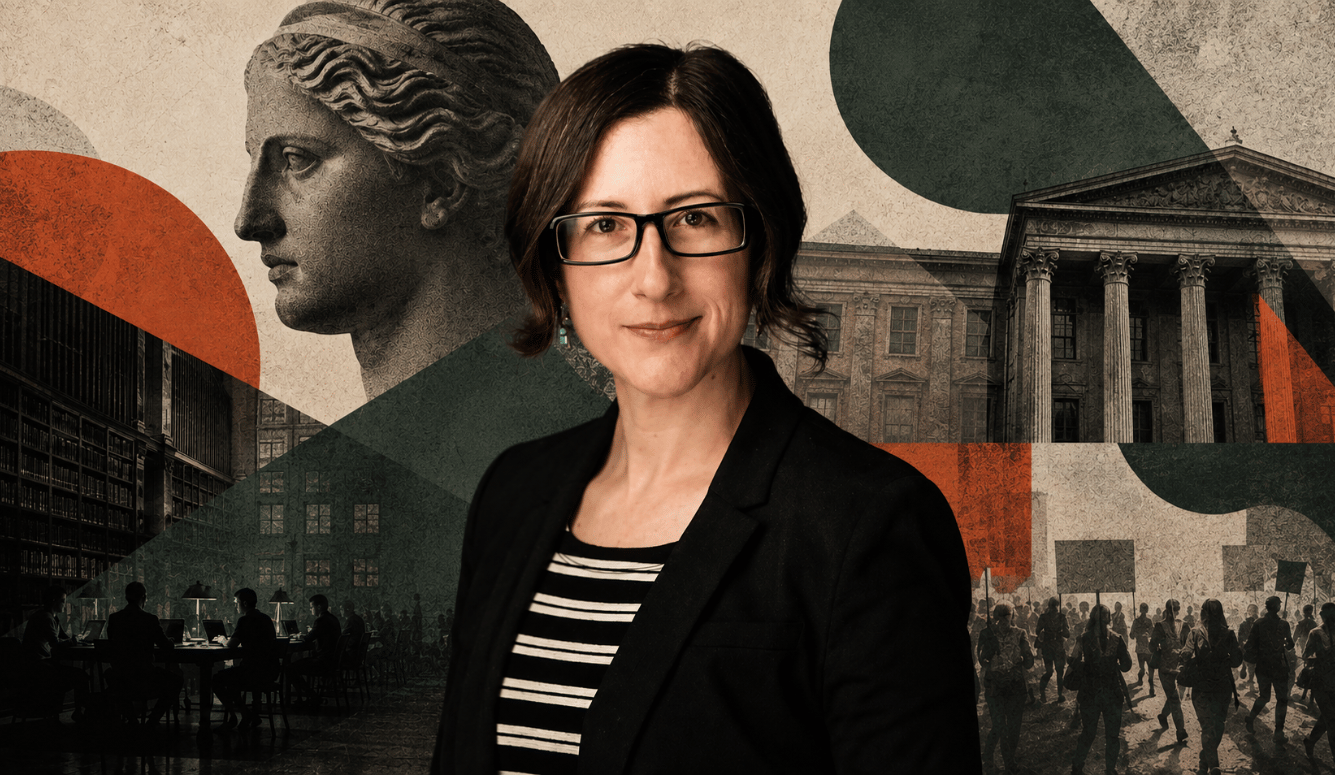

This week on the Quillette podcast, I’ll be speaking with Ashley Rubin, a professor at the University of Hawaii, and the co-author of a recently released report commissioned by Vanderbilt University and Washington University, titled Report on the State of Scholarship in the Humanities and the Humanistic Social Sciences.
Professor Rubin and her co-authors sound the alarm over recent illiberal trends that have taken over, to varying degrees, history, philosophy, literature, and the arts more generally, including Prof. Rubin’s own discipline, sociology.
The authors are careful to note that they don’t object to the progressive political slant of the humanities more generally. Rather, they object to the distortion of their academic disciplines—as they see it—by the use of explicitly ideological standards to judge the quality of new research.
 Paul Boghossian
By way of example: in a 2021 presidential address to the American Anthropological Association, UCLA anthropology professor Akhil Gupta declared that anthropology’s “political project is to challenge the culturally dominant commonsense of capitalist consumerism.”
The authors argue that anthropology has been particularly affected by the tendencies documented in their report. But sociology isn’t far behind. In 2024, the American Sociological Association announced that its annual meeting would be devoted to “Intersectional Solidarity: Building Communities of Hope, Justice, and Joy.”
The organisers explained that the theme reflected the idea of sociology as “a form of liberatory praxis: an effort not only to understand structural inequalities but to intervene in sociopolitical struggles.”
In coming months, the report’s authors, including Professor Rubin, will be preparing specialised reports about their specific fields. But the interview you’re about to hear is based on the general report they published on April 5.
Please enjoy my interview with Ashley Rubin, Associate Professor of Sociology at University of Hawaii, and the co-author of Report on the State of Scholarship in the Humanities and the Humanistic Social Sciences.
Transcript
JK: Professor Rubin, thank you for joining the Quillette Podcast.
Ashley Rubin: Thank you for having me.
JK: The examples given about how anthropology, among the other humanities, has been particularly radicalised, they principally come from proceedings of conferences run by, I think it’s called the American Anthropology Association, which for a variety of reasons, personality, ideology, is not always representative of the rank and file. Is it really the case that anthropology has… And I’m picking on anthropology because, well, you guys picked on it—that it’s really become that radicalised? Or is it just the 17 people who run this particular organisation, who are self-selected and highly motivated to take over acronym groups, that they are highly radicalised?
AR: Yeah, that’s a great question, and I’m gonna kind of shift it to sociology ’cause I don’t wanna speak out of turn about anthropology. But I’ll step back for a moment and say this is a general question for all of the fields. In some cases, the professional associations are more representative, in some cases they’re not.
AR: But there’s also another factor, which is these professional organisations are incredibly important for the field, because a lot of times they’re really part of the job market process. They, a lot of times, issue statements about what it means to be a scholar of a particular type. People look to them for kind of legitimising understandings.
AR: So in my field of sociology, there is kind of a series of presidential addresses that called for more activism and scholarship, that the purpose of sociology is to kind of do more social action, and to kind of shift some of the criteria for doing and evaluating research. That’s gonna have a message on the field, and that’s something that people are gonna look at, and some people are gonna act on that.
AR: So now to the question of representativeness. This is a big issue in sociology, and this is, like, a huge empirical question—is what happens in the American Sociological Association, is that representative of the field? Going into this project, I thought, okay, the ASA is very visible, but it’s not necessarily representative.
AR: But then I also got survey data, and that’s where you see more agreement than disagreement. So that’s one kind of answer to that question. The other one is, at least in my field of sociology, it’s kind of a big deal to go and present at the ASA. The talks themselves are peer-reviewed, so you have to get your paper accepted.
AR: You usually send a paper, or more recently a short version of your paper, and that gets reviewed by a member of the programme committee, who decides, is this good enough? Does it fit our topics? And if not, you don’t get to present. And so it’s kind of like this cherry that you’re reaching for because it’s rare.
AR: But increasingly in recent years, you’ll see a lot of panels that you apply for that are on narrow topics. And so if there’s nothing that your research fits, so if you do kind of politically neutral research on a topic that’s not very politically salient, but it is actually pretty important and kind of foundational to sociology historically, it’s gonna be really hard to get that work accepted at the programme.
AR: In some fields, there might be one out of eight panels where it’s relevant and you only have four slots on that panel.
JK: What kind of panels have been represented lately?
AR: There’s a lot of stuff on kind of inequality, injustice, a lot of things that are specifically about inequality and injustice relating to specific identity groups. So race and gender come up a lot. There’s less on class, for example. Increasingly stuff on criminal justice topics, which is actually my area. So there’s a lot of attention to kind of policing or this kind of informal sense of social control that people kind of label coercerality—just anything that’s kind of vaguely coercive.
JK: This is a tangent, but I was at a Heterodox Academy meeting. There was a sociologist who presented who… I think he was complaining that whenever a film director needs, like, a sort of a pencil neck bad guy type who’s an academic, they always make him a sociologist.
AR: Yeah.
JK: Is that a thing?
AR: Yeah, that goes back a few decades. There have been a couple of movies where people are always making fun of sociologists. I think we’ve had a reputation for a while.
Basically, going back to the beginning of sociology, we’ve always had this tension in the field between kind of like the social progress mindset. So there were, you know, progressive era reformers who were sociologists, and they saw sociology as a tool for reforming society according to their version of what a good society should be.
And there were also the people who were trying to be scientists, some of whom also had their own versions of what society should be, that were also problematic. So we’ve always had this reputation for being a little reformer, little activist. We also are kind of open to looking at the underdog, to taking seriously the perspective of the people below, and kind of saying like, “Hey, we’re gonna go talk to criminals and try to understand them and not demonise them. We wanna understand what their motivation is.” You can’t really understand crime if you don’t take seriously their perspective. That’s kind of given us this flavour of kind of being just a little weird, off, deviant. Deviance is one of our classic topics. And so I think that’s kind of contributed to this sense.
JK: In the current ideological environment, does it make it hard to have basic discussions about determinants of criminal behaviour?
AR: Yeah, I would say so. So one example of that is even just discussing what are the causes of crime. There’s been a shift where some people are not comfortable discussing long-standing variables as potentially explanations for crime.
Even if you give it kind of like, let’s call it a liberal gloss—so structural disadvantages for poor people, for Black people, structural racism, et cetera—you can make the argument that those things lead to what we call social disorganisation, or kind of neighbourhoods that are kind of predisposed to criminality because of the way that they’re set up.
AR: That’s kind of seen as even problematic to say, because you’re implying that Black people commit more crime or poor people commit more crime. Not every type of crime is the same, but for some categories you do see over-representations, and it’s kind of seen as problematic to talk about that. And so that makes even just having the conversation about, okay, so you wanna reform the criminal justice system—how do you do that? Some of the things that we need to talk about to do that well, we’re not really supposed to talk about, and there’s kind of pushback for doing that. So I would say that’s an example of something that’s been difficult. Or a different one is just the kind of blind spots in what we’re studying. So if we wanna understand certain outcomes, we have to look at all the variables. We have to look at the variables we don’t like.
To switch to a totally different topic, female-male wage disparities. You have to look at the explanations that you might not like. Like, maybe there’s something that women are doing that is causing the wage disparity, that it’s not just sexism or structural sexism or something.
There might be choices that women are making. Even if I don’t like that hypothesis, I still have to test it if I’m gonna understand what’s going on about this thing that maybe personally I see as a problem in society. But that mindset is increasingly difficult to have.
JK: A couple years ago, there was a study that showed that, I think, Nordic countries that had the most enlightened policies in regard to letting men and women use their time differently, those are the countries that actually had the greatest disparity in male-female wages, which suggests there’s a choice issue. But you’re saying that kind of thing, that’s not a good subject to get yourself on a panel at an acronyms academic conference?
AR: Or it’ll show up in peer review comments where, you know, “How dare you say this? This is not appropriate to say.”
JK: People write that? They write like the Greta Thunberg, “How dare you?” Like, it appears in the comments, really?
AR: I’m not sure if it would be literally, “How dare you?” I’m paraphrasing.
JK: But something like that, yeah.
AR: Yeah. I mean, I do see that more on social media. But yeah, there are versions of that in actual peer review comments of, you know, “This is offensive. This is an ignorant take,” and things like that. And so during the Q&A on conference presentations, somebody will say—this is a different example, but like, “Why are you using the word prisoner? Why are you not using the phrase person who is incarcerated?”
JK: If you’re giving a talk or doing a paper, you’re almost doing a search and replace on these words with people who ovulate and all this stuff, because you don’t want your presentation to be derailed by, in a crowd of 200 people, one person gets up and rants at you because you used the wrong word. Take me into your creative process when you’re writing an article. Is this front of mind?
AR: Yeah, I would say it is. I mean, okay, one of the very first articles I wrote as a tenure track professor was on this concept of prisoner resistance. This is a topic I absolutely love. But one of the things that I was realising is how little evidence we had that prisoner—
JK: What, sorry, what is prisoner resistance?
AR: Great question. This is part of the problem, where the definition itself is pretty expansive. So I would define it as reaction to power in a way that’s intended to produce some sort of larger change. Other people would define resistance as basically any violation of the rules, any act of agency, meaning any time you kind of decide something for yourself, but especially in a way that is combative with, like, the prison regime or the rules or kind of expectations or norms.
AR: So some examples that people have given of prisoner resistance include masturbation and suicide, whereas more classic examples are things like prison riots or protests.
JK: Sorry, I gotta stop you there. Masturbation is a political protest against what?
AR: Against, like, Victorian norms of sexuality. Or another example would be same-sex relations behind bars, because these are kind of challenging heteronormative ideas of society.
JK: Is it the case that people have cited onanistic behaviour as having a political dimension to it if the person is incarcerated?
AR: Yes.
JK: Okay, but that’s super weird.
AR: Yeah. So this is what I’m thinking. I’m a, you know, first-year professor, and I’m like—
JK: Have people published articles like that?
AR: Yeah, yeah.
JK: Disrupting the patriarchy by… Like, I mean, is that—like, this is in the literature?
AR: Yeah, yeah. My very first article on the tenure track talks about this. And so this is me kind of sitting there thinking—
JK: So, so you invented this thesis?
AR: No, no. Sorry, I’m not endorsing the idea that masturbation is resistance. Like, I’m open to the possibility that somebody is sitting there thinking, like, “I’m sticking it to the man,” while, you know—
JK: Seems an unlikely fantasy, but hey, look—it’s not impossible, right. But okay, but you’re saying you wrote about how expansive the—
AR: I wrote critically about this.
JK: Right. Okay.
AR: And in writing it I was pretty nervous, because I thought, “Oh my God, people are gonna think I’m conservative. They’re gonna think I’m not on board with the project of supporting prisoners and the resistance.” ’Cause a lot of the work in this area is kind of seen as this very pro-prisoner, pro-resistance approach of like, “Yeah, stick it to the prison administration!”
I take a more neutral view of our research, where kind of everybody should be able to read our work and appreciate it, and understand it. So I try to not take particular sides. This article, it became a series of articles, and I circulated it to a senior professor who happened to be a Marxist professor.
AR: Really well respected. I really, really like his research. And he responded and said that it was kind of like I had just thrown cold water on basically a bunch of scholarship, and he didn’t like the paper. And he was an editor of a journal.
JK: And last time I checked, Marx didn’t have anything to say about self-love. Wasn’t in Das Kapital or anything like that. But were you able to publish it?
AR: Yeah. So I did get it published. But I circulated it to other friends and I discussed this concern, and other people were like, “Yeah, people are gonna think you’re conservative if you write this.”
AR: And so I added in some additional text in the article to kind of pre-empt this idea that I am coming at this from an anti-prisoner perspective.
JK: The whole idea that you’re interested in the lives of prisoners, to my mind disqualifies the idea that you’re a conservative. You’re telling me that within the community of scholars, who are presumably self-selected as, you know, bleeding hearts who care about prisoners—and I mean that in a good sense—you’re seen as a Trump fan if you don’t see every personal act of sexual flamboyance, presumably in front of other people, which is how they got caught or why they were disciplined, as a disruptive revolutionary political gesture? That that makes you a conservative in your world?
AR: So not a Trump supporter, because this was like 2014, or 2013 and 2014.
JK: Okay. Well, that’s crazier that it was then. I mean, we all assume that this happened fifteen minutes ago, but you’re saying that even then this made you outré?
AR: Yeah. So I mean, it’s not everybody. And you know, some people are open to the argument, like some people who I—
JK: This guy was a journal editor. This guy wasn’t some rando. You’re saying he actually edited the journal of what, like prisoner reform or something? Like, I don’t know.
AR: A particular high-level journal on this topic. And you know, I actually thought it was a pretty liberal point, because I was saying we’re essentially replacing our own views with what we think the prisoners are doing, rather than listening to the prisoners themselves and letting them be the authors of their own actions.
AR: So if we’re looking at this with this assumption that if you break the rules, that’s necessarily resistance—what about prisoners who don’t break the rules, and then that in itself is actually kind of counter-cultural? So I use the example of a formerly incarcerated man who wrote just a huge number of books, and he wrote kind of autobiographically about his time, and he explained that just reading and writing was seen as a rule violation, and he didn’t see this as resistance.
He saw this as I’m just bettering myself. But in this kind of context, that sort of work would be seen as resistance because he got in trouble for it. And it’s like, wait, this doesn’t make any sense.
JK: In this report, you have these lettered headings. "The problem is not that scholars in these areas are significantly more liberal or progressive than the general public. The problem is not that many scholars are politically active. The problem is not that political considerations have broadened the focus of scholarship away from the Western high art canon. The problem is not that scholarship in these areas is often critical or oppositional—unless it’s from you, apparently."
The focus of the report is replacing traditional scholarly criteria for judging new work, replacing that with overtly political considerations. And I felt kind of like those first sections where it’s kind of like you had a big block of marble, and you chopped off this side, and you chopped off this side, and you chopped off this side, and there was, like, this thing in the middle. And is that what the project was?
AR: Yeah. Yeah.
JK: Did you get critiques from conservatives who are like, “Well, all these things that you say aren’t problems, those are problems”?
AR: Yes. A lot of people didn’t like the report.
JK: Did you please anybody?
AR: I did see a few Twitter threads that kind of, like, seriously engaged it and kind of went one by one in our points, and I thought it was nice engagement. Like, they were, I would say, generally supportive or sympathetic, even if sometimes they would have some quibbles, as people should. So I think there were a few people who did, but yeah, there were a lot of people who didn’t.
JK: Around the same time your report came out, I guess maybe a month or two earlier, two or three months maybe—and I think you know this—is that on this podcast I had on a Yale Law School professor who talked about a report put out by Yale about the sources of distrust in higher education.
Quillette
JK: It was broader. It wasn’t about the humanities. It was about higher education. I read that report. It wasn’t at all what I expected. It didn’t talk about ideology. It talked about the top-heavy nature of administration, the high tuitions, how students are selected. There was a huge focus on grade inflation.
JK: The two reports side by side actually make for very interesting companions. Were you aware of the Yale mission? Because the two reports really do read like companion pieces.
AR: Yeah, we had no idea about the Yale report, or if anyone on the commission knew about it—
JK: Have you read it?
AR: I have, yes.
JK: It’s good, huh?
AR: Yeah. No, it’s great. It’s very clear. It’s very expansive. I’ve also read a bunch of commentaries on it, including criticisms of it, even though I think it’s actually really good. But I think just weighing in on this topic, it doesn’t even matter what your research question is. It’s just—some people are gonna be mad about it.
JK: Do you agree with the concerns about grade inflation?
AR: Yes. Absolutely.
JK: Do you know any academics who don’t agree with it? I get the sense they were saying out loud what a lot of people believe, and I think since the time that report came out, I think Harvard has actually mandated a top-down thing, essentially a curve, right, where only a certain number of students can get As. Do you agree with that approach?
AR: I have some preferences about, I think, better ways to fix the grade inflation, but they’re, I think, too complicated and too difficult to… I think they’re just never gonna get adopted ’cause they’re just too complicated to explain.
JK: “I have great ideas, but you wouldn’t understand them.”
AR: It’s basically a Bayesian statistical analysis. So you’re never gonna explain it to the average undergrad in a non-statistical field, and even in a lot of statistical fields they’re still not gonna understand it.
JK: You gotta be careful with that coercive stuff–you might get displays of resistance in your class! When I went down the list of the 10 people, I think it’s 10 people who wrote this report— I mean, I realise you’re kind of going off into breakout rooms to write your subject matter specific reports. I’m impressed that 10 academics could have cooperated so constructively. I guess it’s because you’re all in different places, and you never actually had to meet. I thought it was interesting that they’re, like, not well-known cultural warriors.
AR: Within academia, some people would disagree with your characterisation. And they would see some of the names on the list as not necessarily culture warriors, but I guess by their standards they might see it that way. Like, I think a lot of people think that I’m a cultural warrior, which—
JK: Within your field?
AR: Yeah, within my field. And you know, that’s kind of annoying ’cause it’s like I really just care about, you know, I wanna do research, I wanna trust the research I’m reading. I can’t do the research I wanna do if the other research in my field is bad.
And, you know, many different definitions of bad—not all of it has to be about political. There are a lot of challenges we’re dealing with. But just to be fair, I think there are a lot of people who would say that about me and about some of the other people on the commission.
And now just the fact that we’re on the commission I think makes us, in their minds, culture warriors, so.
JK: Well, they’re gonna have to set up their own commission.
AR: Yeah. Go for it! A scholarly exchange, that’s what we’re supposed to do.
JK: One of the most important things anyone ever told me is—I mean, I was writing an article about ideological trends in academia. I think it was from Trent University here in Canada. He said, “Jon, the thing you have to know is that 95% of universities’ professors just wanna study their thing.” Like, if they’re studying the three-eyed newt, all they wanna do… They don’t care about, like, whether there’s not enough purple people studying the three-eyed newt or, like, the gender stuff.
Like, they wanna be left alone, and often what we think of as ideological skewing and social panics in these fields, there’s, like, three people leading the charge, and, like, 100 other people who just wanna be left alone and will sign onto anything, and shut up about things, and kind of obey all the rules if it just means they could spend Monday to Friday studying the three-eyed newt.
Do you think that’s a fair characterisation, that some of the radicalism that you talk about is really driven by a small group of people? It isn’t like a mass conscription phenomenon.
AR: One of the big takeaways from the report is the fields are heterogeneous. Like, both within and across the fields, they’re heterogeneous, and this is a huge theme in my own report on sociology.
So I think that’s really important to remember. Like, no group is a monolith, and that’s true of academics. It’s true of any particular discipline. One of the challenges of even answering this question is it really depends on which metric you’re using. It really depends on which piece you wanna talk about.
So I would say it’s no longer clear to me that 90% of academics really do just wanna do their research. I think that’s increasingly not true.
JK: Really? Okay.
AR: Yeah, I think that’s an overestimate. But I do think it varies, and there’s also… They’re kind of different groups. So I do think there’s the group that just wants to be left alone, and that’s just like, “I don’t care. I’m not gonna vote in a presidential election for this professional association. I’m not gonna sign on to this boycott. I don’t care about these things. I just wanna do my work.” Increasingly, those people have just completely left our professional associations, because that is what the professional associations are becoming.
And especially if you’re, like, high status enough, you’re already at a good university, you can get away with that because you can go to small, little workshops on particular topics, and you can exchange your work with other good people who also just wanna do their research. So some people can do that, and it’s great.
You know, if you happen to be at a university where you don’t have very much intellectual stimulation, those national conferences are really important. So anyway, so there’s definitely a group of people who just wanna be left alone, who don’t care about politics. Maybe they do politics on the side, but it’s not part of their research.
There’s also a small, very vocal, very powerful group of, let’s call them activists. Some of them do self-identify as activists. They’re activist scholars, scholar activists. People have their own labels. A lot of people have problems with the word activist, including activists outside of academia kind of think the label for academics is kind of stupid.
But that is a small group, and it’s very visible, and so it can really kind of shift the perception of the field. And it can also, in my view, cause a lot of damage to the field, especially when they’re incredibly organised. But I also don’t think the group is as small as we think it is.
There might be some, like, ringleaders, but, you know, as an example right now, the upcoming ASA meeting is gonna be in New York in just a couple of weeks, and there’s a large boycott of the association. And I forget what the last count was. I think it was more than 1,000 sociologists have agreed—
JK: Because you’re there? [laughs]
AR: Oh, no. No, this is not about me!
JK: No, no, I know it’s not about you.
AR: Yeah. Oh, sorry. I guess I should explain the context. There was a petition that more than, I think, 400 sociologists signed asking the ASA to agree to boycott Israeli universities.
Maarten Boudry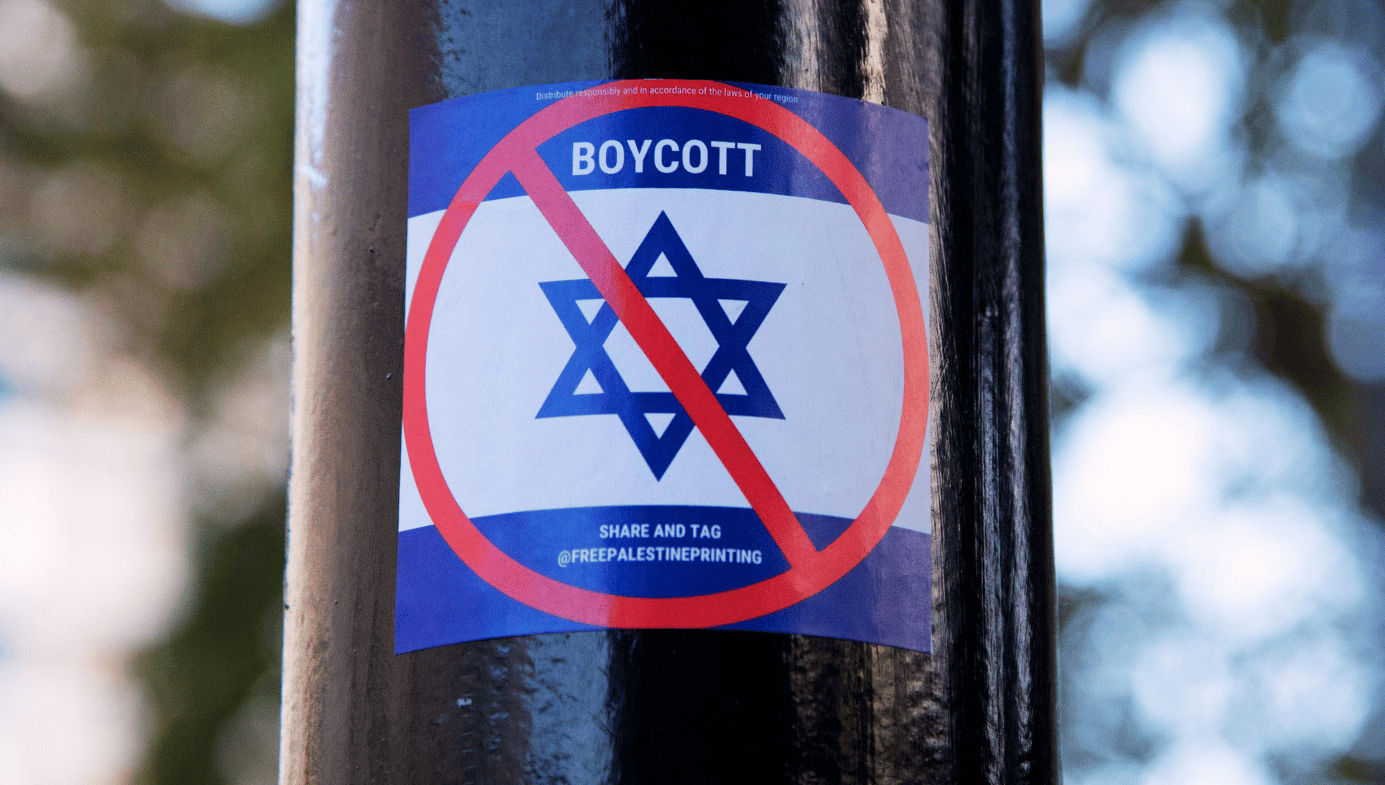
JK: Ugh. That thing, that thing again. What is it with these people? Like, honestly, there’s a lot of crap going on in the world, and it’s just, it’s always about… Anyway, sorry.
AR: Yeah. Why, why is Israel special, right? Like, there are other problems. Yeah.
JK: China is. Okay, anyway, go on.
AR: And also, like, why are we boycotting academic institutions? Old AAUP policy was you don’t do that, but they changed their mind lately, and now it’s kind of open season on places you don’t like, and so you can boycott people and places now.
JK: So people aren’t coming to the meeting because the organisers are not sufficiently anti-Israel?
AR: Yeah. They claim that they are not democratic because, despite the petition, despite having more than 3% of the ASA members, by their read, it should have gone on the ballot.
But the ASA leadership said it’s not going on the ballot ’cause, per our bylaws, this would be not eligible to go on the ballot—not because of the 3%, but because this is actually an operational decision. If it was just you wanna do yet another statement about how Israel is terrible, that would go on the ballot.
We did that a few years ago, and it passed. But if you wanna do that again, fine, it would go on the ballot. But this is about business decisions. This is about, for example, Israeli institutions can’t advertise jobs on our job bank. That’s a business decision. And so the leadership said no, and they say that they consulted with lawyers, who also said, “No, you can’t do this.”
And that decision was not well-received, and so for a variety of reasons, this kind of boycott emerged. And so now a lot of people are agreeing not to go to the conference, or if they do go to the conference, not to stay at the conference hotel, to kind of financially screw over the association.
JK: They really know how to stick it to the man, don’t they? I mean, it’s like those prisoners got nothing on these guys.
AR: Yeah. And they have, like, an alternative conference that they’re going to at a university in the city.
JK: But isn’t that good? Like, shouldn’t they like to stay at your alternative conference? I guess this was my question—
AR: That is one perspective!
JK: You know what? If I went to a conference, I don’t want these people poncing around in their keffiyehs taking photos of each other with raised fists and hashtags about resistance and whatnot. The way this kind of dispute is often settled in other industries, if the northbound axes and the southbound axes can’t get along, they create two different organisations.
Maybe there should be more than one sociology—one for kind of people who just wanna do that crap all the time, and another for just normal people who wanna do sociology stuff. And maybe another one for, like, crazy conservatives who wanna talk about Trumpian sociology or whatnot. Like, is part of the problem here that there’s a conceit that the same umbrella group can represent all scholars in the field just because they have the same word in their professorial designation?
You know, you’re all professors of sociology or criminology or whatnot. Things that are politicised have political parties. That’s the nature of politics.
And if these people… Sorry, I say these people. It’s not like they’re a special species of human being. But if the people who overtly want to politicise the humanities, and which is the subject of your report, if they’re serious about their mission and that they want it to be like politics—well, guess what? Politics has different parties. You’re free to form a party, but that means not everyone’s gonna go to your conference. Some people are gonna go to, like, conferences where we actually talk about the subject matter.
AR: I think that might be the future. And just to clarify, there already are multiple sociology associations.
JK: I know, but you told me it’s a big deal to be at the—that’s a career maker, to give a speech at the… so presumably there is one, like, above the rest, right?
AR: Yeah. But there’s another one, and it used to be that if you thought the ASA was too conservative, you would go to the other one. And that was still a choice, but it’s like a signalling move, and it’s respected enough among kind of left-leaning sociologists, for example, that if you go to the Society for the Study of Social Problems, that would also be seen as okay.
JK: Can you go to both? Like, do you have to get your hand stamped?
AR: You can go to both. They tend to be held—oh, I don’t know if this is still true, but they used to be held in, like, the same place.
JK: So you had to choose.
AR: They would be, like, a few days apart, but I think they kind of overlapped. And then there are other, like, there are affinity groups. Like, there’s a women sociologist group. There’s now a Sociologists for Palestine group. So there are a lot of affinity groups that you can go to, and there’s now a Heterodox Academy sociology group, so—
JK: There’s my raised fist. There’s my raised fist.
AR: So there are these different groups. In terms of the future, and there’s also a new group called Sociological Science. I think that is kind of the way that we’re going. If you take a stance that sociology should be about the scientific study of society, and that’s seen as problematic and inherently political because you’ve just endorsed science, and science itself is this inherently racist, eugenicist movement that has been used in the past for bad things, and we can’t possibly use science for those reasons or for other reasons—we kind of have a problem.
JK: Right.
AR: I mean, I kind of think about this as, like, this Durkheimian moment. So Durkheim has this great discussion about what he calls organic societies and mechanical societies.
So mechanical societies are these very homogenous societies. They tend to be very religious, and they tend to agree on a lot of things. And if you don’t agree on certain things, that really makes you an outlier and kind of subject to punishment. The solidarity for the society is around punishing those outliers, the people who violate the deeply held values.
Whereas organic societies tend to be diverse societies. They tend to kind of have shifted their notion of the sacred from religion or from a monarch to the individual rights themselves. So human rights becomes really important. And the understanding is, if this diverse society is going to exist, you have to agree to live and let live.
You have to agree on things like free speech or freedom of religion or different political views, because if you don’t, society is just gonna collapse. If you say, “I’m not gonna go to that grocery store because I don’t like your political views,” well, you’re gonna start to have a kind of dysfunctional society where you segregate by politics or something.
And if you do that, that way madness lies, because essentially the narcissism of small differences. And you keep self-isolating further and further until you’re a society of one. So there’s kind of this general wisdom in live and let live and saying, “Look, you and I can disagree about these things, but there’s one fundamental thing we agree on—our right to disagree.”
If we’re gonna have a conversation, we have to kind of agree to the terms of the debate. So there’s just certain baseline things we have to agree on, and if professional associations, or disciplines more generally, if we can’t agree to certain fundamental things, then it’s gonna be difficult to play together.
Like, if I don’t know the rules by which my article’s gonna be reviewed when it goes out for peer review, I don’t know how to prepare my article. If the norms are rapidly changing and it depends on whom you ask—I mean, to some extent that’s always true, but when it’s really volatile and it’s changing week over week or year over year, that becomes a really difficult time.
I don’t know how to advise my students under those circumstances. So I think that’s kind of the problem that we’re facing—is it’s not just that we’re gonna kind of split off, it’s if we keep splitting off, we’re not a discipline anymore.
JK: I know I am not the first person to point out the irony of the fact that the progressive left is extremely focused on diversity and in the process created a Durkheimian totalitarian consciousness to enforce that. That’s been pointed out, right? I’m not the first guy.
AR: You’re definitely not the first person. It’s not something that goes over well when you point it out, though. Like one of my big pet peeves is everybody wants to talk about authoritarianism. But really they mean, you know, Trump authoritarianism.
They mean conservative or Republican authoritarianism. They mean government authoritarianism. And you know, to be fair, government authoritarianism is really, really bad.
JK: Sure, sure.
AR: But they don’t seem to notice authoritarianism when it comes from each other, when we try to censor each other, when we go after each other because we don’t like our political views.
You know, there are a couple of high-profile cases where people’s tenure and promotion cases have been challenged for political reasons. And people don’t seem to recognise that as authoritarianism, and they’ll talk all about the importance of academic freedom, but then not acknowledge it when academic freedom is being attacked from within.
And so that to me is a really big irony. Like if we’re really gonna say we’re anti-authoritarianism, we should probably be consistently anti-authoritarian and not just when the government does it.
JK: Yeah. You know, the call is coming from inside the building. Ashley Rubin is Associate Professor of Sociology at University of Hawai'i, also the only podcast guest I’ve ever had who used Durkheimian and Bayesian in the same episode, so. If you want to read the report that Professor Rubin contributed to, it’s called State of Scholarship in the Humanities and the Humanistic Social Sciences.
It was published on April 5th, and an excerpt of it can be read at Quillette under the headline “A Crisis in the Humanities”, under the byline of Paul Boghossian, one of the colleagues with whom Professor Rubin collaborated in preparing the report. Thank you again. It was a pleasure.
AR: Thank you so much.
Quillette invites thoughtful responses to its essays.
Selected responses are published once per week as part of a curated Letters to the Editor feature. If selected, letters appear under the contributor’s real name and may be edited for clarity and length.
To submit a letter for consideration, please email [email protected].
Keep reading
How to Suppress Men’s Writing
Back to the Dark Ages

Prison or Peer Review
France’s Imaginary Austerity

The Limits of Perfectionism