Politics
Imperfect Witness
The testimony of Epstein accuser Virginia Giuffre was seldom examined with the scrutiny that the gravity of her allegations deserved.

I. Disclosure and Disgrace
What we think we know about the Jeffrey Epstein scandal is mired in misapprehension and misinformation. A complicated story involving complex personalities has been oversimplified into straightforward questions of guilt and innocence involving a litany of salacious claims and unsupported innuendo about heinous acts and perpetrators. Epstein was a wealthy and well-connected financier who indisputably paid underage girls for massages and sex. What remains unproven is that he also pimped and trafficked these girls to wealthy clients, who were then made vulnerable to blackmail by the very man who catered to their sexual whims. MAGA populists are convinced that law enforcement and the US Justice Department have been covering up a list of Epstein’s clientele, disclosure of which will finally expose a giant child molestation ring run by and for depraved elites. Donald Trump’s enemies, meanwhile, fantasise that the US president will be implicated in Epstein’s sexual crimes, and that this will be enough to drive him from office.
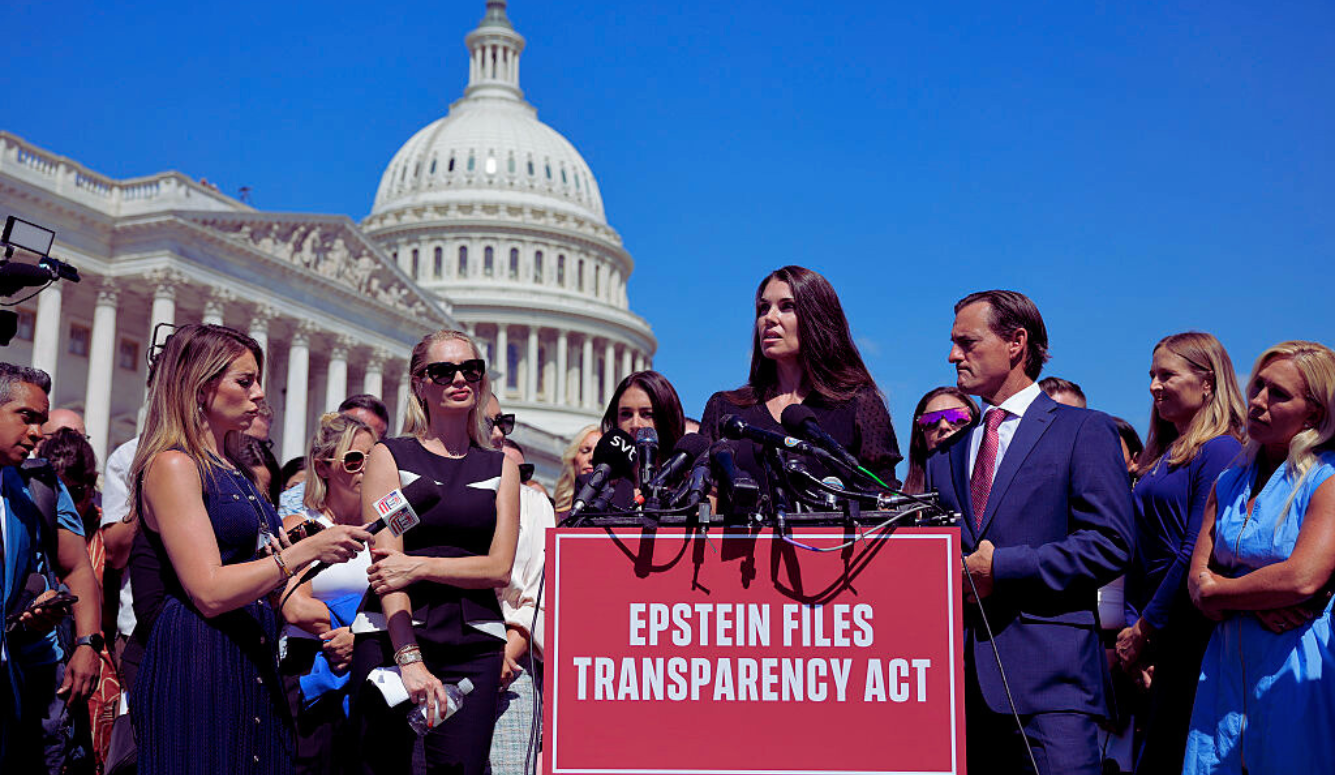
So when the first batch of previously unreleased Epstein files was finally released by Justice Department in late 2025, pursuant to the terms of the Epstein Files Transparency Act, the public reaction was immediate and visceral. Phone screens filled with the faces of the wealthy and the powerful, and social media filled with recrimination. But as the dust settled, a less sensational truth became apparent: a number of famous people were embarrassed by their social proximity and congenial correspondence with Epstein, but the documents disclosed almost nothing criminal. In July 2025, the Department of Justice and FBI said they had found no client list, no credible evidence of blackmail, and no basis to investigate uncharged third parties.
Bradley Edwards—one of the most prominent lawyers representing Epstein’s accusers—concurred, telling ABC in July: “Jeffrey Epstein was the pimp and the john. He was his own No. 1 client. Nearly all of the exploitation and abuse of all of the women was intended to benefit only Jeffrey Epstein and Jeffrey Epstein’s sexual desires.” The ABC report continued:
Edwards describes the enigmatic Epstein as living, essentially, two separate lives: one in which he was sexually abusing women and girls “on a daily basis,” and another in which he associated with politicians, royalty, and titans of business, academia, and science.
“For the most part, those two worlds did not overlap. And where they overlapped, in the instances they overlapped, it seems to be a very small percentage,” Edwards said. “There were occasions where a select few of these men engaged in sexual acts with a select few of the girls that Jeffrey Epstein was exploiting or abusing—primarily girls who were over the age of 18.”
In February 2026, the Associated Press reported that “while investigators collected ample proof that Epstein sexually abused underage girls, they found scant evidence the well-connected financier led a sex trafficking ring serving powerful men, an Associated Press review of internal Justice Department records shows.”
That did not prevent a number of reputations from being destroyed and eagerly pitchforked onto the social-media pyre. Some of these people had merely emailed Epstein after his conviction. Others socialised with him or worked for institutions that accepted his financial largesse. All deny any involvement in his sexual malfeasance, and no evidence has been found to suggest otherwise. But that has not been sufficient to rescue the accused from public disgrace. Casey Wasserman, chairman of the 2028 Los Angeles Olympics, survived calls for his cancellation after it emerged that he had flirtatiously emailed Epstein’s former girlfriend Ghislaine Maxwell in 2003, well over a decade before she was convicted of sex trafficking. Others have already lost lucrative and prominent positions after their links to Epstein were exposed by the release of email correspondence held by the US government:
- Børge Brende, the president of the World Economic Forum, announced his resignation in February. According to the BBC, he “acknowledged he dined with Epstein three times between 2018 and 2019 and communicated with him by email and text, but said he was ‘completely unaware’ of his past criminal activity.”
- Larry Summers stepped down from his professorship at Harvard because he had engaged in friendly email correspondence with Epstein until 2019. “Contact only ended,” the Guardian reported, “shortly before Epstein was arrested in July of that same year.”
- Miroslav Lajčák, Slovakia’s national security advisor, resigned after it was revealed that he’d exchanged texts and emails with Epstein in 2017 and 2018.
- French political heavyweight Jack Lang resigned from his role at the Arab World Institute after the Epstein files “revealed years of correspondence and financial links between Lang and Epstein.” His daughter Caroline had resigned days earlier, walking away from her leadership position at a major producers’ organisation. Both deny any wrongdoing.
- French arbitrator Matthieu de Boisséson was suspended after the Epstein files revealed social and business links between the two men.
- Norwegian diplomat Mona Juul met the same fate. Joanna Rubinstein resigned from her role with Sverige för UNHCR.
- British Prime Minister Keir Starmer’s chief of staff, Morgan McSweeney, also resigned because he’d helped Peter Mandelson land a job in government (Mandelson, in turn, stepped away from the House of Lords and was arrested in February 2026 over allegations he’d shared “market-moving” government information with Epstein).
The most prominently disgraced figure of all is Andrew Mountbatten-Windsor, the former Duke of York, who was stripped of his royal titles on 30 October 2025. Andrew was dramatically arrested in February 2026 following allegations that he shared sensitive government material with Epstein during his tenure as trade envoy. But the scandal that precipitated his downfall began over a decade ago with the publication of an unsubstantiated sex story.
 Lawrence M. Krauss
The narrator of that story was the late Virginia Giuffre, who claimed that she’d been trafficked to Andrew by Epstein when she was a minor. The germ of that claim first appeared in 2011 in the UK’s Mail on Sunday, which also published a 2001 photograph of Andrew with his arm around Giuffre’s waist. That image placed Andrew’s reputation in a coffin. Giuffre’s subsequent media interviews and civil lawsuit secured the lid. And her posthumous memoir, Nobody’s Girl, published on 21 October 2025, shovelled on the earth. Andrew’s life as a titled royal expired days after the book’s release.
Giuffre remains the most famous of Epstein’s accusers, and a symbol of the entire scandal—a young innocent defiled by an obscenely privileged and powerful man. Her florid allegations mortified Britain’s royal family, popularised the idea of a sinister “client list,” and received acres of news coverage on both sides of the Atlantic. But few journalists have systematically fact-checked her account or thought to question her integrity and reliability as a witness. This absence of scrutiny is partly the result of a reluctance to interrogate those who describe themselves as victims and survivors of male sexual predation. But it is also because almost nobody cares about a null hypothesis.