Politics
Going Home to Vote
Jewish visibility has become increasingly precarious in recent years. I have a strong sense that Jews may need Israel as a refuge in the not-too-distant future.

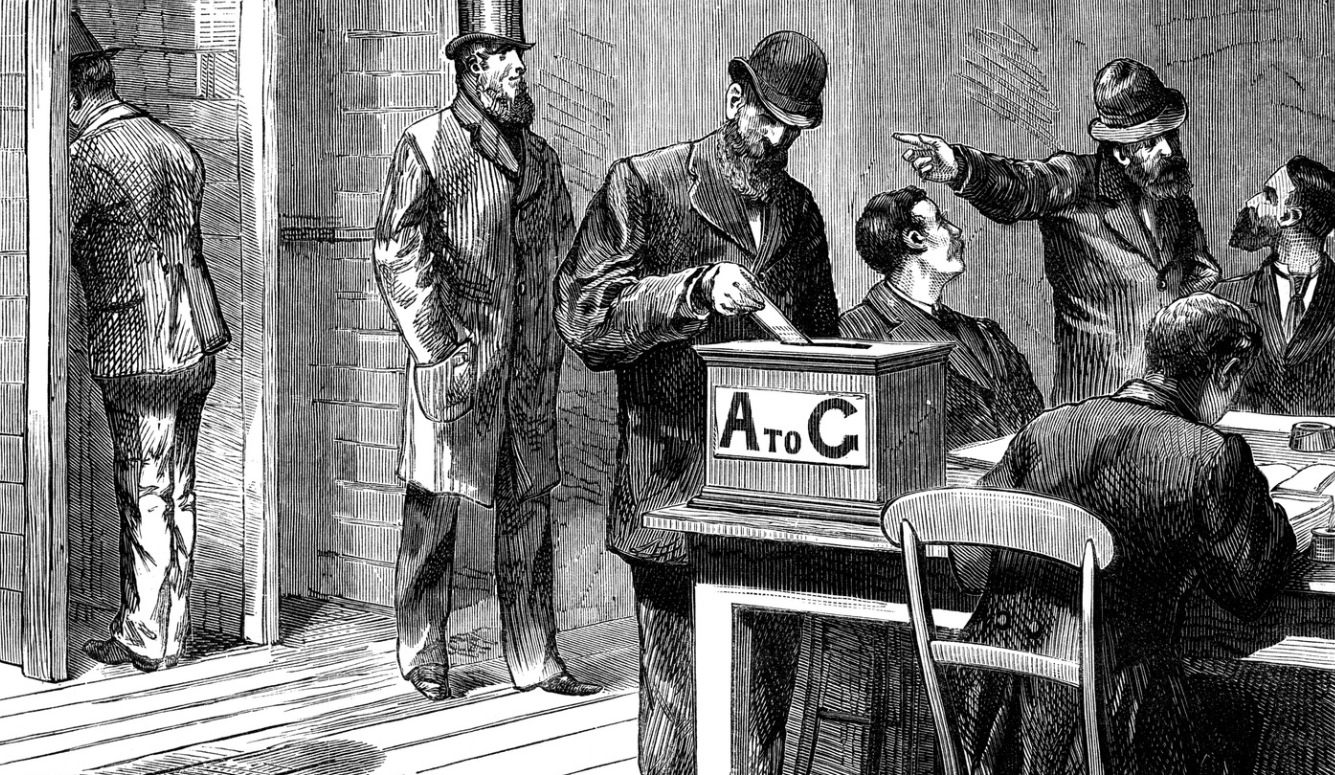
“Rehov Antokolsky 4, Poll 277.3, Tel Aviv.” The WhatsApp election service of the Israeli Ministry of the Interior quickly printed out my voting details when I entered my ID number and date of birth, just as my friend and neighbour in North London had assured me that it would. This was according to the last address that I had registered as my residence. My circle of Israeli expat friends and colleagues had been scrambling to determine our eligibility to participate in the 27 October elections, until the neighbour had discovered the WhatsApp number. It was quickly passed through our informal network.
Ever since the election was called, I had felt the need to return home to vote in what appeared to be a historic event. The last time that I had voted in Israel was in 1988, when we were living in Haifa, and I was teaching at the university there. I had worked for Shulamit Aloni’s political party Ratz, which went on to become a founding partner in the left-wing party Meretz. Sitting with Druze, Arab, and Jewish scrutineers from parties across the political spectrum in the polling station in Haifa had been an interesting experience of Haifa’s multicultural landscape. The atmosphere was good-humoured, with the scrutineers sharing different styles of food from their respective families. The narrow victory of Yitzchak Shamir’s Likud Party had been a big disappointment for everyone there, except for the Likud representative, who was alone in greeting the results with quiet delight.
The following year, the financial strain of supporting a growing young family led us to leave Haifa, which we loved deeply, for a research-staff position in the AI department of IBM, in Westchester, New York. In late 1993, I accepted a faculty appointment at one of the colleges of the University of London, and we made our final transatlantic move, this time to England, with additional children in tow. One of the attractions of the place was its relative proximity to Israel, where a large part of our family remained, and to which our older son eventually returned.
In the intervening years, we had followed successive Israeli elections from afar with hope, despair, and frustration, depending on the results. This time was different. After Hamas’s terrorist attack on 7 October 2023 and the devastating wars that followed, the political life of the country and its international standing had been transformed. The lethal threat posed by jihadi terror proxies and their Iranian sponsors had been entirely misunderstood by the country’s political and military leadership. Netanyahu’s determination to avoid any personal responsibility for his role in the disaster was fully consistent with his lengthy career of cynicism and personal self-advancement at all costs. His assault on the legal foundations of Israel’s democratic institutions during a time of national crisis was shamelessly relentless. His indulgence of ultra-Orthodox extortion imposed the full burden of military service and productive economic activity on a shrinking demographic of secular and national religious parts of the population. His patronage of Ben Gvir’s sponsorship of far-Right settler pogroms against Palestinians in the West Bank threatened to provoke a new Intifada, and it undermined what little remained of our international standing. The continuation of this dysfunctional coalition of extremists, loudmouth incompetents, and self-declared racists threatened the basic security of the country, and the viability of its democracy. Watching the election from a distance was not an option. So I joined the tens of thousands (around 67,000) expat Israelis who flew home to vote.