Praising the ‘Praxis’ of Mass Murder
When a Canadian publicly-funded literary journal announced a special edition dedicated to extolling Palestinian terrorism, some assumed it was a bad joke. Now it’s been published, and no one is laughing.

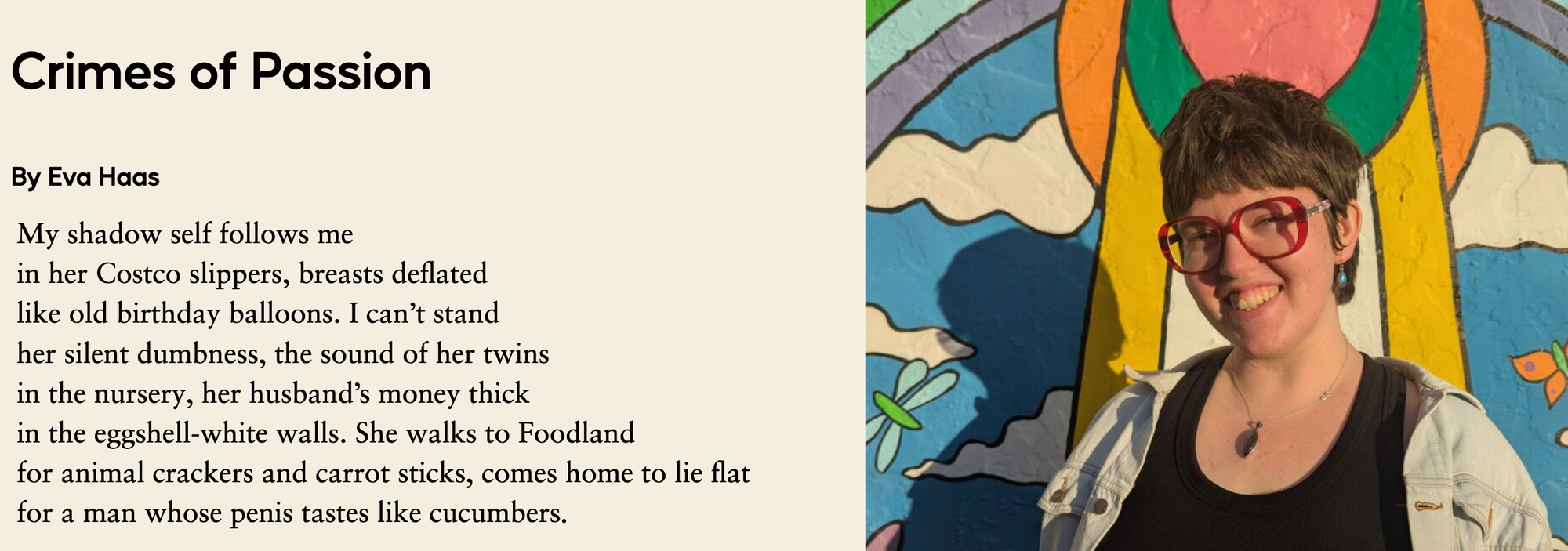
Until recently, The Ex-Puritan offered exactly what one might expect from a Canadian publicly funded online literary journal. Last winter’s edition, for instance, included poems about a bad landlord and loveless sex (“She walks to Foodland for animal crackers and carrot sticks, comes home to lie flat for a man whose penis tastes like cucumbers”). There was also a review of a gay coming-of-age novel, and an arty essay about eating fast food on road trips while being “queer.” If you wanted a time-capsule specimen of Canada’s taxpayer-subsidised literary periodicals, this would do as well as any.
I’d guess that most readers, including most Canadian readers, have never heard of The Ex-Puritan. The main reason it’s in the news is that famed writer and filmmaker David Bezmozgis wrote a newspaper column back in June, pointing out that the journal was planning a special edition—titled “Resistance & Hope,” aimed at justifying Palestinian terrorism—guest-edited by a woman named Bahar Orang. As Bezmozgis wrote:
Framing the issue, which she hopes will be ‘a creative folio of political education that consolidates “Resistance” as armed struggle against US-led imperialism,’ Ms. Orang writes that she deplores ‘zionist demand[s] to “condemn” this group or that group,’ and wishes ‘to affirm [that] revolutionary violence…is a historically accurate, materially grounded, and ethically sound position to hold.’
The fact that The Ex-Puritan hews to an anti-Israeli position in general terms is hardly surprising: this is the expected ideological baseline for members of any Canadian arts organisation. Last winter’s edition of The Ex-Puritan, for instance, featured an interview with a Palestinian-American poet, who exhorted each reader “to recommit yourself to the liberation of the Palestinian people each day.” In keeping with normal practice, the poet’s language is gauzy and ambiguous, a long-winded version of shouting “from the river to the sea.”
By contrast, the “Resistance & Hope” edition was promoted as a digest for writing that explicitly defends “armed resistance”—acts that most of us would call terrorism—as a means to promote Palestinian political objectives. Indeed, Orang writes of being exasperated by “a recent book launch in Toronto about a book on Palestine,” where the writer “spoke loosely about writing as resistance, theory as resistance, teaching as resistance.” Emphasising these “symbolic performances of solidarity,” she worries, comes with the implicit “admission [that] armed resistance must be criminalized, censored, shamed, and stripped of political legitimacy.”
Orang wants her audience to reject “the demand to qualify any discussion of Palestinian resistance with a condemnation of certain groups.” By “certain groups” she evidently means Hamas, which Canada has (properly) classified as a terrorist organisation since 2002 (this being the same year that a Hamas suicide bomber murdered 30 Israelis at a Passover Seder).
Naturally, the editors instruct us that the project was conceived as an outgrowth of their staunch commitment to “anti-racism and decolonization.”
(Quillette sought comment from the editors of the journal, and from each of the contributing authors and poets cited below, in regard to the issues discussed in this article. None responded. If any response is supplied, this article will be updated accordingly.)
When this project was first announced on the Ex-Puritan website in June, some suspected it might be a dark joke, or perhaps a macabre piece of performance art. The magazine’s former publisher, Kelly Baron, resigned three years ago, following Hamas’s 7 October 2023 terrorist attacks—citing a colleague’s habit of signal-boosting antisemitic conspiracy theories to the effect that Israel was killing Gazans to harvest their skin. Was “Resistance & Hope” part of some kind of follow-up stunt?
The wait is now over: “Resistance & Hope” has been posted to the Ex-Puritan site, and it contains no hint of irony, humour, or postmodern detachment. The editors delivered what they promised: a whole edition that effectively defends—and, in some cases, even seems to celebrate—the terroristic slaughter of Israel’s residents.
 Hal Niedzviecki
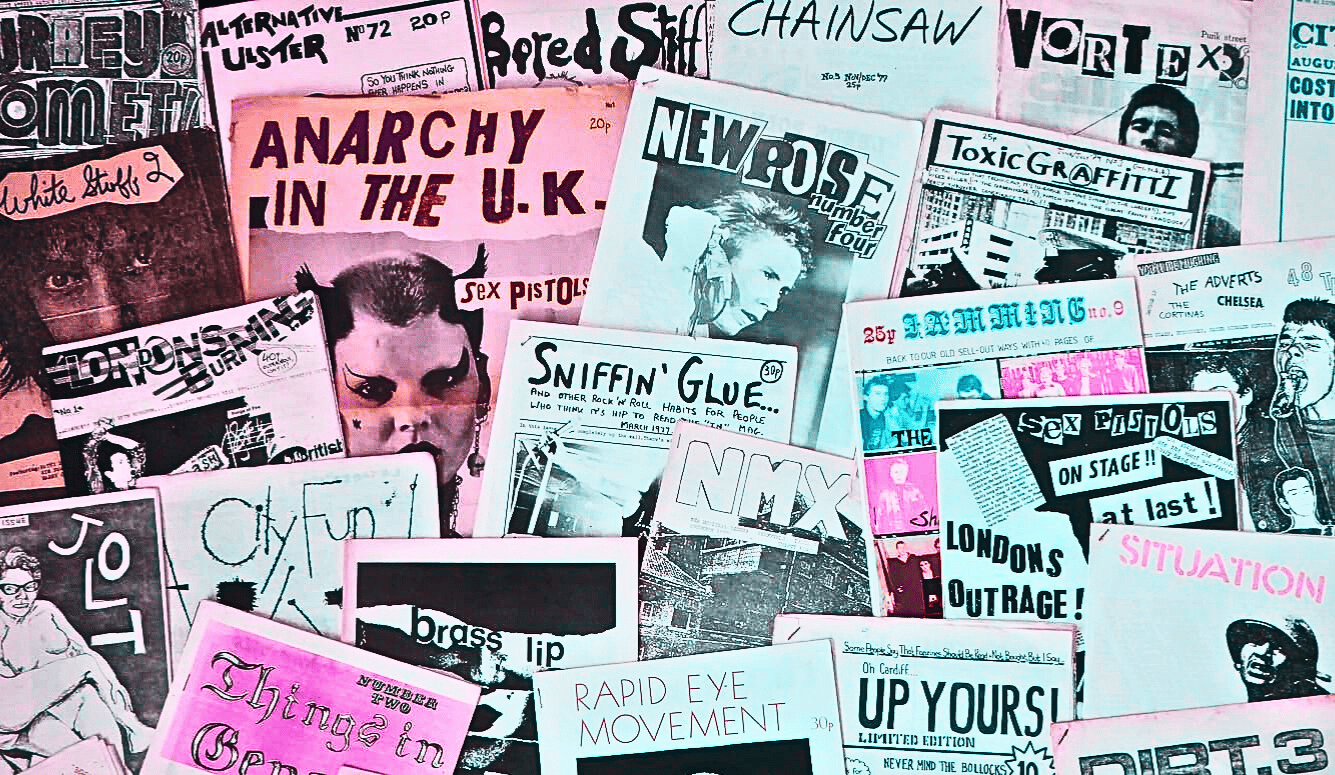
Like others, I come to the conservative-culture-critic beat as an exile from the left, having previously been best known as the founder, editor, and publisher of Broken Pencil. That now-defunct periodical was (to my knowledge) the world’s only magazine devoted to independent and underground zine publishing. The contributors were deeply steeped in counterculture. During my long tenure, I saw (and published) pretty much everything Canada’s nascent writing scene had to offer. Much of it, the bulk in fact, was content advancing left-leaning ideas: anti-capitalism, anti-racism, and anti-colonialism, often in the form of screeds against the heteronormative patriarchy, plastics, dating, religion, Marvel movies, carnivores, logging, cars, office life, and much else besides.
I thought I’d seen it all. But I’ve never seen anything quite like this.