Politics
Religion Can’t Save Democracy
If Shadi Hamid and Matthew Kaemingk want a productive dialogue with secularists, they should extend the same charity that they expect.
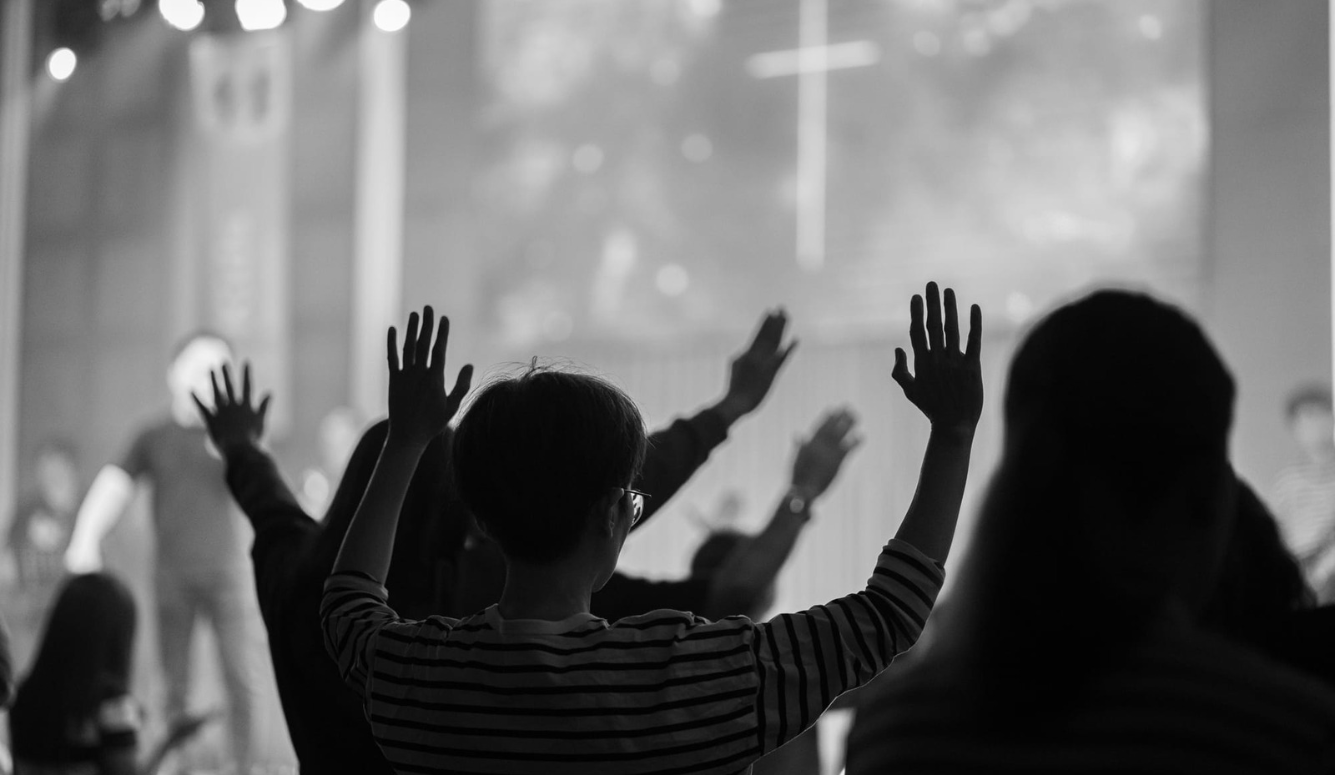
A review of Can Religion Save Democracy? How More Faith—Not Less—Can Heal Our Public Life by Matthew Kaemingk and Shadi Hamid; 224 pages; Brazos Press (October 2026)
I.
While there is some evidence that the decline in religiosity is stabilising or perhaps even reversing across the West, the secularisation of the world’s freest and most advanced societies remains one of the great sociological stories of our time. “God is dead. God remains dead,” Friedrich Nietzsche declared in 1882. “And we have killed him. How shall we comfort ourselves, the murderers of all murderers?” Nietzsche speculated about the “festivals of atonement” and “sacred games” that would have to be created to fill the void, and these words are quoted by Matthew Kaemingk and Shadi Hamid in Can Religion Save Democracy? because they capture a central theme of their book: “In any given society, there is a steady supply of religious conviction and passion. What varies is where and how it is expressed.”
It’s true that many non-religious causes—of which communism is perhaps the clearest historical example—have their own zealots, dogmas, heresies, promised utopias, and excommunication rituals. But Kaemingk and Hamid go beyond identifying the human impulses that make some people passionate religious believers and others devoted ideologues in service of some terrestrial cause:
Secular individuals bind themselves to ideas, movements, and charismatic leaders every day. They make promises, vows of solidarity, and profound and even heroic sacrifices. Over time, secularists develop beliefs about the good life, what’s wrong with the world, what governments are for, and what their legacy should be. However mixed and muddled it might be, they each have a philosophy, a worldview. They too believe.
On this account, it doesn’t seem to matter if secularists protest that they are explicitly anti-religious. If they’re committed to ideas, movements, philosophies, or worldviews, they’re religious believers in spite of themselves. In this way, Kaemingk and Hamid take what might be a valuable insight about the psychological roots of religious belief and expand it beyond the point of usefulness. The authors invite their secular readers “to reach out to their religious neighbors, to listen to them, and perhaps even to learn from them.” But insisting that there’s no such thing as secularism isn’t an especially auspicious place to start.
Kaemingk and Hamid—a practising Christian and Muslim, respectively—have clearly encountered their share of condescending secularists who treat their religious convictions as backward and absurd. But when they summarise arguments for secularism, they return the favour with exasperating caricatures. They imagine an “uncomfortable debate” between a Muslim and an atheist in a college dorm. After failing to shake the Muslim’s religious convictions, the atheist cries, “Can’t you see that you’re on the wrong side of history? How can you still believe these things? … it’s 2026!” The authors then explain what has happened:
While the young Muslim might feel confused, seasoned believers will know exactly what’s going on. The dialogue is over. An announcement has been made—we now know the date. At the heart of the modern West sits a fervent belief in, well, the modern West. It’s the belief that history is marching toward a single and unified end. The modern West represents the end of history, the ultimate goal for all cultures, religions, and ways of life.
This contrived interaction pits earnest religious belief against the smug certainty of secular liberalism, which is made to sound like imposed homogeneity for good measure. But in a secular and liberal society, believers like Kaemingk and Hamid are free to practise their faiths as they see fit, or to argue that Islam and Christianity should occupy a more prominent position in the public square. And while liberals prefer liberal democracy to its alternatives, that doesn’t mean they believe history is an inevitable march “toward a single and unified end.” If Kaemingk and Hamid want a productive dialogue with their opponents, they should extend the same charity that they expect.
At a time when powerful political forces in the West are explicitly anti-liberal, Kaemingk and Hamid’s effort to bridge the divide between secular and religious liberals is welcome. But the view that secularists are merely practising “religion without religion,” as Kaemingk and Hamid put it, steamrolls important differences between secular and religious worldviews. It implies that secular Americans, who believe it is possible to live rich and meaningful lives without religion, don’t understand their own motivations or beliefs. Religious Americans may feel embattled in a time of secularisation, but this doesn’t entitle them to tell their fellow citizens who they really are and what they really believe.
II.
In support of their contention that Americans are transferring their religious passions “to the political battlefield,” Kaemingk and Hamid quote the conservative writer and broadcaster Ross Douthat: “Part of the nature of politics in a landscape where there’s no religious consensus, there’s no moral consensus, is that forces that appear to have energy behind them—world historical energy, perhaps—will draw people.”
But has there ever been a religious or moral consensus in the United States?