Science / Tech
The Evolution of the Patriarchy
How technology-aided male coalitional competition built civilisation.
We hear a lot about the patriarchy and the many ills for which it is held responsible, including panic attacks, unjust gender norms, unearned privilege, mean girls, and the consequences of natural disasters. This frequent and careless use of the term obscures its historical and evolutionary importance; after all, an ill-defined concept that explains just about everything doesn’t explain much of anything.
What Is the Patriarchy?
The patriarchy is a social system organised around outcome-focused, hierarchical groups that are dominated by cooperating males. These groups can be quite destructive, as I illustrate below. On the other hand, they can engage in collective action to build and maintain complex societies and institutions, create new technologies, develop and enforce abstract laws, and make many other contributions to the modern world.
My focus here is on how this happened, including why no other species came close to these accomplishments, and why it was male and not female lineages that spearheaded evolutionary and historical change in social organisation and the emergence of civilisations. In brief, the argument runs as follows. Better tools and cooking allowed our ancestors to extract more food from their environment. More food meant larger populations, and larger populations meant more intense competition within and between groups. Because men stayed in their birth groups while women left, that competition was waged largely by coalitions of related men. The resulting arms race selected for the cognitive and cooperative abilities that would later allow these coalitions to build states, institutions, and the other foundations of the modern world.
Why Male Lineages?
The sex that stays in the birth group at maturation is called the philopatric sex. This is important because the philopatric sex is more likely to form stable kin-based coalitions than the sex that emigrates to avoid inbreeding.
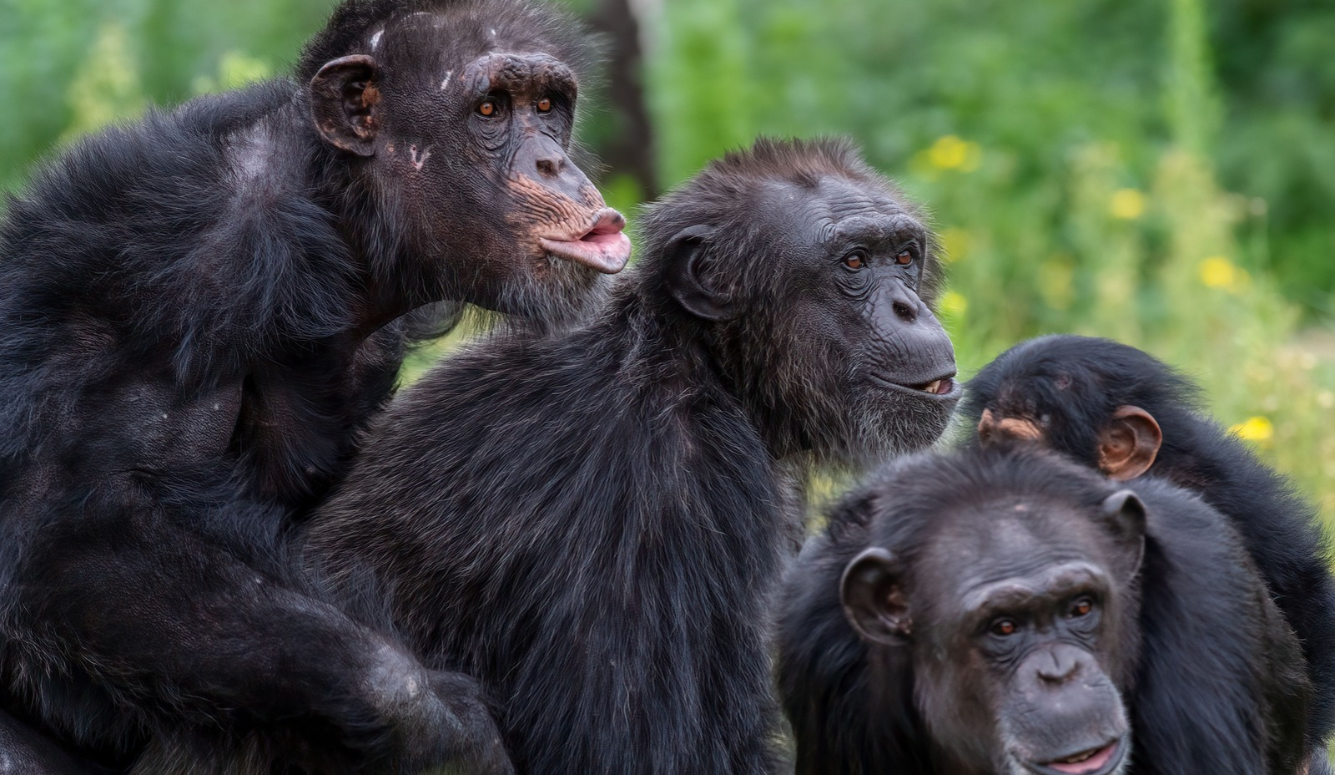
It is now well established that males are the philopatric sex in our closest living relatives, chimpanzees and bonobos, and isotope analyses and ancient DNA indicate this was likely the case for australopithecines, Neanderthals, early humans, and most human groups during the Neolithic and Bronze Ages. Male philopatry in turn provided the foundation for the formation of competitive kin-based coalitions that eventually expanded to more distant kin and were then organised by ideology (e.g., religion). The competitive potency of these coalitions was amplified by advances in weapon technology, and the combination sparked the creation of civilisations.
So, why didn’t female coalitions build complex societies and empires? There are more primate species in which females and not males are the philopatric sex. Females form kin-based coalitions in many of these species (e.g., to defend food sources). Despite more opportunities for female- than male-centred large-scale social groups and cultures to evolve, none did so.
This is because of the cost-benefit trade-offs associated with escalated aggression. Females’ reproductive outcomes can be improved by increasing territory size, but this is kept in check by the risk of injury and the difficulty of forming aggressive coalitions while pregnant or breastfeeding. Male-male competition is more of a zero-sum game, whereby high-status males sire many more offspring than even the most reproductively successful females, and low-status males are eliminated from the gene pool.
A Brief Tour of Hominin Evolution
Male-male reproductive competition does not, in and of itself, lead to the formation of human-like civilisations. These were preceded by millions of years of one-on-one and coalitional competition among our ancestors and, critically, an expansion of brain size and the emergence of new social and cognitive competencies.
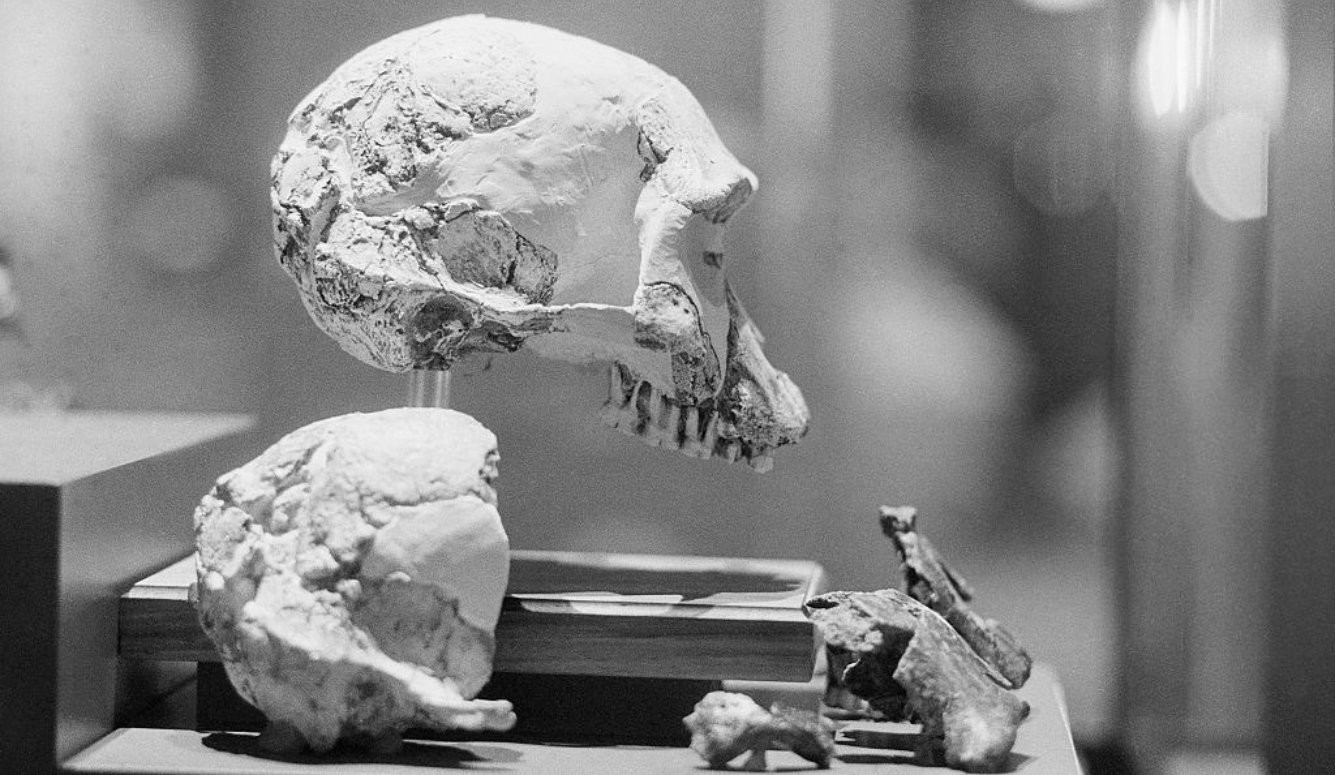
There is general agreement about our hominin ancestors and their evolutionary relationships, as shown in the figure below. The actual tree is much bushier, with many australopithecines and their cousin species (genus Paranthropus), as well as at least eight species of Homo at various points in time, but the evolutionary pattern is the same whether it is drawn with more branches or fewer.
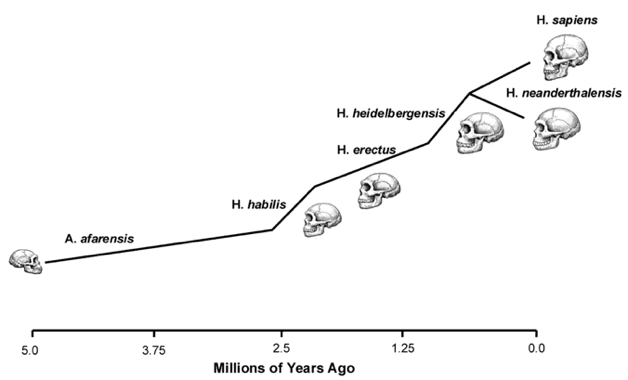
The brains of australopithecines (e.g., Lucy, an early bipedal hominin) were slightly larger than those of modern-day chimpanzees, and they increased only gradually in volume over about two million years. As shown in the figure below, a jump in brain volume occurred with the emergence of H. habilis about 2.3 million years ago, followed by relatively modest increases and then another jump with the emergence of H. heidelbergensis.
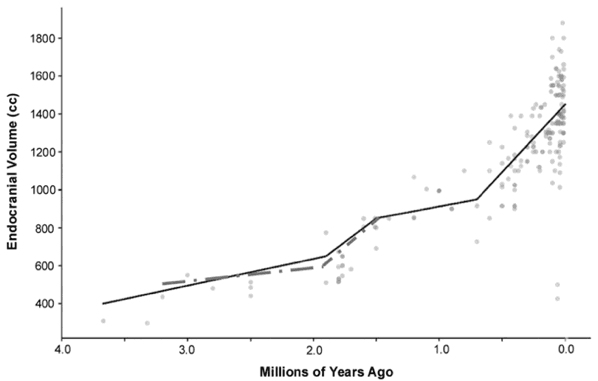
Along with these extraordinary increases in brain volume came disproportionate expansions in some specific brain regions. These include areas related to complex problem solving, creativity, and tool construction. Critically, these changes were restricted to our ancestors and not found in primates generally, indicating something unique about human evolution.
What Drove These Changes?
Hominin brain expansion was likely driven by a combination of climate change, improvements in foraging abilities, and social competition. The details are not important here, but briefly: climatic cooling in Africa about 2.8 to 2.5 million years ago created a variety of new ecological niches that supported the emergence of many new species of australopithecine and their cousins, Paranthropus. This is important because the increased number of species upped the odds that one of them would break from the pack and evolve into something different.
That something different was H. habilis, and things changed after its emergence. Van Holstein and Foley showed that before this time, having many similar species and potential competitors around did not increase the risk of extinction, suggesting relatively muted competition among them. Homo species, in contrast, were characterised by range expansion and reductions in species diversity. The implication is that the territorial expansion of one species contributed to the extinction of sister species.
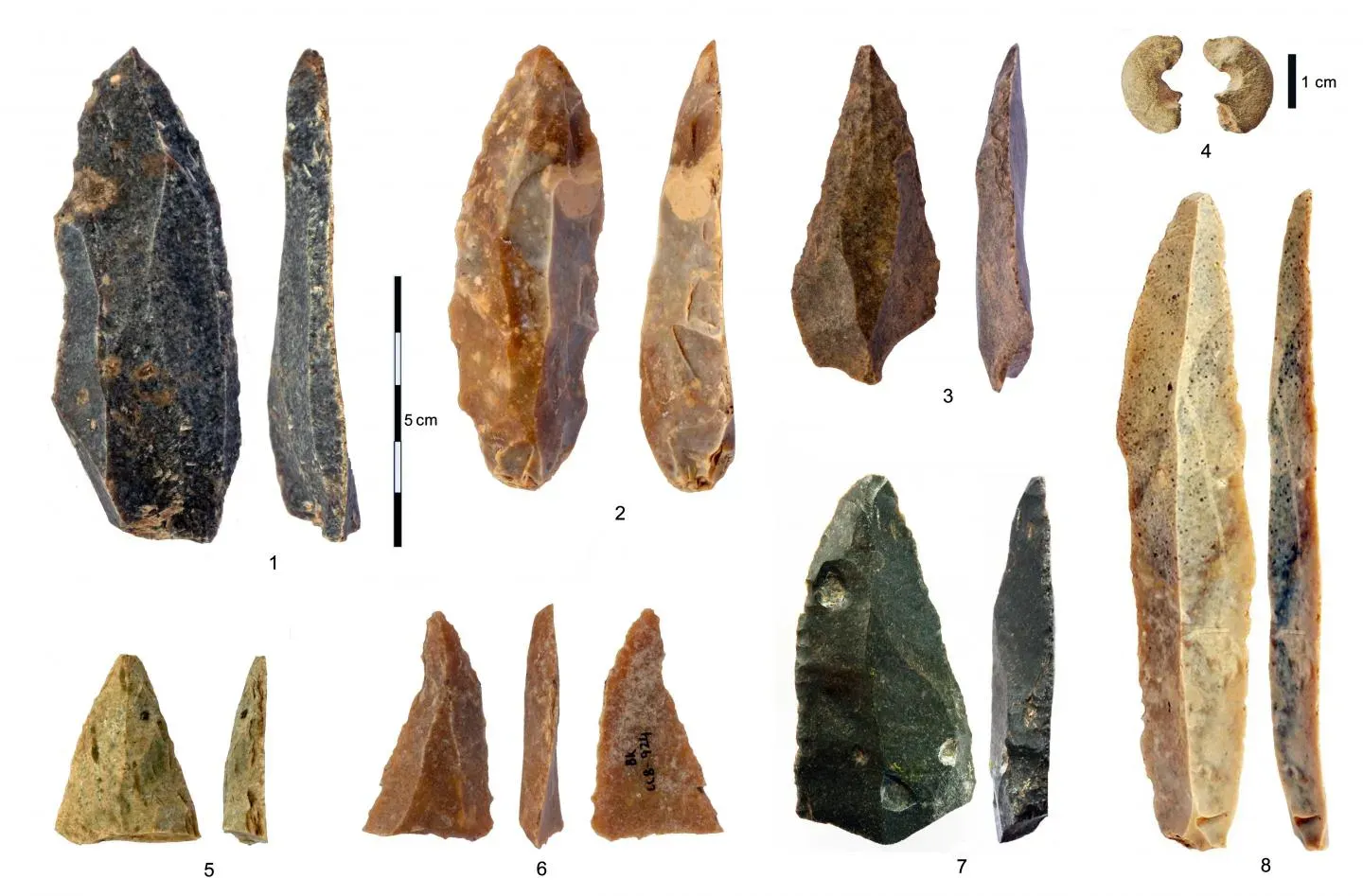
Before social competition intensified, our ancestors became better at extracting resources from their environment, aided by more complex tools that supported more efficient hunting, foraging, and cooking. A critical step occurred when H. erectus began constructing tools that were sophisticated compared with those of H. habilis. These technological advances continued after H. erectus and continue to this day.
This might be why we left chimpanzees in the dust. Despite male philopatry and male-male coalitional competition, chimpanzees did not evolve to build large civilisations. The key reason, in my opinion, is their relatively poor understanding of how objects can be used as tools. Thus, they never made the conceptual leap that likely occurred with H. erectus and that triggered a technology-aided coalitional arms race.
In any case, more and better food increased population size, and social competition became an increasingly potent selection pressure. Population expansions increase in-group conflict and result in migration to new areas that are often occupied by other groups or other species. H. erectus (or closely related species) made the most significant early range expansions, across various parts of Africa, then into Asia, and eventually into Europe. Early migrations of H. sapiens out of Africa occurred about 100,000 years ago, but these migrants may have been pushed back by Neanderthals. The migration that resulted in the spread of H. sapiens throughout Eurasia occurred about 60,000 years ago, following earlier population expansions and likely conflicts in Africa.
Population Cycles and the Rise of Violence
When males are larger than females, it indicates more intense competition among males than among females during the species’ evolutionary history. In our ancestry, this size disparity stretches back more than three million years. Before the emergence of Homo, this competition was likely similar to that seen in modern-day chimpanzees: a mix of one-on-one and coalitional competition within groups, and some coalitional competition between groups.
The uptick in extinction risk after the emergence of Homo suggests a rise in between-species violence. Interbreeding and assimilation are alternative but not mutually exclusive possibilities, and there is indeed evidence of interbreeding among various Homo species. Other factors, such as poor nutrition and disease, also contributed to extinction risk and may have been more important than violence; nevertheless, violence cannot be dismissed.
Social competition and territorial expansion need not result in lethal violence. In fact, expansion into sparsely inhabited regions with plentiful resources ought to reduce competition and result in an increase in population size. As the population expands, per capita resources decline and competition for them intensifies. One remedy is to move into the territory of neighbouring groups, but this increases the risk of lethal conflict both between and within species.
Once a species reaches this point, it can experience cycles of population expansion and contraction, although overall population levels may remain relatively constant when averaged across cycles. The cycles emerge because population expansions and attendant conflicts are typically followed by contractions resulting from violence, increased risk of disease (e.g., due to higher population density), and declining per capita nutrition. Population declines in turn increase the resources available to the survivors, and this eventually results in another population increase.
These repeating dynamics can accelerate evolutionary processes and set the stage for runaway selection, whereby more cognitively and behaviourally sophisticated individuals are able to outmanoeuvre competitors to gain social influence and preferential access to resources. Such a within-species arms race explains why humans’ brain size, cognitive competencies, enhanced cooperation among non-kin, and related traits far outstrip those of related species.
The Archaeological Evidence
Archaeological discoveries are revealing more intense and often lethal social conflict than previously believed. One example comes from 61 individuals buried in the Nile Valley about 18,000 to 13,000 years ago. Crevecoeur and colleagues found that 16 of them had unhealed injuries associated with fatal trauma and 38 showed healed trauma, indicating repeated conflicts. The injuries were caused by penetrating weapons (e.g., arrowheads) and blunt-force strikes to the head, likely in between-group violence. Note that bone damage underestimates the extent of lethal conflict, because many penetrating wounds do not damage bone.
 Razib Khan
Although this is one of the better-documented examples of prehistoric violence, it is not the only one. There is evidence of violence-related trauma in H. erectus, H. heidelbergensis, and Neanderthals. One study estimated that between twenty and thirty percent of Neanderthal and human males suffered blunt-force trauma between 80,000 and 20,000 years ago; again, this underestimates lethal violence from penetrating weapons.
Agricultural Expansion
This pattern continued after the development of large-scale agriculture at least 12,000 years ago in the Fertile Crescent (including western Iran). These early farmers expanded throughout the Mediterranean Basin over the next 4,000 to 5,000 years and eventually into the interior of Europe and parts of North Africa.
Ancient DNA reveals migrations from Mesopotamia (parts of present-day Iraq and Syria) and the Levant (including present-day Israel and Jordan) into the Anatolian peninsula (Turkey) and then into the Caucasus. One critical question is whether farming spread into these and other areas through cultural transmission or through the replacement of hunter-gatherer populations. A recent analysis concluded “that cultural transmission must have only played a limited role in the farming expansion.” The same was found for Britain, where migrating agricultural communities appear to have largely replaced local hunter-gatherer groups.
There are other examples, but the bottom line is that the early expansion of agricultural populations was accommodated by migration into areas only sparsely inhabited by hunter-gatherers. Migration into these resource-rich environments was likely associated with comparatively low rates of social conflict, and with population growth. But over time, fewer of these sparsely populated areas remained.
Per capita resources would then decline, and this could not easily be addressed through migration because adjoining lands were occupied by other expanding communities. The result would be an uptick in social conflict within and between groups. The latter is consistent with the increasing number of mass graves containing trauma victims from earlier to later epochs, during the period in which agricultural communities expanded.
The genetic evidence points the same way. Y-chromosome and ancient DNA studies indicate more variation in men’s than women’s reproductive success since the emergence of humans: some men had many children and others never had any. Between 5,000 and 7,000 years ago, there was an extreme contraction of men’s genetic variability from Africa to Europe to East Asia, with little change in women’s. Genetically, the population size of women was up to seventeen times larger than that of men. This does not mean that there were seventeen women to every man, but rather that a large proportion of male lineages went extinct while others substantially expanded. The diversity of women’s lineages rules out famine and plague, leaving lethal conflict as the most likely driver. Moreover, the DNA evidence is consistent with the hypothesis that the conflict was driven by organised groups of related men.
States and Empires
This pattern continued, and it favoured coordinated groups that had technological advantages over their competitors. It eventually led to the formation of proto-states and then formal states. These began to emerge in Mesopotamia about 6,000 years ago and continued to develop during the early Bronze Age. Their initial emergence was associated with a sharp increase in violence, likely due to conflicts over regional dominance. This violence subsided with the formation of early Bronze Age states and increased again about 3,000 years ago.
Drops in violence were likely due to state-level suppression of in-group conflict and the benefits of cooperation within the in-group. However, peace and cooperation often result in population expansion and a return of the dynamic described above; such a process likely contributed to the increase in conflicts between expanding and competing empires during the late Bronze Age and early Iron Age.
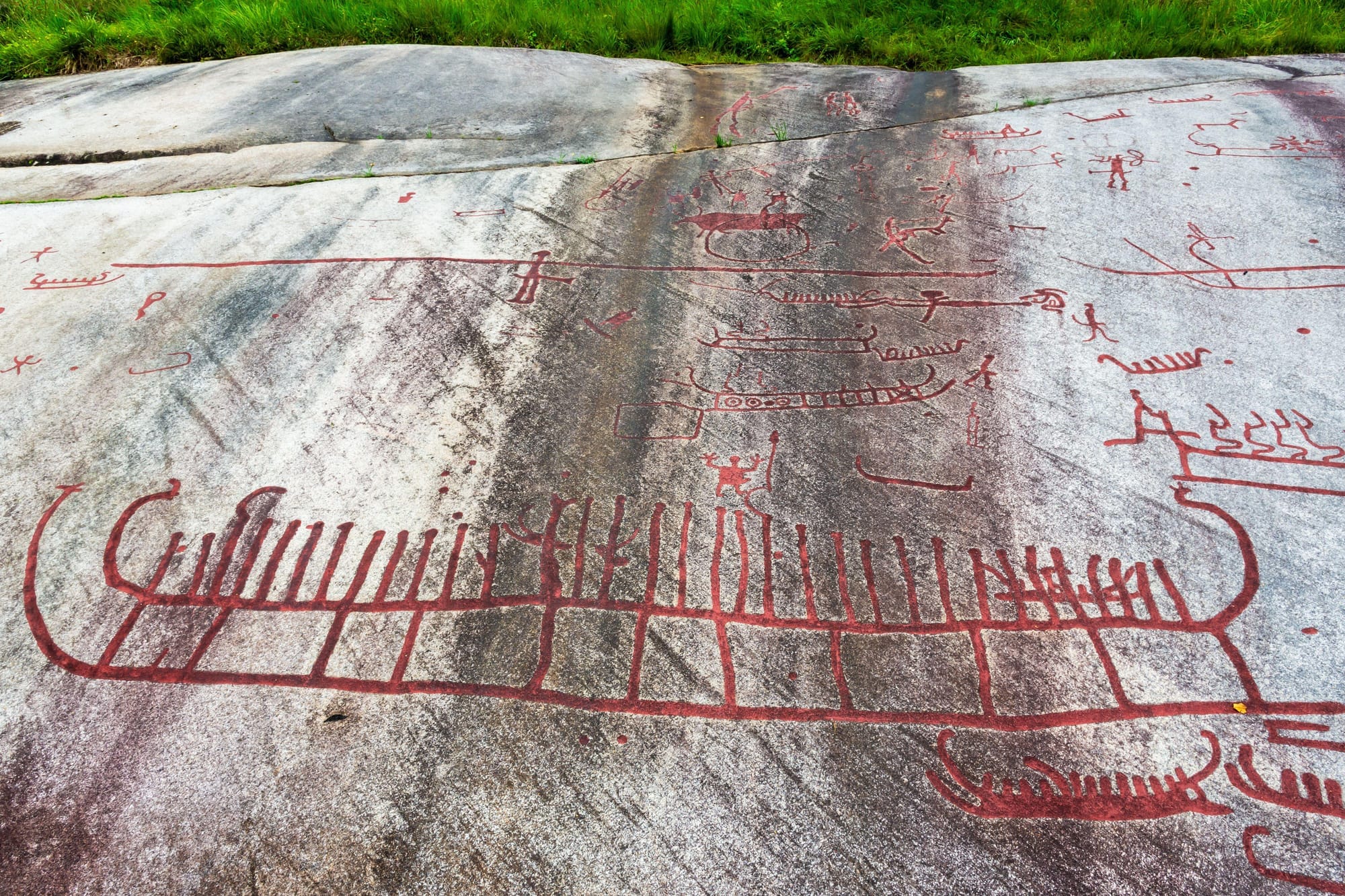
The competing empires further amplified the within-species arms race driven by male coalitions and spurred the development of new technologies, forms of social organisation, and military strategies. One critical takeaway is that men independently formed large-scale, competitive coalitions in different parts of the world—the dynamic is not dependent on specific climatic, ecological, or cultural factors, although these can modify its expression. Rather, it reflects a deeper evolutionary history.
Genghis Khan (c. 1162–1227) provides a historical example of the extreme variation in men’s reproductive success described above; he had hundreds of wives and concubines and many hundreds of children. Genetic patterns suggest that Genghis Khan and his close male relatives are the direct ancestors of sixteen million men in Asia. To achieve this feat, the Mongol armies contributed to the deaths of many millions of people. It was one of the most devastating examples of a dominance-based reproductive strategy in human history, though less extreme than what occurred 5,000 to 7,000 years ago.
These genetic studies provide evidence for an intense within-species arms race centred on male-male coalitional competition. These patterns are a continuation of coalitional violence that appears to have intensified with and after the emergence of H. erectus. Ancient DNA suggests that the arms race, including the evolution of enhanced cognitive abilities, never stopped and was similar across human populations. These similarities are found in geographically separated groups and suggest the same evolutionary pressures are acting on them. Some of these are related to things like the immune system, but others, including cognitive abilities, are likely associated with the same social pressures that contributed to brain expansion during human evolution.
In other words, the patterns of social organisation, cooperation, and competition during recorded history provide insights into our prehistory. My focus on violence is to make the point that men’s coalitional competition is a central feature of human biological and cultural evolution.
The flip side of coalitional violence is the emergence of large-scale communities that eventually provided laws and social stability (for the in-group), property rights, the development and maintenance of trade routes, market integration, economic specialisation (and thus enhanced efficiency), monetary systems, and the bureaucratic organisation of various social institutions. The motivation was in part to mobilise the resources needed to control and maintain large territories obtained through warfare. Warfare, in fact, contributed to the emergence of monetary systems and supported the market economy through payments for the construction of warships and castles and for supplies for troops, among other things.
We even saw this with the Mongol Empire in the wake of the mass destruction described above: “Under this united system of rule, trade came to occupy a special place and led to hitherto unprecedented exchanges and prosperity. Mongol Eurasia was able to transform micro economies into a coherent macro economy that relied on overland and maritime trade.”
The eventual result was the emergence of large and very diverse societies that include many cultural niches (economic, ideological, political, and military) and sources of social power and influence. Men develop and then compete for status in one or several of these hierarchies. The competencies that promote success in the different hierarchies differ to some extent, but moving up any of them will be facilitated by the cognitive systems that support rational problem-solving, innovation, and the ability to cope with the novelty and change inherent in large-scale social dynamics. (All of this is dependent on recently evolved complex brain networks that are beyond the scope of this essay.)
Women’s Competitive Strategies
None of this is to say that women aren’t competitive; they are. Women compete for social and material support within the institutions formed by male coalitions. In these contexts, women who achieve greater access to resources, including from their husbands, have healthier children with lower mortality risks than their peers.
Women’s basic strategy is to form a social network of in-group relationships that increases their social-emotional support and their access to material resources. Gaining access to resources through relationships is important, because in many environments pregnancy and the care of young children limit women’s ability to acquire sufficient food for themselves and their children. With male philopatry, women’s key relationships are often with unrelated women living in the same group. These relationships help to resolve social conflicts, provide shared childcare, and sometimes form the basis of labour networks.
Women also cooperate to push for and enforce social rules that favour them, typically to enhance the social protection and provisioning of women generally. Women’s collective action to change in-group social rules is amplified in liberal, wealthy contexts in which most women are not in direct competition with one another. Ironically, this activism is also driven in part by envy of men’s cultural success, so the anger is directed against the very patriarchy that helped create the wealth and comfort in which it flourishes.
In any case, a core feature of women’s friendships is their dependence on mutual reciprocity, which makes them less stable than kin-based relationships. To maintain reciprocity, these relationships involve muted conflict, equality of outcomes, and continuous availability, which limits their number and works against the formation of the large-scale hierarchical relationships that define men’s collective-action groups.
Implications for the Modern World
The core point is that male-male coalitional competition gave men the ability to form integrated hierarchical social institutions focused on goal-directed collective action. To be sure, this sometimes results in violence, but the flip side is the ability to develop and maintain the key institutions of complex societies. Men’s cooperation in these contexts is often driven by competition with other coalitions (e.g., one corporation against another), but the outcomes often have wide-ranging benefits (many of which Steven Pinker has described in books such as The Better Angels of Our Nature and Enlightenment Now).
Achieving these benefits often requires the suppression of violence and the creation of abstract rules, regulations, and other guardrails that steer men’s competitive biases in ways that benefit others. Demonising men’s collective activities—that is, the patriarchy—is sometimes warranted, but it risks throwing the baby out with the bathwater.
Individual women can be successful in these hierarchies, but the same does not necessarily apply to group dynamics, as Helen Andrews noted in her widely debated Compact essay, “The Great Feminization”:
Female group dynamics favor consensus and cooperation. Men order each other around, but women can only suggest and persuade. Any criticism or negative sentiment, if it absolutely must be expressed, needs to be buried in layers of compliments. The outcome of a discussion is less important than the fact that a discussion was held and everyone participated in it.
The result is a flattening of status differences in women’s groups in pursuit of social harmony. This is the core dynamic of women’s friendships, and it is well suited to the contexts in which these biases evolved. However, these biases are very different from the social biases that lead to the formation of male-typical, collective-action hierarchies.
In other words, female social dynamics are not well suited to the development and maintenance of the hierarchical, merit-based groups that evolved to facilitate male-male coalitional behaviour, and that generated the core institutions of the modern world. In keeping with Andrews’s argument, these hierarchical groups could well deteriorate and become less effective if women’s social dynamics come to dominate them.