Genetics
How Genetics Rewrote History
Ancient DNA has given historians a new archive, and in two decades it has settled long-running arguments about who migrated, who conquered, and who replaced whom.

For the last 2,500 years, since Herodotus and Thucydides pioneered the Western tradition of history, the discipline has been one of the load-bearing intellectual foundations of our culture. In 1905, the philosopher George Santayana famously stated that those “who cannot remember the past are condemned to repeat it.” Long before this, Western civilisation had taken a particular interest in its past, not just for matters of intellectual curiosity, but for the lessons it can teach us. Suetonius’s The Twelve Caesars makes clear its author’s belief that the private character of a Roman autocrat redounds to the health of the Roman state. From the bold Caesar to the perverse Caligula, Suetonius showed how the past could teach us to rule in the present and future.
Over the last few centuries, this venerable tradition of studies of character and the recitation of the annals of diplomacy and war, drawing upon a corpus of textual records, has matured into one of the established social sciences. Modern scholars bring analytic rigour, pretensions to prediction, and empirical tools from economics, anthropology, and archaeology, transforming history from a distillation of textual memory to a reflection of multiple lines of evidence that can echo back through the centuries, and even millennia. New techniques have affected even the time-tested analysis of text: the Vesuvius Challenge aims to deploy computational visualisation and analysis to read the carbonised Herculaneum scrolls without opening them. In the future, textual historians may ponder the nuances of machine-learning algorithms as much as they do the translation of texts and the location of obscure archives.
Of history’s helpmates, archaeology, which grew out of 19th-century antiquarianism, has arguably been the longest-lasting collaborator, taking a humanistic endeavour and making it part of a broader movement of the “historical sciences.” But in the 21st century, the injection of the methods and means of genetics—a hard science of the 20th century—into an enterprise that goes back to Herodotus’s chronicles of the Persian Wars has been the most rapid and striking transformation, with an explosion of findings settling questions old and posing others new.
If the primary instrument in the toolkit of the 20th-century historian was their familiarity with archives of long-forgotten texts, supplemented with the material information proffered by archaeologists, 21st-century historians can now avail themselves of an entirely different text: the DNA sequences of individuals present and past. Whereas historians of the past relied on letters and texts to flesh out the biography of a single person, laboriously making societal judgements from the aggregate of these individuals, historians today can infer the history of an entire population from the genetic code, the physical substrate of which is the biomolecule deoxyribonucleic acid, or DNA. The Jesuits would say, “Give me a child until he is seven and I will show you the man.” Today, scientists can ask for someone’s genome, and they will show you that individual’s entire genealogical history.
From Blood Groups to Genomes
Though the full absorption of genetics into history has occurred in this century, with the rise of genomics—the study of all the genes—and the correlated development of ancient DNA, a branch of forensic genetics amplified by orders of magnitude, an understanding of how we got here has to begin with the late Italian scientist L. L. Cavalli-Sforza. A medical doctor by training, Cavalli-Sforza began working in human genetics in the 1940s after studying under one of the co-founders of modern population genetics and statistics, R. A. Fisher. Though scientists understood DNA as the concrete means of inheritance by the 1940s, with James Watson and Francis Crick elucidating its structure correctly in 1953, Cavalli-Sforza focused his research, which began five decades before the completion of the Human Genome Project, on classical markers like the ABO blood-group complex.
His magnum opus, The History and Geography of Human Genes (1994), an assemblage of the results from his entire career, relied on patterns of variation across 49 genes in 42 populations. Cavalli-Sforza’s work was particularly influential on our understanding of human evolution, from our origins in Africa to our species’ relative genetic homogeneity, and the relationship between patterns of language and patterns of genes. However, geneticists only identified precise variations across DNA sequences in the late 20th century, during the twilight of his career, which allowed them to truly illuminate questions of traditional historical importance during the age of empires and the nearest edges of prehistory.
Less than a decade after the publication of The History and Geography of Human Genes, Spencer Wells, a geneticist who learned from Cavalli-Sforza at Stanford, published The Journey of Man (2002). Here Wells applied cutting-edge molecular genetics to extract patterns of variation out of the Y chromosome, the direct lineage of men back to a common ancestor hundreds of thousands of years ago. Wells’s work helped pioneer the field of historical population genetics; it was his generation of scientists that turned Cavalli-Sforza’s ambitions into reality. Though The Journey of Man was still concerned with deep history and human evolution, confirming through the independent pathway of Y-chromosomal phylogenies that mitochondrial Eve had as her counterpart a Y-chromosomal Adam, Wells also shed light on questions about the world after the end of the last Ice Age, and up to the beginnings of the civilisations of the cities and scribes.
One of Wells’s projects had been a survey of male genetic variation across Eurasia, and here he discovered that there was one particular mutation associated with men who populated the entire expanse of the supercontinent, from the marshes of Poland to the jungles of India to the high mountains of Mongolia’s Altai. Wells, who did graduate work at Harvard and postdoctoral fellowships at Stanford and Oxford, presented his work to a meeting of elite British archaeologists around the turn of the century and posited that this mutation, labelled M17, spread with Bronze Age pastoralists out of the Eurasian steppe. A senior scholar rose and dismissed Wells’s conjecture, explaining that the field had done away with ideas about mass migration by warlike hordes. “We no longer believe such things,” she declared. As a young scientist wielding a new technique and inserting himself into an established field with its own mores, Wells had little in the way of rebuttal.
But today, a generation on, we know he was right. Starting 5,000 years ago, pastoralists exploded out of the Pontic steppe, sweeping in all directions to spread the Indo-European languages, from the forests of Britain to the steppes of Mongolia, down even to the jungles of Sri Lanka.
The Ancient DNA Revolution
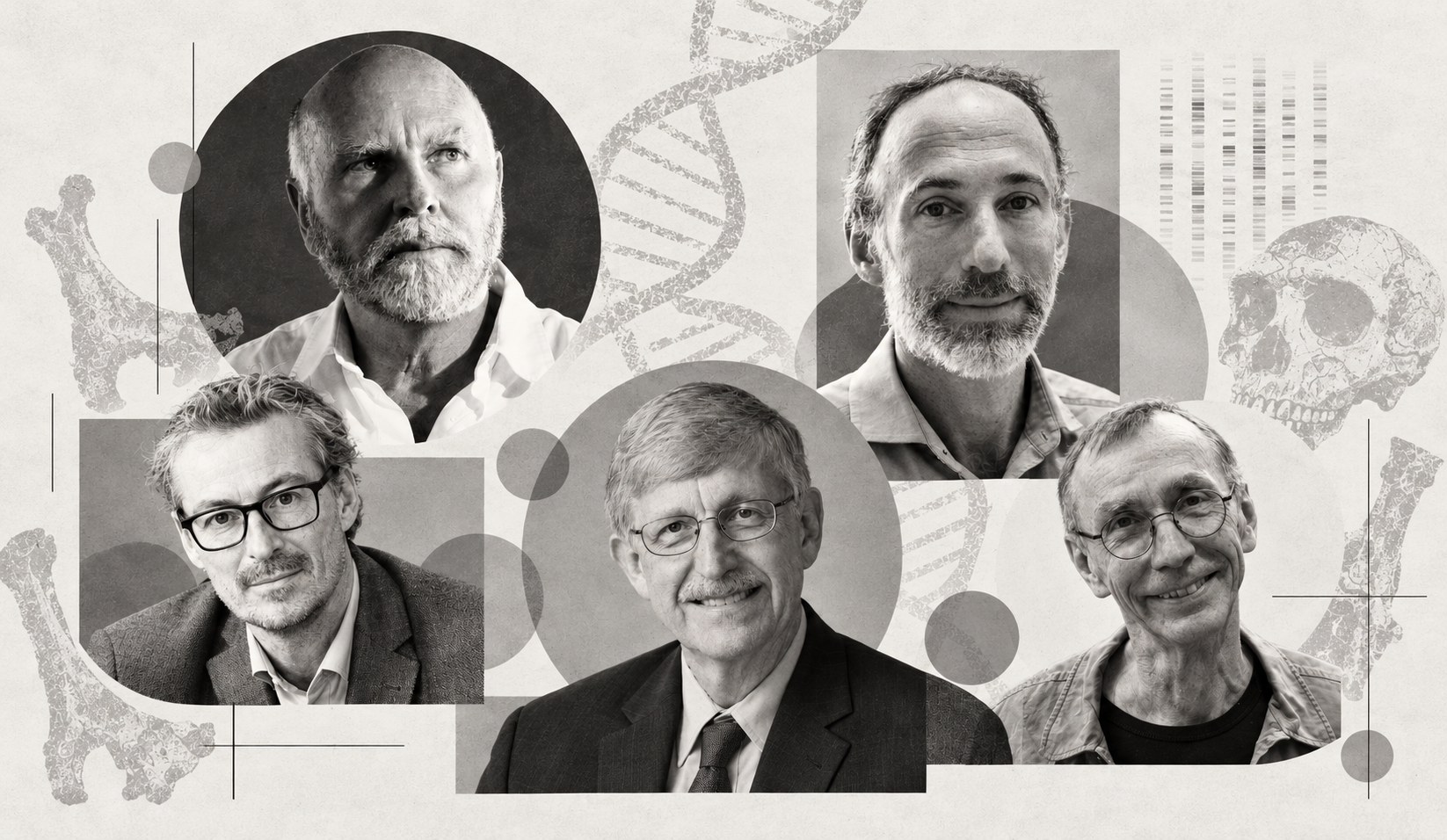
If you could reduce the revolution in genetics and history over the last generation to individuals, you would list five men: the late J. Craig Venter and Francis Collins, for pushing forward genomics, and Svante Pääbo, Eske Willerslev and David Reich, for pioneering palaeogenetics, the genetic analysis of ancient DNA.
Wells trained in the 1990s, in the grey zone after “classical markers” like the ABO blood groups but before we had a near-total map of the entire genome. Geneticists operating just before the year 2000 were familiar with the world of DNA, but the tools of their trade were limited to thin slices defined by mitochondrial DNA (passed from mother to child) or the Y chromosome. Or, if they were more focused on forensic identification, mutationally active hotspots in the genome called microsatellites. Wells and colleagues like Oxford’s Bryan Sykes, who worked with mitochondrial DNA, hefted their torches into the darkness, illuminating enough to make out larger features and avoid pitfalls.
 Tristan S. Rapp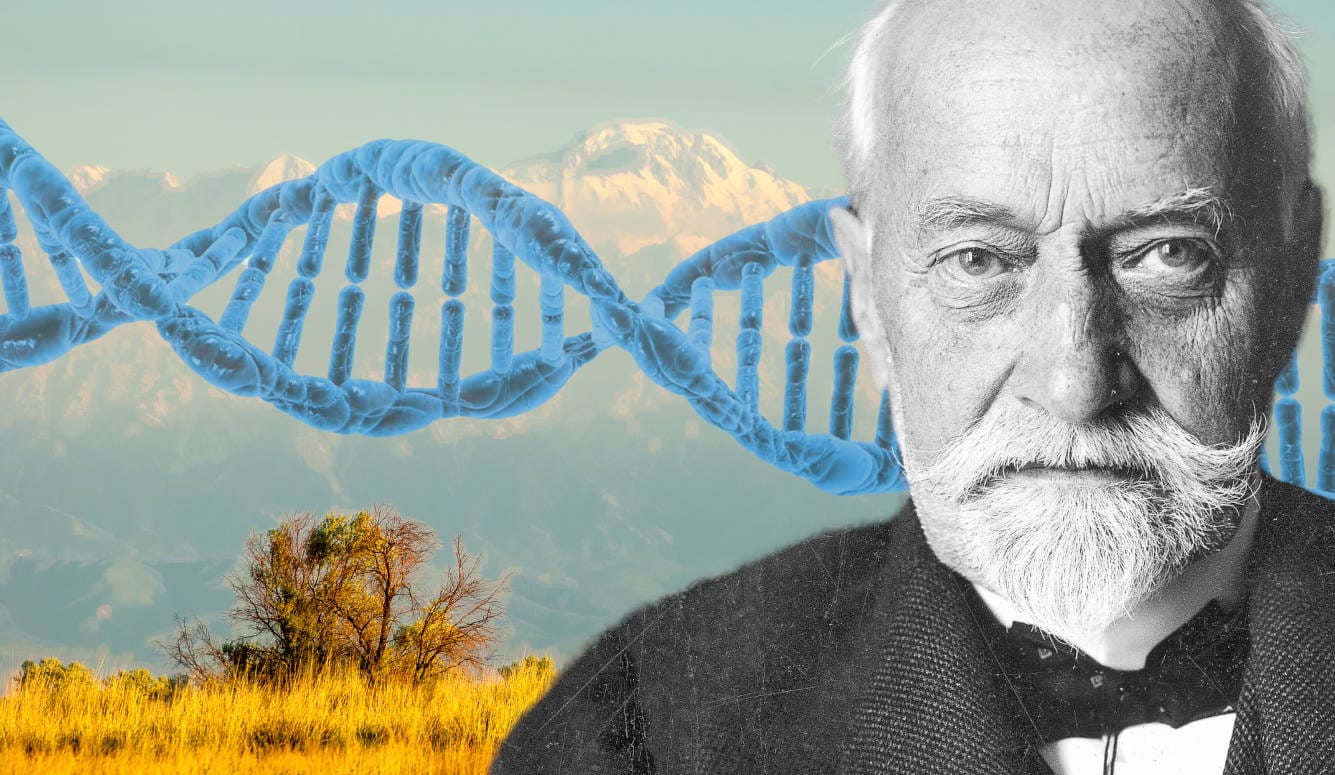
Meanwhile, in the late 1990s, Venter and Collins worked together in competition to bring forward a map of the human genome more than a decade earlier than expected. Compared with the DNA analyses that had come before, 21st-century genomics shines a Klieg light across a dark field; you see all three billion bases and 19,000 genes within a single individual. When Wells arrived at Stanford in the mid-1990s, there were even still some geneticists who believed that the human genome would never be fully mapped. How things have shifted within just a generation.
Whereas late 20th-century geneticists could not avail themselves of even a single genome of a living human, in 2026 scholars have access to over 10,000 sequences from ancient individuals long dead. In fact, there are five high-quality Neanderthal genomes! The driving force behind this is Svante Pääbo, who pioneered the field of ancient DNA analysis in the 1990s and brought it to maturity in the first decade of the 21st century, culminating in the publication of the first entire Neanderthal genome in 2010. This groundbreaking work won him the Nobel Prize in Physiology or Medicine in 2022.
If Pääbo is the éminence grise of palaeogenetics, Eske Willerslev and David Reich are the two young guns who drove many of the field’s successes through the 2010s. Both expanded the purview of palaeogenetics as outsiders. The Danish Willerslev was trained as an anthropologist, while the American Reich was a physicist-cum-medical geneticist. Willerslev and his team had beaten the Pääbo-led Neanderthal genomics publication to the punch by three months with the sequence of the first ancient human when they unveiled the results for a 4,000-year-old Palaeo-Eskimo from Greenland. Meanwhile, for the Neanderthal paper, Pääbo’s molecularly oriented bench-lab team had brought on the quantitative-minded Reich and his primary collaborator, the mathematician Nick Patterson, to aid in deeper analysis of their Neanderthal sequence data. From this first stab at evolutionary genomics on a grand scale, Reich and Patterson built up an ancient DNA scholarly empire that left their past as researchers on the population genetics of prostate cancer far behind.
As with Venter and Collins, the competition between the Willerslev-led and Reich-led groups produced incredible findings; over 15 years after Spencer Wells’s ideas were dismissed at a seminar, his theories about migration out of the Eurasian steppe shaping the continent’s genetics were to be vindicated. In the spring of 2015, the Reich and Willerslev labs published two papers in Nature that, by combining genomics and ancient DNA, definitively established that just such a thing had happened.
People, Not Pots
The archaeologist David Anthony, who obtained samples from the Pontic steppe for the Reich team, had published his own argument for steppe migration in 2007’s The Horse, the Wheel, and Language. He argued that Indo-European languages spread through the migration of nomads, an elite minority whose culture and folkways were emulated by the masses of agriculturalists who form the bulk of the ancestry of people today. For this limited migrationist view, Anthony was something of an outlier and a radical among his colleagues.
For decades, the dominant model was that archaeological cultures changed through the spread of ideas; pots, not people, were migrating, they believed. Or, more precisely, traditions of pottery making and ornamentation spread from sedentary group to sedentary group like a mimetic epidemic. Into this orthodoxy stepped the geneticists, innocent of preconceptions and theoretical commitments, and unencumbered by alliances with any archaeological faction. What Reich and Willerslev found was that Anthony was wrong. But that was because his migrationist view was too modest; the arrival of new types of pottery across much of Europe occurred not through the transmission of ideas, but through the replacement of whole peoples.
About 5,000 years ago in the forests of Poland and Belarus, an archaeological culture called the Globular Amphora was replaced by another labelled Corded Ware. The dominant view within archaeology before 2015 was that Corded Ware spread out and replaced Globular Amphora as a package of ideas, with the same people evolving culturally in place. David Anthony in The Horse, the Wheel, and Language argued for the dissenting position that migration and some demographic displacement must have occurred. Looking at the genes of the people buried in Globular Amphora settlements, and later buried in Corded Ware settlements, and comparing them to the steppe pastoralists, the Yamnaya, David Reich and Eske Willerslev found that the transition from Globular Amphora to Corded Ware was primarily one of demographic displacement. Concretely, 75 percent of the ancestry of the Corded Ware peoples of Eastern Europe in 2900 BC could be traced to Yamnaya pastoralists from the Pontic steppe, with the remaining 25 percent being Globular Amphora-type ancestry.
The palaeogeneticists also looked at the markers that so fascinated Spencer Wells a generation earlier, those on the Y chromosome. While some archaeologists had posited that Neolithic European societies like the Globular Amphora were matrilineal and matrifocal, the geneticists noted that almost all villages were dominated by related males, who all carried the Y-chromosomal lineage labelled I2. The arrival of Corded Ware people saw a mass shift, as the vast majority of males buried in these settlements carried the lineage R1a, still dominant in Poland and Belarus today. The implication here is that Corded Ware males integrated Globular Amphora individuals into their communities, but these were overwhelmingly female.
In just a few years, decades of debate ended, and old orthodoxies were overturned. Researchers uncovered the stories of entire peoples through the record of their genes. Sometimes the results were sensational and shocking; the Danish archaeologist Kristian Kristiansen discovered that the replacement of Neolithic people who had constructed vast megaliths across coastal Scandinavia had been total. It seems the aptly named Battle Axe people entirely exterminated their Funnelbeaker Neolithic predecessors across Scandinavia. There was simply no evidence of Funnelbeaker heritage in any of the Battle Axe individuals who succeeded them. People. Not pots.
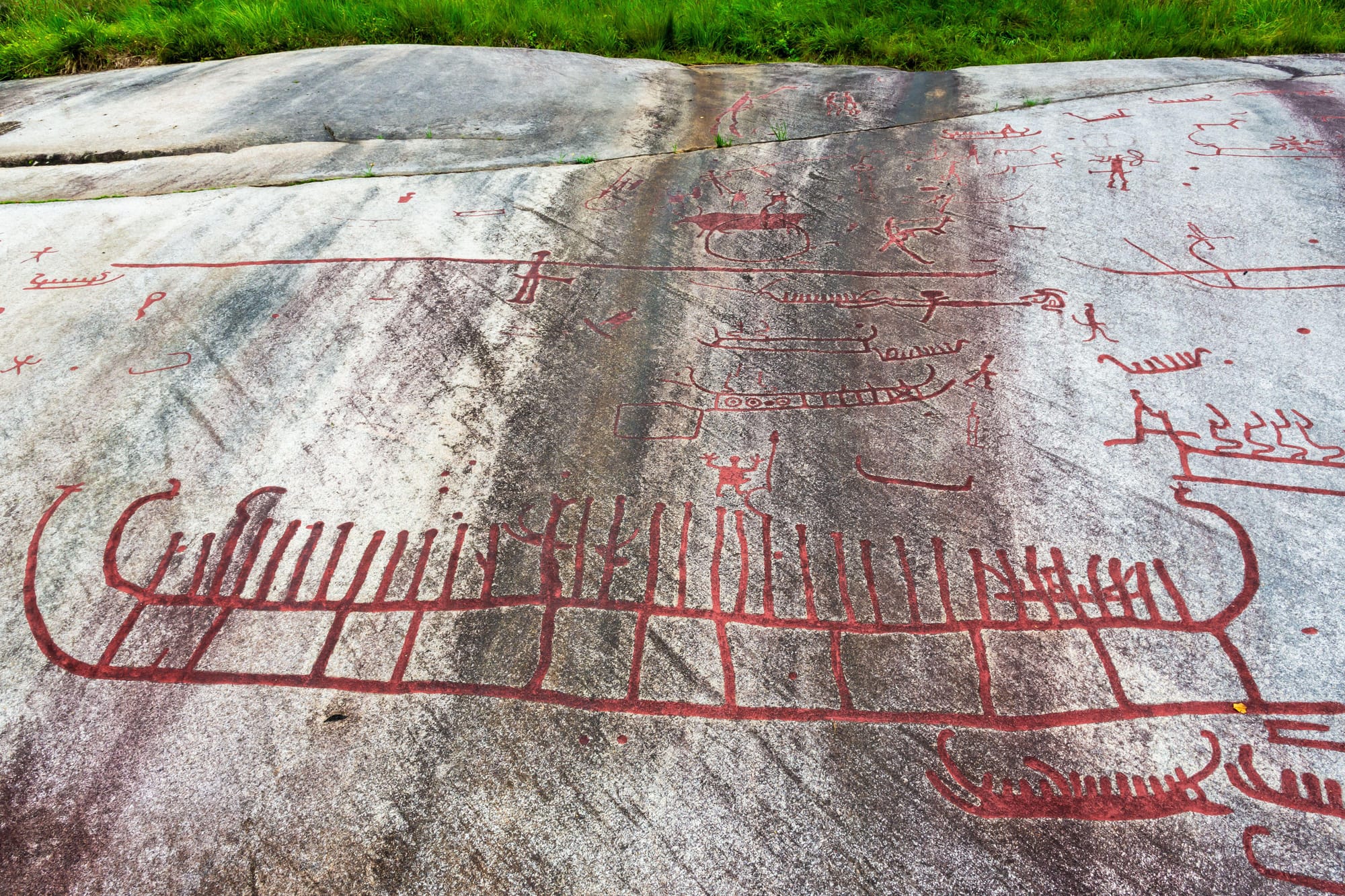
The Reich and Willerslev groups, which within a few years became vast rival coalitions of labs scattered across continents and included geneticists, statisticians, computer scientists, archaeologists, historians, and anthropologists, rapidly transformed frontier basic science into a near-industrialised system of inquiry. Across the innumerable questions amenable to their methods, the primary limitations were those of attention and time. The earliest work in ancient genomics, in the years after 2010, focused on Neanderthals and other peoples of deep history because until then only archaeology and biological anthropology were able to explore the lives of early humans long before literacy and out of the reach of oral memory. But as the techniques became cheaper and more accessible, scholars began to revisit old historical questions that might benefit from the illumination of genetic probing.
The Fall of Rome, Revisited
Long after Suetonius wrote of the first century of the Roman Empire, the polity centred on the Eternal City faltered. In 410 AD, the barbarians sacked Rome, and in 476 AD the last Western emperor was deposed. Pagan writers like the historian Zosimus argued that the Empire’s turning away from the old gods and towards Christianity was to blame for its misfortunes, while St Augustine in The City of God observed that all empires rise and fall, and Rome had already done its duty by establishing the universal empire for the universal religion, Christianity. Edward Gibbon, writing in the 18th century, updated the pagan critique, making the case that Christianisation had sapped the vigour and public-spiritedness of the elite, which had turned towards otherworldly pursuits encouraged by the Church.
But in the century after Gibbon, a new theory supplemented such ideological arguments: that the decline of Rome was the decline of one race and the rise of a new one. Even in antiquity, the second-century satirist Juvenal prefigured such theories when he declared, “Long since has the Syrian Orontes flowed into the Tiber,” meaning that people of eastern Mediterranean origin had replaced the indigenous peoples of Rome. This is not entirely without historical foundation; by the time of Juvenal, foreigners were numerous in Rome, and a century later, 30 percent of Christian inscriptions were in Greek script, indicating non-Italian origins.
This is, of course, a question where genetics can offer some answers. DNA is the perfect tracer for the rise and fall of peoples. With thousands of genes and millions of variants per person, a single genome is like a fan that extends back into an individual’s genealogical past; each of us is the terminal node in a pedigree that displays an expanding burst of ancestors. As the second decade of ancient DNA began, geneticists turned their gaze to the near past rather than prehistory.
Since the time of Herodotus, scholars have debated the origins of the Etruscans, the mysterious northern neighbours of the Latin tribes, who influenced, ruled, and were eventually conquered by Rome. The first historian and his successors offered both an indigenous and a foreign origin as possibilities; the latter theory was supported by the peculiarity of their language, which was not Indo-European and had a relative in the Aegean. But the genetic relationships between the remains of ancient Etruscans and Iron Age Romans now make it quite clear that there is almost no genetic difference between the two groups despite their sharp differentiation by culture. Etruscans and Latins were products of the same Central Italian milieu; perhaps they had originally been differentiated genetically, but centuries of intermarriage had likely diminished these distinctions to the point where cultural separation was all that remained.
What about the Romans of the Republic and Empire? The genetics make it clear that Juvenal was not all wrong, though perhaps the Syrian Orontes could have been replaced by the Anatolian Halys. During the Imperial period, the cities of the Empire were stocked with large numbers of people from the Anatolian provinces (or descended from them). This populous region was at the time heavily, though not exclusively, Greek-speaking. Is it the case, then, that modern Italians are by and large the descendants of newcomers from the east, with the Romans of the Republic long gone into the dustbin of history? In fact, no. Though there is some residual connection to Eastern Mediterranean peoples, especially in the southern part of Italy and in Sicily, there was a shift back towards the Republican-era genetic profile in Rome and other cities after the fall of the Empire. What happened?
In 1981, the historian A. M. van der Woude coined the term “urban graveyard effect” to describe the reality that for much of history cities were demographic sinks; people went to them, and they often died of disease, or their offspring did so. So how did a city like Rome maintain such a large population over centuries? Since all roads lead to Rome, the supposition is that the Eternal City was a massive magnetic draw for migrations over the course of the Empire, from every corner, especially the wealthier and more populous eastern provinces.
But with the end of the Empire and the diminution of the connection between the west and the east after the beginning of the Gothic Wars in the 6th century AD, migration ceased, and so the city shrank. By the time of Pope Gregory the Great, circa 600 AD, the city was a vast post-apocalyptic expanse, re-greening, with as few as 50,000 residents, down from its Imperial peak of over 1 million. So how was Rome repopulated in the medieval period? New migrants, of course! And this time, they arrived from the hinterlands of Italy itself, the rural regions that maintained a continuity with the Iron Age past and were far less affected by migration during the Imperial period. Juvenal was correct, but only for an interregnum.
What Genes Can Tell Us
Genetics is concrete, rooted ultimately in physical science; the biological medium of heredity happens to be a molecule that can maintain its integrity for hundreds of thousands of years (the oldest hominin DNA yet recovered dates to 430,000 years ago, from the Sima de los Huesos in Spain). Additionally, DNA is digital and discrete, a set of letters—A, C, G and T—that is perfectly legible to man and machine. The beauty of modern genetics is that it is a statistical science, and so offers those intervals of precision that the more humanistic aspects of history do not. If history asks “how many of these people were there?”, then inference of population size from sequence can step forward. If history asks “who were these people related to?”, then inference of admixture from sequence can be offered.
Matters of genealogy are just the beginning. Phylogenetics is the most robust and well-developed aspect of the palaeogenetic toolkit, but not the only one. Of late, ancient DNA laboratories have been looking at functional patterns within the genomes of ancient peoples; we now know that Iron Age Europeans were lactose intolerant. We know that the genetic difference in heights between Northern and Southern Europeans is entirely explainable by the difference in Yamnaya ancestral proportions. Similarly, we can see the impact of plague on the genomes of Neolithic Europeans, the roots of caste thousands of years ago in the genomes of modern Indians, and even the gradual rise in Eurasian intelligence since the ice retreated 11,700 years ago.
History can paint the past with textual flourish, while archaeologists can expose to modern air vivid ancient scenes depicted on the walls of tombs long lost. To that, genetics can add reconstructions of the faces of Ice Age Europeans with pale blue eyes and swarthy skin, and of an Old Kingdom Egyptian with dark eyes and hair and brown skin. Each discipline is a distinct eye with its own perspective, and together they allow historians to achieve a depth of vision unimagined.
The Unity of Knowledge
Over 180 years ago, William Whewell, an English polymath, referred to the “consilience of inductions”: pointers from numerous disciplines converging on a unitary truth. More recently, the evolutionary biologist E. O. Wilson outlined an expansive vision of disciplinary fusion in 1998’s Consilience: The Unity of Knowledge, resurrecting public interest in Whewell’s hopes. Wilson’s ambitions were not purely abstract; he was a biologist who aimed for scientific imperialism. More than a decade after Consilience, in The Social Conquest of Earth, Wilson asserted, “History makes no sense without prehistory, and prehistory makes no sense without biology.” Though what he argued is true after a fashion, the reality is that biology, in the specific form of genetic science, has already shown great promise in resolving questions relating to history recorded in text.
This is trivially true for biological questions such as the origin of the bubonic plague, a disease of immense historical consequence whose source was the subject of speculation for decades (yes, it came out of the heart of Eurasia, again and again, and it is much more ancient than we had realised). But genetics can also answer sociological questions. Were Neolithic Europeans matriarchal? No, they were rigidly patriarchal, with longhouses dominated by male kin. The distribution of Y-chromosomal lineages in ancient sites attests to this. They placed related men in the same burial sites, along with unrelated women.
Did the nomadic Scythians come out of the east, as Herodotus speculated? Yes, the genetic patterns we associate with Scythians across Eurasia between 1000 BC and the Roman Imperial epoch seem to have congealed in the pastures of the high Altai, where eastward-migrating Iranian pastoralists assimilated tribes of Siberian foragers, the latter’s genes and memes transmuting these early Aryans into something different. Questions that would otherwise have yielded to speculation and become prey to the sophistry of style and cleverness of argumentation can now be submitted to the machinery of DNA. As Gottfried Leibniz would say, “Let us calculate!”
History has ripened with the fullness of time into a hydra-like discipline with many heads; long gone is the lonely anthropological naivety of Herodotus, who reported on griffins guarding the gates of Asia’s heart with total credulity, or the singular annalistic reveries of Thucydides, whose sober and objective tone likely masks the reality that he was an aristocratic Athenian general in exile. Today, the grand table includes economists, with their Babylonian ledgers, anthropologists scrutinising Al-Biruni’s observations, and linguists digging through disparate archives for ancient dialectal substrata.
The arrival of geneticists, ambassadors from the empire of natural science, at history’s grand table should be no surprise, because heredity is the story of the past that was, and the future that will be. It too is history, albeit that of molecular mutations that act as the puppet masters of human development and physiology. But at the intersections of human life across the millennia, through the birth and death of innumerable generations, lies the connective tissue—the Persian Wars, the lineages of the Greeks and Romans—that allows genetics to carve nature and the flow of history at their common joints.
Two generations before Herodotus and Thucydides, the Ionian philosopher Heraclitus declared that “all is one.” From nature all scholarly endeavours emerge, and to nature they will always conform. As genetics has become more perspicacious in its second century of existence, it has finally come to be of service to history, a field that is exceedingly difficult to tame and comprehend. We have only just begun to answer some questions and have yet to start addressing most others.
Quillette invites thoughtful responses to its essays.
Selected responses are published once per week as part of a curated Letters to the Editor feature. If selected, letters appear under the contributor’s real name and may be edited for clarity and length.
To submit a letter for consideration, please email [email protected].
Keep reading
How Genetics Rewrote History
Equal Pay, Unequal Work

The Genetics of Crime and Punishment
Jerry Kaplan on AI Doomers