Politics
How Modern Elections Were Invented in Victoria
The 1856 Victorian election set a standard for elections that was copied throughout Australia, then in other British colonies, the United States, Europe, and, eventually, all of the world’s democracies.
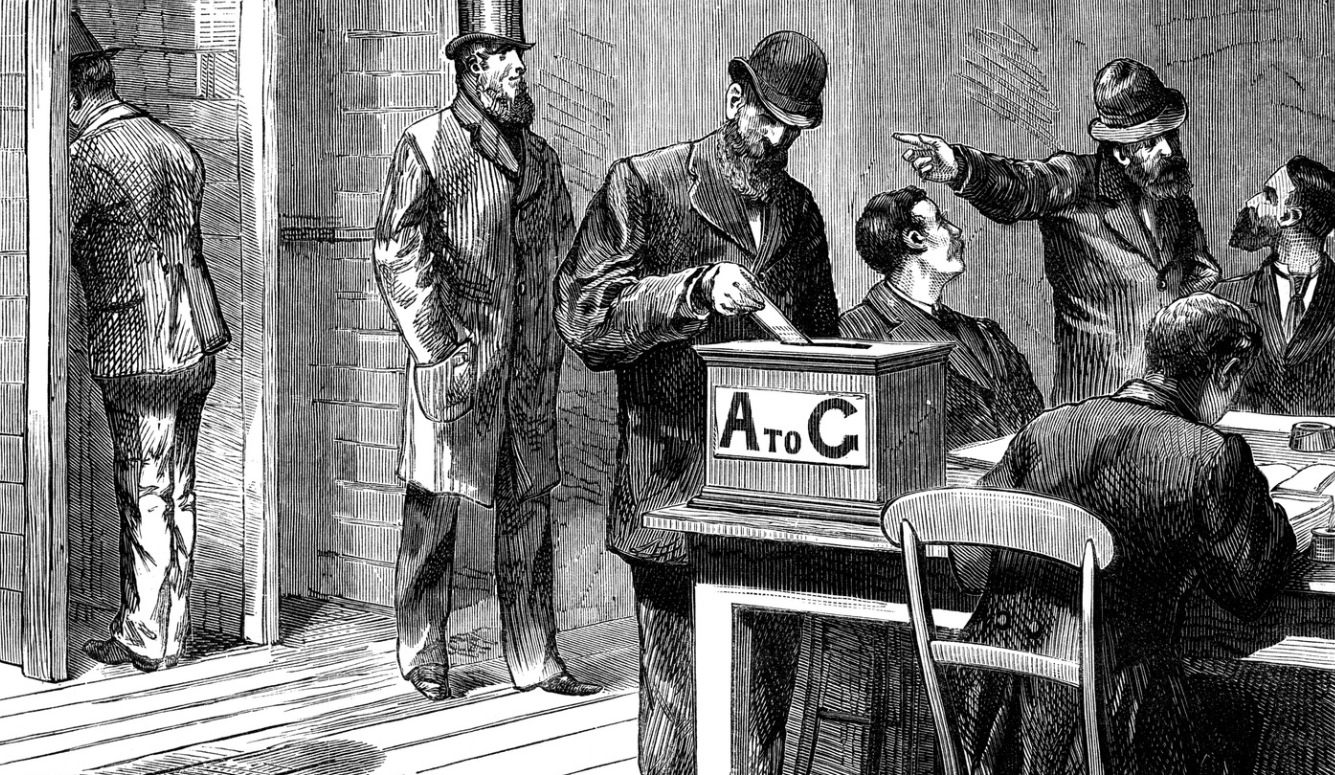
This month, the residents of Victoria will vote in a state election. We’ll go to a polling place, like our local primary school, dodge the people handing out how-to-vote cards, get our name marked off in a big book by an employee of the Victorian Electoral Commission, get issued two ballot papers which have been printed by the government, take them into a voting booth, write on them, put them in locked ballot boxes, and go and buy a sausage on the way out. This is a familiar process to anyone who lives in a democracy anywhere in the world. Americans who voted in the mid-terms followed a similar process, minus the distinctly Australian democracy sausage.
It is difficult, today, to imagine an election without ballot papers, voting booths, and ballot boxes. The very first election to bring them together took place in Victoria, in September–October 1856. The secret ballot was not actually invented in Australia, as some writers claim. Elections in revolutionary France used a form of voting by secret ballot. But in those elections, voters wrote down their vote on a piece of paper and handed it over to an election official in the street. Voters had to be literate and provide their own paper—both barriers to voting—and the system was far from secure.
The 1856 Victorian election set a standard for elections that was copied throughout Australia, then in other British colonies, the United States, Europe, and, eventually, all of the world’s democracies.