Politics
Antifragility in Ukraine
Four years into the full-scale invasion, Ukraine bears little resemblance to the country Russia expected to defeat in a matter of days.
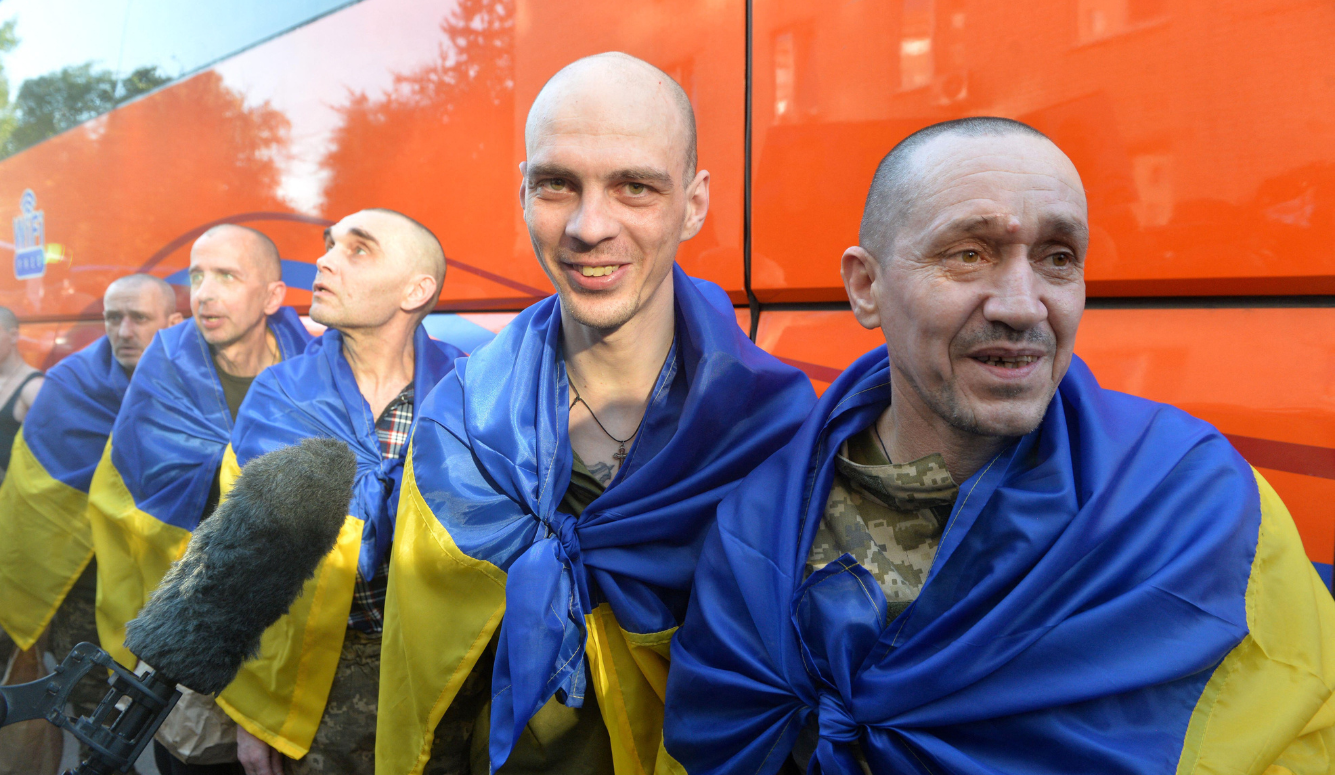

In the summer of 2014, my wife and I were forced to flee our hometown of Donetsk after it was occupied by Russia. We left with a couple of suitcases containing everything we had managed to pack in a hurry. Our apartment, our belongings, our family ties were abandoned forever. One of the least practical things I brought with me to Kyiv was a copy of Nassim Nicholas Taleb’s 2012 book, Antifragile. I imagined that it would help pass the time on the journey, but the train was too crowded and I was too anxious to read it.
I rediscovered the book later, once I had arrived in Kyiv, while we watched our modest savings steadily disappear into rent payments. There was a couch beneath the window of the apartment we had rented, and during those first nights, I often awoke in darkness to the roar of passenger planes, which I mistook for air raids. By day, I would stretch out on the same couch with Antifragile. I began it with a mixture of scepticism and despair. Taleb was known to the world for his “Black Swan” concept—a sudden and unexpected event that radically changes the course of our lives. It seemed to me then that his uninvited bird had landed in Ukraine—right on my head, crushing the life I had known.
But by the time I finished reading Antifragile, Taleb had persuaded me that we would endure: my family, my country, and somehow, myself. It’s unlikely that he had Ukraine or Russia in mind when he developed the concept of antifragility, which he is careful to distinguish from mere resilience. His framework is much broader and universal in nature. A robust system, he argues, absorbs a shock and returns to its previous state, while a fragile one breaks under pressure. An antifragile system does something more surprising: it uses stress as fuel. “Some things benefit from shocks,” he writes. “They thrive and grow when exposed to volatility, randomness, disorder, and stressors.”
When I read those lines, I sat upright on the couch. Perhaps I interpreted them in an overly simplified way, but they helped me to see the world and myself in a new way. Fragile systems rarely advertise their fragility. More often, they seem to be unbreakable due to their rigidity. The more centralised the system, the more plausible this illusion—until the framework suddenly cracks, unable to withstand external and internal pressure.
Antifragility means more than resistance. It means benefiting from stress rather than merely surviving it. When I shook a kaleidoscope as a child, I always discovered a new beautiful pattern before me instead of the chaotic shards. When I broke my father’s favourite cup or my mother’s crystal vase, it was final and irrevocable. You can sculpt with plasticine for as long as you like. But what will you do with a cracked steel part? This may be a primitive and rather immature understanding of the philosophical concept, but it helped me to climb out of the abyss of despair into which I had slumped. I told myself that I was neither fragile nor robust. I was antifragile, and this allowed me to adapt to any conditions.
In the winter, my wife and I lived in a small dacha outside Kyiv that friends let us use free of charge during the cold months, and I chopped wood for its tiny fireplace. In the summer, I toiled over translations and acted as a copywriter to pay the rent on my apartment in central Kyiv. My wife and I had nothing, yet we had everything—every path and opportunity imaginable. In my understanding, this was antifragility. Adaptation to anything. Looking at Ukraine, I noticed the same qualities in its political, economic, and social manifestations. It didn’t crumble when it encountered obstacles, it transformed. Taleb’s book didn’t tell me anything about Ukraine, but it gave me a new lens through which to view it.
For years, this understanding was little more than a personal intuition. Then came 24 February 2022. That morning was the largest real-world stress-test in modern European history. A country of forty million people suddenly faced an invasion launched by what many analysts considered the world’s second most powerful army. If Taleb’s concept meant anything beyond philosophy, it would reveal itself then.
Western intelligence agencies watched Russian tanks and troops pour across Ukraine’s border and gave Kyiv 72 hours. Some said less. The calculation was not unreasonable: Russia was deploying what appeared to be an overwhelming conventional force along a five-axis approach, and its special-operations units were moving on Hostomel airport to open an air bridge directly to the capital. The assumption embedded in every assessment was the assumption that had governed European security thinking for decades—that Putin had transformed Russia into an invulnerable war machine. But that calculation was wrong. Not slightly wrong. Structurally wrong.
The Russian military that crossed into Ukraine was built on blind obedience. Its officers had been trained to wait for orders, not to improvise. Ukraine’s military was, by any conventional measure, outmatched—roughly 200,000 against a Russian force with vastly superior equipment, air power, and logistics. What Ukraine had that no order of battle could capture was a distributed architecture of resistance. The Territorial Defence Forces were not a professional army but a network of motivated civilians with weapons and local knowledge that no satellite image could fully map. You cannot decapitate a network that has no single head. You cannot cut the supply lines of an army that is, in significant part, supplied by volunteers driving their own cars.
 Scott Atran
The Kyiv offensive failed not because Ukraine was stronger. It failed because Russia was too inflexible. The battlefield became not merely a contest of weapons and manpower, but a contest of learning. Civilians became the backbone of the Ukrainian Army. We donated money, wove camouflage nets, made Molotov cocktails, and attended courses on first aid for the wounded. None of it was centrally planned. Nobody waited for instructions. Tens of thousands of people simply began solving problems in front of them. This wasn’t something official or professional. Fragments of a kaleidoscope were forming perfect patterns.
Russia’s strategic calculus included an assumption that looked perfectly logical on paper. Millions of Ukrainians who had fled Donbas after 2014—and later other occupied territories—would become a source of instability. Many of them were Russian-speaking. Many had grown up in the Soviet cultural space. Some had relatives across the border. Under pressure, they were expected to weaken Ukraine from within. But the opposite happened. Assimilation accelerated. Russian aggression compressed processes that might otherwise have taken generations. On 24 February 2022, my own family began speaking Ukrainian. Today, if my seven-year-old granddaughter hears a Russian word somewhere, she asks what it means. The children around her do not watch Soviet cartoons. Moscow is not a dream city to them. It is barely a geographical concept.
Four years into the full-scale invasion, Ukraine bears little resemblance to the country Russia expected to defeat in a matter of days. Entire sectors have been rebuilt around wartime necessity. Volunteer networks evolved into logistical systems. Civilian drone enthusiasts became military innovators. Small workshops became defence manufacturers. A society that was expected to collapse under pressure has instead spent years converting pressure into adaptation. The process has been costly, painful, and incomplete. But it illustrates Taleb’s central insight: under conditions of prolonged uncertainty, survival belongs less to the strongest than to the fastest learners.
At every stage of war when Ukraine appeared to be losing—the encirclement of Kyiv in February 2022, the fall of Mariupol in May, the grinding attrition of Donbas through the summer, the annexation of four oblasts in September, the strikes on energy infrastructure through the winter of 2022–3, the stalled counteroffensive of 2023—the expectation formed, in Western capitals and Moscow alike, that the breaking point had been reached at last. And at every such stage, Ukraine adapted, reorganised, and found a new mode of operation. Ukraine is not just surviving under the pressure of the Russian assault, it is revolutionising drone technology and warfare.
Keep reading
How to Suppress Men’s Writing
Back to the Dark Ages
Prison or Peer Review
France’s Imaginary Austerity

The Limits of Perfectionism