Politics
How the Weak Prevail
From ISIS to the IRGC, how groups with sacred commitments outlast adversaries with far greater firepower.

From the Kurdish frontline facing the Islamic State, I watched through binoculars as fighters stood in pickup trucks rigged with stripped-down autocannons, bellowing war cries. They were exposed in ways that no conventional military would tolerate. Days earlier, at the nearby village of Kudilah, my research team and I had chronicled a battle in which ISIS fighters held off US-trained Sunni Arab militia and Iraqi army units. The Kurdish Peshmerga eventually intervened and pushed ISIS back. But then they withdrew, leaving the village in ISIS hands.
Kurdish commanders were unwilling to lose more men to hold an Arab village that local forces themselves could not defend against an adversary willing to blow itself up rather than retreat. A Kurdish officer put it plainly: “Daesh is weak now because they have used up their resources, but their fighters don’t retreat even if the battle is lost.” That observation captures a recurring failure in how we understand war. These fighters were outgunned, outnumbered, and under constant pressure. By conventional military logic, they should have collapsed. Instead, they persisted—and their persistence reveals a deeper conceptual error in modern strategy: the failure to distinguish between what a military can destroy and what drives people to fight.
The error lies in treating war as fundamentally a problem of what US planners call “cost imposition”: degrade the enemy’s infrastructure, kill its commanders, impose sufficient losses, and rational actors will eventually calculate that continued resistance is no longer worth it. This kind of reductive realism rests on assumptions borrowed from economics: that preferences are ordered, tradeable, and ultimately subordinate to self-preservation. The problem is that these assumptions break down in precisely the conflicts where they are most often applied.
Reductive realism has vocal champions in the current US administration. As US defence secretary Pete Hegseth has argued: “We can talk all we want about values. Values are important. But you can’t shoot values, you can’t shoot flags, and you can’t shoot strong speeches. There is no replacement for hard power.” That statement rests on the assumption that adversaries will either be eradicated or they will respond to coercion in proportion to their material losses. In reality, when core cultural values and identities are at stake, the opposite is often true: cost imposition deepens rather than erodes resistance, because what is being defended is not reducible to material interest.
Violence is never experienced in a vacuum. When bombs fall on cities, the meaning attributed to those bombs matters enormously—whether they are experienced as deterrence, humiliation, or confirmation of a long-held narrative about injustice and existential threat. These interpretations are shaped by moral culture: historically rooted frameworks through which communities define what is worth defending and why.
Embedded in these frameworks are sacred values—devotion to God, homeland, family, honour, dignity. These commitments are non-negotiable and effectively immune to cost-benefit calculation. They are not mere preferences to be traded against material concerns; they are unfalsifiable axioms, and no amount of coercion changes the underlying algebra. When sacred values are engaged, the logic of coercion can invert: the imposition of cost confirms that what is under threat must be defended.
Extensive research—with active combatants in Iraq, with civilians in Iran, and with civilians and Hamas leaders in Gaza—shows how these psychological variables translate into concrete behaviour. Among the fighting groups we studied in Iraq (ISIS, Kurdish Peshmerga, Shia militias, and others), those most willing to absorb casualties and continue fighting were not the best-resourced or the best-trained. They were the groups populated by devoted actors who had fused their personal identities most completely with their collective struggle, and whose cause was anchored in sacred, non-negotiable values. Crucially, rival fighters judged these groups to be more formidable than raw material strength would predict.
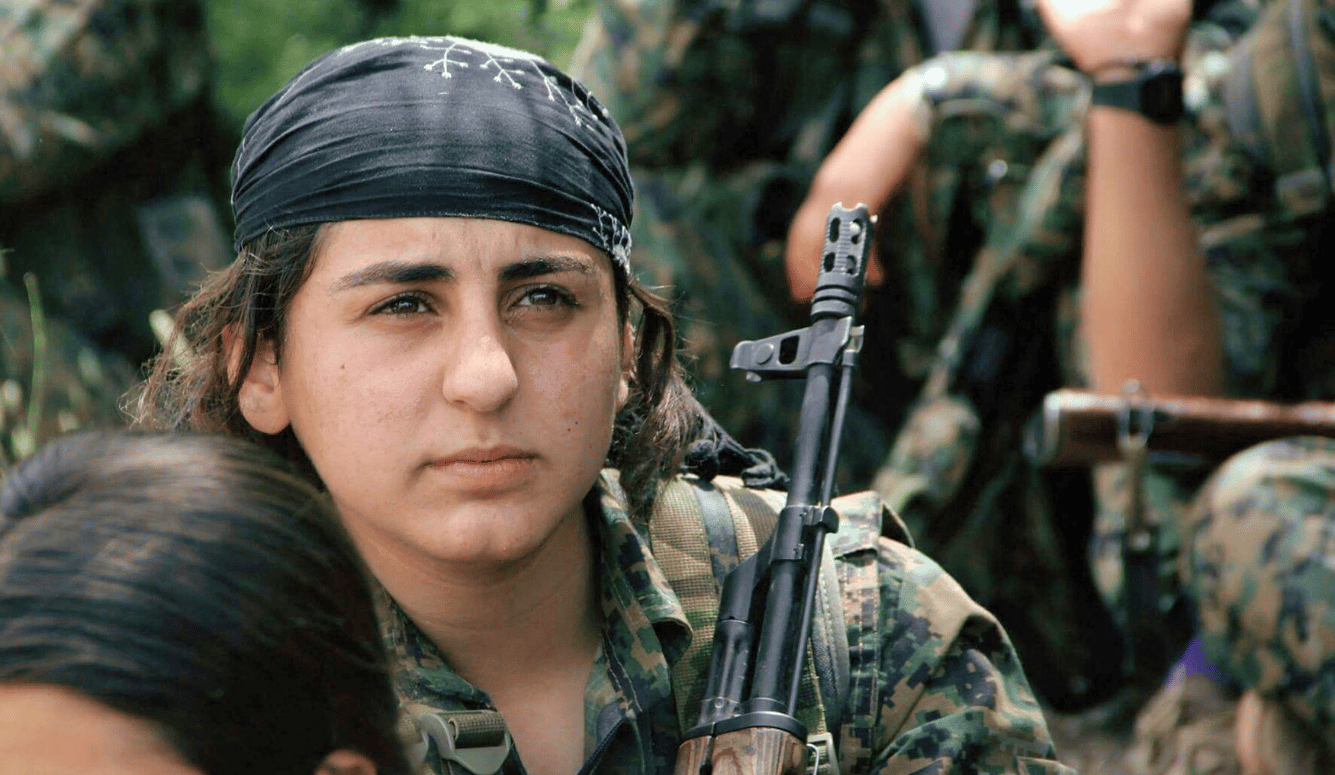
For devoted actors, sacrifice and even death become compelling within their own moral logic, even though this appears to be irrational from the outside. They do not ignore material reality; they evaluate it using a different calculus. Behavioural and neurological research across Europe, North Africa, the Middle East, and East Asia shows that when identity fusion and sacred values combine, willingness to sacrifice exceeds what either factor produces alone. The effect is nonlinear: a relatively small number of such individuals can sustain resistance far beyond what force-ratio calculations would predict, and their visible commitment activates and amplifies the resolve of the wider population around them.
In Gaza, survey data from 2025 indicated that roughly one-in-five residents qualified as devoted actors by these criteria—fusing their identity with that of Palestine, treating certain political and religious arrangements as sacred, and expressing readiness to bear substantial personal costs in their defence. Support for Hamas as an organisation had declined, but a large plurality of Gazans still aligned with its core goals. Similarly, in post-ISIS displacement camps around Mosul, support for the group had fallen in response to its brutality, but backing for its main objective—the establishment of a Sunni Arab state under strict Sharia—remained far stronger than support for democracy or a unified Iraqi state. Military attrition had not dissolved the underlying commitment structure; in some respects it had reinforced it.
In The Descent of Man, Darwin argues that devotion to “highly esteemed, even sacred” values provides “an immense advantage” when embodied by individuals who, “by their example,” inspire others to sacrifice. Their willingness to impose and absorb costs, coupled with control of coercive capacity, allows a small group of individuals—what Lenin called the “revolutionary vanguard”—to shape strategy. The pattern is consistent across history: German bombing of London stiffened British resolve; saturation campaigns in Korea and Vietnam failed to compel capitulation; attacks on Ukrainian cities have reinforced national resistance rather than broken it. Once the initial onslaught by a superior power fails to secure victory, the contest shifts—from who can inflict more damage to who can sustain the greater will to fight and adapt tactics more effectively.
 Michael J. Totten
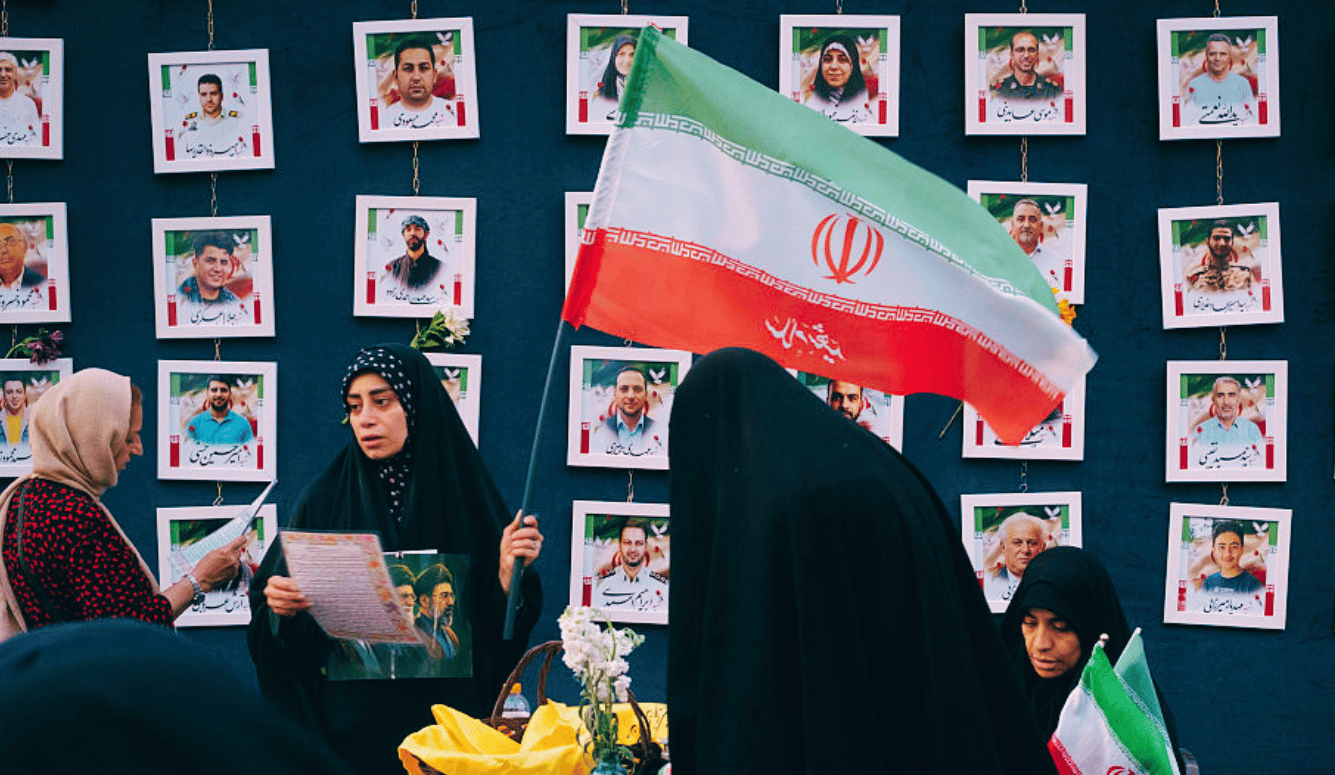
Iran presents a clarifying case. Only a minority of Iranians share the regime’s most sacralised commitments—those defended by the Islamic Revolutionary Guard Corps (IRGC), including a strict religious order reinforced by missile development and a nuclear program framed as part of the “sacred jihad of the defenders of Iranian land.” The IRGC’s identity was forged in the brutal, prolonged attrition of the Iran–Iraq War: a shared ordeal that created bonds of solidarity among survivors that external pressure is poorly positioned to erode.
Keep reading
Robert Lynch on Status, Humour and the Apes We Pretend Not to Be | Quillette Cetera Episode 74

The Radicalisation of Tucker Carlson
A Pop Fiction Master and Monster

Australia’s Coming Censorship Machine

Anatomy of a Book Promotion