Art & Culture
Homeric Heresies
Outrage over a black Helen of Troy misunderstands the long Western tradition of radically reinventing classical myths.
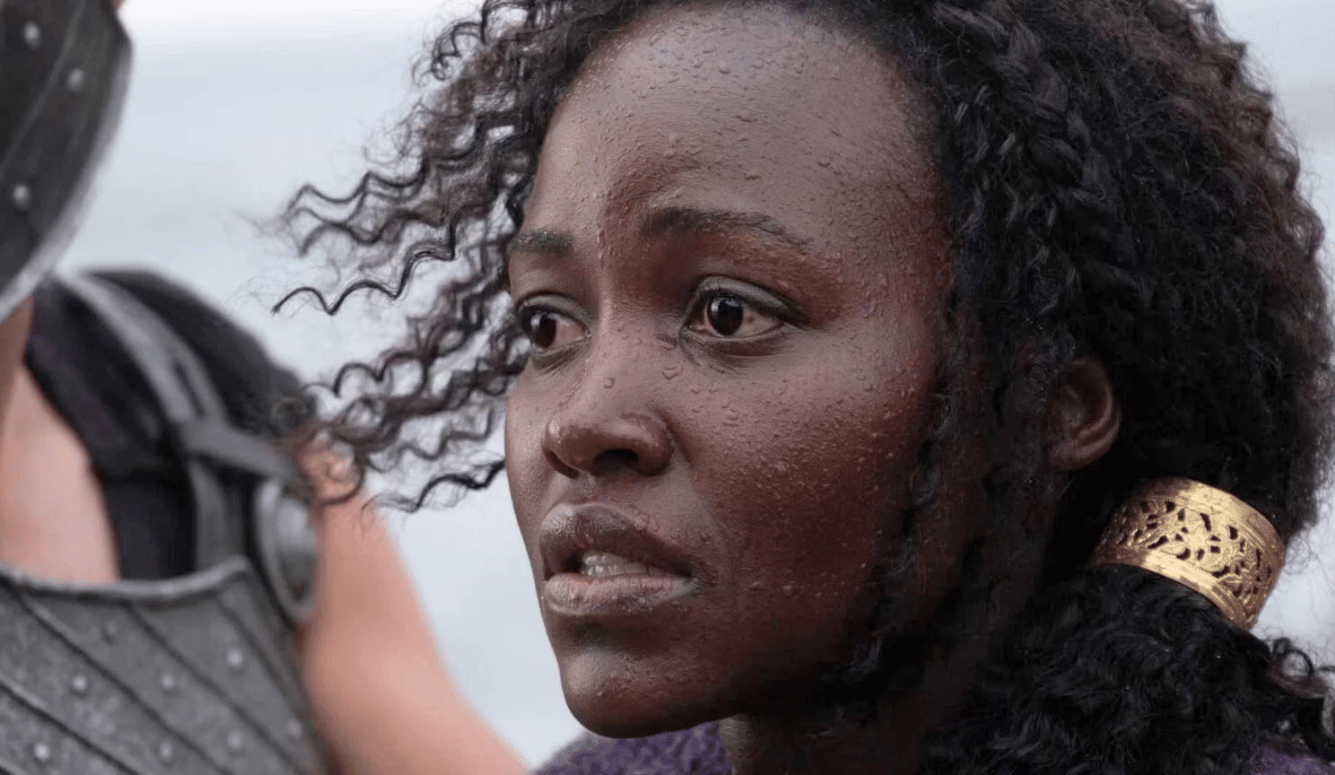

In recent days, an overheated debate has been raging over Christopher Nolan’s forthcoming adaptation of The Odyssey. Much of the controversy has focused on the casting of black actress Lupita Nyong’o in the dual roles of Helen of Troy and her sister Clytemnestra. (Reports that Elliot Page would be playing Achilles appear to be inaccurate.) For “anti-woke” campaigners like X owner Elon Musk and right-wing pundit Matt Walsh, this decision constitutes an act of anti-white racism, and an insidious attempt to “erase European history” by race-swapping Western icons.
Chris Nolan is an anti-White racist
— Elon Musk (@elonmusk) May 22, 2026
Nolan has also been accused of careerism on the assumption that he is trying to satisfy the Motion Picture Academy’s current diversity requirements to qualify for a Best Picture Oscar (untrue, since those requirements can be satisfied with diversity in behind-the-scenes roles), as well as cowardly conformism.
Not one person on the planet actually thinks that Lupita Nyong’o is “the most beautiful woman in the world.” But Christopher Nolan knows that he would be called racist if he gave “the most beautiful woman” role to a white woman. Nolan is technically talented but a coward. Too… pic.twitter.com/wwzF9RkrWI
— Matt Walsh (@MattWalshBlog) May 12, 2026
Nolan never won an Oscar in his life until he made Oppenheimer, a movie whose hero is a communist who lost his security clearance bc he lied to the FBI about his contact with Soviet spies. Then he won 2. Hollywood is all-in on communism, and Nolan is now addicted to their praise.
— Roman Helmet Guy (@romanhelmetguy) May 22, 2026
Others have sarcastically suggested (with Musk’s approval) that white actors should now be cast in iconic black roles:
A glaringly obvious double-standard https://t.co/bis3wryR5T
— Elon Musk (@elonmusk) May 16, 2026
This last point is particularly easy to mock because (a) all the black individuals hypothetically played by white actors are real people (alive or dead) while Helen of Troy is a fictional mythological character, and (b) Helen was traditionally described as the daughter of the god Zeus, conceived by him in swan form and hatched from an egg. Nonetheless, there’s a nugget of truth in the complaint about double standards. It’s certainly true that today, casting a white actor as even a fictional or mythological nonwhite figure—such as the Chinese female warrior Mulan or the legendary Indian hero Rama—would be a no-no in Hollywood. In recent years, even the voicing of Indian-American cartoon character Apu Nahasapeemapetilon on The Simpsons by Jewish actor Hank Azaria became “problematic.” Meanwhile, white-to-black race-swapping has sometimes extended to historical figures such as Ann Boleyn, who was played by a black actress in a controversial 2021 British miniseries.
The best defence of Nolan’s Odyssey to date has come from Matt Yglesias, who argues that diverse casting in an adaptation of one of our culture’s enduring myths reflects an arguably conservative idea: that the Western canon is foundational to American and European civilisation, and that it is the common heritage of anyone who is a part of that civilisation. Opening up the great stories of Western civilisation to nonwhite actors is not just a matter of career opportunities; it is also a matter of belonging—a statement that nonwhite Americans or Europeans are equal citizens with an equal claim to that heritage. At least some of the opposition to a black Helen of Troy—and to diverse casting in general—comes from a rejection of precisely that view.
It’s fine to debate and disagree about specific issues of verisimilitude and historicity. A black Marie Antoinette would probably be fine onstage, since theatre generally involves greater suspension of disbelief, but it would be jarring in a movie or on a television show that aspired to even minimal historical accuracy. (The BBC’s black Ann Boleyn looked to me like a cheap political stunt, especially since the actress’s race was asked to represent Boleyn’s outsider status at the English court and her powerlessness as Henry VIII’s queen.) But if there’s one setting in which colourblindness surely works well, it’s deep mythological antiquity. At one point, the common-heritage status of our foundational myths operated in the direction of white actors being cast in nonwhite roles: think of biblical epics, as recent as Frank Zefirelli’s 1977 TV series Jesus of Nazareth, populated by fair-skinned, light-haired and/or blue-eyed people representing Semitic denizens of the Middle East.
 Jaspreet Singh Boparai
Keep reading
Robert Lynch on Status, Humour and the Apes We Pretend Not to Be | Quillette Cetera Episode 74

The Radicalisation of Tucker Carlson

A Pop Fiction Master and Monster

Australia’s Coming Censorship Machine

Anatomy of a Book Promotion