Media
No, the Media Isn’t Responsible for Jason Arday’s Suicide
The disgraced academic was a pathological liar and lifelong con artist whose misdeeds were covered up for years by self-serving academic administrators. Exposing this kind of rot in elite institutions is our job.

No true culture warrior worth his salt admits to reading The New York Times. Very Online conservatives refuse to read it because they think it hates Jews. Very Online progressives refuse to read it because they think it hates trans people. So intense is their loathing, it seems, that some of these hashtaggers cannot even tolerate the company of those who do read the Times. This includes one @claireyfaerie, who recently told Bluesky followers: “My parents have a [New York Times] subscription. Whenever I go to visit them and see the paper sitting on their coffee table, I remember the trans kids who have died after being denied necessary medical care and segregated from their peers. Remember the trans kids I know. I never stay long anymore. Can’t do it.”
I have my own issues with the Times, which, back in 2021, did more than any other media outlet to spread fake news about those non-existent child graves in Kamloops, British Columbia. But on most days, the Times remains a great newspaper. Case in point: this outstanding 15 August investigative piece about disgraced Cambridge University sociologist Jason Arday, who committed suicide last week following revelations that his academic work was heavily plagiarised and his CV was a tapestry of self-aggrandising lies.
1/ I'm glad NYT did the right thing here and examined how this tragedy unfolded without pulling punches. Cambridge's yearslong pattern of baffling decisions and shirking of responsibility is a scandal, and one of its victims was Jason Arday himself.https://t.co/eDBivVb2RN
— Jesse Singal (@jessesingal) August 15, 2026
During late July and early August, news outlets on both sides of the Atlantic lit up their hit counters with fresh disclosures about the bizarre claims that Arday had peddled over the years. He said that he’d been prophetically anointed as a social-justice Spartacus by a wise old villager during a trip to South America that never happened. He claimed that he’d been in a (non-existent) coma for weeks when he was a child, and that doctors had urged his parents to pull the (non-existent) plug before his miraculous recovery. He claimed that a racist (and completely imaginary) would-be killer wearing a mask had stalked him in Cambridge’s academic halls, and that other racists had sent (equally non-existent) pig heads to his house. These lies were so grotesque that even left-wing media outlets that (by sheer force of habit) had originally seemed receptive to Arday’s claims of a vast racist conspiracy pivoted to an attitude of pointed scepticism.
While liars and con artists are a dime a dozen, they usually find their marks among lonely widows and art-world dilettantes. Arday’s example was astonishing because the people he dazzled (or who pretended to be dazzled, at any rate) included the brain trust at Cambridge University—which is to say, some of the (supposedly) smartest people on the face of the planet. Their gullibility (or cynicism) has always been the real story here. And it is on this score that the aforementioned New York Times story—bylined with no fewer than five names—breaks fresh ground.
Jason Atta Kwei Arday grew up in London, the third of four brothers born to Ghanaian immigrants. During his early academic career, he bounced around from one school to the next, producing a thin and undistinguished publication record in the field of physical education. Riding the ideological trends, he eventually pivoted to the study of racism and mental health, subjects on which he was extremely forthcoming in regard to his own “autoethnography”—which, as noted above, he simply made up as he went along.
In other words, Jason Arday was a complete fraud. But in the early 2020s, Cambridge, like much of the western academic firmament, was consumed by a great fervour for quick-fix DEI hiring policies. And as Columbia University professor John McWhorter pointed out, Arday had the advantage of being not just black, but also what a certain kind of posh white British academic would see as the best kind of black. As McWhorter put it, “Dreadlocks seem to have a narcotic effect on some people in academia and publishing. I can’t help wondering whether this guy would have been taken up like this if he had short hair.”
This piece sums up this episode perfectly. Another tragedy in cases like this is that he will pass on his version of what research and serious thought is to students and assorted mentees. And goodness, dreadlocks seem to have a narcotic effect on some people in academia and… https://t.co/kfqRie3RJG
— John McWhorter (@JohnHMcWhorter) July 29, 2026
What’s more, Arday also claimed to be autistic, thereby providing the school with what 30 Rock fans will know as a toofer.
And so in 2023, when an opening came up for a prestigious professorship in Cambridge’s sociology department, Arday made the shortlist—despite having nothing close to the “outstanding research record of international stature” that the position nominally demanded.
 Rosalind Arden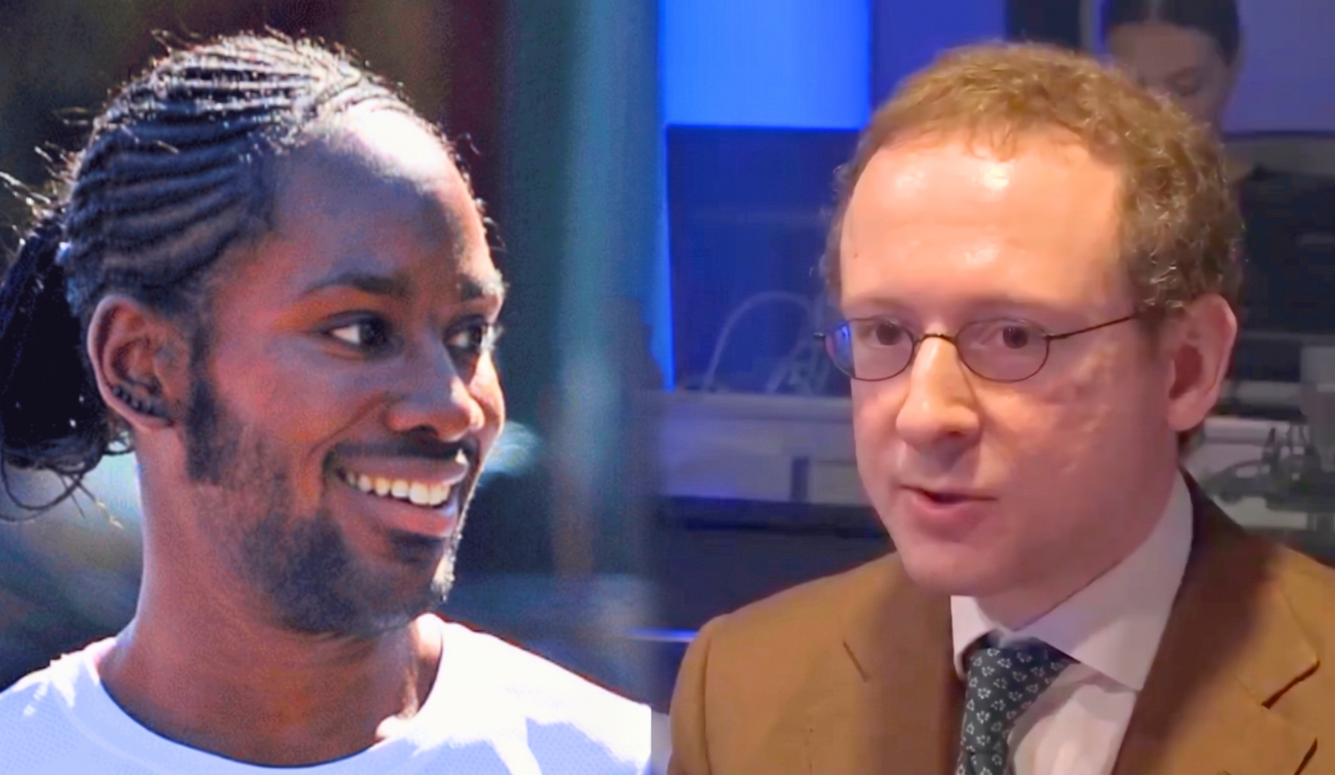
What happened next has now been detailed by Times investigators: Arday and the three other short-listed applicants (two of them non-white women, for what that’s worth) were invited to Cambridge for two days of interviews. The selection process was overseen by a panel of nine academic experts. One “influential member” of this group, it is noted, was child psychiatrist Paul Ramchandani, a Cambridge scholar whose research work has involved autistic children. As the Times indicates, this is important because someone with Ramchandani’s expertise would have been able to easily debunk Arday’s far-fetched claim that he’d never spoken a word until he was 11, and only learned to write at age 18. (The rapid academic development that would be required for someone such as this to then go on to earn a PhD “has no precedent in clinical literature,” the Times notes.) We know that Ramchandani voted for Arday, as did everyone else on that panel, because documents obtained by the Times indicate that Arday’s selection was “unanimous.”
It is impossible to know whether the panellists selected Arday because they were absurdly gullible, or because they cynically overlooked his shoddy record and dubious achievements so they could take credit for hiring a telegenic black savant who amazed everyone with (false) claims of having raised millions of dollars for charity and run 30 marathons in 36 days on a severely injured leg.
None of these academics responded to requests for comment from The New York Times, so we are left to speculate on their motivations. My own guess is that at least some members of this group really did become true believers, imagining Arday to be a sort of magical negro whose wordless upbringing had turned him into a social-justice savant (a modern-day echo of those medieval legends you hear about unlettered child-prophets in farming villages suddenly memorising the Bible and then besting monks and priests in theological debates).
The most obvious example here is Faculty of Education head Hilary Cremin, who was featured in an absolutely cringe-inducing BBC video that showed her staring deeply into Arday’s eyes as they locked hands, at which point she began babbling to him about how he was “the best in the world in terms of the research that you do.”
Professor Arday was told he was " the best in the world " by his boss. pic.twitter.com/MdfB8fDknX
— InvictaRegina🇬🇧 🦅 (@InvictaRegina) August 6, 2026
Gullibility can be forgiven. More damning is the fact that three years later—by which time school administrators would have known what they’d signed up for with Arday—Cambridge assisted Arday in smearing his detractors as racists engaged in a “vile campaign to undermine his credibility.”
Much has been made of the fact that the first scholar known to have publicly called out Arday’s fraud was Nathan Cofnas, a philosopher whose research affiliation with Cambridge was terminated in 2024 after he’d publicly amplified his controversial views on race and intelligence. But as the Times report makes clear, Cambridge had already been provided with warnings about Arday’s dodgy academic record by established scholars. Yet they did nothing except discreetly prod Arday to correct some of the more obvious errors in his published research.
The dam ultimately burst on 27 July, when Retraction Watch, a news outlet run by Quillette contributor Ivan Oransky, disclosed that Arday had used legal threats to force Times Higher Education to kill a story that documented the many plagiarized passages contained in his PhD thesis. In anticipation of that article appearing, The New York Times informs us, Cambridge had pre-emptively written up a strenuous defence of Arday.
Securing a copy of that document was the Times’ investigative coup de grâce—as it showed that Cambridge administrators were ready to play the racism card, even before they’d seen the actual Times Higher Education article. In that letter, Cambridge thundered that “the integrity of higher education is at risk if we do not take a stand against the systematic attempts to erase Black scholarship.”
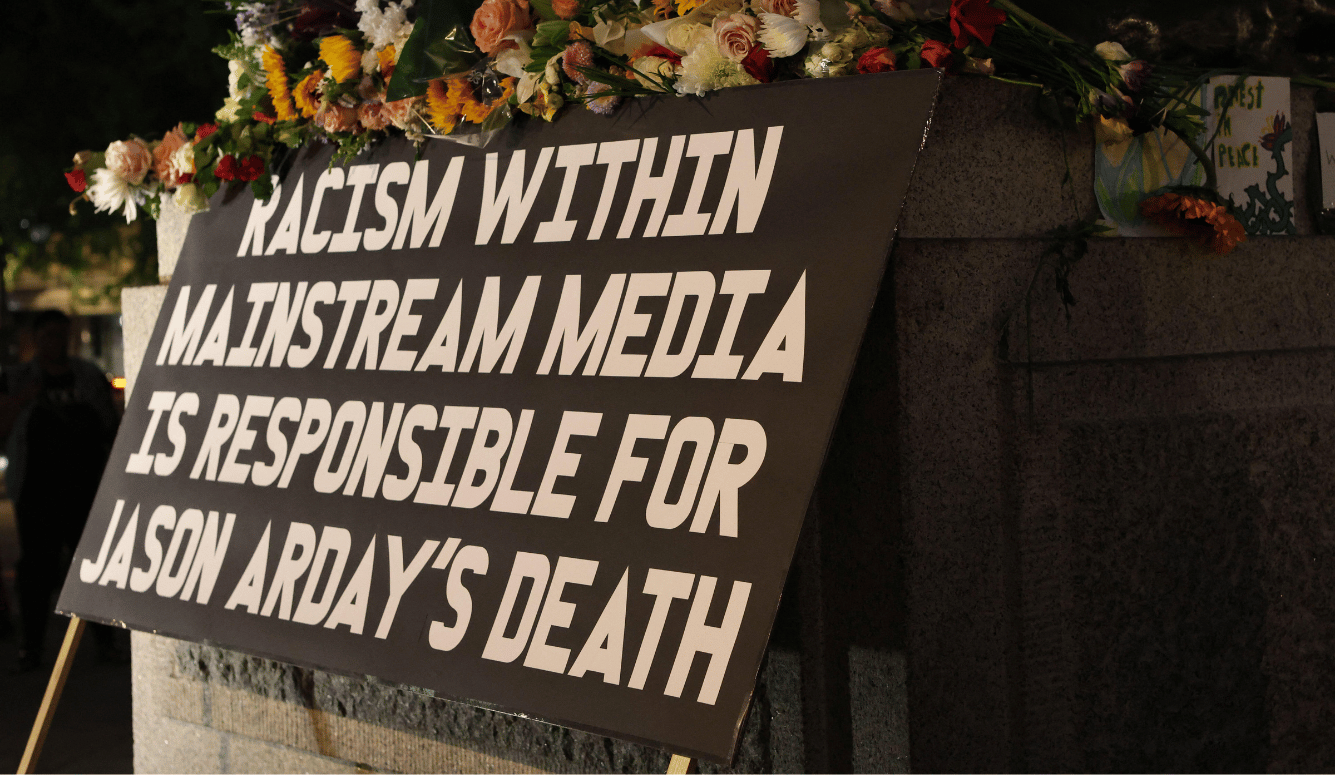
Every life should be regarded as having inherent moral worth. And Arday’s suicide, like all suicides, is to be regarded as a tragedy. But not all tragedies reflect collective wrongdoing. And it is wrong to imagine (as conservatives have attempted to do) that Arday was killed by DEI or “wokeness”; or (as some progressives have attempted to argue) that he was “hounded to death” by a swarm of racist journalists whose true mission was to cut down a high-profile black scholar.
Arday committed suicide because he was a pathological liar and lifelong con artist who’d been exposed for what he was; and he faced a lifetime of humiliation and disgrace as a result. Yes, the DEI movement gave him a pathway to grift his way to the highest levels of British academia. But if it hadn’t been for that opportunity, he might equally have embarked on a career path of money pyramids and crypto scams. The final act may well have been similarly tragic.
When Arday’s lies finally did come home to roost, he lashed out viciously in the same grubby way as any cornered scam artist. In his case, this included hurling accusations of racism at the reporters and academics who asked him questions he found inconvenient, and even going so far as to report one journalist to the police. These were deplorable actions, and they do not become less deplorable because the person who committed them took his own life.
It’s never a pleasant or polite task to speak ill of the dead. And it wouldn’t be necessary to do so if prominent academics weren’t seeking to portray Arday as some kind of wide-eyed ingenue who’d made a few innocent mistakes while trying to navigate the sharp-elbowed world of academia—a black angel too good for this white world. When he died, Arday was 41 years old, already pushing on into middle age. Between his PhD and his teaching career, he’d worked his con at no fewer than six British universities. By the time the jig was finally up, he probably knew the inside game better than many of the Cambridge administrators who were running interference for him.
Following Arday’s death, various British MPs and public figures signed on to a petition demanding a public inquiry into the actions of the news media, on the grounds that Arday’s death “was the direct, foreseeable and foreseen result of press harassment.” To the extent that any inquiry is convened, its object of scrutiny should be Cambridge University and the other schools that facilitated Arday’s long masquerade as a legitimate scholar.
The much-vilified news media, on the other hand, did its job—very much including the uber-vilified New York Times. Those arguing otherwise are doing nothing more than shooting the messenger.
Quillette invites thoughtful responses to its essays.
Selected responses are published once per week as part of a curated Letters to the Editor feature. If selected, letters appear under the contributor’s real name and may be edited for clarity and length.
To submit a letter for consideration, please email [email protected].
Keep reading
The Insight Trap
Cornell and Consent
Robert Lynch on Status, Humour and the Apes We Pretend Not to Be | Quillette Cetera Episode 74
The Radicalisation of Tucker Carlson