Education
Institutional Failures in the Garden of Great Intellects
The Cofnas and Arday controversies show that on matters of race, administrators at Cambridge have failed to conduct deliberate checks, failed in probity, and failed in their tolerance for unsettled science.
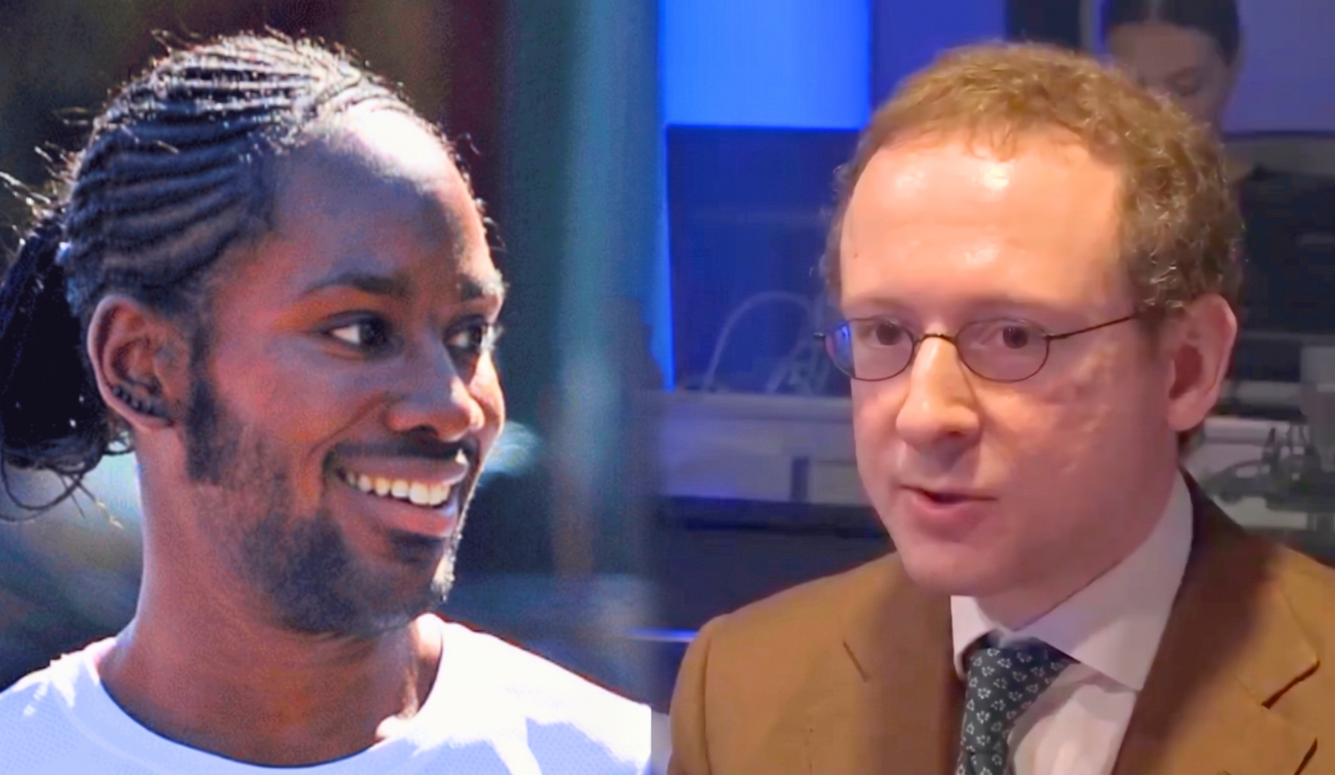

Editor’s note, 15 August 2026: Jason Arday was found dead at his home in south London on the afternoon of 14 August. He was 41. The Metropolitan Police have said the death is being treated as unexpected but not suspicious. This essay was published earlier that day, before the news was reported. It concerns the conduct of Cambridge University, and we have left the text as published. Our sympathies are with Arday's family and friends.
Jason Arday—fantasist, fabulist, fraud, and (until recently) Professorial Chair in the Sociology of Education at Cambridge University—sold a bolus of lies to students, faculty, and administrators, and they gobbled it up like a dish of ice cream on the hottest sunniest driest summer day in English memory. Months earlier, Nathan Cofnas, a philosopher at the same university, was accused by students of racism. Would nobody rid Cambridge of this turbulent scholar? Rid of him it got—through suitably tortuous means.
That you and I know about Jason and his Argo of lies owes to Nathan Cofnas, who broke the story by publishing evidence of Arday’s many apparent plagiarisms on his own Substack. The faculty of education at Cambridge University was first alerted to the possibility that Arday was a plagiarist by David Harris, a former professor emeritus at Plymouth Marjon University, in 2023, the year that Arday was appointed. Then, about a year ago, rumours began to circulate that Arday’s inspiring story of overcoming unbelievable childhood hardship was, in fact, not believable. But when Jack Grove, a journalist from Times Higher Education (THE), contacted Arday requesting comment and clarification for a forthcoming article, Arday hired doughty defamation lawyers Carter-Ruck to threaten THE with litigation. For good measure, Arday also reported Harris and Grove to the police, alleging harassment.
I won’t recapitulate Jason’s deceits, expanded accounts of which are plentiful elsewhere. You’d have to be pretty po-faced not to find some of them amusing. Students defrauded of time, attention, and tuition fees may not be laughing so hard. And administrators at Cambridge will need large handkerchiefs to wipe that much egg off their faces. Here, I want to compare and contrast how an august and historic institution treated two of its own scholars once they presented the university with a problem. The two problems are tightly linked by the theme of race.
Let’s start with the hiring process. Nathan Cofnas was awarded a Leverhulme fellowship by Cambridge: those fellowships are extremely competitive. Fewer than one percent of applicants successfully pass through both the internal nomination round and the external national competition. Cofnas had already obtained a BA in Philosophy from Columbia College in 2011, and the intake rate of nine percent the year he applied was then the lowest on record. He achieved an MPhil with Distinction in History and Philosophy of Science from Cambridge's Darwin College in 2016, followed by a DPhil in Philosophy from Oxford’s Balliol College in 2021. By the end of 2021, he had seventeen peer-reviewed publications of which fifteen were first-authored. Which is to say that by the time Cofnas was awarded his fellowship in 2022, he had star-potential written all over him.
And Arday? Arday obtained a BA in Education Studies and Physical Education from St Mary’s University College, Twickenham, which lacked the authority to award its own degrees until September 2006. That institution’s current acceptance rate is between sixty and seventy percent. This was followed by an MA in Pedagogy, Professional Practice in Education, also from St Mary’s University College. He achieved a second Master’s at Liverpool John Moores University, followed by a PhD on peer-mentoring and reflective practice among student teachers at the same university in 2015. At the time of his hiring, Arday had about twelve peer-reviewed publications of which ten were first-authored. Leaving aside the allegations of plagiarism that surfaced later, Arday’s candidacy is inexcusably weak for a full professorship at Cambridge (full professor is the top academic rank there).
We can test my assertion by comparing his candidacy with the last ten hires at equivalent rank in the fields of education and sociology at Cambridge. For external hires, the recruit is typically 19–28 years post PhD; Arday was eight. Each of the last ten equivalent hires has a major competitive grant or fellowship on record; several have very large grants. Arday had none. Six of the last ten full professorial hires were internal promotions following 13–28 years of a Cambridge-based career. In summary, each of the previous ten hires at Arday’s level demonstrated the track-record of senior scholarship. When pro-vice chancellor Bhaskar Vira described Arday as “an exceptional scholar,” he wasn’t kidding—Cambridge has a case to answer for putting Arday in an untenable position. Arday is a mendacious cheat, but he is also a co-victim, along with those he hoodwinked; he should not have been put in that post in the first place.
How did institutional responses at Cambridge vary in their treatment of Cofnas and Arday?
Having won his Leverhulme Fellowship, Cofnas was awarded college research associate status at Emmanuel College. (Cambridge, like Oxford, is a collegiate university comprising about 31 legally separate, self-governing colleges plus a central university, so the college and the university can act as distinct agents.) Students protested loudly about Cofnas’s status at Emmanuel because Cofnas had published his unpalatable views on the exceptionally sensitive topic of race. Cofnas had argued that genetic differences may partly explain measured gaps in average IQ between racial/ancestry groups, and that because “truth is intrinsically valuable,” scientists have a duty to research and discuss this possibility openly rather than suppress it for moral or political reasons.
 Rosalind Arden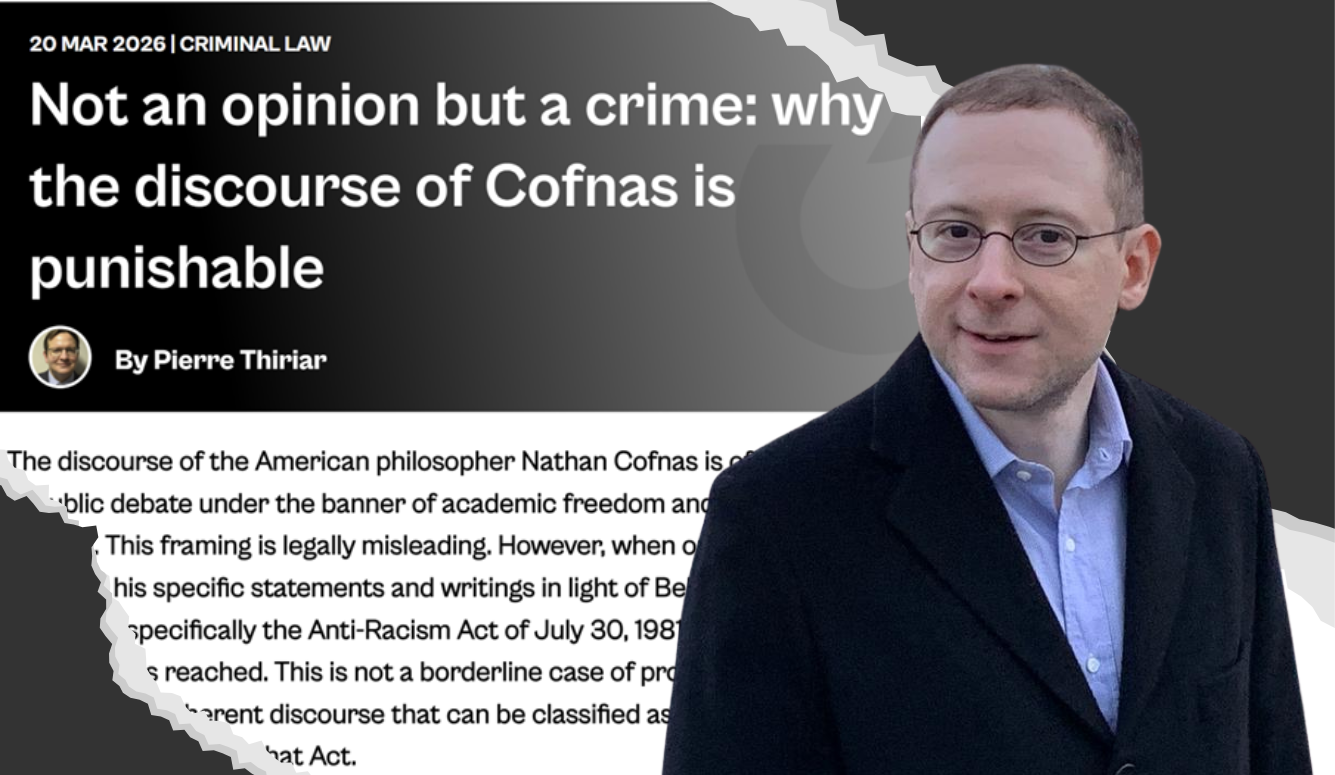
On 9 February 2024, Doug Chalmers, master of Emmanuel College, acknowledged “Dr Cofnas’s academic right, as enshrined by law, to write about his views.” Two days later, Chalmers and senior tutor Corinna Russell wrote that “nobody is free to do their best work whilst false narratives of this kind continue to call into question a scholar’s right to be part of this community.” Five days after that, pro-vice chancellor Bhaskar Vira provided a clarification: “Freedom of speech within the law is a right that sits at the heart of the University of Cambridge” and “the voice of one academic does not reflect the views of the whole University community.” A week later, Vira is on record as telling student protesters, “Cofnas has crossed the line of all the concerns for freedom of speech.” In mid-April, a College Fellowship Committee chaired by Mike Gross concluded that Cofnas’s Substack “amounted to … a rejection of Diversity, Equality and Inclusion (DEI and EDI) policies” and “represented a challenge to the College’s core values and mission.” The committee recommended termination of Cofnas’s college associate status. It was formally terminated on 2 July 2024.
Cofnas brought a discrimination suit against Emmanuel College. In March 2026, the county-court judgement ruled that, although Cofnas’s beliefs are protected under UK law, his expression of them was “objectionable” and Emmanuel College had been “objectively justified and proportionate” in terminating him. In late 2025, Cambridge University reported the results of its own internal investigation, which concluded that while Cofnas’s views are “offensive to many” (manifestly true), they do not breach the law or the university’s free-speech regulations; 58 student complaints were dismissed. Cambridge University did not fire him—his position expired at the end of the standard Leverhulme three-year term, which is distinct from Emmanuel College terminating his college research associate status. Cofnas claims that the eighteen-month university investigation functioned to keep him sidelined and off campus until the contract timed out. Cambridge’s “Statement on Disciplinary Investigation” clearing him of wrongdoing wasn’t published until October 2025, after he’d already left.
What about Arday? In February 2023, pro-vice chancellor Bhaskar Vira announced that this exceptional scholar would help “address the underrepresentation of people from socio-economically disadvantaged backgrounds.” Hilary Cremin, head of the faculty of education, told the Times, “Not only is he a world-class scholar, he also brings a wealth of experience.” (Had she read any of Arday’s scholarship?) When allegations of plagiarism were brought to the attention of Rhys Morgan, head of policy, governance, and integrity at Cambridge, the same year, he declined to investigate. Asked about these allegations, Cremin replied, “We remain immensely proud of Prof Arday’s achievements and scholarship ... he has our full support.” Vice chancellor Deborah Prentice called Arday “world-class” and spoke about “structural issues” in BAME hiring. Arday had attributed problems in some of his papers to “direct and indirect racism” and “significant health issues.” In late July 2026, a spokesperson for the university (whom the university chose not to name) stated, “Professor Arday has been the victim of a vile campaign to undermine his credibility, which must stop.” The plagiarism claims had been “thoroughly investigated … and dismissed” by the relevant bodies, continued the Unnamed Spokesperson.
Richard J. Haier
Finally, on 6 August 2026, Cambridge announced an investigation into Arday’s “academic qualifications and honorary appointments” after evidence of his plagiarism and falsehoods became impossible to deny or deflect. Arday resigned a couple of hours later complaining that he had “reached the limits of what any person should reasonably be expected to endure.”
Compare the two cases and a pattern emerges. Cofnas cleared every formal bar that Cambridge erected—a competitive fellowship, a strong publication record, an eventual ruling that he’d broken no law and no policy—but he was punished anyway, and his position quietly expired while the university dithered. Arday did not clear the bars his professoriate peers had to clear, he was defended anyway, and he was propped up by administrators who failed to do due diligence. One scholar was punished for an opinion; the other was protected despite misconduct that objective methods could verify. Two different treatments, one shared instinct: expedience trumps evidence.
Our best explanation for this mess comes from evolutionary psychology. It is hard to overstate the strength of the connection between the instinct to acquire status and our behaviour. Bluntly, when a cause is highly valued, coding one’s statements in alignment with that cause provides benefits, while not doing so incurs costs. Some readers will have experienced this in their own work or social lives. It is what may cause some of us to feel unease without a pronoun line in our email signature, or a “safe space” sticker on the door—the discomfort of not visibly aligning with the current culturally valued signal. There are circles in work and friendship where much social capital hangs on our coding. Zealots punish laggards partly because it upgrades their own status. Little of this is explicit or even well known to our conscious minds, which is why it’s hard to call the bluff on the branding.
I distinguish sharply between anti-racism as a moral disposition and antiracism as a political brand. Antiracism is currently the most valuable way of advertising virtue across wide swathes of our culture. Free speech has only limited brand appeal, which is why pro-vice chancellor Bhaskar Vira can swing from backing a scholar’s freedom of speech on one day to antiracism on another. Antiracism is far more valued by students than free speech, and so alignment confers the greater benefit. Scholar-activism as college mission is institutionalised status-signalling. Racism is a destructive (and resistant) part of human societies. Historically it has been a force for great evils. While we must remain vigilant, coding our behaviour as antiracist is just coding. Public alignment predicts branding, not character—I know people whose politics run well outside fashionable lines who I’d trust to do the right and courageous thing without hesitation in a real crisis, and vocal allies I would not. Not coding is not equal to being racist. Placards don’t make the person. This is the crucial distinction to make.
Some people, however, are not built this way. They do not code their behaviour, and they forgo the social capital that comes with it. Cultures are heterogeneous, and there are many niches. There is a racist niche in every society, and the size of that niche varies among countries. Aside from soi-disant racists, non-aligners include ornery nonconformists, as well as people who are low on what personality researchers measure as “agreeableness.” The latter—nonconformists and those low in agreeableness—are unworried about “being seen in public without proper coding” and that is emphatically not the same as being racist. Nathan Cofnas was one such individual, and he was punished by Cambridge University because the students insisted that he is a racist. Commentators in the legacy press and on social media have repeated this accusation during the row about Arday without caveat or qualification.
Two points on this. First, it cannot be racist to hold the view that genetics may contribute to differences among people from different ancestries, because that is an empirical (and, pace Cofnas’s critics, scientifically unsettled) point. Second, it is cavalier to neglect the impact of register and tone when writing and speaking about ethnicity and ancestry—especially in conjunction with intellectual capacity—because we tend to mistakenly elide cognitive capacity with moral worth. This is a sensitive topic; I am wholly in sympathy with those who find coarse expressions of “group differences” offensive. But does an “offensive” opinion provide legitimate grounds for what was effectively a sacking by Emmanuel College? It does not, and my interest here is in institutional failings, not in psychoanalysing either Cofnas or Arday.
Administrators at Cambridge failed to conduct deliberate checks, they failed in probity, and they failed in their tolerance for unsettled science. Cambridge sold out on Mertonian norms (judge the claim not the claimant) and exchanged them for a politics of identity and branding. Their leadership was inattentive to accessible information, and cravenly posturing for the benefit of being seen as antiracist, which has nothing at all to do with actually reducing racism. As Cofnas noted in his exposé of Arday, they could easily have chosen an extremely bright black sociologist to do “serious work in the sociology of education.” They failed to secure high-quality teaching for their students, and they have egregiously failed current and future black faculty and students by making race the story. Again.
Andrew Hammel
Who pays for this fiasco? Cambridge will surely be hurt—in time, attention, reputational damage. Arday has been exploited by Cambridge, elevated beyond his academic record, and exposed. Cofnas has divisive (some would say rebarbative) opinions and style, but he is an excellent scholar who should be ornamenting an elite philosophy department. Sociology students at Cambridge have, by all accounts, been ill-taught by an ill-equipped professor. And black scholars—existing and future members of the academy—have seen black achievement devalued by what looks a lot like race-based affirmative action.
I shudder when I think of the impact of the egregious mishandling of Cofnas and Arday on a highly talented black academic friend. “Why on earth have you chosen to research law? It’s so heavily text-based,” I remonstrated with him. “Well,” he said, “I suppose being blind since birth I got used to being without vision and learned how to manage a lot of text during my history PhD.” A lamentable and inevitable outcome of Cambridge’s failures is throwing shade on terrifically talented and tenacious scholars like him. One may only hope that this much-discussed debacle causes the academy to engage in some authentic and honest self-reflection.
CORRECTION: An earlier version of this article incorrectly stated that Jason Arday had been involved in the publication of just one book (his own). In fact, he also co-edited two others (here and here). Quillette regrets the error.
Quillette invites thoughtful responses to its essays.
Selected responses are published once per week as part of a curated Letters to the Editor feature. If selected, letters appear under the contributor’s real name and may be edited for clarity and length.
To submit a letter for consideration, please email [email protected].
Keep reading
Common People

How Genetics Rewrote History
Equal Pay, Unequal Work

The Genetics of Crime and Punishment