Art & Culture
Man of the People
Sam Wasson’s new Capra biography is a welcome corrective, but it goes too easy on the director and misreads his decline.
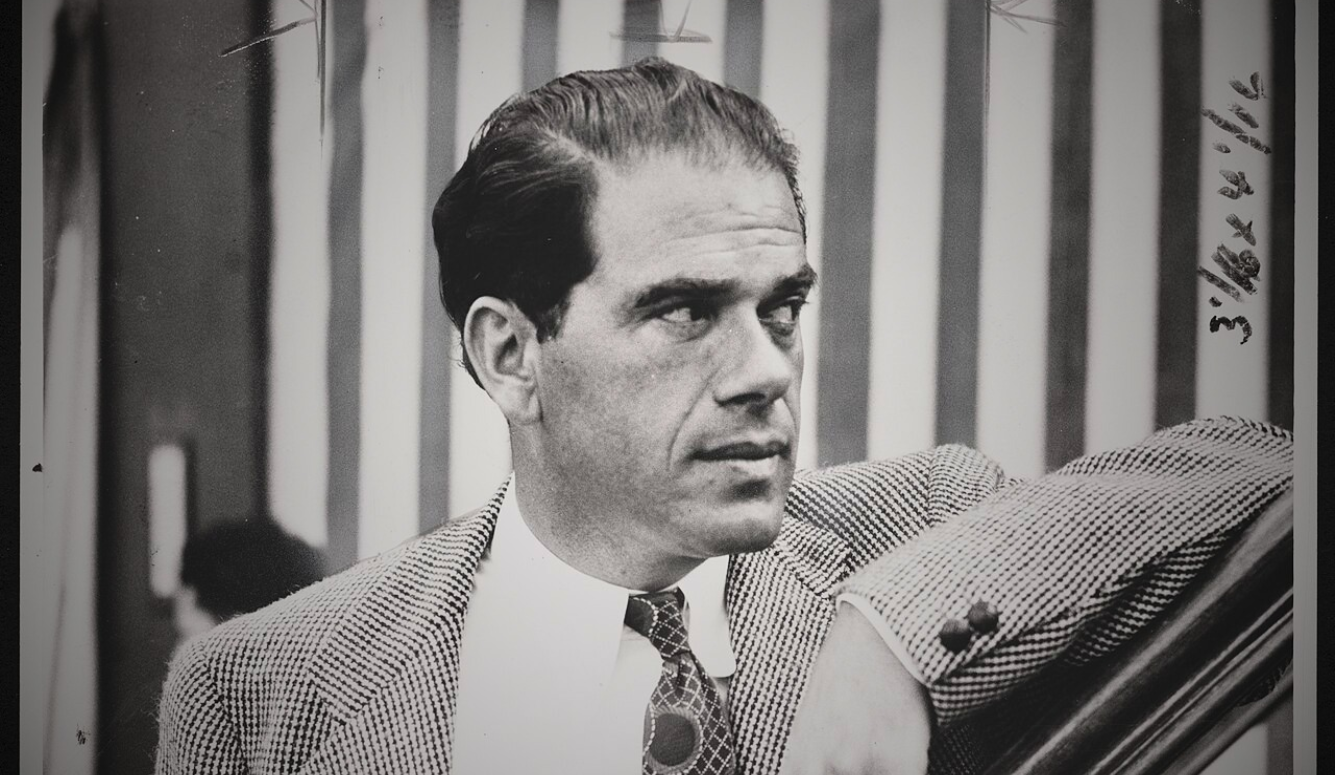
A review of Frank Capra: A Life by Sam Wasson; 752 pages; HarperCollins (October 2026)
Near the start of his massive new biography of Frank Capra, film historian Sam Wasson describes his subject as “the greatest American director who ever lived.” In the FDR era, that would have been an uncontroversial opinion. Between 1935 and 1939, Capra received the Oscar for Best Director three times. He was on the cover of Time magazine. He was the president of both the Screen Directors Guild and the Academy of Motion Picture Arts and Sciences. “Capra,” the novelist (and Spectator film critic) Graham Greene wrote in 1936, “has what Lubitsch, the witty playboy, has not: a sense of responsibility, and what Clair, whimsical, poetic, a little precious and à la mode, has not, a kinship with his audience, a sense of common life, a morality: he has what even Chaplin has not, complete mastery of his medium.”
Capra’s career foundered in the Fifties, but he was held in high regard for the rest of his life, collecting awards, continuing to play an important role in guild politics, and sitting for countless interviews. Then, in 1992, a year after Capra’s death, Joseph McBride published his long-awaited, meticulously researched biography of the director, Frank Capra: The Catastrophe of Success, and readers recoiled. McBride revealed that Capra was not a sweet everyman like the heroes of his films but an absolute bastard—a liar, a credit-thief, an antisemite, a political reactionary who kept a portrait of Mussolini on his bedroom wall, and “a gut-punching little man.” McBride acknowledged that Capra had made some excellent films, but he pointed out that much of what we call Capra-esque was, in fact, the invention of screenwriter Robert Riskin:
What Capra called his “formula” did not emerge until he began working with Riskin material in the early 1930s. His career before that point was scattershot and uncertain, that of a director in search of something to say. But once the formula had been established, Capra was content to repeat it, with minor embellishments, for the rest of his career, eventually to diminishing effect. ... Without Riskin, the formula became a straitjacket for Capra, one in which he struggled uncomfortably for years but could never manage to escape.
Though Wasson never says so explicitly, it’s clear that his biography of Capra is meant to correct the record. “By his own example, Capra led,” Wasson writes. “Working late into the night, he was the filmmaker his colleagues wanted to be, the winning embodiment of industry, kindness, patience, integrity, and—when he was called upon to exceed his managerial duties—talent.” That’s laying it on a bit thick, I think. Still, Capra could use a boost because he was, in his prime, an incredibly gifted filmmaker, directing some of the most luminous films to come out of Hollywood during the Great Depression, including Lady for a Day (1933), It Happened One Night (1934), and Mr. Smith Goes to Washington (1939).