History
After Apocalypse
Nothing short of being at the precipice, on the sharp edge between the world as it was and the world as it will be, ever seems able to describe the present in terms that adequately capture it.
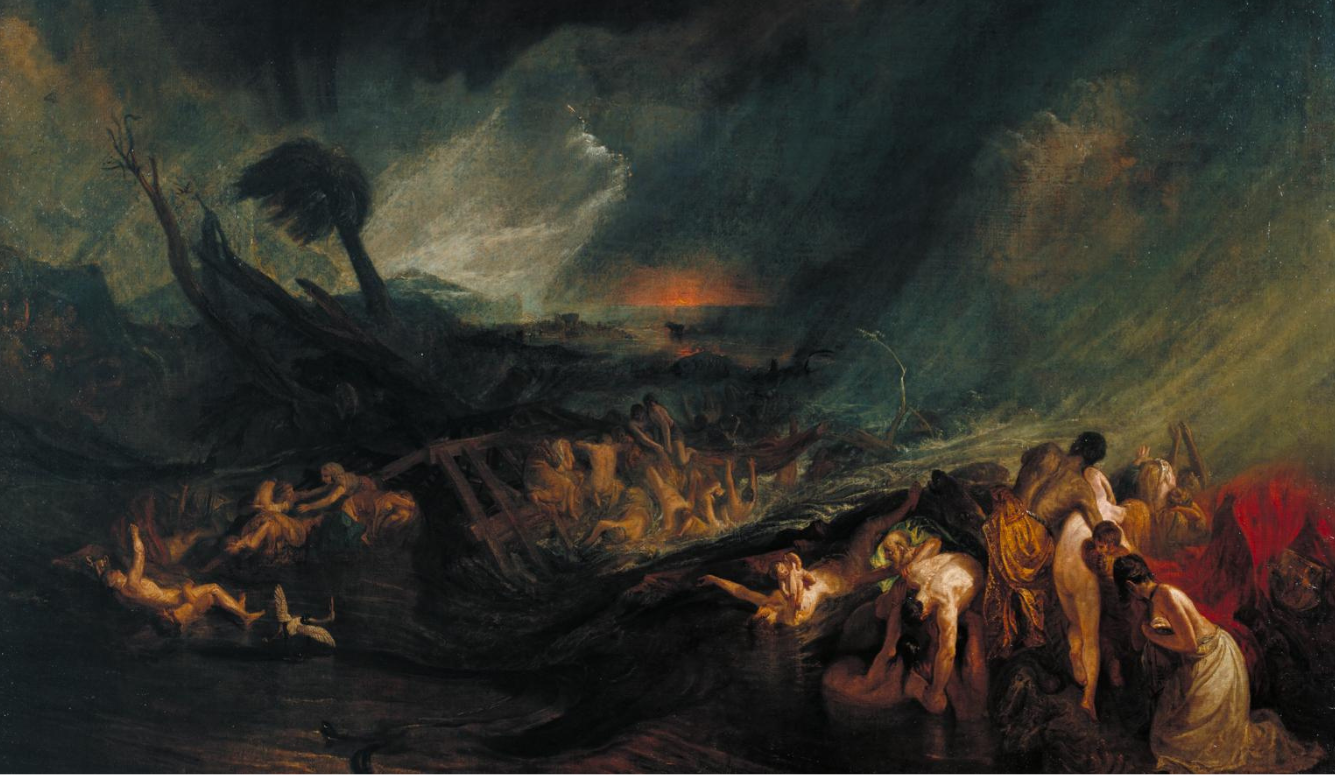
We have become convinced that we are living through the end of something in American history. Of what, exactly, it is harder to say. Democracy, liberalism, neoliberalism, globalism, the postwar order: depending on whom you ask, one or another is dying or already gone. James Davison Hunter has written that “ordinary Americans of all backgrounds and convictions” recognise that our political order, including its “leading ideas and ideals,” is failing. Much of American political life now seems to operate under the assumption that we are witnessing the sun setting on our age, to rise on another soon, or not at all. Arch-progressive Samuel Moyn writes that the country is “poised on the brink of something.” Grouchy conservative Catholic intellectual R.R. Reno is less equivocal: “We are at the end of... the postwar era.”
Why are we so drawn to the description of the present as an end, as the moment when one thing gives way to another? There is evidence that this attraction to boundaries reaches deep into human cognition. Psychologists have found that people of every age systematically regard the present as a watershed moment in their lives, looking backward on a period of considerable change while imagining themselves as having arrived, more or less, at what comes after. The researchers called this the “end-of-history illusion.” Humans do not perceive the continuous experience of their lives as one undifferentiated stream. We segment ongoing experience into bounded events instead, carving continuous activity into units with beginnings and ends. That habit may explain why we have such trouble leaving the future as simply open: an indefinite expanse whose shape we cannot know. Nothing short of being at the precipice, on the sharp edge between the world as it was and the world as it will be, ever seems able to describe the present in terms that adequately capture it. Time takes on a decisive shape in our minds, and the present correspondingly a critical position within it.