Israel
Creeping Annexation
Israeli governments have never decided what to do with the West Bank—so the settlers have begun deciding for them.
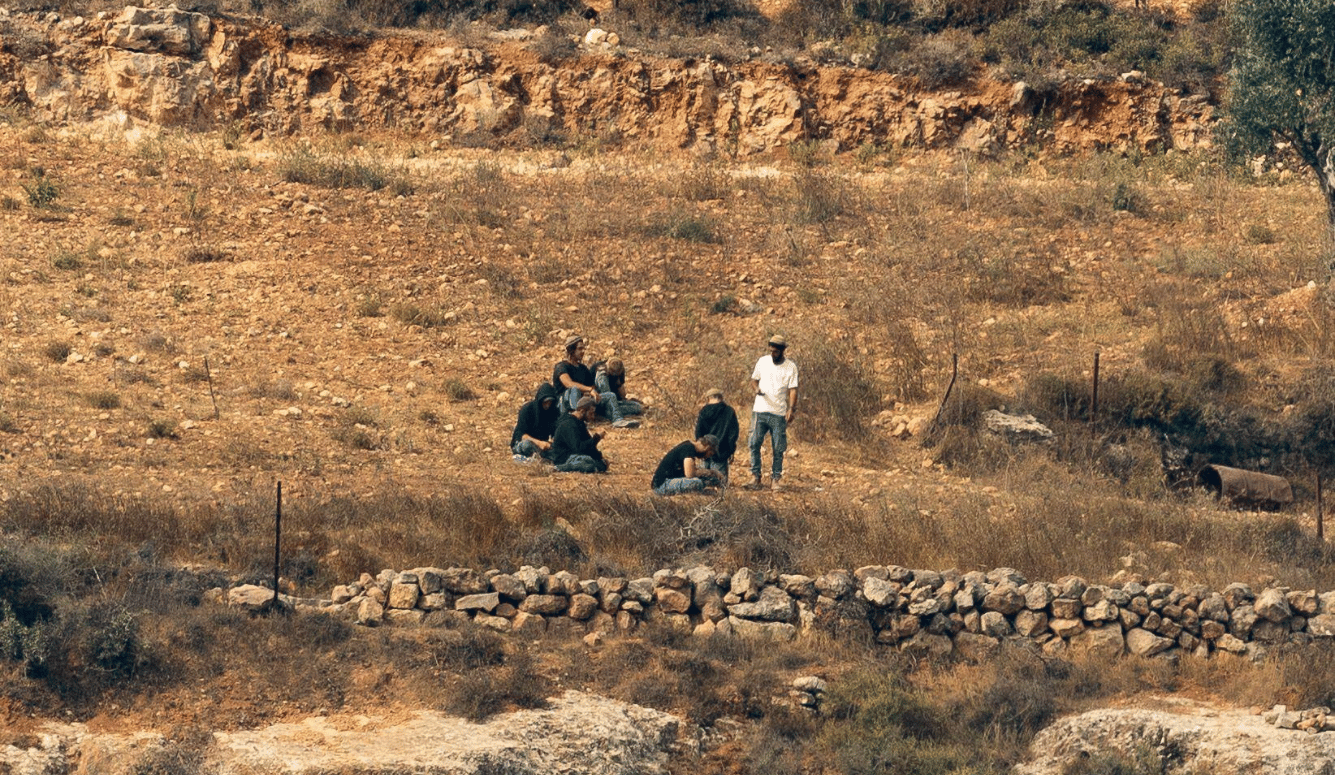

For the past fortnight, a group of Israeli settlers have besieged two Palestinian houses on the outskirts of the northern West Bank village of Qusra, and the Israeli authorities—meaning the cabinet headed by Benjamin Netanyahu, the IDF, and the police—have done nothing about it, despite some prodding from Washington. The settlers, some in uniform—presumably belonging to regional IDF defence units—have severed the houses’ water and electricity lines and periodically blocked the arrival of food supplies.
So far there has been no serious violence—but in microcosm, the Qusra siege highlights Israel’s West Bank predicament and the past three years’ campaign by the settlers to intimidate, hem in and, ultimately, drive out the territory’s three million Palestinian inhabitants. It also highlights the right-wing Netanyahu government’s duplicitous, somewhat shambolic and, in terms of international law, criminal behaviour. Netanyahu himself has said not a word publicly about Qusra in an effort at once to distance himself from the affair and “let the young men … play before us” (II Samuel 2:14).
During the past three years, following the murderous Hamas assault from Gaza on southern Israel on 7 October 2023—and with the world’s attention riveted to Gaza and then the Lebanese border, where Israel confronted Islamist Hezbollah attacks, and then Iran—many West Bank settlers, ultimately bent on Israeli annexation of the territory, mounted a well-coordinated campaign of intimidation, which included arson against Palestinian homes, vehicles, and agricultural equipment, beatings, theft, and occasionally murder, to force Arab communities to abandon their olive groves and fields and, eventually, their homes and villages. The IDF blanketed the territory with 26 battalions of ground troops, virtually ending Palestinian attacks on Jews—but did nothing to stop or restrain Jewish terrorism against the Arab inhabitants. More than 1,000 West Bank Arabs, some of them terrorists, others civilians, were shot dead during those years, mainly by troops, some by settlers.
By comparison to many of the incidents, Qusra is chickenfeed. In an op-ed in Israeli daily Haaretz this week, writer Galia Oz, the daughter of the late Israeli novelist Amos Oz, graphically described what happened two weeks ago in the remote Palestinian village of Tuba in the Hebron hills. A band of young masked Jews from a nearby settlement broke into homes during the night, torched a refrigerator, shattered rooftop solar panels, stoned and clubbed the residents, including two sisters, breaking their glasses. A woman in advanced pregnancy was hospitalised with two broken fingers and needed eight stitches to a head-wound. During the pogrom, one of the raiders danced and prayed in apparent “ecstasy.”
The Qusra siege was but the latest incident in this campaign of intimidation. After telephone appeals by the besieged homeowners—one of whom has American citizenship—to all and sundry, IDF and Border Police units (a paramilitary arm of the police) were twice dispatched to the site. They repeatedly drove off the hooligans but, crucially, arrested no one. The soldiers and border policemen then left and the hooligans, based in nearby illegal hilltop outposts or mini-settlements, came back and renewed the siege (which is still ongoing as I write) and prevented maintenance crews from repairing the water and electricity lines sabotaged by the settlers. The IDF declared Qusra and its surroundings a “closed military area.” But, in defiance, the settlers roamed and roam the area at will. During the prolonged siege, the settlers did not use firearms so as to avoid undue foreign or press attention and anger.
Keep reading
How to Suppress Men’s Writing

Back to the Dark Ages

Prison or Peer Review

France’s Imaginary Austerity
The Limits of Perfectionism