Southeast Asia
An Ambivalent Relationship
Southeast Asia in World War II, Part Three: Independence Movements under Japanese Occupation
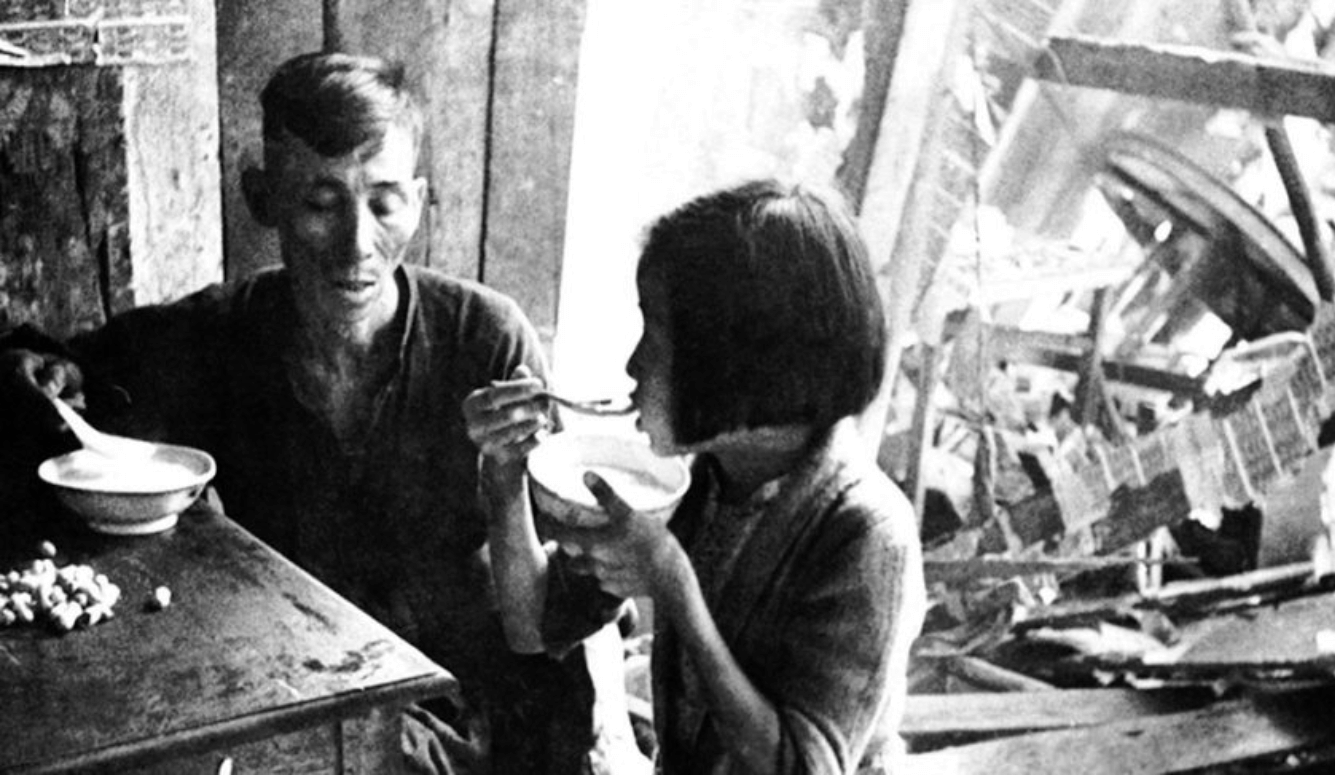

In the previous essay in this four-part series on the impact of the Second World War in Southeast Asia, I looked at the widespread violence, scarcity, and militarisation that characterised the Japanese occupation. This third essay will focus on the experiences of individual countries under the occupation and examine how local nationalist movements were cautiously co-opted by the Japanese.
 Imran Said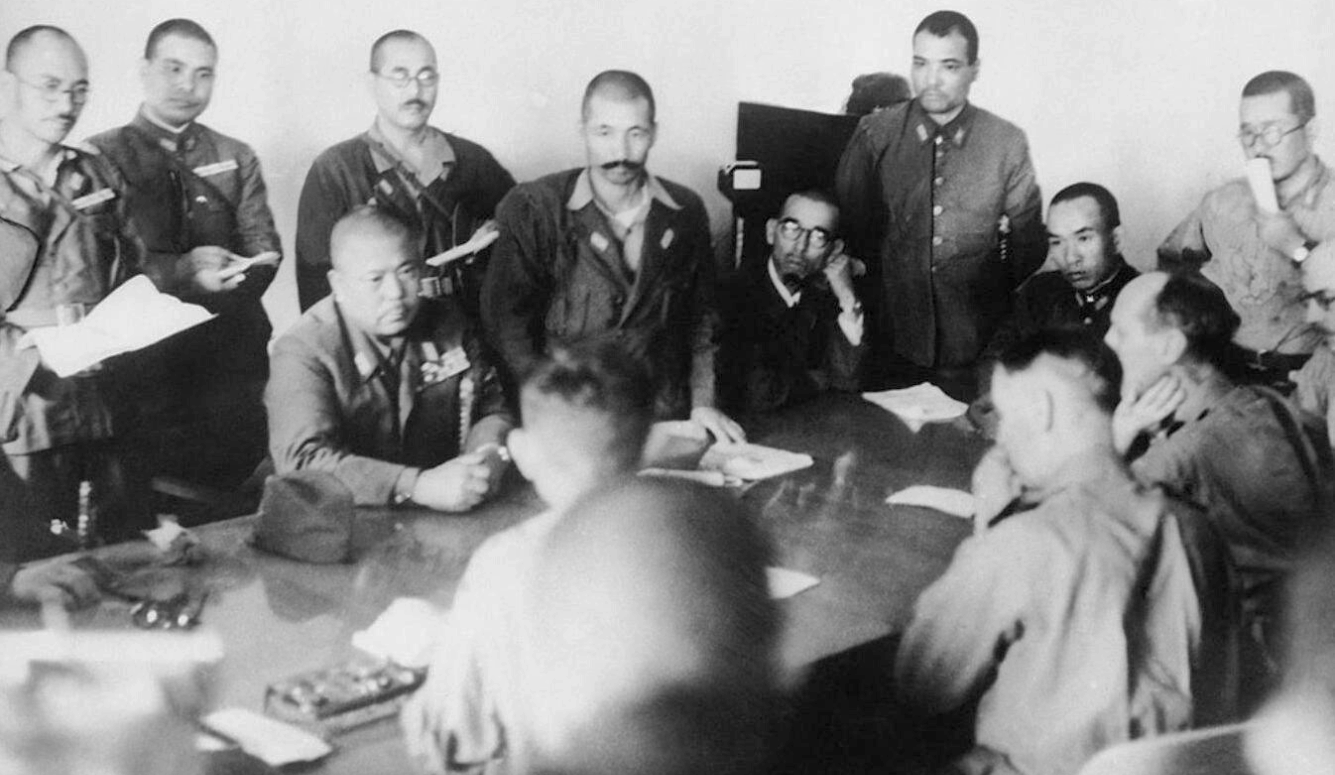
The Japanese occupiers had an ambivalent relationship with the local nationalists they encountered in Southeast Asia. Like the European colonialists before them, the Japanese often preferred to enforce their rule by collaborating with traditional elites rather than with local nationalists. In cases where the Japanese did choose to cooperate with the latter, the end goal was always enforcing control and mobilising the resources of Southeast Asia to feed the Japanese war machine, rather than creating independent states.
Yet, as the war intensified and the Allies advanced across the Pacific, the Japanese saw fit to grant more concessions to local nationalists, including plans for eventual independence. It was hoped that, if granted more autonomy, Southeast Asian elites would be better able to channel local manpower and materials to the Japanese.
Indonesia
This was how the Japanese approached the administration of Indonesia, the primary target of the Japanese offensives throughout Southeast Asia in 1941–42. Many Indonesians initially welcomed the invaders, believing Japanese propaganda that they were there to liberate them from the Dutch. In Gorontalo in northern Sulawesi and Aceh in northern Sumatra, revolts against the Dutch broke out before the Japanese even arrived. By the time the Japanese arrived in Aceh, they were met by cheering crowds, the Dutch having already fled.
If the Indonesians hoped that independence was imminent, however, they were to be sorely disappointed. Horrified by the violence they encountered, the Japanese promptly banned all political parties, as well as Indonesian nationalist symbols such as the red and white flag and the national anthem. To the dismay of nationalists, the administrative unity of the archipelago was dismantled, with Sumatra annexed to Malaya and administered by the army from Singapore, Java administered as its own separate entity, and the eastern half of the region handed over to the Imperial Japanese Navy. Sumatra was later governed as a separate entity.
To administer the territory and to mobilise its rich resources of oil and rubber, the Japanese ruled through the traditional Javanese administrative aristocracy, just as the Dutch had done before them. Local nationalist leaders like Sukarno (the future president of independent Indonesia) and Muhammad Hatta (the future vice-president) were generally sidelined, enlisted instead into Japanese-sponsored mass organisations to help inspire and mobilise Indonesia’s vast reserves of manpower into supporting the war effort.
Many of the nationalist leaders were not blind to Japanese intentions. Sukarno told a friend, “I know the Japanese are fascists. But I also know that this is the end of Dutch imperialism. We will suffer under the Japanese, but thereafter we will be free.” Aligning with the Japanese allowed these nationalist leaders to reach the masses through their system of mass propaganda, which included radio broadcasts transmitted via loudspeakers attached to trees and poles. Through the Japanese, thousands of Indonesians were introduced to the charismatic Sukarno for the first time, allowing him to build a mass following.
In return for being provided with a platform, nationalist leaders turned a blind eye to the miseries being inflicted on their fellow countrymen. Among the most wretched were those recruited as forced labour for the Japanese. The mobilisation of such labour in Indonesia was called romusha. Villages were ordered to supply quotas of men. They usually targeted poor peasants and landless people, who would be put to work in ports and coal mines, as well as in the construction of military fortifications, airstrips, and railways. They were provided with no clothes and very little food. Some one million Javanese were enlisted as romusha, 120,000 of whom were transported to Sumatra and 70,000 to mainland Southeast Asia, where many worked on the notorious Burma Railway.
Tens of thousands died of hunger, exhaustion, and disease. Some 15,000 Javanese romusha died during the construction of the Burma Railway, while another 25,000 were killed building the 220-kilometre-long Pakan Baru Railway from East to West Sumatra. On a visit to a lignite mine in Bayah in West Java, Sukarno recalled encountering “wretched skeletons performing slave labour.” At the behest of the Japanese, Sukarno urged people to sign up to be romusha—something that would later haunt him. He admits in his memoirs, “Yes, I was the one who put them to work. Yes, I shipped them to their death. Yes, yes, yes, I am responsible. It was awful. I handed them over to the Japanese, no one likes this ugly truth.”
As unpalatable as collaboration was, Japanese policies ultimately proved crucial to facilitating the nationalist project and forging an Indonesian identity. A critical role was played by the education system, on which the occupation had a revolutionary impact. The Japanese made primary schooling free, allowing a growing number of children from the lower classes to gain access to the education system for the first time. At its peak in 1944, some 2.6 million attended primary school (compared to 2.2 million in 1940). Teachers were better paid, and besides teaching the Japanese language, Indonesian youth also learned the new language of Bahasa Indonesia, a standardised form of Malay developed by Indonesian nationalists (up until then, most Indonesians had spoken their local dialects).
As Japan’s war situation began to deteriorate in mid-1943, the Japanese responded by drafting Indonesia’s large pool of young men into paramilitary and auxiliary militias. Local militias such as the Keibodan were established throughout Java to maintain order; their members received military training but no weapons. By early 1944, the Keibodan had 1,280,000 members. A further 25,000 Javanese men were recruited as auxiliary soldiers (Heiho) to perform supporting tasks for the Japanese army, such as guarding prisons and building fortifications. The Heiho were also provided with military training. In October 1943, the Pembela Tanah Air or the Defenders of the Fatherland (PETA) was established. PETA was the first ever military force under Indonesian command, and was well armed, with a total of 20,000 rifles. Among those who served with PETA were Sudirman (independent Indonesia’s first commander-in-chief) and the future military dictator, Suharto.
Imran Said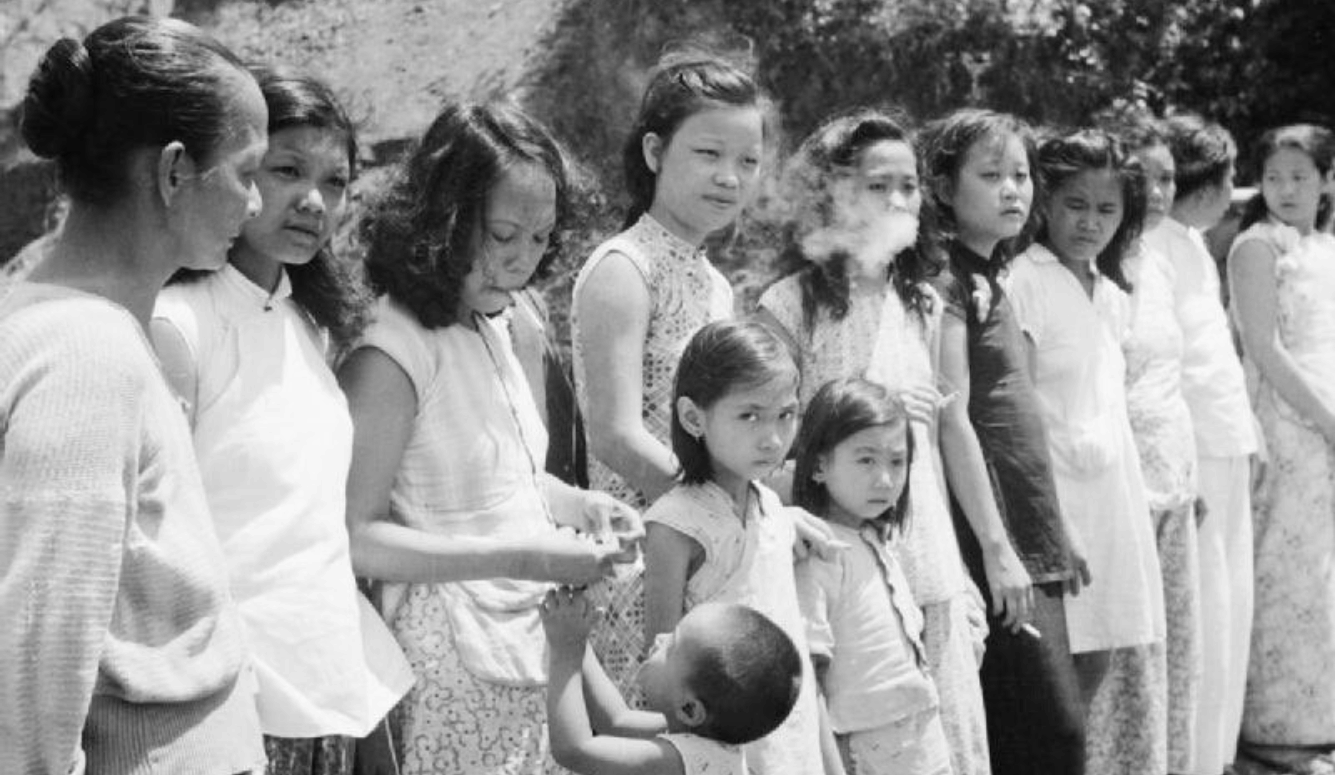
By early 1945, nearly two million young Indonesians were members of a militia. This created a large pool of young men with basic military training, imbued with a militant mentality by their Japanese trainers. From among their midst emerged the pemuda, a term literally meaning youth but that often refers to the spirited nationalists who took up the fight against the returning Dutch in the postwar struggle for independence. Although the Japanese attempted to drill a hatred of the West into their charges (“Amerika kita setrika, Inggris kita linggis”—“We’ll squash the Americans, we’ll bash the British”), many of the pemuda soon developed a loathing of the Japanese too, angered by the brutality and deprivations inflicted on their families. The pemuda also became alienated from the much older nationalist leaders like Sukarno, who were collaborating with the Japanese and were seen as too conciliatory and out-of-touch.
While the Japanese had initially hoped to annex large parts of Indonesia, the deteriorating war situation in 1945 pushed Tokyo to announce the creation of a Committee for Investigating Independence for Indonesia. The committee was to research models for an independent Indonesia to be forwarded to the Japanese for review. The sixty-four members of the committee included Sukarno and Muhammad Hatta. It was as a member of this committee that Sukarno first formulated Indonesia’s founding principles, Pancasila. On 7 August, one day after the Americans dropped an atomic bomb on Hiroshima, the Japanese announced the formation of a Committee to Prepare for Independence and promised that independence would be granted in September of that year.
Japan’s surrender on 14 August caught Java’s politicians unaware. On 16 August, pemuda kidnapped Sukarno and his immediate circle and forced them to make a unilateral declaration of Indonesian independence, as they did not want people to think they had been granted independence by the vanquished Japanese. On 17 August, then, Sukarno proclaimed Indonesian independence in the name of the Indonesian people in a declaration he co-signed with Muhammad Hatta. Indonesia thus became the first country to declare independence after the Second World War.
Malaya and Singapore
As in Indonesia, the Japanese had initially expressed little interest in preparing the British colonies of Malaya and Singapore for independence. Instead, they envisioned turning Singapore (renamed Syonan or Brilliant Harmony) into a colony, while the Malay states were to become protectorates.
Keep reading
France’s Imaginary Austerity
A Clockwork Filmmaker


The Insight Trap

Cornell and Consent