Politics
Collision with Reality
The Supreme Court has just invalidated Trump’s tariff agenda. But the economics were already doing that.
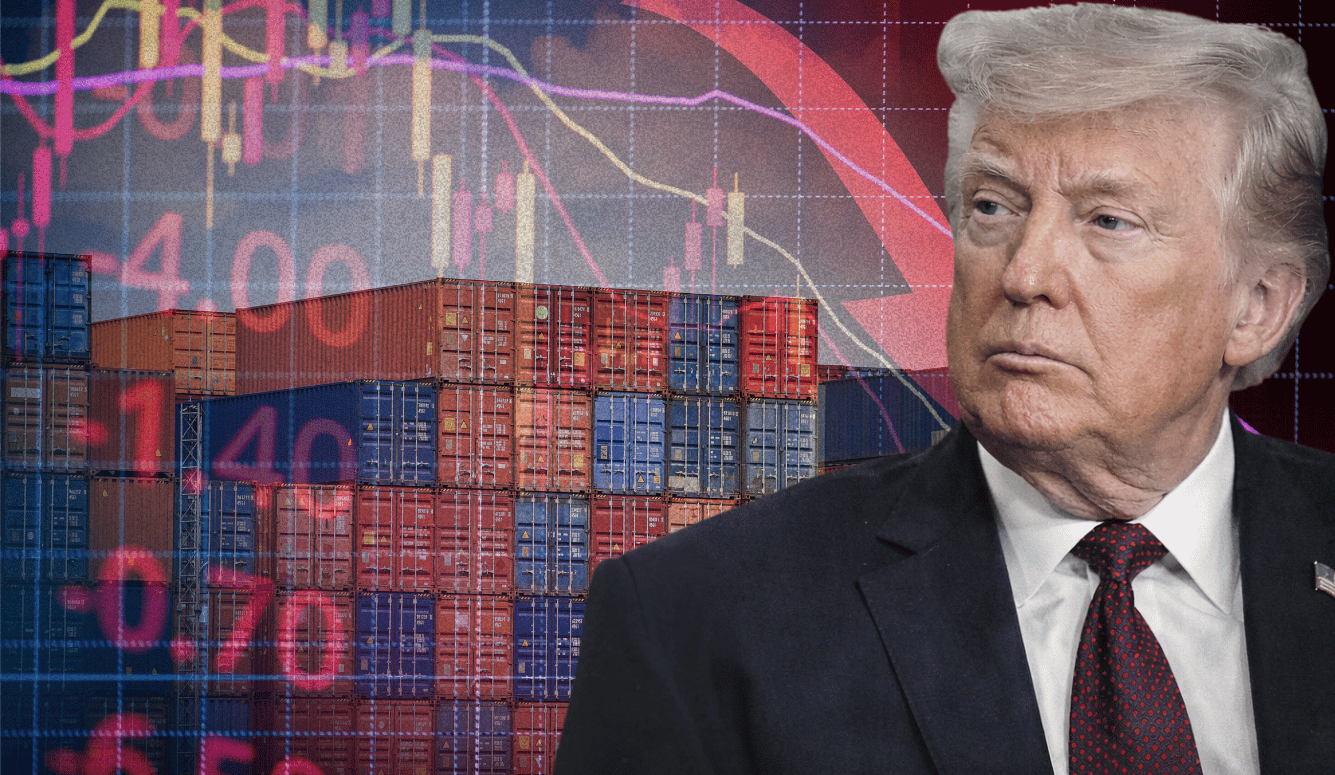

In a sweeping and consequential ruling, the Supreme Court of the United States has invalidated the core of Donald Trump’s tariff agenda. The Court ruled that the International Emergency Economic Powers Act (IEEPA) does not authorise the president to impose tariffs. This brings to an abrupt end a year-long experiment in executive-driven trade policy that attempted to rewrite the US tariff schedule by decree. The legal ramifications are substantial. But the economic case against tariffs was mounting long before the Court stepped in.
Trump’s tariffs were justified on a series of claims about trade deficits, manufacturing revival, foreign countries paying the bill, and the mass economic benefits tariffs would supposedly generate. One by one, each of these claims has collided with empirical reality. The Court’s decision, therefore, does more than resolve a statutory dispute: it marks the collapse of a narrative about tariffs that had already unravelled under scrutiny.
How Did We Get Here?
The path to the Court’s ruling began in March 2025, when President Trump advanced a novel legal theory: that the United States faced an international “emergency” caused by its trade imbalance, defined as the country importing more goods and services than it exports. Trade deficits of this kind, however, have been the norm in the United States since the mid-1970s. What had long been treated as a feature of a globally integrated economy was suddenly reclassified as a national emergency.
On that basis, the administration argued that the IEEPA—originally designed to address foreign threats and sanctions—granted the president authority to “regulate” international commerce by taxing international trade. Tariffs, the argument went, were simply one tool of regulation. Starting with the so-called “Liberation Day” orders issued in April 2025, the administration then implemented sweeping tariffs. These orders were revised, expanded, and recalibrated over the following months, effectively rewriting large parts of the US tariff schedule through executive action.
Unsurprisingly, the tariffs soon faced legal challenges. A lawsuit brought by importers and affected businesses argued that the IEEPA did not grant the tariff authority that the administration claimed it did. The case moved through the US Court of International Trade and the appellate courts, with each stage ruling against the administration’s interpretation. Ultimately, the issue finally reached the Supreme Court, and on 20 February, the justices issued a decisive ruling: the IEEPA does not authorise the president to enact tariffs. So that legal conclusion is now settled. But the economic consequences of the policy remain very much in motion.
The Trade Deficit Myth
The first justification for the tariffs was the trade deficit itself. According to the administration’s argument, persistent deficits are a form of economic weakness or exploitation that requires emergency action. But economists have long pointed out that the trade deficit is a misleading indicator when viewed in isolation. In fact, what is commonly described as the “trade deficit” refers to the current account: the balance of goods and services traded across borders. Yet international economic activity includes another major component: the capital account, which tracks investment flows.
The United States runs a goods-and-services deficit, in part because it runs a large surplus in capital inflows. Foreign investors buy American assets, invest in American firms, and finance American innovation. When the full balance of payments is considered—including goods, services, and financial flows—the accounts balance. Therefore, the so-called “deficit emergency” dissolves under a more complete accounting framework. Nevertheless, the administration cited the trade deficit as a central justification for the tariffs.
Even by that narrow metric, the policy failed to achieve its stated goal. Just days before the Supreme Court ruling, new government data showed that the trade deficit in goods and services had continued to widen: in February, Reuters reported the deficit had widened 32.6 percent to US$70.3 billion in December; goods imports had increased by 3.8 percent; exports had declined by 2.9 percent. In fact, “the goods shortfall in 2025 was the highest on record [emphasis added] despite President Donald Trump’s tariffs on foreign manufactured merchandise.”
But weren’t tariffs explicitly marketed as the solution to this supposed problem? They were. But when the metric used to justify an emergency moves in the opposite direction, the rationale collapses.
Manufacturing Reshoring
Another core promise of the tariff policy was that it would revive American manufacturing. Tariffs, the administration argued, would give domestic producers an edge against foreign competitors and trigger a wave of “reshoring” in the United States. Above all else, Trump has promised an employment boom in the manufacturing sector, tied to his tariff policies.
Recent estimates by the Bureau of Labor Statistics suggest that factory employment has shed about 70,000 jobs since the tariffs took effect.
Instead, the opposite happened. The most recent employment numbers show continued monthly declines over the eight-month period between “Liberation Day” and the end of 2025. Recent estimates by the Bureau of Labor Statistics suggest that factory employment has shed about 70,000 jobs since the tariffs took effect. Total factory employment now sits below its pre-COVID levels during Trump’s first term in 2020. While some firms engaged in steel and aluminium production have reported benefits from Trump’s tariffs, these products are also used as inputs in other manufacturing sectors such as automobiles.
The “big three” producers in the US car industry—as well as foreign companies that operate plants inside the United States, such as Toyota and Mercedes—have all faced substantial hits. The total price tag for Trump’s tariffs in the automobile sector is currently estimated to be in the tens of billions of US dollars range. Many of these companies have faced higher costs on imported parts and raw materials, even though they were already producing their finished products in the United States.
Keep reading
AI Is Not About To Become Sentient

The Innovation Trap

Treating Myths as Science

The Edifice Complex

Letters to the Editor

Criminal Research