Canada
Stop Pretending the Tumbler Ridge Killer Was Female
The sight of Canadian police and journalists extending fraudulent courtesies to a trans-identified mass-murderer may prove to be a clarifying moment.
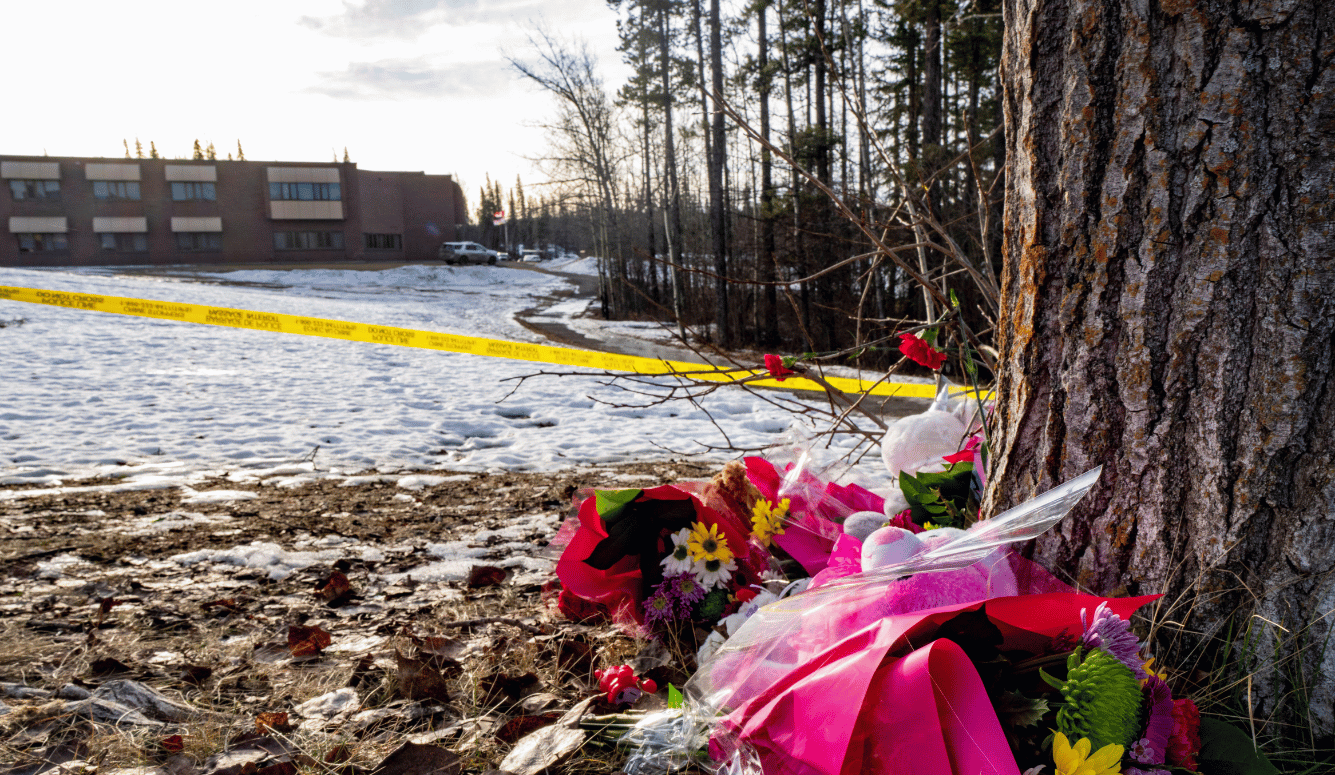

On 10 February, Jesse Van Rootselaar (also known as Jesse Strang) killed eight people in the remote British Columbia mining town of Tumbler Ridge. The first two victims were the killer’s mother and half-brother, whom Van Rootselaar shot at home. Van Rootselaar then went to a local secondary school and murdered six more people—five of whom were twelve- or thirteen-year-old students—before committing suicide. Twenty-seven others were injured. It was the deadliest Canadian school shooting in almost four decades, and the highest-casualty mass-shooting event in the nation’s history.
Nothing I write here can properly convey the anguish that surviving family members must now endure. The population of Tumbler Ridge is only about 2,400. Most residents likely know one or more people connected to the tragedy in some way, and so they will share in the trauma as well. Like Columbine and Sandy Hook, the words “Tumbler Ridge” will now become indelibly associated with senseless violence and unfathomable sorrow.
When news of the tragedy was first reported to Canadians on the afternoon of 10 February, it appeared to include a striking anomaly: The killer, we were told, was a “woman.” There are scattered examples of female killers in the annals of Canadian crime. But this would be the first time in the recorded history of Canada and its colonial antecedents—going back more than 400 years, to the early seventeenth century—that a woman had gone on this kind of murderous rampage.
If initial reports had been true, this would have been the first time in Canadian history that a woman had gone on this kind of murderous rampage. But Jesse Van Rootselaar wasn’t a woman—just a man whose mental-health afflictions happened to include gender dysphoria
It soon became clear, however, that Van Rootselaar wasn’t a woman. He was an eighteen-year-old man—a gun-obsessed, middle-school dropout whose many mental-health afflictions happened to include gender dysphoria. The mass murderer called himself a woman. But that doesn’t mean he was, or that the rest of us have to live in the imaginary universe he (literally) built for himself.
According to Royal Canadian Mounted Police deputy commissioner Dwayne McDonald, Jesse was “a biological male” who “approximately six years ago began to transition to female and identified as female, both socially and publicly.” In keeping with Canadian policies implemented by Justin Trudeau’s government in 2017, McDonald and other police officials then proceeded to refer to the killer with female pronouns, as if he actually were a woman.
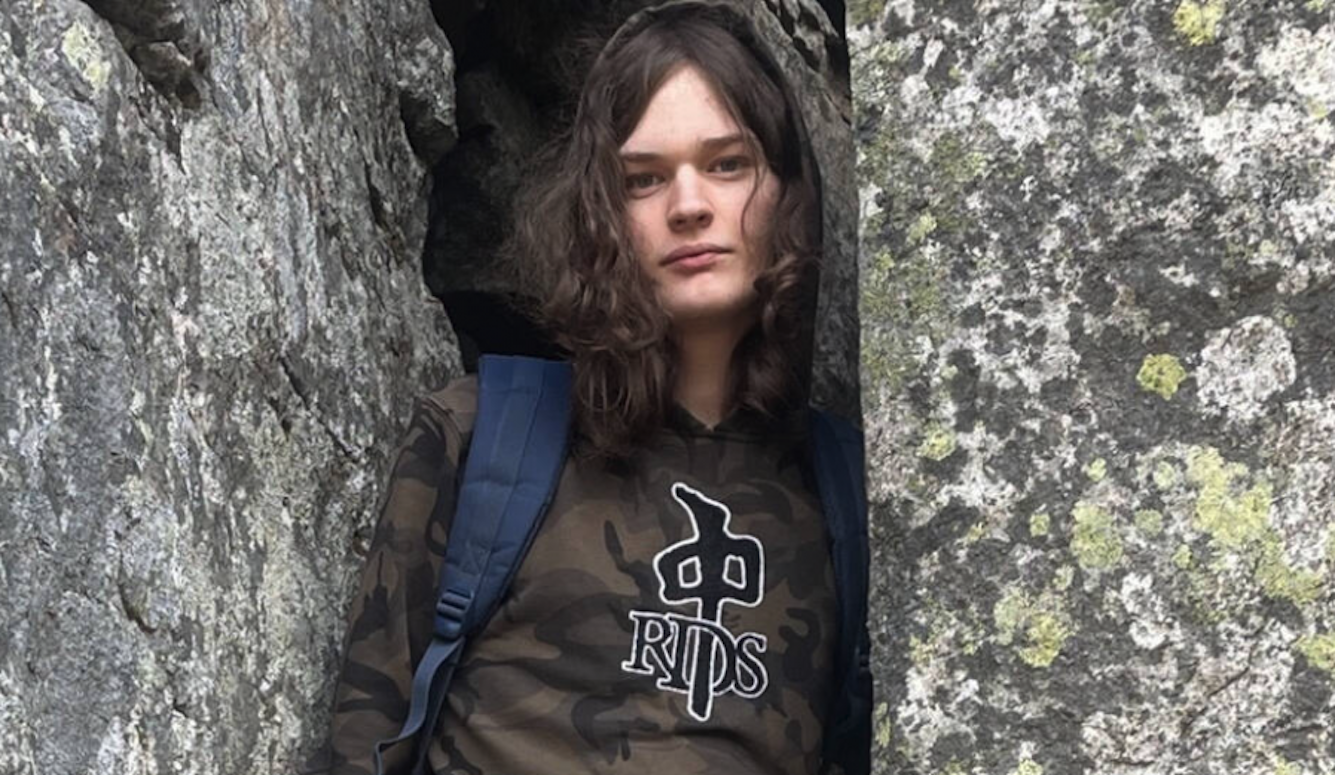
This kind of institutionally mandated misuse of language is dishonest at the best of times. But it is especially offensive when it serves to misrepresent reality on behalf of a murderer (posthumously or otherwise). While Jesse Van Rootselaar’s criminal motive is unknown, he left a trove of digital clues about his identity—all of which paint a picture of a deeply disturbed young man with a stereotypically male fixation on firearms and violence.
Needless to say, no one personally affected by the Tumbler Ridge massacre is in a state to care about culture-war arguments over the killer’s identity. But policies that allow male and female criminals to be miscategorised on the basis of self-declared gender identity can actively hinder law-enforcement efforts to identify and monitor future killers before they strike.
Men are more violent than women, which is why they account for more than ninety percent of the world’s prison population, and commit about ninety percent of all homicides. For acts of mass murder, US data puts the corresponding figure at 98 percent. This greater tendency toward violence is rooted largely in male evolutionary psychology, and doesn’t get erased when a man changes his pronouns or puts on a skirt. Simply put, being male (and young) represents one of the most important risk factors that exist when it comes to violent crime. And so a constabulary seeking to prevent the next school shooting, whether in Canada or anywhere else, would naturally focus most of its limited resources on men, whatever their claimed “gender identity.” And yet, Canadian policy since 2019 has been to categorise homicide suspects not according to sex, but rather according to the “gender a person publicly expresses in their daily life,” including “at work” and “while shopping.”
One commonly offered rationale for “affirming” a dysphoric man’s female pretences is that any act of “misgendering” may, in and of itself, drive him to despair, suicide, or other self-destructive acts. But these are ideological slogans, not evidence-based therapeutic principles. In her authoritative 2024 review of the treatment of gender dysphoric youth, Dr Hilary Cass, a former president of Britain’s Royal College of Paediatrics and Child Health, concluded that while “it has been suggested that hormone treatment reduces the elevated risk of death by suicide in this population,” the available evidence “did not support this conclusion.”
 The Quillette Editorial Board
In the case of Van Rootselaar, his own mother seems to have greeted her child’s announced transition sympathetically, and lectured conservatives about transphobia. Yet Van Rootselaar killed her all the same during his rampage. (By one newspaper’s account, this may have been the second time he’d tried to do so.) A somewhat similar pattern played out with another recent trans (or ex-trans, depending on how you interpret his diaries) mass murderer, Robin Westman: His father publicly celebrated his transgender identification on Facebook (though his mother appears to have taken longer to come around). As Forest Romm and Kevin Waldman recently wrote in Quillette: “‘Affirmation’ didn’t relieve Westman’s distress. By his own account, it may even have accelerated his deterioration. ‘Gender and weed fucked up my head,’ he wrote. ‘I wish I never tried experimenting with either.’”
Keep reading
A New World Order in the Making

Podcast #328: The Extraordinary Exploits of Agent Zo

On Truth and Beauty
Why Populism is Rising in Australia: Immigration and One Nation Surge

Why Europe Still Misreads America