History
That Other Greenland Standoff
In April 1940, Danes, Germans, Brits, Americans, and Canadians had designs on the world’s largest island. Eighty-five years later, many of their arguments sound eerily familiar.
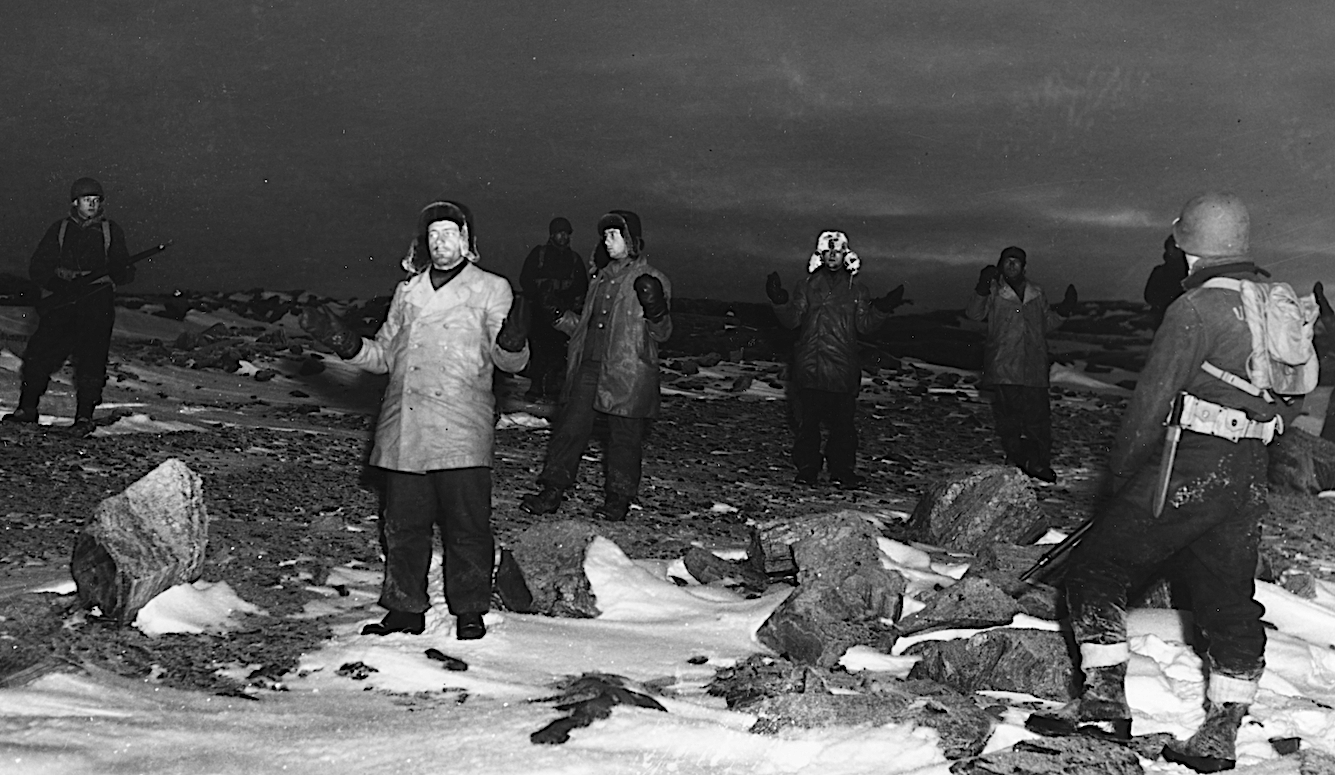

It’s a scenario that students of history will find familiar. Greenland’s strategic importance becomes front-page news. Statesmen demand access to the island’s resources. Arcane principles of international law are rediscovered and weaponised. Rancour grows over the question of who will control the world’s biggest island, threatening to open a rift between otherwise friendly powers.
This is spring 1940. While the Second World War rages in Europe, Canada, and the (still officially neutral) United States became embroiled in a diplomatic stand-off in the North Atlantic. More than eight decades later, the echoes of their dispute resonate in a world that leaders from that era could scarcely imagine.
Donald Trump has had difficulty convincing others that Greenland—an autonomous, thinly populated territory of Denmark—is a critical strategic asset in the current era. But as Peter Harmsen argues in his (unexpectedly timely) 2024 book, Fury and Ice: Greenland, the United States, and Germany in World War II, the island’s military importance was more obvious in 1940.
 Peter Harmsen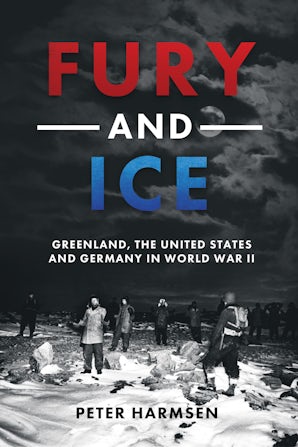
From air bases on Greenland’s southern coast, Allied planes could patrol the sea route that brought vital war materials from North American factories to European armies. If ceded to German hands, Greenland could instead act as a refuelling station for U-Boats preying on that traffic.
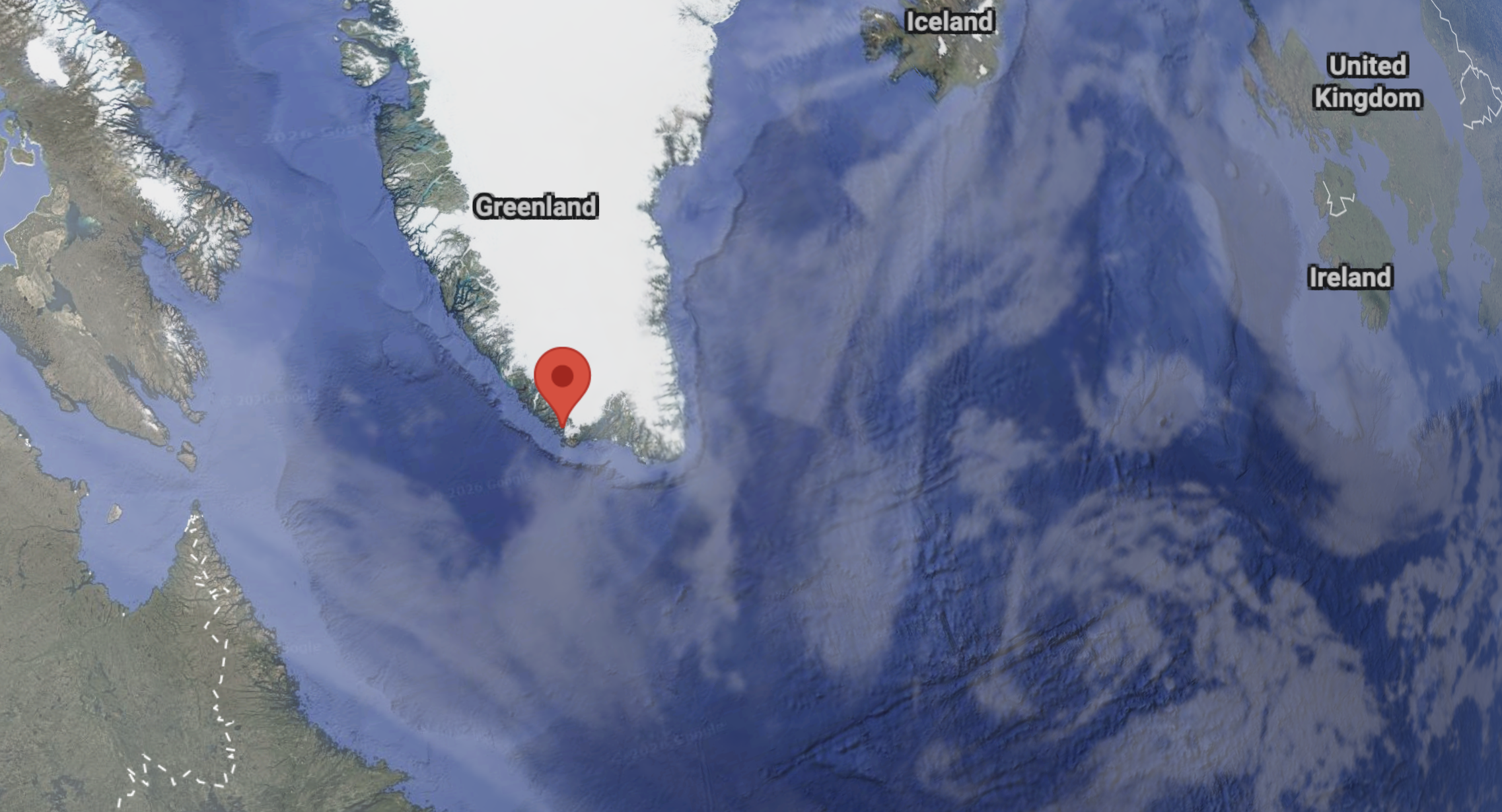
While many may regard Greenland as a geographical obscurity, transatlantic plane travellers frequently pass through its air space, as the island’s southern tip and coastal waters are located along the “great circle route” corresponding to the shortest distance across the north Atlantic. In the 1940s, only long-range aircraft could traverse the ocean without stopping. Being able to land in Greenland allowed a wider variety of planes to make the trip—whether they were American-built fighters being ferried to Britain, or, in a nightmarish what-if version of history, German bombers targeting American cities.
(Sidebar: Some of the geography at play here may be familiar to viewers of the Broadway musical Come from Away, which is set in Gander International Airport—built in the 1930s at the northeastern tip of North American airspace, so as to minimise travel distance to Europe’s northwestern fringes. During the 1940s, it had four runways and was the busiest airport in the world.)
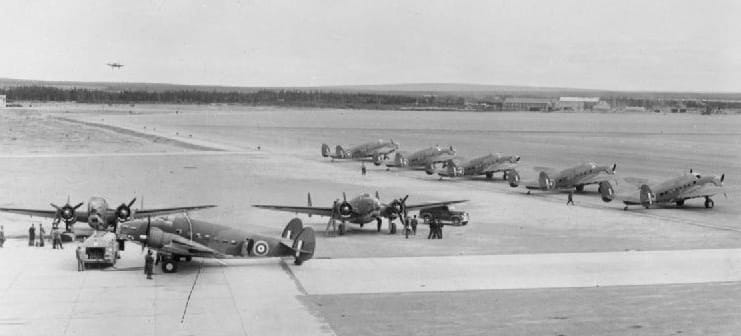
Greenland was also home to important meteorological stations. I realise this sounds underwhelming compared to the air and naval warfare implications described above. But during this era, before the age of satellites and other advanced information-gathering techniques, local access to weather data had enormous military implications—especially when it came to amphibious landings. As one German researcher put it, Greenland’s airspace was Europe’s “weather kitchen,” giving birth to the storms that would eventually hit continental Europe. (If readers will excuse a second theatrical reference—anyone who has seen the 2023 play Pressure will know the crucial role that weather prediction played in the planning of the D-Day landings.) All of which to say: Access to Greenland’s meteorological data was an asset as valuable as any munitions factory.
But Greenland’s most valued strategic asset (and the focus of the 1940 diplomatic crisis in question) was a cryolite deposit at Ivigtut, a now-abandoned mining town on Greenland’s southwestern coast.
A glassy, almost ice-like mineral, cryolite (also known as sodium aluminium fluoride), is a crucial ingredient in the industrial-scale electrolysis of aluminium oxide. (The addition of cryolite lowers the oxide’s melting point by more than a thousand Celsius degrees.) And the mine at Ivigtut was an important supply-chain element for aluminium smelters in Canada and the United States.
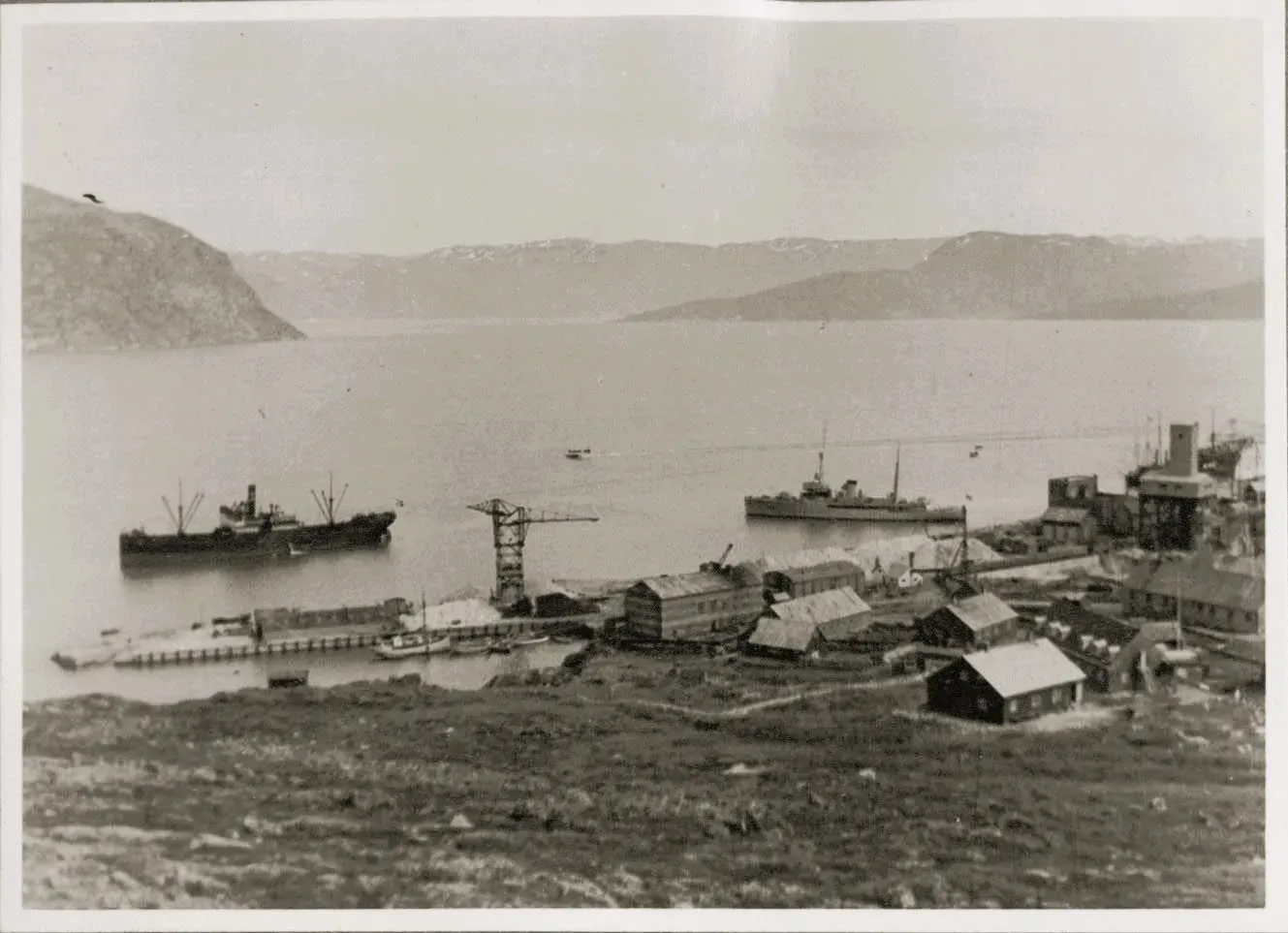
Of course, aluminium itself was crucial to waging war—being the only material strong and light enough to produce airframes and other bulk components of aircraft. Thus did the geographically remote map-speck known as Ivigtut—on the wonderfully-named Cape Desolation—become a focal point for many of the world’s great powers.
It was possible to produce cryolite synthetically. Indeed, the German aluminium industry relied almost entirely on the man-made version. But metallurgists at Alcan, Canada’s major aluminium-producing company, warned that switching to synthetic cryolite would significantly increase costs and slow production. And so even if Germany couldn’t take Ivigtut, it could still hobble the Allied war effort merely by disabling the mine.
As Harmsen writes in Fury and Ice—which is the basis for the chronology that follows—the strategic importance of Greenland and its cryolite mine was initially overlooked by Allied statesmen and military planners. Then as now, many leaders thought little about supply chains until they were threatened or disrupted.
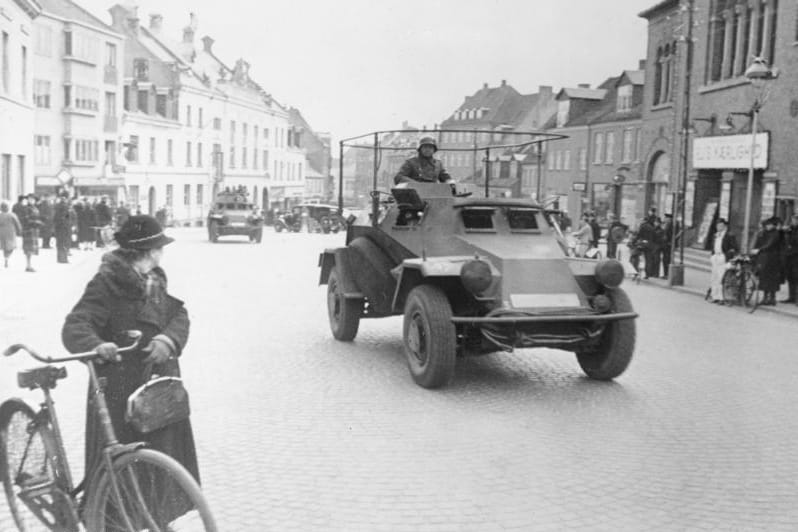
That changed on 9 April 1940, when Germany ended months of relative military inaction by invading neutral Denmark, which had controlled Greenland since its link to Norway was dissolved by the Treaty of Kiel in 1814. (As discussed in more detail below, the country’s Nazi-controlled puppet government would seek to revive its claim to the island, and even proposed a joint German-Norwegian invasion. In the end, the only ship that sailed, a sealer named the SS Buskø, was seized by the US Coast Guard.)
The reaction in Greenland itself was shock and confusion. On the morning of 9 April, a cable from the Danish government alerted Greenland officials that the Germans had crossed the border. Within hours, the vastly outgunned Danes surrendered, and all communication with the island went dark.
Administratively, Greenland was divided into a northern and southern district. The northern governor, a Danish civil servant named Eske Brun, was out hunting when news of the German invasion arrived. He rushed home so quickly, Brun later reported, that he feared for the health of his sled dogs. Aksel Svane, the southern governor, who ruled from the colonial capital at Godthab (now Nuuk), called for calm. But he didn’t downplay the gravity of the situation, warning that some Danes may “never see their country again.”
Internationally, one of the first decisive reactions came not from a general, nor a politician, but a business executive in Canada (which, like the UK, had been at war with Germany since early September 1939).
Keep reading
A New World Order in the Making

Podcast #328: The Extraordinary Exploits of Agent Zo

On Truth and Beauty

Why Populism is Rising in Australia: Immigration and One Nation Surge

Why Europe Still Misreads America