Skip to content

Politics

Who Got the Camera?

The right-wing response to recent events in Minneapolis indicates that MAGA conservatives are determined to repeat the mistakes made by Daryl Gates 35 years ago.
· 6 min read
Who Got the Camera?
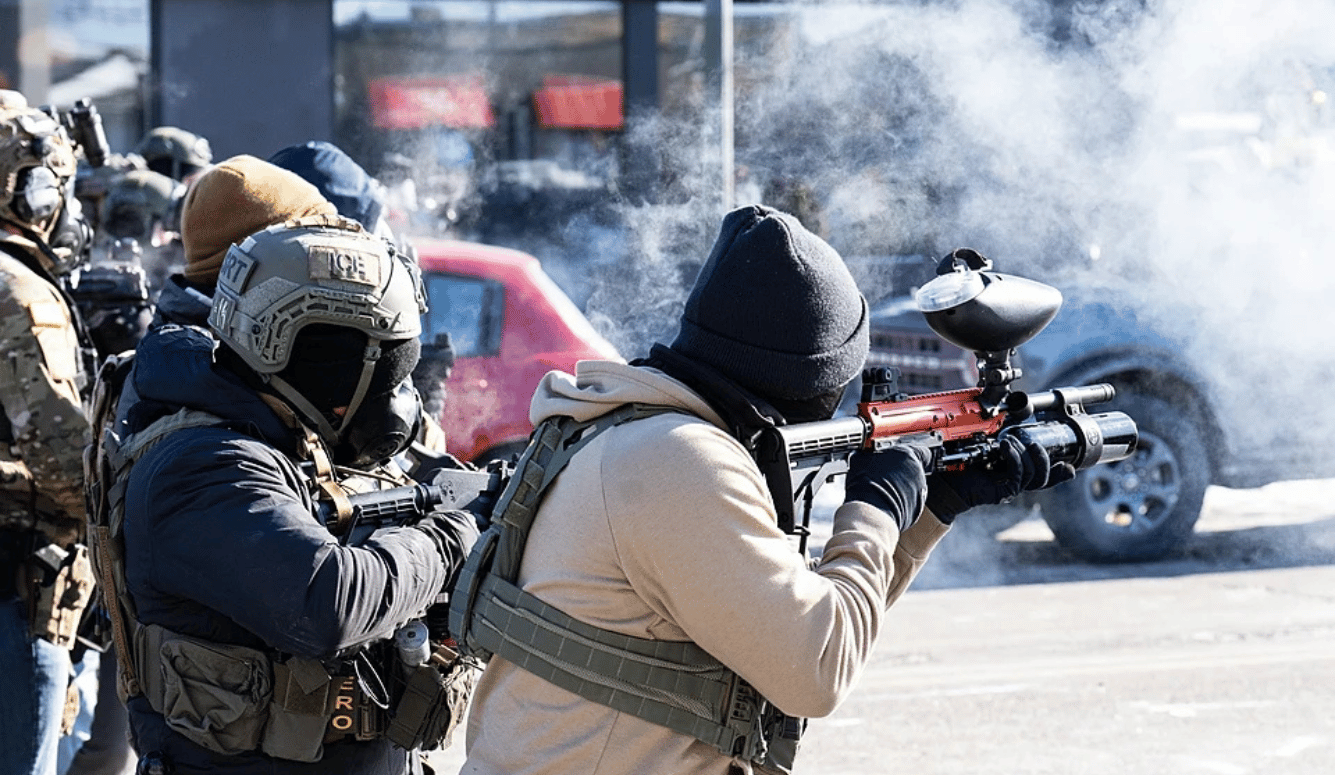
ICE and Border Patrol agents on Nicollet Avenue on January 24, 2026. This follows the shooting death of Minneapolis resident Alex Pretti. Pretti is the second person killed and third person shot by federal agents in Minneapolis this month. Wikimedia.

I grew up in the suburbs of Los Angeles, and as I became aware of the city’s politics, I learned of an ongoing debate among Angelenos about policing. On one hand, many residents were quite upset about Los Angeles’s crime problem—the gang wars that made certain areas uninhabitable, the homeless who were encamped on the streets of Downtown, the drug dealing, the murders, and the muggings. On the other hand, other residents were telling a story in which the police were the outlaws, pulling over drivers because they were black, stopping and frisking youths of colour for no reason, and delivering beatings—and occasionally shootings—to anyone who gave them lip or otherwise defied their authority.

These debates had started long before I was even born—I heard stories about the Zoot Suit Riots of the 1940s, and the inquest into the death of Leonard Deadwyler, who was shot and killed by an LAPD officer in 1966 after being pulled over while taking his wife to the hospital, a year after the Watts Riots. The Los Angeles police chief in my youth was a man named Daryl Gates, who stubbornly refused to admit that his officers had done anything wrong even when they had. Policing LA, he believed, was like fighting a war. He pioneered the use of a tank with a battering ram to enter properties where suspected criminal activity was taking place, and he infamously declared that “casual drug users should be taken out and shot.”

California’s politics back then were not nearly as liberal as they are now; we were, after all, the state that produced Richard Nixon and Ronald Reagan, Republicans who both ran on a tough-on-crime platform. So Gates enjoyed a lot of support. And yet, one night in March 1991, we would find out that maybe there was more agreement between the two sides of that endless debate about Los Angeles policing than was previously believed.

Nobody really doubts that 25-year-old Rodney King was no angel. He was a convicted felon, having served a year in prison for assaulting and robbing a Korean grocer. He had fathered three children by three different women. And on the night of 3 March 1991, he was severely intoxicated behind the wheel of his Hyundai. When highway-patrol officers turned on their lights and sirens, rather than pulling over, King led them on a high-speed chase, reaching speeds of 117 miles per hour on the freeway and eighty miles per hour on city streets. He was endangering innocent people. This attracted additional law enforcement, and when he exited the freeway, he entered the jurisdiction of the LAPD’s Foothill Division. Several police units eventually cornered King, and he had no choice but to stop. The chase was over, but his ordeal had only begun.

Before Rodney King, we have no idea how many motorists in Los Angeles were beaten up by police who were angry that they had not pulled over as instructed. There were enough of them that even before the King case made national news, I had heard the urban legend that if you led the cops on a chase, you’d get a beating at the end of it. We only know Rodney King’s name because a resident of the Lake View Terrace neighbourhood of Los Angeles named George Holliday happened to be carrying a camcorder, then still a rather novel bit of consumer technology. When he saw that the police were beating a man near his home, he picked up his camcorder and started to record it. Four LAPD cops beat King, mostly with batons, although one officer also kicked him. King was also hit with shocks from a taser, another then-new technology. The most surreal and disturbing thing about Holliday’s video, though, was its length. The beating seemed to go on and on. It did not look like the officers were defending themselves. It looked like they were meting out a punishment. And when the video was released to news organisations, soon after the incident took place, it changed the debate over crime and policing.

It turned out that there were a lot of people living in Los Angeles for whom seeing was believing. They had heard all the complaints made by civil-rights and civil-liberties organisations about the LAPD, and had dismissed them. But here was a recorded video of LAPD officers completely out of control, pounding on a defenceless citizen. And it turned out, when they saw that video, that many of the people who said they supported tough-on-crime measures did not, in fact, also favour police brutality.

When Narrative Outpaces Evidence: The Minnesota ICE Shooting
What four videos show—and fail to show—about a deadly ICE encounter.

Daryl Gates put out the same defences of his officers he always did, and conservative commentators picked through Rodney King’s criminal past in careful detail, but this time nobody wanted to hear them. Gates was forced out of his position just over a year later. And when the four cops who assaulted King were acquitted of using excessive force by a jury in cop-friendly Simi Valley, the verdicts produced widespread outrage as well as another round of destructive riots in April 1992. The officers were subsequently retried in federal court, where two were convicted and sentenced to two and a half years in federal prison each.

This is all coming back to me now because, while the arguments for and against aggressive policing have not changed, the game-changing technology in the King case is now ubiquitous. This means that the claims conservatives always made to dismiss accusations of police brutality—that the victims were bad people, that the police have tough jobs and make split-second decisions, and that the cops were being threatened by people confronting them, resisting arrest, and assaulting them—only work when the video footage supports those claims.

On the whole, video cameras—and bodycams in particular—have been good for cops. Most cops are honest, get into the career for the right reasons, and act with admirable professionalism even when faced with difficult interactions involving potentially dangerous citizens. Thanks to cameras, one can now find copious footage of police officers doing their jobs well, on reality television as well as on Internet platforms like YouTube. But video cameras have been awful for bad cops. Bad cops used to be feared by their fellow cops as well as the ordinary people who interacted with them. This created a code of silence in police departments—after the Rodney King beating, none of the officers reported the beating to their superiors. You didn’t snitch, because the cops who beat guys like King could come after you, too. Today, nobody wants to file a false report that is contradicted by the video recording, so bad cops have nobody to cover for them anymore.

However, the right-wing response to recent events in Minneapolis indicates that MAGA conservatives are determined to repeat the mistakes made by Daryl Gates 35 years ago. Flush with triumphalism after Donald Trump’s reelection, they believe they can defy the natural revulsion Americans feel when they watch cell-phone footage of official brutality. In the first Trump term, the indelible images of the administration’s needlessly cruel family-separation policies at the Southern border arguably helped elect Joe Biden president in 2020. Now, in an effort to demonstrate its toughness against illegal immigration, the second Trump administration has deployed masked Immigration and Customs Enforcement officers to the streets of American cities, where they have arrested citizens and legal residents, beaten suspected illegal immigrants, attempted to prevent citizens from filming their activities, and roughed up protesters. And in less than three weeks in January, they have been videoed shooting two civilian protesters to death in the street.

The Trump administration and their supporters are running the same playbook, focusing on the disobedience of the victims and the perceived or actual threat they posed to the officers’ lives. But as we discovered in 1991, none of that works when set against the shocking evidence of official barbarity supplied by a video recording. Ordinary people look at this footage, and if they think the cops are in the wrong, they side with the civil libertarians.

I keep waiting for the administration to realise that this is happening. The polling data are unambiguous. In August 2025, approval of Trump’s handling of the immigration issue outstripped disapproval by nine points. On 20 January—four days before the second shooting in Minneapolis—Rasmussen reported that those approval ratings were now twenty points underwater. Amazingly, YouGov has just reported that “more Americans support than oppose abolishing ICE.” Politico reports that “In a sign of growing discomfort among the president’s base, more than 1 in 3 Trump voters say that while they support the goals of his mass deportation campaign, they disapprove of the way he is implementing it.”

The Right cannot seem to help themselves—they do not seem to appreciate that much of the American public has a nuanced view—they want their government to secure their country’s borders, but they want this accomplished without needless cruelty and violence. The midterm elections, which are now less than ten months away, may provide a stark reminder.