Antisemitism
Australia’s Selective Blindness
The refusal to discuss Islamic antisemitism in Australia endangers Jews and threatens social cohesion.

The refusal to discuss Islamic antisemitism in Australia not only endangers Jews but threatens social cohesion.
The terrorist attack at Bondi Beach on 14 December has prompted the shock and grief any society would expect, but I fear that the accompanying public conversation will follow an unproductive and yet familiar pattern. The focus will rapidly shift away from questions of ideology or communal attitudes and toward explanations that require little cultural introspection, such as the existence of “blind hatred” and “ignorance.” Commentators will no doubt emphasise the supposedly individual pathology of the perpetrators and urge restraint, while politicians will warn against division, call for unity, and double down on “anti-racism” programmes.
This is fundamentally misguided. If we hope to prevent further violence, we must trace the roots of the Bondi attack with clarity, since any solution divorced from those roots is destined to fail. Over the past several years, there have been many signs that antisemitism in Australia is becoming more visible and, in some places, clearly linked to ideological and theological beliefs. Much of this has appeared within pockets of the Muslim community committed to a strident interpretation of Islam.
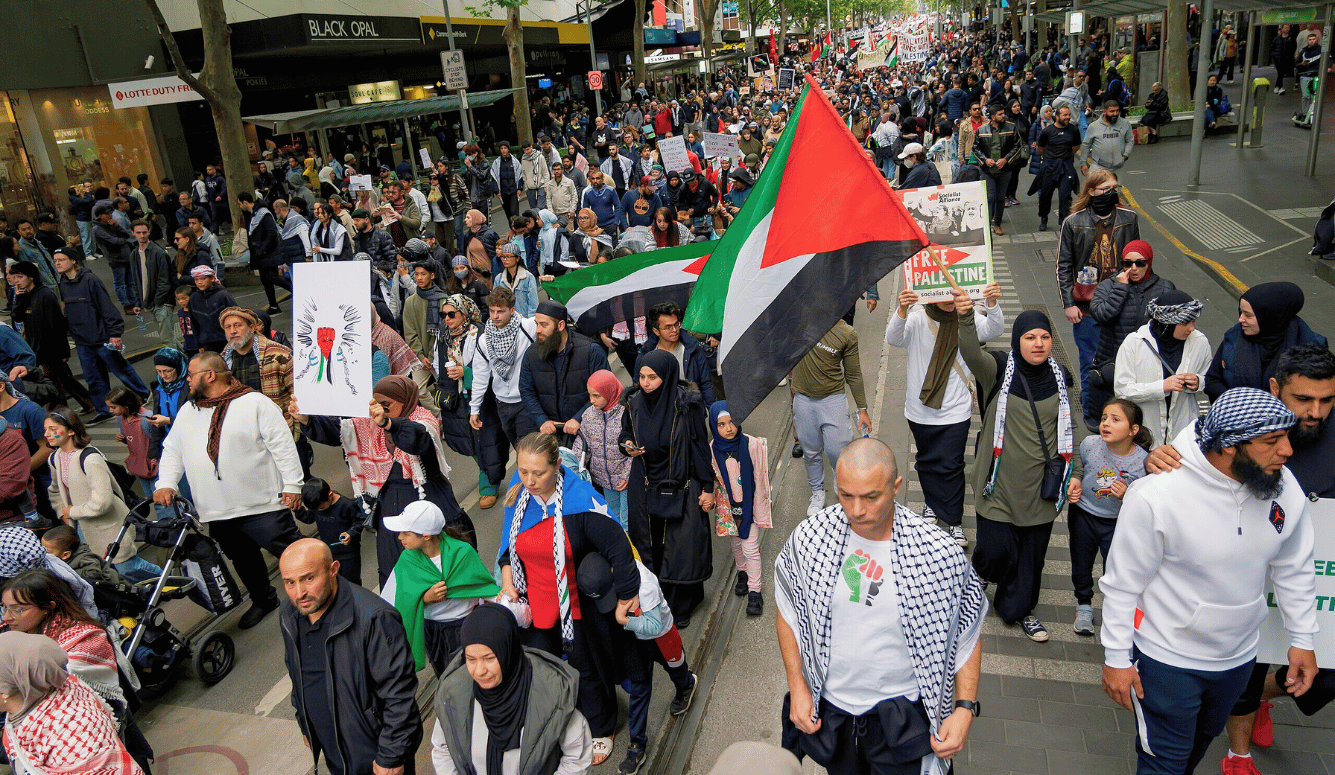
The pattern has been hard to miss. At various rallies last year, some participants openly celebrated the Hamas attacks of 7 October 2023. At the Sydney Opera House, antisemitic chants were shouted within days of the massacre. Jewish schools and synagogues have been targeted with graffiti, harassment, and threats. In one widely reported incident, two nurses in Western Sydney spoke casually and proudly on camera about harming Israeli patients. These episodes should not be used to generalise about an entire community, yet they show that a defined ideological current exists and that it has found local roots.
Most people have little difficulty recognising the presence of this toxic ideology, but few are willing to acknowledge its source in public. Australia’s multicultural compact has long relied on a belief that cultural diversity naturally supports social cohesion—that “diversity is our strength.” This belief has often taken the form of moral proclamation rather than an empirically grounded analysis. This country celebrates diversity and discourages offence, but rarely ventures into a more rigorous examination of the values, historical experiences, or political theologies that different groups may bring with them. In this atmosphere, multiculturalism is less a policy and more a civic story about who we imagine ourselves to be. When contradictions appear, the preferred approach is to suppress the contradictions rather than scrutinise them.
In his well-known critique of American multiculturalism, The Disuniting of America, Arthur M. Schlesinger Jr. notes that a system that encourages the preservation of strong communal identities can also import longstanding antagonisms. These do not dissolve simply because they have been relocated. Australia’s experience over the past year suggests something similar. A commitment to inclusion has been interpreted as a requirement to avoid discussing conflicts that arise from divergent and incommensurable worldviews. The assumption is that harmony can be maintained if difficult topics are kept out of public view. This has the short-term advantage of reducing political tension, but it also creates a long-term vulnerability by encouraging collective blindness.
When it comes to antisemitism in particular, the result has been a profound unwillingness to consider where much of the hostility originates. Antisemitism is treated as a mere subset of “hate”—a kind of free-floating social toxin, rather than a set of beliefs that have identifiable theological and cultural roots within actual people. In the Islamic world, anti-Jewish attitudes are not marginal or obscure. The Islamisation of antisemitism has been a thread through recent history, especially in the form constructed by Sayyid Qutb (1906–66), spread by the Muslim Brotherhood and like-minded groups, and—most recently—fanned by politically progressive narratives about colonisation, reinforced through school curricula, media narratives, sermons, and political rhetoric. A serious multicultural society would inquire into how these inherited attitudes play out within a liberal democracy. Instead, the prevailing discourse insists that the only legitimate direction of prejudice is from white, “colonising” Australians (of whom Jews are sometimes considered a subgroup) toward minorities. When hostility flows in the other direction, the narrative falters.
 Alan Davison
The concept of “Islamophobia” has contributed massively to this problem. Originally defined as unfounded hostility toward Muslims, it has gradually expanded to cover almost any critical discussion of Islamic beliefs or community practices This expansion has been given a veneer of scholarly legitimacy through the use of social distance measures, often presented in surveys and research studies as objective evidence of public prejudice. Social distance scales ask respondents how comfortable they would feel in hypothetical situations involving members of another group—for example, working alongside them or having them as in-laws. These instruments capture degrees of personal ease, but they cannot explain why someone might feel that way. As a result, perfectly logical and reasonable responses from non-Muslims to Islamic doctrinal issues or communal attitudes are treated as a form of intolerance. This strongly discourages scholars, journalists, and policymakers from raising questions about the presence of Islamic antisemitic sentiment within sections of the Muslim population. It also infantilises minority communities by implying they cannot withstand the same level of scrutiny commonly applied to majority institutions.
The reluctance to speak openly about Islamic antisemitism is also reinforced by a moral hierarchy that has taken hold within certain parts of Australian civic culture. Muslims, as a minority community, are presumed to occupy a position of vulnerability, while Jews are sometimes rhetorically framed as powerful because of their role in Western history or because of their association with the state of Israel. This framing obscures the reality that Jewish Australians are one of the country’s most targeted minorities and that many recent antisemitic incidents have come from individuals identifying with Islamist or pro-Palestinian causes. When identity categories harden into moral categories, it becomes nearly impossible to acknowledge that prejudice can originate from those designated as victims.
Political considerations further discourage honest discussion. Governments and law-enforcement agencies often prioritise the maintenance of “community relations,” a phrase that increasingly means avoiding any statement that might provoke backlash from well-organised groups or their so-called “leaders.” Officials sometimes appear to believe that silence contributes to stability. The consequence is that it becomes easier to deny the ideological dimensions of problems rather than confront them. This also places an unfair expectation on the wider public, who are encouraged to see each new incident as inexplicable or isolated.
The Bondi terrorist attack will likely expose yet again the limitations of this approach. A society that cannot speak plainly about ideological or religious motivations is a society that eventually struggles to understand the forces shaping its own trajectory. This does not require stigmatising Muslims generally, nor does it require ignoring the many Muslim Australians who have condemned antisemitism and extremism. It requires something far more basic: the willingness to identify the specific forms of religious and ideological thinking that drive antisemitism, and to consider how these interact with Australia’s democratic norms. In a genuinely liberal society, religious ideas are open to critique, just as secular ideologies are. Multiculturalism should not mean an absence of reciprocal accountability.
Daniel Allington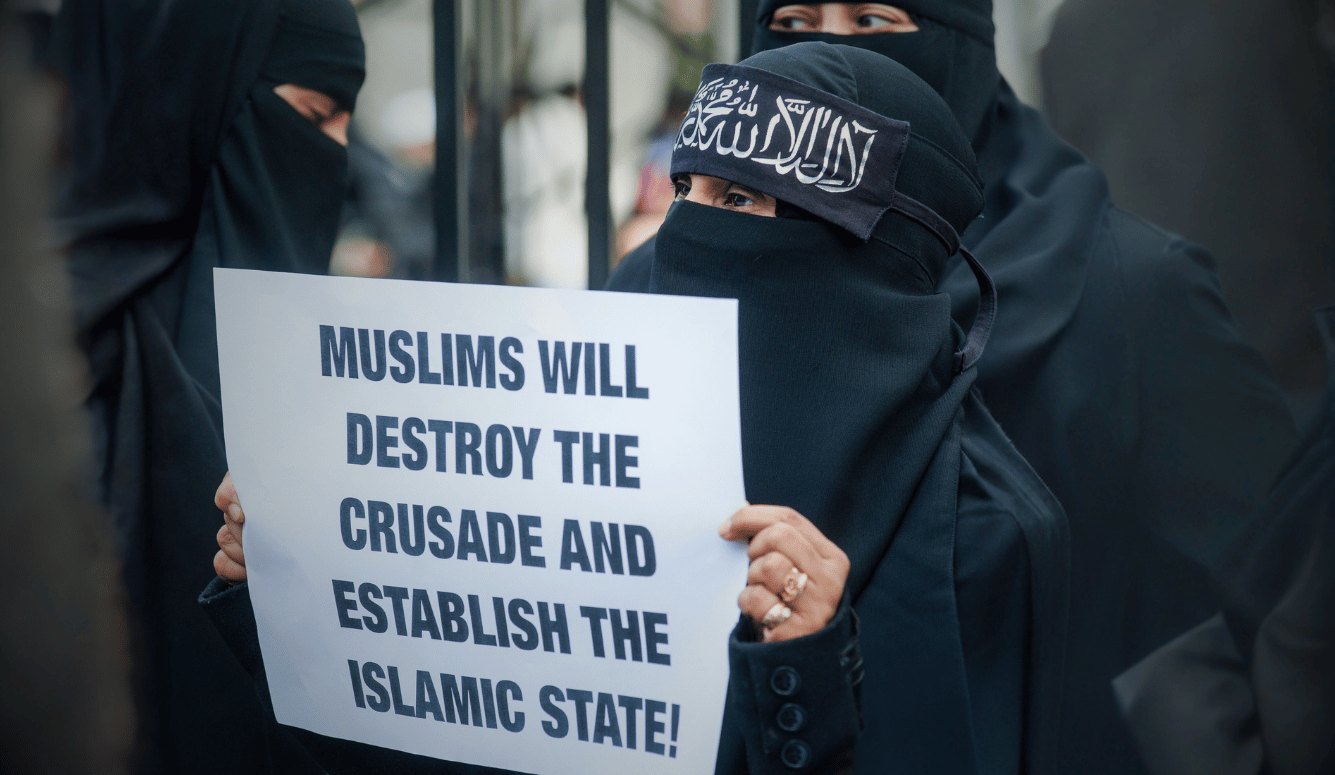
There is also an internal cost to maintaining the current silence. By avoiding honest discussion, Australia restricts the ability of Muslim reformers and moderates to challenge extremist ideas within their own communities. Many feel the same frustration as Jewish Australians, but they are caught in an environment where criticism of religious doctrine is treated as disloyalty. Public institutions reinforce this dynamic by treating minority communities as monolithic blocs, rather than as complex collectives with their own internal debates.
The problem is not the presence of Muslims in Australia, the majority of whom make valued contributions to our society, but the unwillingness of institutions to acknowledge that some strands of Islamist thought are incompatible with the principles of religious pluralism, sexual equality, and civic reciprocity. When these strands manifest as antisemitism, the response should not be silence or euphemism.
The Bondi terrorist attack should therefore prompt a reconsideration of how Australia understands multiculturalism and its “tolerance of intolerance.” If diversity is to be more than a slogan, it must include a commitment to frank discussion about conflicting values and about the historical and theological sources of prejudice. Protecting minority groups from unfair discrimination does not require denying the existence of illiberal ideas within those groups. In fact, it is the refusal to acknowledge these ideas that ultimately jeopardises social cohesion, because it prevents the development of meaningful solutions.
Australia’s future as a pluralistic society depends on our ability to think clearly about the pressures that accompany demographic and cultural change. Antisemitism cannot be addressed if its origins are obscured. Nor can our country rely on general appeals to harmony when parts of the population are influenced by narratives drawn from conflicts abroad. A sustainable multiculturalism requires more than sentiment. It requires a willingness to examine the evidence, even when the evidence unsettles prevailing assumptions.
Whether Australia is prepared to learn from Bondi depends on our willingness to bring difficult subjects into the open, and to do so without fear, sentimentality, or selective moral concern. A democratic culture cannot function if entire topics are declared off limits. Bondi is not only a moment of violence, but a test of whether Australia is capable of honest reflection about its own social foundations.
Keep reading
The Axis of Renewal
Doomscrolling into Adulthood

Podcast #331: The Ayatollahs’ Assassins
The Disgrace of Tariq Ramadan