Politics
Islamist Violence and Official Silence
A month after the lethal Manchester synagogue attack, the UK still refuses to take its number one terror threat seriously.
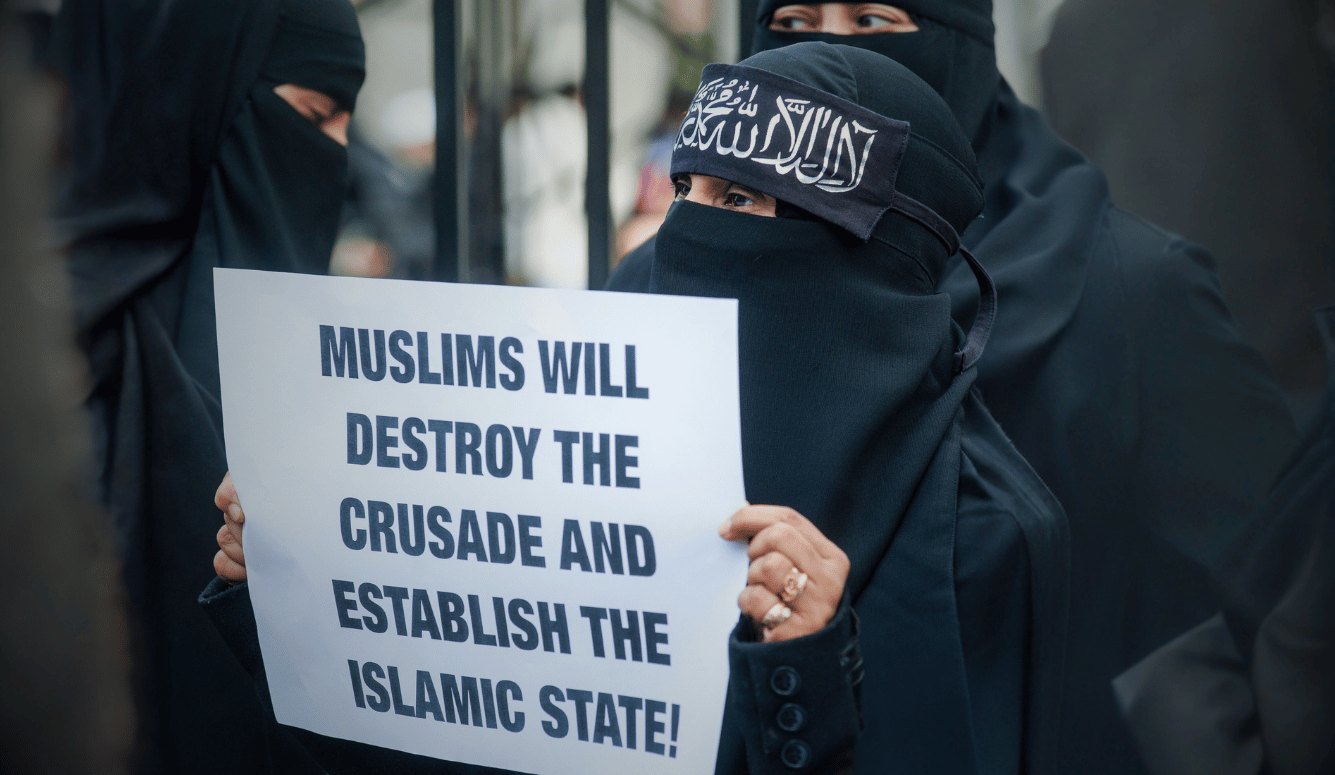

The priorities of Britain’s extremism researchers, and even those of the country’s state apparatus, do not reflect the fact that Islamism presents the greatest terror threat to the UK. Islamism is a religio-political movement that aims to reestablish a theocratic Caliphate in the modern world—a single polity encompassing all of the world’s Muslims, within which Sharia Law would be followed in all matters, and non-Muslims would be reduced to (at best) second-class citizens. This ideology began with the founding of the Muslim Brotherhood in Egypt in 1928, and it now exists in multiple variants and offshoots worldwide. Al-Qaeda, Islamic State, Boko Haram, Hamas, the Taliban, and the Shi’ite regime ruling the Islamic Republic of Iran are all overtly Islamist entities, while the governments of Turkey and Qatar might diplomatically be described as influenced by or sympathetic to Islamism.
For many Western politicians and intellectuals, criticism of Islamism is taboo, but this should not be the case. Aside from Qatar’s Al-Jazeera media network and a minority of Islamist-aligned states, the Muslim world is far more ready than the West to acknowledge the danger that Islamist movements and ideology pose. Multiple Muslim-majority states have even outlawed Islamist organisations like the Muslim Brotherhood altogether, which is now banned in Jordan, Saudi Arabia, the United Arab Emirates, and its own native Egypt, but remains free to operate throughout continental Europe (with the exception of Austria) and the English-speaking world.
Revolution in and conquest of Muslim-majority regions of the world has always been the greatest priority for Islamists—Islamic State, for example, was largely occupied with a war against its Muslim neighbours. However, they also seek dominance over Muslim minorities elsewhere in the world, and they work to infiltrate state and community institutions wherever they are able to do so. A recent report about the Muslim Brotherhood’s activities in France paints a disturbing picture of creeping totalitarianism. As the BBC reported in May:
In a copy of the report published in Le Figaro newspaper, the authors identified the Federation of Muslims of France (FMF) as the main French emanation of the historic Muslim Brotherhood, which was founded 100 years ago to promote a return to core Islamic values.
They said the FMF controlled 139 places of worship in France, with a further 68 affiliated—in all around 7% of the total. The organisation also ran some 280 associations, in sports, education, charity and other fields, as well as 21 schools.
The aim of the movement was to set up “ecosystems at local level” to “structure the lives of Muslims from birth till death.”
“[The movement’s] officials, who are hardened activists, enter into a relationship with the local authority. … Social norms—the veil, beards, dress, fasting—are gradually imposed as the ecosystem solidifies,” the authors write.
“What happens is that religious practice become[s] stricter, with a high level of girls wearing the abaya (long robe) and a massive and visible increase in the number of young girls wearing Islamic headscarves. Some are as young as five or six.”
All of the same symptoms may be observed in the UK, where Brotherhood-linked figures and organisations are also well-established in the religious and charitable sectors, maintain extensive investment and property portfolios, and provide cradle-to-grave services for many British Muslims. In 2015, a review of the Muslim Brotherhood in Britain—commissioned the previous year by then-prime minister David Cameron—found that “Muslim Brotherhood associates and affiliates here have at times had significant influence on the largest UK Muslim student organisation, national organisations which have claimed to represent Muslim communities, … charities, and some mosques.”
The report further explained:
[I]n common with the Muslim Brotherhood elsewhere, Muslim Brotherhood-related organisations and individuals in the UK have openly supported the activities of Hamas. People associated with the Muslim Brotherhood in the UK have applauded suicide bombing by Hamas, in some cases against civilians. Hamas terrorist activities have not been publicly disowned or condemned. Muslim Brotherhood organisations and associates in the UK have neither openly nor consistently refuted the literature of Brotherhood member Sayyid Qutb which is known to have inspired people (including in this country) to engage in terrorism.
Exemplifying this trend, the report added that two Brotherhood-linked organisations—the Muslim Association of Britain and the Muslim Council of Britain—had “consistently opposed programmes by successive Governments to prevent terrorism.” Yet, as recently as 2023, the Ministry of Defence was trusting the latter to endorse chaplains in the armed forces.
Keep reading
Life in The Grim Old Days
In Defence of Academic Standards

Letters to the Editor
Danielle Haas on How Activism Took Over Human Rights | Quillette Cetera Episode 73
On Trauma-ism