Skip to content

Art and Culture

“These Songs Are Timeless”

Forty Years on, Dire Straits’ bassist John Illsley talks to Quillette about the band’s 1985 masterpiece, ‘Brothers in Arms.’
· 9 min read
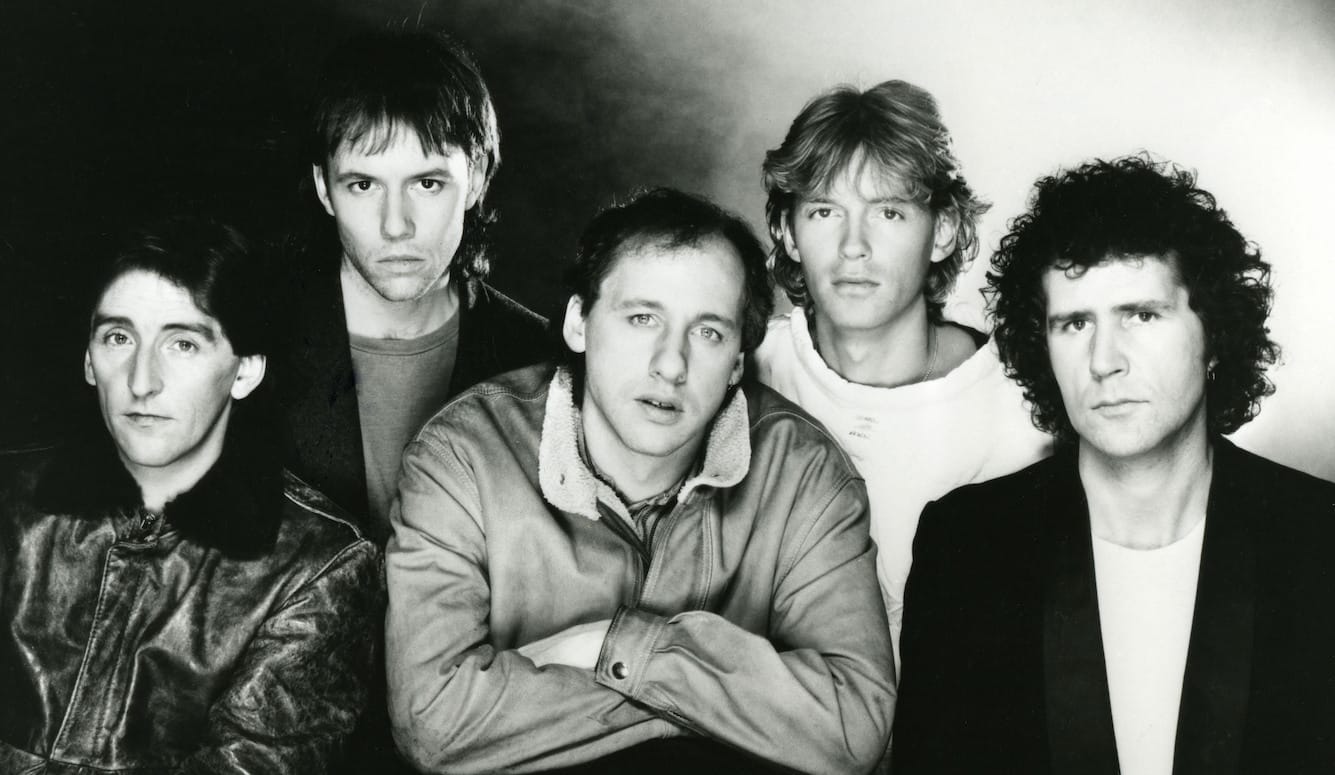
John Illsley (far right) with Dire Straits in 1984 (left to right): Terry Williams, Allan Clarke, Mark Knopfler, and Hal Lindes. Black and white photo. Band members are white men in their t
John Illsley (far right) with Dire Straits in 1984 (left to right): Terry Williams, Allan Clarke, Mark Knopfler, and Hal Lindes.

“‘Brothers in Arms’ is a one-off in the musical world,” says Dire Straits bassist John Illsley of the title track to the band’s iconic 1985 album. “On the one hand, it is a deep and arresting observation of the human condition, showing rare integrity, but it was also a massive commercial hit when it was released. This ‘clash’ baffled quite a few people at the time.” With its Scottish folk undertones and Charles Wolfe-inspired lyrics, the song soon became an anti-war anthem. “I have played it live countless times,” says Illsley. “Forty years on, it is always an emotional moment and resonates with the audience—a testament to the quality of the songwriting.” 

Illsley co-founded Dire Straits in 1977 with his lifelong friend Mark Knopfler (vocals, lead guitar, songwriter), Mark’s younger brother Dave (rhythm guitar), and David “Pick” Withers (drums). The band would undergo multiple line-up changes after Dave left in 1980, but Mark Knopfler and John Illsley would be members of every iteration of Dire Straits until the band finally dissolved in 1995. In this interview for Quillette, Illsley reflects on the 40th anniversary of the band’s 1985 masterpiece, its monumental commercial success, Knopfler’s songwriting magic, and how music’s place within our culture has changed since then. The interview has been lightly edited for clarity.

John Illsley at home in 2025 (Photo by Janine Penney, courtesy of John Illsley)

Quillette: The Brothers in Arms album went straight to number one in every country where it was released. It topped the UK charts for fourteen weeks, ten of which were consecutive, and it topped the US Billboard Chart for nine weeks. It was the first CD to sell a million copies and more. And it was showered with music accolades and critical praise.

John Illsley: The level and speed of success were unbelievable. There were times where I stopped to try to make sense of it all.

Q: In your autobiography, you write about when you played the Roxy, following in the footsteps of Neil Young, Frank Zappa, Bob Marley, Van Morrison, and B.B. King. You said you were “not quite believing it’s real” and that you spent some time “trying to get my head around the absurdity of it.” You told Mark Knopfler how “weird” it all was, and he replied, “Embrace it, we could be in the Dog and Duck begging for a midweek slot after the darts match.”

JI: The four lads from the borough of Deptford [in London] went far. Forty years on, I am about to play some dates in Holland in celebration of Brothers in Arms. A promoter rang me and asked if I will do some shows to mark the anniversary of the album and I said yes. I love celebrating the songs, the music that we made together. It’s not a question of trying to keep it alive, because people want to hear it again. I’ve been doing these concerts in the UK for the last few weeks and the response has been really overwhelming. We haven’t made an album since 1991 yet people are still interested in listening to the music. That says something about the songs for a start.

Q: Mark Knopfler’s tunes are often described as iconic for a reason.

JI: Mark’s songwriting has an incredible narrative to it and people just get it. He’s a master storyteller. His songs are masterpieces, like a great painting that you want to come back and look at again and again—“Sultans of Swing,” “Romeo and Juliet,” “Down to the Waterline” are all timeless. From Brothers in Arms there’s “Money For Nothing,” “Walk of Life,” “Why Worry” and the title track, my personal favourite on the album. These songs are timeless. As with Leonard Cohen, the Beatles, Neil Young, or Dylan, they are remarkable observations of the life that we live or the life that the poet lives—an observation on the human landscape and that’s really what art is all about. It’s a response to what’s going on around you and how you interpret it, how you articulate it and share it with the world.

Q: Brothers in Arms displays this aspect of the songwriting to perfection.

JI: Yes, Mark wrote “Money For Nothing” after he visited a white-goods store in New York. At the back was a row of TV sets all tuned to MTV. Some workers were watching and saying things like “That ain’t working” and “Money for nothing.” At the other end [of the record] is the sombre “Brothers in Arms”—a deep, serious anti-war anthem.

Q: Four decades ago, an album release was a major cultural event. There was a kind of cultural consensus because with only a few channels everyone listened to the same thing. But the sheer volume of releases today makes such a consensus impossible.

JI: This is true. But also consider the frustrations of a one-or-two-channels-of-music reality, where a very small number of people decide what is played to the British public. When “Sultans of Swing” came out, it wasn’t played on British radio because the “committee of experts” decided that, at six minutes, it was too long and that there was too much lyrical content for the public to understand. So they didn’t play it on the BBC until it had been big in Europe and enormous in America. Only then did they reluctantly play it. When you went to America in the late ’70s, there were hundreds of radio stations. England had, like, two. Now we’ve got loads of mainstream outlets but they’re all playing the same thing—BBC Wiltshire, BBC Shropshire, BBC Leicester and the like still take their guidance from the BBC. It’s only when you go to private stations that you might hear Bob Dylan or Leonard Cohen. I can’t remember the last time I heard them on the radio.

Q: It is also about music’s place within Western culture—how it shifted from the intellectual and emotional heart of the person’s being to the background of the person’s life. Music simply does not hold a central place within culture anymore.

JI: I agree with you, it’s crazy. With all that music being released—fifty to sixty thousand tracks uploaded to Spotify daily—the great majority will never reach the greater public. But all of life has shifted in a way. We also went from kids mucking about outdoors, making rafts, riding bikes, and playing outside to sitting in front of a computer or iPhone screen. I don’t know how much music I would have made or how much guitar we would have played had there been computers and internet when we were growing up.

Q: The Brothers in Arms tour lasted 366 days and included 248 concerts. You played in 23 countries, 118 cities altogether, and fourteen consecutive nights at Wembley Arena.

JI: That was very intense. From early ’77, it was pretty much non-stop apart from a few years off in the late ’80s. So it was about sixteen or seventeen years of continual touring and recording. I do love touring but I wouldn’t contemplate doing it the way Dire Straits used to.

In the Spirit of the Lord
Menacing, exuberant, eccentric, and ambitious—Dylan’s first evangelical record turns two-score and four.

Q: The world is grateful that you did if the number of online views is anything to go by. Your performance of “Money for Nothing” at Live Aid, for example, has clocked tens of millions of views.

JI: That was a pretty crazy but extraordinary day. Amazing that it actually came off to be frank, thanks to the sheer energy and determination of Bob Geldof and Harvey Goldsmith getting it beamed around the world. It was an incredible thing to do forty years ago. Now it’s easy to beam things around the world, but in 1985 it was quite an exercise.

Q: You were on stage with Sting, am I right?

JI: Yes, Sting was on stage with us, he’d been playing earlier in the day and he was sitting in the royal box just having a look at the rest of the artists when our tour manager asked him if he wanted to sing on “Money for Nothing” with the band. And because he’d recorded it with us in Montserrat, he agreed. It was a coincidence that he was in Montserrat to record the track with us—he was on holiday there and visited the studio. He heard the song and predicted a hit, so Mark asked him to join in and he just got in front of a microphone and sang that famous MTV line. Geldof would have liked us to headline Live Aid but we were busy doing twelve or thirteen sold-out shows at the arena next door, so that’s why we played in the afternoon.

Q: The crowd went crazy when you came on. The atmosphere was electric. Live music is magic, there’s nothing like it.

JI: I think it’s because people want to see something real—you are seeing people actually recreating what they did in the studio live at that very moment. Recreating that on stage in front of people is a very magical moment and people appreciate that. They are experiencing a one-off situation that is not going to happen again. It’s the same when they see Coldplay, U2, or Springsteen: a proper band playing proper music. You can look at YouTube or Twitter as much as you like but it’s all slightly removed. When you’re at a venue with a crowd of people who feel the same way you do, it’s an incredible experience. 

People love live music. Always will. It is an innate need—ever since people banged on drums and put some sticks together and hit tree trunks or put some strings on something. We were in Cuba recently and read about the development of Cuban music. It started off with the slaves coming over and working on the sugar plantations, they hit drums with sticks. Then the Spanish came in with stringed instruments and that got added to the drums and sticks. And then somebody came with wind instruments and keyboards from another country, and all this gelled into what we know as Cuban music now. It’s a real lesson in unintentional international collaboration.

Q: You said that “Brothers in Arms” is your favourite Dire Straits tune. In one interview, you described it as a near-perfect song.

JI: This is Mark the storyteller opening people’s eyes to the horrors of war. It was written after the Falklands conflict and told from the viewpoint of a wounded soldier. I believe the title was inspired by Mark’s dad’s comment on Argentinian and Russian soldiers being brothers in arms. The lyrics were also inspired by [Charles Wolfe’s 1817] poem “The Burial of Sir John Moore after Corunna,” I believe. Its message resonates still and will forever be relevant. This song is a rarity in the musical world in terms of integrity and captivating beauty—like a magnificent piece of art that hangs on the wall and stops you in your tracks each and every time.

Q: In the SkyArts Guitar Stories documentary, Knopfler tells you that teenagers today are looking into guitar shops just like he did as a young man. They also own a record player and scour vinyl shops for Dylan, the Beatles, and the Rolling Stones.

JI: These are the foundations which we all built on. The Beatles built on a foundation of blues and folk, rock ’n roll, and a lot of other music from the States. Music is a powerful force, a worldwide communicator, partly because of the English language. Also, a great many pop groups started in England. The Beatles were the first proper pop group that had worldwide success and nobody can ever forget that. I’m not surprised that teenagers listen to these greats. This music speaks to them either from a musical or a lyrical point of view or both. When I first heard Elvis Presley, I just wanted to try and join the world he was in—the world that Chuck Berry was in, and that Muddy Waters was in. I wanted to understand how to play the blues. Today, there’s a huge variety of music available whether we like it or not, and it’s a lot for people to sift through.

Photo by Janine Penney. Courtesy of John Illsley.

Q: In the foreword Mark Knopfler contributed to your autobiography, he wrote, “The ride is not for everyone, not for those who can’t take the pressures and the pace.”

JI: Everything was changing [in 1985]. The whole digital thing was starting. The whole album [Brothers in Arms] was recorded digitally in the middle of the CD revolution and the CD was being pushed like crazy. MTV had just come over from America and it was huge. “Money For Nothing” was played in heavy rotation on MTV Europe. I remember there was anticipation and great expectation from the band to deliver the new album. We finished it off in the Power Station recording studio in New York, and we ended up with a record that we were very pleased with. For me, it seemed to have some elements from all the previous albums—it reflected where Mark’s writing was going, from the upbeat “Walk of Life,” to the more serious “Your latest Trick” and the reflective “Brothers in Arms” track itself. It was beautifully produced by Mark and Neil Dorfsman. Neil didn’t care for “Walk of Life” but I believe it gave the album a little lightness. It also became a big hit single which helped. For me, Brothers in Arms was kind of a synthesis of the other four albums—a culmination of nine years of Dire Straits if you like.