Activism
The Bias Narrative versus the Development Narrative: Thinking About Persistent Racial Inequality in the United States
How can you expect population parity in an enterprise when there are some groups (Asians? Jews?) who are significantly overrepresented?
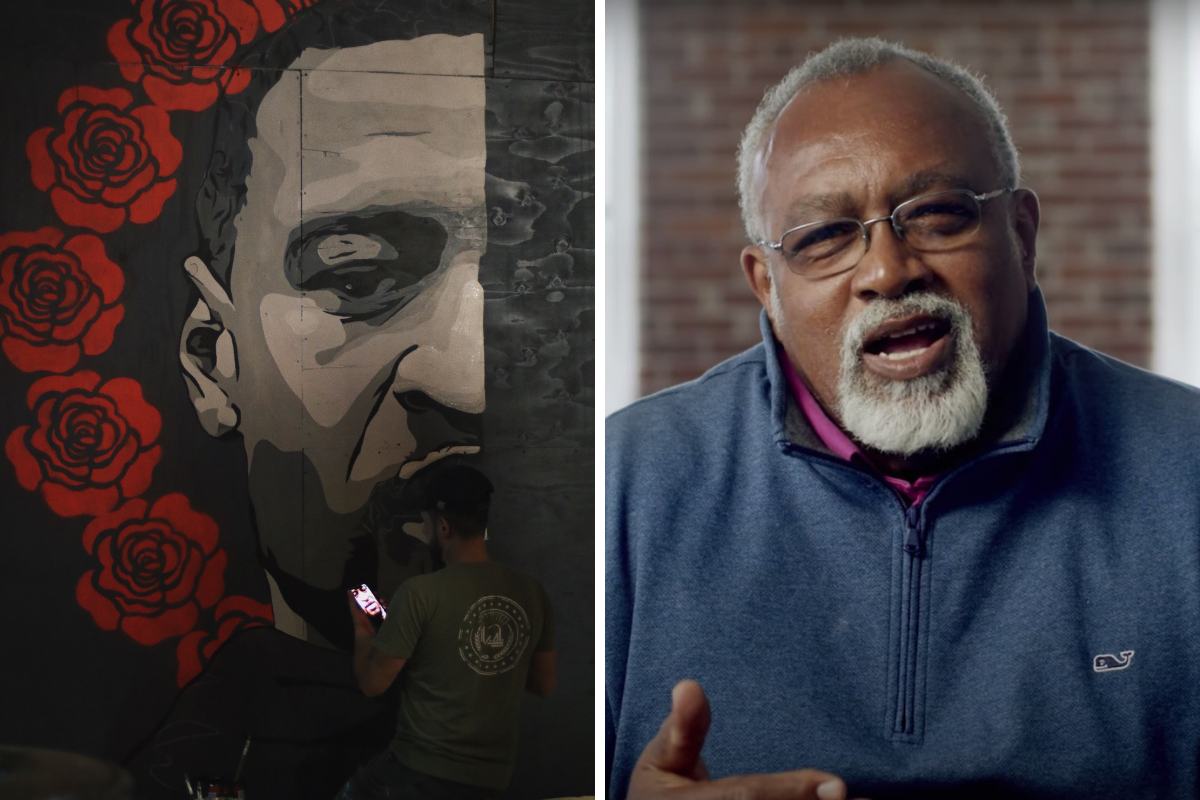

Quillette invited author and Brown University professor of economics Glenn Loury to respond to Aaron Hanna’s recent critique of black conservatives. He replied:
I read Hanna’s long piece. It is very thoughtful and provocative. You are to be commended for publishing it. [Thomas] Sowell and [Shelby] Steele can speak for themselves. I hope one or both elects to do so. As for my part (as a fellow-traveller with those black conservatives) here is my answer.
Attached was a transcript of a talk Professor Loury delivered at Pepperdine University on June 5th, 2021. It is not a direct reply to Hanna’s essay but we are reprinting Loury’s remarks below to further discussion of this important and timely topic. A video of the talk is embedded for those who prefer to watch the speech rather than read it. The text has been lightly edited.
The power of the narrative
Let me be as provocative as I can. I want to talk about the power of narratives to shape racial politics in this country. As we all know George Floyd was killed in Minneapolis by police officer Derek Chauvin, who has been duly convicted of murder by a jury of his peers. The cop was white and his victim black. But I have a question: Was it a racial incident?
What would we mean if we said this was a racial incident, beyond the trivial statement that one participant was white and the other black? Well, we might mean that we think we know Chauvin’s motive when putting his knee on Floyd’s neck—that he acted out of racial animus. Alternatively, it could be that people identify with the incident and ascribe significance to it due to the race of the participants, quite apart from any discriminatory intent of the people acting in that situation.
The racial force of this incident is largely independent of causality and intentionality. Rather, it has mainly to do with interpretation, with narration. That is, the political significance of this event is not fully determined by the facts. It also depends on the stories we tell, the analogies we draw, and the meanings we extract from those facts. Put differently, whether the killing of George Floyd is seen as a racial event or not is, to a great extent, a choice we are making.
So, an important follow-up question to ask is, “Why do so many of us insist on seeing such events through a racial lens?”
Loury’s four “Ps”
There are Four Ps that I will use as an organizing principle for this talk about racial inequality in America: perennial, personal, political, and perplexing.
Perennial. A problem that has been around forever, and that is central to the American saga.
Personal. I am a black man from the south side of Chicago. These are my people that we are talking about. How can I completely divorce that reality from scientific imperatives? What are my responsibilities? How will I be read? If I speak out with a particular viewpoint it will be seen, in part, in the context of my racial identity. I will be understood as a black economist, black professor, black intellectual, saying whatever I have to say. And I have no control over that.
Political. The stakes are incredibly high when we talk about race and inequality in the United States. You had people marching for black lives in cities across the country. And not only marching. The presidential election was partly enmeshed in this argument going on within American society about race, systemic racism, white supremacy, black marginality, diversity and inclusion, equity, and all that—so this issue is very political.
Perplexing. Because we do have problems here. We have a social-science problem. But we also have a challenge-to-the-country problem. We stand here now 50 years past the Civil Rights movement. That’s practically as long a period of time as from Appomattox, where Robert E. Lee surrendered to Ulysses S. Grant, to Versailles, where the Europeans sorted out the mess that was World War I. Technology has dramatically changed over the last 50 years. The economy is completely different. Our polity is completely different. Tens of millions of non-European immigrants have come to the country in the last half-century. Everything is different. And yet, if you look at some of the speeches that are being given, or consider some of the events recorded for posterity in the media, or some of the arguments being made, it’s as if we were still back in the 1970s. Why is this so? This is a real puzzle.
Who is Glenn Loury?
Let me say something about my own biography. I grew up in Chicago in the 1950s and 1960s, in a working-class family. I came to MIT to study economics in the early 1970s after having received a good education at Northwestern University. Upon arriving at MIT, I discovered two things. One was the deep structure and the beauty of analytical economics, which I grew to love. I also learned that economics is a social science, not divorced from policy, politics, society, or people.
My teachers at MIT way back in the early 1970s cared about what was going on in the real world, not just about impressing their peers with the virtuosity of their technical practice. They addressed the great questions of their day. That lesson stuck with me. I went on to teach economics at Harvard in the 1980s and at Boston University in the 1990s. I have been at Brown since 2005. In the 1980s, I was a black conservative, public intellectual, a supporter of the Reagan administration. In the 1990s, I tacked back toward the center. Today, I would probably be classified as a conservative again given my views on issues like structural racism, affirmative action, slavery reparations, and so on. (More about this in due course.)
So that is my setup. Racial inequality in America. It has been around for a long time. It is a deep, political question. It involves me personally. It is a puzzle.
Two conflicting narratives about racial disparities
I want to preface my argument about persistent racial inequality by invoking the notion of “narrative,” by at least gesturing toward an appreciation for the power of the story, and by noting that historical evidence does not pin down the stories we tell ourselves about our experience. Indeed, multiple accounts can be consistent with the same facts. So, there is an inescapable element of choice about how we “narrate” those facts.
Recently, some prominent economists—UC Berkeley’s George Akerlof and Robert Shiller of Yale, for example—have also stressed the importance of narratives for understanding social outcomes. It is this viewpoint that I invoke when I juxtapose conflicting narratives about the persistence of racial inequality: the bias narrative versus the development narrative. I will be advocating for the latter. We have a choice about how to look at this problem. And we have consistently been making the wrong choice.
“Hands up, don’t shoot.” That narrative was heard frequently after Michael Brown was killed by a police officer in Ferguson, Missouri, in 2014, abetting the rise of the Black Lives Matter movement. This was a singular event in the history of racial conflict in America. It would appear that, actually, there was no validity to the “hands up, don’t shoot” story. Rather, Brown attacked the police officer who, fearing for his life, then shot him. Independent investigations by local authorities and the US Justice Department concluded as much. Eyewitnesses have testified to this effect. The fact of the matter is that “hands up, don’t shoot” never happened.
But it did happen virtually. It happened in effect. It happened because of the force of the narrative: a black man brutalized by overbearing, vicious, and racist state power. For many, that story overwhelmed all the facts in the case. There is a documentary by filmmaker Eli Steele, narrated by his father, Shelby, called What Killed Michael Brown? The film reviews the Michael Brown case and concludes that “hands up, don’t shoot” is what Shelby Steele calls a “poetic truth”—an account so powerfully resonant with a narrative paradigm that it may as well be true. Once it gets out there, many will have a hard time believing that it is not true because the power of the narrative is so great. For many, stories about bias against African Americans have this allure. This has become a problem.
Likewise, “systemic racism” is a kind of narrative. What, after all, do people mean when they invoke “systemic racism”? They mean that racially disparate outcomes today are due to complex systems of social interaction embodying morally suspect historical practices, the consequences of which persist. “Mass incarceration” on this view is “systemic racism” because of the way that urban areas are organized, because of decisions society has made about prohibiting traffic in addictive substances, due to poor education and inadequate economic opportunity for certain sectors of society, all of which leave black youngsters with no alternative other than to engage in the illicit activities for which they are being punished.
I am not a big fan of this systemic racism narrative. It is imprecise and those invoking it are begging the question. I want to know exactly what structures, what dynamic processes, they mean, and I want to know exactly how race figures into that story. The people employing that narrative do not tell me this. History, I would argue, is complicated. Racial disparities have multiple causes that interact with one another, ranging from culture, politics, and economic incentives to historical accident, environmental factors and, yes, the acts of some individuals who may be racists, as well as systems of law and policy that are disadvantaging to some racial groups without having so been intended.
So, I am left wanting to know just what they are talking about when they say, “systemic racism.” Use of that phrase expresses a disposition. It calls me to solidarity while asking for fealty, for my affirmation of a system of belief. It frames the issue primarily in terms of anti-black bias. It is only one among many possible narratives about racial disparities, and often not the most compelling one.
I wish to offer here an alternative way of telling the story of persistent racial inequality which I call the “development narrative.” This account stresses patterns of behavior within the disadvantaged population that need to be considered. I speak now about African Americans, some 40 million people in the United States. This, of course, is a variegated, differentiated, and heterogeneous population. One size does not fit all. Nevertheless, I am willing to ask: do some behaviors observable in certain communities of color have the consequence of inhibiting the development of human potential among their members? And should such behavioral disparities be borne in mind when confronting and acting against the fact of racial inequality?
Here is an illustration of why the distinction between these narratives might be important. Consider school discipline. I call your attention to the Department of Education policy under the Obama administration of admonishing school districts that reported racial disparity in the frequency with which students were suspended from school for disruptive behavior. The statistics reveal that black students are suspended more often relative to their numbers. Looking at the average frequency of suspension for black and white students in a school district, that is, one sees a disparate incidence of suspension by race.
Obama’s Office of Civil Rights in the Department of Education sent a letter to local school districts warning them that they should be aware of, and take efforts to reduce, this disparity, or they might find themselves subject to being investigated for racial discrimination. Now, the racial disparity in this area is, indeed, nontrivial. If it reflected the racially discriminatory behavior of the school districts—principals, teachers, and security officers who are biased in how they treated disruptive behavior, such that the same acts by a white student are met with a less punitive response—then that would, indeed, be alarming, and would warrant the attention of the authorities.
Another possibility, however, is that the disruptive behavior being punished occurs more frequently among black students for reasons lying outside the school. If that is the case then interpreting disparate suspension rates as evidence of racial bias and responding to that by disciplining the school districts—cutting off their funding, perhaps hauling them into court—would be a terrible mistake. Rather, one would want to address the sources of this behavioral disparity. One would certainly not dismiss the racial inequality, but one would address it by attempting to enhance the opportunities and experiences of the affected young people, which shape their behavior patterns, to make those students less subject to disciplinary measures. That is, one would try to enhance their development.
(There are other possibilities. For example, one might become more tolerant of disruptive behavior across the board because a punitive reaction to disruption could be predicted to generate an unacceptable racial disparity. One can go many places with this example. I use it here merely to illustrate the differences between the bias and the development narratives when responding to the fact of a racial disparity.)
Let us talk more specifically now about the development problem. I am willing to invoke the demographic observation of a high rate of single-parenthood in African American families, where a mother is raising kids on her own. Three-in-four black kids—something like 70 percent—are today born to women without husbands. Common sense suggests that this reality cannot be unrelated to some of the outcomes, like disruptive behavior, that concern us. Perhaps it is not the main factor but it should be part of the story when discussing persistent racial inequality.
That I am willing to take it onboard does not, however, answer the question: What is the causal mechanism? A historical sociologist, historian, or demographer might well argue that we do see these different organizational patterns within families, but they are explicable given the historical experience of the respective groups. For Orlando Patterson, a sociologist at Harvard, they are a result of slavery—of the fact that families were disrupted at their core by the intercession of a master’s property claim over and against the filial connections of natal bonding. It is impossible, on his view, that you could have had as intrusive an intervention into intimate social relations among African-descended people as was slavery and not see present-day familial consequences.
Family organization matters for human development. There is a large racial disparity in family organization. Therefore, part of the story that you need to tell to account for persisting racial inequality involves family organization. In saying that, I would not have precluded a historical argument about the sources of the family organizational patterns. I would simply have been willing to consider the full range of relevant factors as I try to explain persistent racial inequality. This narrative is, of course, fiercely resisted by many. Nonetheless, I urge here that we consider it.
Violence, murder, homicide—huge racial disparities exist in this area. As anyone reading the newspapers knows, this is a reality of contemporary urban America. And there is a tightly networked set of social connections among the people who are committing and who are victimized by much of this criminal violence. Is that phenomenon, in any straightforward way, a manifestation of bias—of racism? Could it really be about white supremacy? Or is it about the failure of some part of a population to be socialized with the restraint, self-discipline, and commitment to civil behavior that, when widely embraced, make ordinary life and commerce in a community possible? Does it matter what story we tell here?
A willingness to ask about the behavior of the violent criminals preying on their neighbors, and the sources within a community of such behavior, is part of what it means to take the development narrative seriously. Again, I am not saying that we should forego trying to do anything about it, that policy has nowhere to go if the problem is mostly on the development side. Policy obviously has a lot to do with the development side, from better education to subsidizing child development to improving parenting skills to helping families move to safer neighborhoods. Nor am I assigning blame since sources outside of the community may be ultimately at fault for developmental deficits. But I am asserting that behavioral patterns such as these, and their cultural antecedents, need to be taken seriously.
Everyone talks about the academic achievement gap. Several groups are suing Harvard University, saying that the school’s affirmative action practices are penalizing Asian Americans. And the special high schools in New York City are being pressured to change their selection criteria to ensure that they do not enroll a class of more than 1,000 first-year students and have only a handful of black kids among that cohort. If you look at the National Assessment of Educational Progress, where a representative sample of American students are regularly tested for their cognitive abilities in mathematics and writing, you can see huge racial disparities in those data.
Am I willing to consider the development side when I talk about that? Am I willing to ask: What is going on in the homes? And: What do peer groups value? Am I willing to measure how much time people spend on homework? How many books there are in the home? Is the large racial disparity in academic achievement better understood when viewed in terms of the bias or the development narrative?
If you are prepared to discuss the supply side—if you are prepared, that is, to talk about the extent to which members of a disadvantaged, marginalized, and oppressed group are implicated in their own disadvantage—then some will charge that you are “blaming the victim.” I reject that charge categorically. It is not assigning blame to simply observe that the labor market has a supply side; that people make choices and engage in behaviors having deleterious consequences for their future economic prospects.
Of course, those behavioral patterns well may be a consequence of structural conditions and historical dynamics. On the other hand, if the reflexive response to seeing any disparity of behavior is to say: “Well, this is simply due to historical exigency,” then that has its own moral and philosophic implications in regards to agency—i.e., the extent to which people can be presumed to control their own fate, and the extent to which their communal norms and ways of living are seen as being within their ability to change.
For instance, is it a necessity that the homicide rate be as high as it is in the black communities where rates of interpersonal violence are so high? Is that really how we want to talk about such matters—to say, “What can they do? Of course, there is a high level of violence in poor black communities. Look at our structures; our gun laws; our hypocrisy about drug consumption and trafficking. Look at our history of racism in this country. Of course, there’s going to be a higher level of violence.” It is, in my view, morally repulsive to impute such a lack of agency to people in this fashion. It infantilizes them, makes them mere puppets at the end of strings being pulled by others. In the extreme, it robs them of their human dignity.
And perhaps worst of all, it robs a community of the ability to make social judgments. It undermines the capacity to clearly delineate right and wrong ways of living and to urge individuals to live rightly. I am not a philosopher, but I have read Immanuel Kant’s Foundations of the Metaphysics of Morals several times, in an attempt to understand what he was talking about. While it is certainly true, he says, that we are all embedded within the flux and the flow of history and under the influence of forces that are beyond our control of environment, psychology, and such, nevertheless, the theorist must assume the capacity of individuals to make free will choices about their moral life, lest there be no possibility for any theory of morals whatsoever.
I am signing on to that argument here when insisting on the need to engage the development narrative alongside talk about bias; the need to call attention to patterns of behavior and values that are internal to a community which limit their success; and when defending myself against the accusation that I give aid and comfort to racists, or that by making these observations I am somehow blaming the victims for their plight.
I am not unmindful of the pitfalls. I can hear the retort: “But, what will the racists say if you talk like that? Whatever the merits of such a narrative, in a society like the one that we live in, where many people are much less sympathetic than are you to the well-being and the aspirations of black people, some will take your words—the words of a black man—as license to entertain their own racist thoughts about why racial inequality persists.”
I cannot prove all this scientifically. But between the two paths—withholding arguments I believe to be true in order to manage political discourse, versus giving voice to such insight as I think that I might have, subject to rebuke, repudiation, and refutation by other critics, so as to enliven and enrich the political and public discourse—I choose the latter course. I am willing to take the risk of telling the truth, as best I can discern it, even though I cannot calculate all the political consequences which may flow from doing so.
Nor should it come as a surprise in a society with our racial history that such behavioral patterns would differ by race. Indeed, I would argue that so long as race is a meaningful part of people’s identity, with those meanings being reproduced via patterns of social affiliation, then there will be racial disparities in the structure of social networks in which people are embedded. Moreover, when network-mediated spillovers in human capital acquisition are important, this means there will be some persisting racial disparities of developmental outcome.
 Glenn C. Loury
The anatomy of racial inequality
Over four decades ago, in my doctoral dissertation at MIT, I had the good fortune to coin the term “social capital.”1 I did so by way of contrasting my concept, “social capital,” with what economists routinely referred to as “human capital.” As you may know, human capital theory imports into the study of human inequality an intellectual framework which had been developed primarily to explain the investment decisions by firms—a framework that focuses on the analysis of formal economic transactions. In my thesis, I argued that this framework was inadequate to the problem of accounting for social inequality.
My fundamental point was that human investments are essentially relational. Things having to do with informal social relations are missed in the human capital approach. Human capital theory is incomplete when it comes to explaining racial disparities, I argued, and there were two central aspects of this incompleteness. This led me to make two observations about the dynamics of human development and the nature of racial identity.
First, I noted that all human development is socially situated and mediated. That is, I argued that the development of human beings takes place inside of social institutions. It occurs as between people, by way of human interactions. Families, communities, schools, peer groups—such cultural institutions of human association are where development is achieved. Resources essential to human development—the attention that a parent gives to her child, for instance—are not alienable. Developmental resources, for the most part, are not “commodities.” Rather, structured connections between individuals create the contexts within which developmental resources come to be allocated to individual persons. Opportunity travels along the synapses of these social networks. People are not machines. Their “productivities”—that is to say, their behavioral and cognitive capacities bearing on their social and economic functioning—are not merely the result of the mechanical infusion of material resources. Rather, these capacities are the by-products of social processes mediated by networks of human affiliation and connectivity. This was fundamentally important, I thought and still think, for understanding persistent racial disparities in America. That was the first point I wanted to make, all those years ago, about the incompleteness of human capital theory.
My second observation was that what we are calling “race” in America is mainly a social, and only indirectly a biological, phenomenon. The persistence across generations of racial differentiation between large groups of people, in an open society where individuals live in close proximity to one another, provides irrefutable indirect evidence of a profound separation between the racially defined networks of social affiliation within that society. Put directly: there would be no “races” in the steady state of any dynamic social system unless, on a daily basis and in regard to their most intimate affairs, people paid assiduous attention to the boundaries separating themselves from racially distinct others. Over time “race” would cease to exist unless people chose to act in a manner so as biologically to reproduce the variety of phenotypic expression that constitutes the substance of racial distinction.
I cannot over-emphasize this point. “Race” is not something simply given in nature. Rather, it is socially produced; it is an equilibrium outcome—something we are making; it is endogenous. It follows from these two observations that, if the goal is to understand the roots of durable racial inequalities, we will need to attend in some detail to the processes that cause “race” to persist as a fact in the society under study, because such processes almost certainly will not be unrelated to the allocation of developmental resources in that society.
That is, the creation and reproduction of racial inequality in any society rests on cultural conceptions about identity that are embraced by people in that society—the convictions people affirm about who they are and about the legitimacy and desirability of conducting intimate relations with racially distinct others. (Here I do not only mean sexual relations.) My impulse to contrast human and social capital all those years ago was rooted in my conviction that beliefs of this kind ultimately determine the access that people enjoy to the informal resources required to develop their human potential. What I called “social capital” in my dissertation was, on this view, a critical prerequisite for creating what economists referred to as “human capital.” This point is crucial, I believe, if we are to understand the persistence of racial inequality in America today. This is why I believe it is so important to focus attention on the development side of the equation. I wish to repeat: doing so in no way requires that we “blame the victims.”
Historically oppressed groups, time and again, have evolved notions of identity that cut against the grain of their society’s mainstream. A culture can develop among them that inhibits talented youngsters from taking the actions needed to develop that talent. Now, given such a situation, I wish to ask: Do kids in a racially segregated dysfunctional peer group simply have the wrong utility functions? It is a mistake to attribute the dysfunctional behavior of a historically oppressed group of people to their having the wrong preferences when those “preferences” have emerged from a set of historical experiences that reflect the larger society’s social structures and activities.
Another way of saying this is that when thinking about racial disparities, social relations come before economic transactions. When ethnic communities and their local cultures are not integrated across boundaries of race in a society—then inequalities may persist, not mainly because of racial bias in market transactions but, more fundamentally, because of complex, morally ambiguous, and difficult-to-regulate relationship patterns reflecting what people see as the meanings which give significance to their lives, and most critically, from the structures of social connectivity to which those meanings have given rise. These relationship patterns affect the opportunities people of all races enjoy to develop their human potential.
Equity versus equality
What about affirmative action and reparations? Surely, if I believe that racial inequality is rooted in social relations, then I must favor these polices, no? Actually I have concerns—grave concerns—about these policies. I want briefly to give some hint of what it is that I am concerned about, which reveals something about my larger outlook on the age-old American dilemma of racial inequality.
I oppose slavery reparations for two reasons—one principled and the other pragmatic. When the Japanese Americans interred by the Roosevelt administration during the Second World War were finally, in an act of Congress signed into law by Ronald Reagan and presided over by George H.W. Bush, acknowledged as having been wrongly victimized and offered a token reparation payment, it was $20,000 a head for 80,000 people. That was $1.6 billion, paid out of the Treasury—and it should have been paid, in my view. By contrast, there are some 40 million African Americans, and if you take the modern equivalent of 40 acres and a mule, and you bring it forward at a normal rate of return, you are reaching astronomical sums. Maybe it is $100,000 a head, with inflation, for 40 million people. That would be $4 trillion, compared with 80,000 people and $1.6 billion. Some scholars estimate even larger sums, purportedly due to black Americans because of slavery.
Keep reading
Jerry Kaplan on AI Doomers
Payback Time for Steven Galloway
War Stories

Life in The Grim Old Days
In Defence of Academic Standards