Health
The Tragic Vision: Making the Best of Things
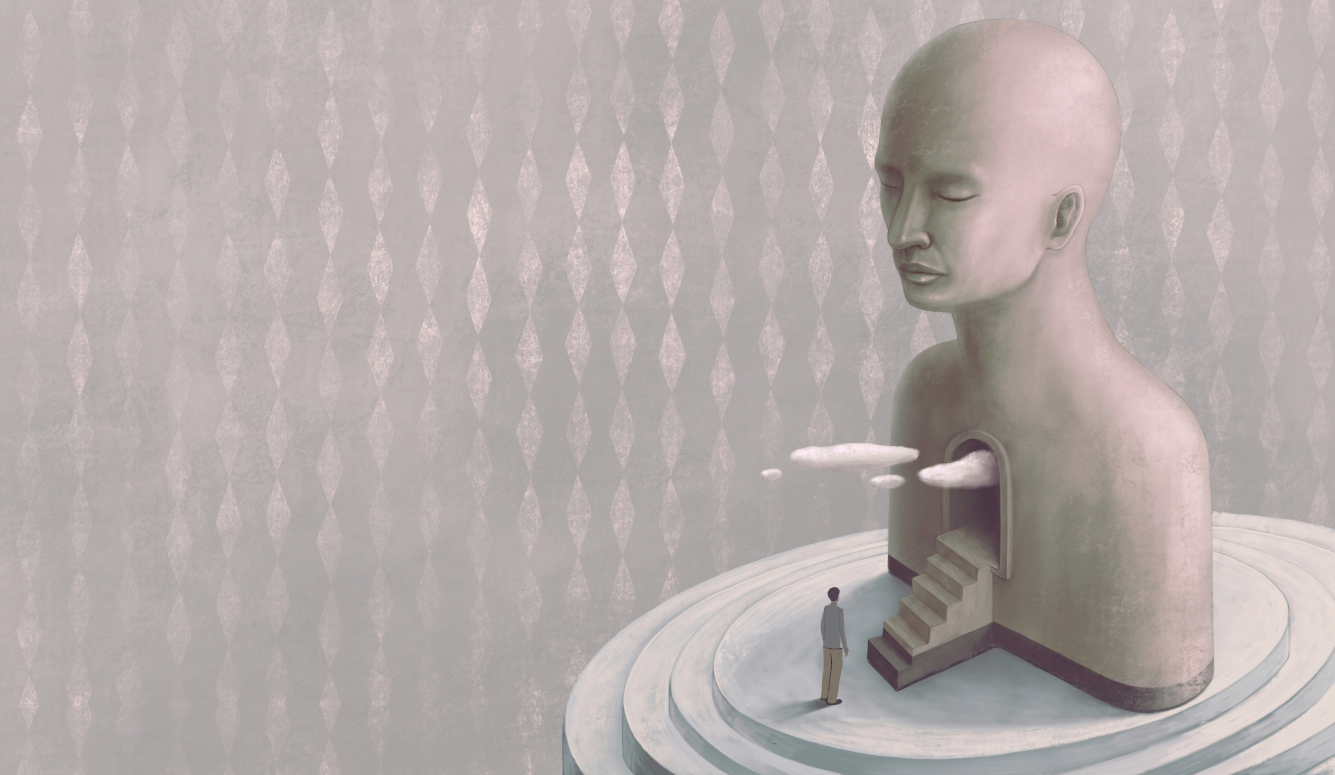
The denial of tragedy inevitably results in the denial of what makes us human, snipping the invisible thread that connects us to the lives of other people and draining the individual of moral gravity.


“Life is tragic,” James Baldwin wrote, “simply because the earth turns and the sun inexorably rises and sets, and one day, for each of us, the sun will go down for the last, last time.” Baldwin was expressing the tragic vision of human life. This vision has been a consistent feature of great art and literature throughout history, confronting universal themes of death, time, chaos, futility, the absurd, evil, unmitigated suffering, and the built-in constraints of the human condition from which any transcendent heroism must invariably proceed, and upon which all genuine religious experience is based. In the typical tragedy, the protagonist comes up against the cruel and indifferent forces of the universe and loses, but in the process discovers a deeper human capacity for resilience that can sustain a sense of meaning through future struggles. The tragic hero transcends limitation by accepting it and gaining knowledge of their own flaws and limitations in the process.
In The Hero and the Blues, the novelist and critic Albert Murray compares Greek tragedy to the blues tradition in black American culture: “Not unlike ancient tragedy, it would have the people for whom it is composed and performed confront, acknowledge, and proceed in spite of, and even in terms of, the ugliness and meanness in the human condition. It is thus a device for making the best of a bad situation.”1 Making the best of things is part of growing up. This applies to individuals as well as cultures. In his 1964 book of essays Shadow And Act, Ralph Ellison attributes the moral decline of the post-Reconstruction era to the “anti-tragic approach to experience” that effectively cut away the nation’s “deep probing doubt” and its “sense of evil,”2 enabling the moral brittleness that made racist atrocities easier to abide. Without a sense of tragedy we are left with shallow utopian idealisms, abstractions, and generalities that reject the harsh realities of human experience by blaming them on someone or something else. This has the effect of aggravating the problems they were meant to solve. As Murray observes, there is no shortage of “totalitarian systems which began as freedom movements.”3 The irony of repressing the metaphor of tragedy is that we end up making life more tragic.
Even in our age of COVID, modern life seems almost perfectly designed to repress the tragic vision. Digital technologies and social media platforms stave off boredom at the cost of nullifying our sense that time is real and the present moment is all there is. The image takes precedence over reality. Dating apps, for example, eschew the necessary awkwardness and bottomless terror of approaching beautiful strangers while flesh-and-blood human beings become little more than profile pictures or thumbnails to be summarily judged, categorized, and swiped left or right. If anyone gets “weird” with us—meaning if anyone expresses some kind of human frailty in our direction—we can “ghost” them, extricating their existence from our consciousness. Cancel culture is merely an extension of this fickleness, and it is evident in the stories we tell ourselves. A quick scroll through Netflix yields mostly escapist fantasies incapable of dealing with the complexity and ambiguity of our emotional lives, and even many dramas are rendered unreal by their tear-jerking sentimentality which milk and manipulate emotions more than confronting or accepting them. The entire self-help industry, whatever its utility in getting people out of bed, is predicated on denying human limitation, and if you don’t become rich, enlightened, or preferably both, like the other 99.9 percent of humans on Earth, the implication is that it’s your fault. This is the anti-tragic approach at its core; the notion that everything bad can be overcome and everything good has been earned.
 Marilyn Simon
The denial of tragedy inevitably results in the denial of what makes us human, snipping the invisible thread that connects us to the lives of other people and draining the individual of moral gravity. It’s no wonder, really, that Jordan Peterson’s lectures on confronting our inner demons and cleaning one’s room quickly became so popular, in contrast to prevailing narratives that portray those demons as some political or cultural identity group which must be externally vanquished.
Likewise, an impulse has emerged across the political spectrum—from woke to MAGA—that attributes any undesirable outcome in the world to some nefarious individual or group that must be righteously inveighed against, and anyone who exercises constraint or expresses doubt is stigmatized as a traitor, a phony progressive, RINO, Uncle Tom, corporate shill, or whatever else. Society’s problems are understood as the product of bad intentions and bad people, who are conveniently imagined to be whichever politicized stereotype or caricature happens to irritate us the most—the redneck or the hippie, the globalist or the capitalist, the black hoodlum or the white racist. The obvious and parsimonious answers to the problems we face (that we are experiencing entropy like every society in history) are exchanged for self-satisfying conspiracy theories which accelerate our decline. The breakdown of mutually agreed-upon reality gives way to zero-sum narrative warfare between political and cultural tribes with each narrative providing such meaning and identity to its believers that you can’t get a damn word in about anything meaningful or interesting without offending the sensibilities of someone nearby. This is politics as salvation; the absence of tragedy. The upshot is that nothing gets done while the public grows increasingly bitter and resentful.
* * *
Neil Gray
But isn’t life hard enough? Shouldn’t we focus on our vast potential as human beings, on the prospect of moral victory and the possibility of transcendence? This is the intuition underlying the opposite of the tragic vision, which might be called the anti-tragic or the comic vision. This vision was also expressed by James Baldwin when he said in an interview: “I really do believe in the New Jerusalem. I really do believe that we can all become better than we are. I know we can. But the price is enormous, and we are not yet willing to pay it.”
In this vision, we are all born with infinite potential before we collide with the forces of the world, and we can make use of that potential once we develop the necessary moral courage. Traditionally, the comic narrative structure begins with a naive, light-hearted protagonist who, after lifting the veil from their eyes, overcomes an external force standing in the way of The Good—represented and christened through romance—and then ending on a high note. Comedy is basically a rejection of the established order. Like the tragic vision, this vision speaks to an essential truth of human life: We really are something quite special, and human history testifies to our ability to overcome the odds. The problem is not with the visions themselves, which only correspond to different elements of human consciousness, but when there isn’t a good enough balance between them. We’ve gone too far in the anti-tragic direction.
Thomas Sowell captured the philosophical dimensions of the tragic and comic visions in his book A Conflict of Visions. Broaching the question of why the same people seem to line up on the same sides of completely different issues again and again, from taxes to climate change to gun laws, Sowell lays out two fundamentally contrasting visions of human nature and social causation that run through various political traditions in history. He describes these visions as pre-analytic cognitive acts preceding conscious thought—the constrained vision and the unconstrained vision, one essentially tragic and one essentially comic, which broadly correspond to conservative and progressive dispositions. The constrained vision views the moral limitations of human nature—egotism, tribalism, and wickedness—as basically fixed, while engaging the social world as a series of trade/offs in which perfect results and solutions can never be wholly engineered by enlightened decision-makers. Systemic processes develop from the bottom-up over time or are otherwise set in motion—the rule of law, markets, cultural traditions—which create the incentives that drive human behavior beyond the scope of individual intention. In essence, the constrained vision wants to preserve what has worked so far without letting well-intended moralists come in and screw everything up.
Conversely, the unconstrained vision views human nature as infinitely morally expansive, the problems of the world as the result of corrupt interests, and the solutions as coming through the harnessing of political and moral willpower. This is the “Blank Slate” view of human nature in which people are endlessly malleable and culture is socially constructed through prevailing attitudes and norms, which are just as likely to be backwards and superstitious holdovers from the past as they are to be the fruits of time-tested wisdom. The unconstrained vision looks out for new ideas that will improve the world, and roots out any belief or attitude that appears to stand against positive change. While the unconstrained vision sees moral progress as a consequence of revolution, the constrained vision sees moral progress as a consequence of evolution. While the unconstrained vision “seeks out the special causes of poverty, crime, and war,” the constrained vision “seeks out the special causes of peace, wealth, and a law-abiding society.” While the constrained vision takes chaos for granted, the unconstrained vision takes the established order for granted. Sowell writes:
The constrained vision is a tragic vision of the human condition. The unconstrained vision is a moral vision of human intentions, which are viewed as ultimately decisive. The unconstrained vision promotes pursuit of the highest ideals and best solutions. By contrast, the constrained vision sees the best as the enemy of the good—a vain attempt to reach the unattainable being seen not only as futile but often counterproductive, while the same efforts could have produced a more viable and beneficial trade-off.4
Although Sowell is a clear proponent of the constrained vision, he allows for the utility of both, though in different ways and at different times. The trick is to remain mindful of our inherent limitations while always staying open to new possibilities—to learn as much as possible from accumulated experience while always looking for something better. The visions need each other. Identifying too strongly with one cuts us off from the other. We ultimately need a conducive interplay between the tragic and the comic, and a framework that allows for an attitude of both acceptance and rejection towards experience—an acceptance of that which we can’t change and a rejection of that which must be changed. Ellison and Murray describe this approach as one of antagonistic cooperation, using suffering and adversity to deepen our sense of life.
Going too far in either direction elicits bitterness. Taken to its extreme, the comic vision creates an expectation gap between image and reality that can only be filled with incoherent rage. We think life should be better than what it is and are angry that it isn’t. This is what happened to James Baldwin. Despite his early humanism, Baldwin grew increasingly bitter over the course of his life about the distance between “The New Jerusalem” and the world as it was, even after contributing to the great moral victories of the civil rights movement that established racial equality under the law. His later message seemed geared for no higher moral purpose than assaulting the consciences of white liberals, setting the tone for the excesses of modern progressive activism which really went no further than milking historical guilt. Conversely, the tragic, without the hope of transcendence or fulfillment, creates its own very different kind of bitterness—the hard, cold, and silent bitterness that comes when novelty has been blotted out from one’s life and complacency has set in. Purifying one’s vision might be politically expedient, but it isn’t existentially or culturally replenishing. One must look at the world both ways.
The tragicomic sensibility was articulated by Ellison when he described the blues as “an impulse to keep the painful details and episodes of brutal experience alive in one’s aching consciousness, to finger its jagged grain, and to transcend it, not by the consolation of philosophy but by squeezing from it a near-tragic, near-comic lyricism.”5 This expanded on themes Ellison covered in his classic novel Invisible Man. In the epilogue, the unnamed black narrator comes to terms with his invisibility in the eyes of the world, giving him the courage to rejoin society after it has run him underground. He comes to embody a frame of both rejection and acceptance and, by choosing to live in that paradox, which is really the paradox of life itself, overcomes his rage and grants him the autonomy to keep moving. “The very act of trying to put it all down has confused me and negated some of the anger and some of the bitterness,” he says.
I condemn and affirm, say no and say yes, say yes and say no. I denounce because though implicated and partially responsible, I have been hurt to the point of abysmal pain, hurt to the point of invisibility. And I defend because in spite of it all I find that I love… So I approach it through division. So I denounce and I defend and I hate and I love.
To some, this might feel like resignation. But working ourselves up into apoplexy over things we can’t control and then inevitably devolving into bitterness is real resignation. Conversely, recognizing that nothing would exist without its opposite and embracing the full spectrum of human experience, love and hate, good and evil, life and death, suffering and joy, chaos and order—cultivating the capacity to abide comfortably in both—can provide the necessary spiritual resilience to carry on in the face of hardship, disaster, and certain defeat.
Keep reading
Prison or Peer Review
France’s Imaginary Austerity
A Clockwork Filmmaker

The Insight Trap