History
Goodbye to Hong Kong?
For classical liberals, Hong Kong had been a beacon of hope for half a century.
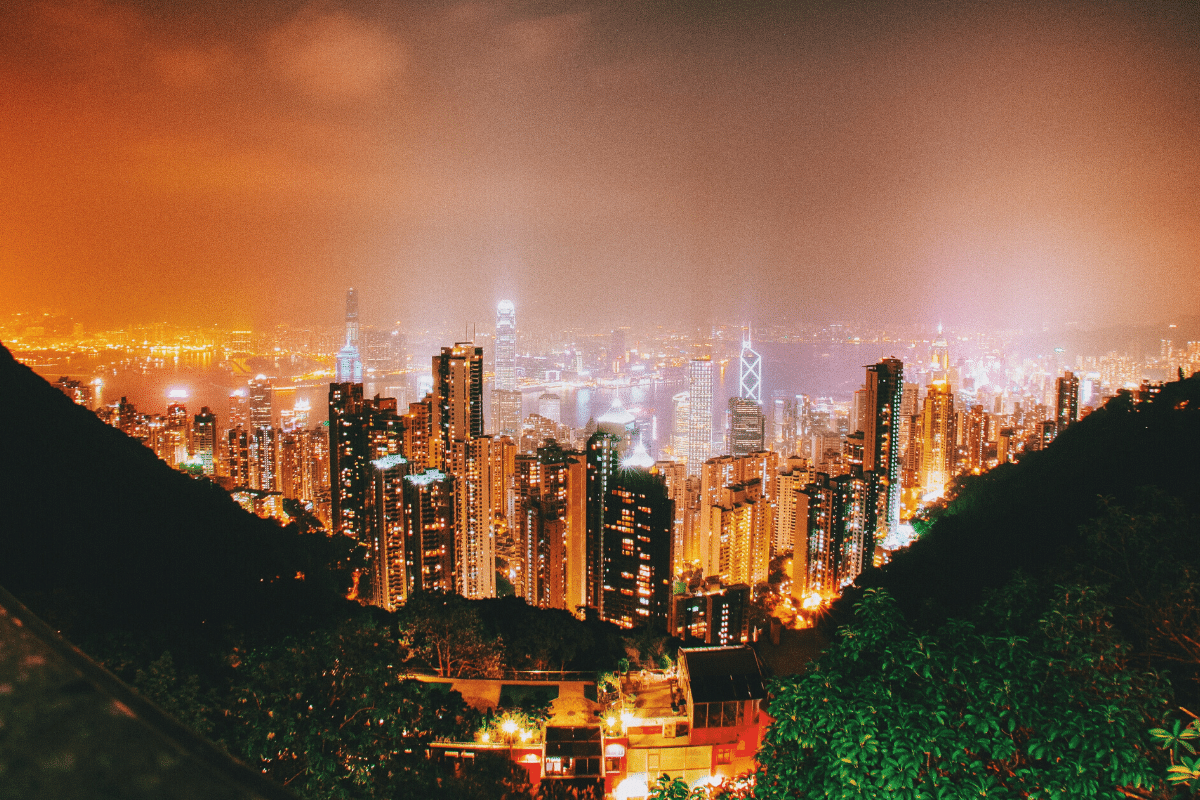

I shall always regret not visiting Hong Kong while it was still under British control or while the city remained the “Hong Kong Special Administrative Region of the People’s Republic of China.” For reasons I will get into below, I feel a special affection for the city, and will mourn the loss of its political autonomy and, potentially, the end of its economic prosperity.
For classical liberals, Hong Kong had been a beacon of hope for half a century. Peter the Great is said to have built St Petersburg to be “Russia’s window to the west.” Hong Kong was supposed to be liberalism’s window to the future. The city’s fabled wealth was built on four pillars of classical liberalism: limited government, rule of law, free trade, and fiscal probity. And, it worked! We hoped that the rest of the world would follow a similar path.
When Britain obtained the territory following the First Opium War (1839 – 1842), British Foreign Secretary Lord Palmerston denounced the acquisition as a “barren rock with nary a house upon it” that would never “be a mart for trade.” He was right—at least for the first 100 years.
In 1941, Martha Gellhorn, an American war correspondent, accompanied her new husband, Ernest Hemingway, on a trip to a war-torn Hong Kong. The city was on the front line, with the imperialist Japanese slowly gaining ground against Chiang Kai-shek’s nationalists. Landing by plane in Hong Kong, she penned the following impressions of a starving city:
The streets were full of pavement sleepers at night. The brothels were small square wood cubicles, lining a narrow passage; $2 a night per man per girl… These people were the real Hong Kong and this was the most cruel poverty, worse than any I had seen before. Worse still because of an air of eternity; life had always been like this, always would be. The sheer numbers, the density of bodies, horrified me. There was no space to breathe, these crushed millions were stifling each other… When finally I visited a dank ill-lit basement factory where small children carved ivory balls within balls, a favorite tourist trinket, I could not bear to see any more. I had a mild fit of hysterics. ‘They look about ten years old,’ I shouted at the UC [Unwilling Companion = Ernest Hemingway]. ‘It takes three month to make one of those damned things, I think it’s eight balls within balls. They’ll be blind before they’re twenty. And that little girl with her tortoise. We’re all living on slave labor! The people are half starved! I want to get out, I can’t stand this place!’ … From agonizing over the lot of my Chinese fellow men, I fell into a state of hysterical disgust with hardly a pause. ‘Why do they all have to spit so much?’ I cried. ‘You can’t put your foot down without stepping on a big slimy glob! And everything stinks of sweat and good old night-soil!’ The answer of course could be that spitting was due to endemic tuberculosis, and as for the stink, I had seen where and how the people lived.
And then, things changed. By the time of the Hong Kong hand-over to the Chinese in 1997, the average Hongkonger was 12 percent richer than a typical Briton. Last year, the people of Hong Kong were, on average, 46 percent richer than the British. The poverty that Gellhorn described was not “eternal” after all. But, Hong Kong’s emergence from destitution to one of the world’s richest territories was no miracle. The city became a success due to a thoughtful application of liberal principles.
 Peter Baehr
I first heard about Hong Kong’s success as a post-graduate in St Andrews. (My undergraduate education in Johannesburg was more conventional, focusing on the evils of global capitalism rather than the prosperity it bestowed upon those who partook in it.) By the early 2000s, Internet was good enough to watch online videos, including Milton Friedman’s timeless “Free to Choose” series. In one of the episodes, Friedman travelled to Hong Kong to admire its rise from poverty. He did so in 1980 and could not have known that the city’s best days lay ahead.
Friedman noted that Hong Kong’s success did not happen by chance and credited a British civil servant, Sir John Cowperthwaite, with instituting a laissez-faire system of governance while the latter was the colony’s financial secretary (1961 – 1971). Since then, I learned that Sir John was not alone. His predecessors as financial secretaries, Geoffrey Follows and Arthur Grenfell Clarke, as well as Sir John’s hand-picked successor, Philip Haddon-Cave shared a similar (if less principled) commitment to laissez-faire.
There was a reason, I suspect, why Friedman focused on Cowperthwaite’s role. That reason was the damnable decade of the 1960s. It was one thing to promote and defend limited government in the liberal 1860s or the post-stagflation 1980s. The 1960s were an altogether different kettle of fish. Britain, at that time, had a socialist government, the Soviets sent a man to space, and Britain’s African possessions were opting for independence and communism. Meanwhile, Hong Kong, with its low taxation and regulation, competitive enterprise and free trade, and modest income redistribution and budget surpluses, was an anomaly.
Cowperthwaite knew that—or so he told me when I visited him at his home that was located, to my astonishment, three doors down from my university dorm. Having retired to St Andrews, the location of his alma mater, after he left the civil service, Cowperthwaite led a self-facing life. Having graciously agreed to see me, he expressed his frustration with others’ glib (though amusing) comments that he helped to usher an era of prosperity to Hong Kong by “doing nothing.” In reality, he said, his hands were full fending off incessant attempts of the British government to import socialism to the colony. By standing firm, he bought Hong Kong precious time. By the early 1970s, the British soured on socialism. Likewise, the USSR was revealing the limits of central planning. Most importantly, the economic success of Hong Kong was beyond question. And so, laissez-faire remained.
Keep reading
What the Navigators Knew
Gemma Tognini on Australia’s Political Revolt
Rubio in Athens
How France Lost Control of Its Streets
How to Suppress Men’s Writing