Canada
Righteous Among the Nations — The Rescued Tribe of Colonel Castellanos
With the release of their extraordinary documentary film The Rescue, Alvaro and his younger brother Boris haven’t just faced up to their clan’s history. They have turned it into high art.

“When you grow up in a country where war is the order of the day, the bullets are flying all around you, it is only normal that once you get to a safe place like Canada, it may actually be a good thing to leave your country’s history behind, at least for a while,” Alvaro Castellanos tells me over coffee in midtown Toronto. “And so that is what my brothers did when we got here.”
But in time, the past caught up with the Castellanos family. With the release of their extraordinary documentary film The Rescue, Alvaro and his younger brother Boris haven’t just faced up to their clan’s history. They have turned it into high art.
Alvaro and Boris came to Canada as immigrants during the height of the civil war in native El Salvador. Their first home was in Pickering, a predominantly white, middle-class Toronto suburb. This was a household run by their mother and aunt. The boys’ estranged father remained in El Salvador, an almost entirely unknown figure in their lives.
 Charlotte Allen
“You could say the Canadian kids growing up around us were mean to us when we first arrived, but they actually just didn’t know any better,” Alvaro says. “They didn’t know where El Salvador was. We had Spanish accents. They did call us names, and while it was not fun to be singled out like that, it was a thousand times better than living in fear for your life in a war-torn country. Eventually, we found our niche.”
That’s an understatement. Boris and Alvaro immersed themselves in heavy metal, rock and other musical genres, and later began careers as techno musicians and DJs. They also rediscovered classics of Latin America popular music from the early and mid 20th century, when Latin America was turning out musical genii such as Carlos Gardel, Xavier Cougat, Tito Puente and Celia Cruz.
“Our interest in Latin popular music was a kind of bridge to the good stuff that we left behind in El Salvador,” Boris says. “It was the first step in figuring out who we were and where we came from.”
Eventually, Boris and Alvaro moved out of the suburbs and into Toronto, building careers around a 24-hour home-care schedule for their ailing mother (whom I had the privilege of meeting a number of times). Playing on their comedic skills in both English and Spanish, the Castellanos brothers tuned this multi-ethnic city into their creative oyster.
I first met them a decade ago, when I was Executive Director of a Jewish charity involved with projects in Africa, where I’d worked for 16 years as an anthropologist. I explained that we were bringing in Elie Wiesel, the late author and Holocaust survivor, to speak to our group. Wiesel was famous for mumbling; and on a good day, only the people sitting in the first 10 rows could hear him clearly. I asked Boris and Alvaro to apply their skills as music producers to the task. When the day of the event arrived, Wiesel’s voice carried to every corner of the auditorium. The three of us became friends. And when the brothers discovered that I could play guitar in Latin American styles, we ended up jamming together—and even did a few professional gigs.
But music is just one component of the Castellanos’ new multimedia production, The Rescue. Having worked closely with Jewish organizations in Toronto, the brothers slowly became aware of how their family’s history was intertwined with that of Europe’s Jews. Their paternal grandfather, they discovered, was one of the greatest among the righteous gentiles—a man who may well have saved more Jews from the gas chambers than did Raoul Wallenberg. Together, Boris and Alvaro embarked on a personal voyage of discovery—to El Salvador, the United States, Switzerland, Germany, Italy, Hungary and Israel—where they learned about the remarkable tale, picking up the requisite documentary film making skills during their journey.
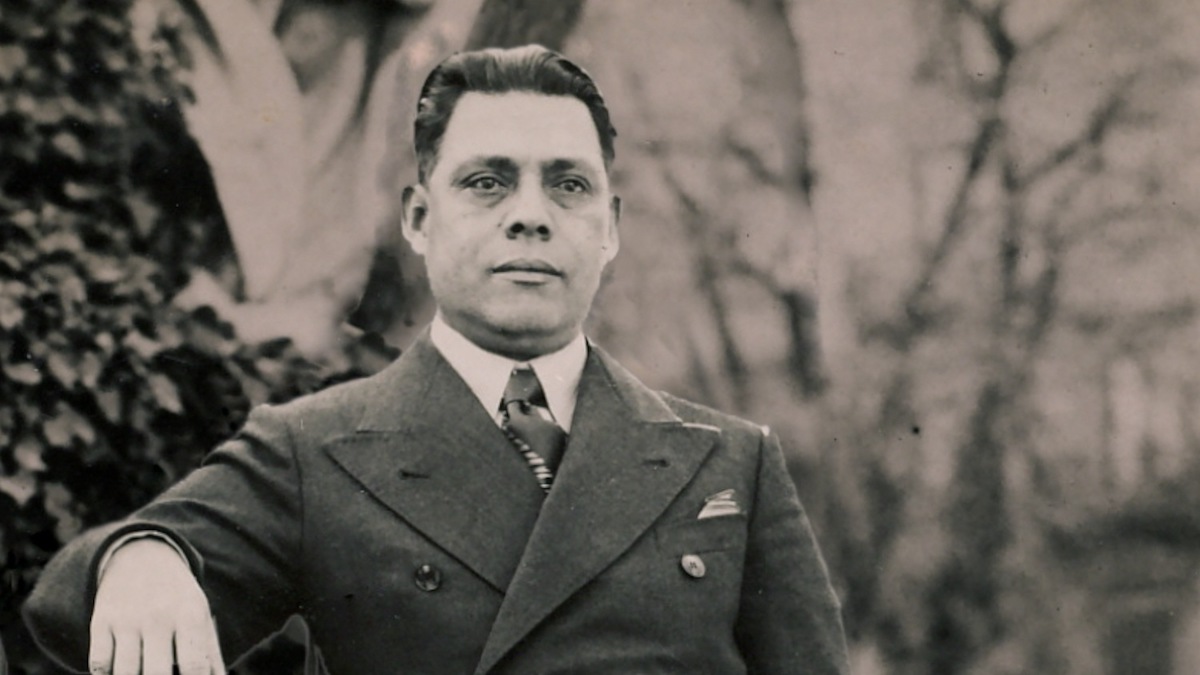
Colonel Jose Arturo Castellanos Contreras (1891-1977) grew up in a wealthy Salvadoran family before joining the military, and rising quickly through its ranks. Everything we know about him—which is to say, everything that Boris and Alvaro learned—suggests that he began his career as a conventional Catholic, and a supporter of the authoritarian, dictatorial style of government that then characterized this part of the world. Yet even so, he was unusually sensitive to the injustices within his society, and spoke out openly about women’s rights, the plight of the poor, and the ongoing persecution of Central America’s indigenous peoples.
Despite his status as a military man, Castellanos is said to have had a gentle manner. In surviving photos, he is shown to be well dressed and turned out. Like Oscar Schindler, Castellanos loved a good party, a fine glass of brandy, a Cuban cigar. He ate well and enjoyed the good life, marrying and divorcing several women, while siring more than a dozen children. To put things diplomatically, his personal life was complicated.
When his various political causes rankled the government, he was pulled out of the military and appointed Consul General in neutral Switzerland. It was intended as a sort of velvet exile. But in Geneva, Castellanos fell in with a man who would become his first secretary— a Hungarian Jew going by the name George Mantello (originally György Mandl), who laid bare to him the full horror of the Holocaust. Castellanos had, by this time, become alienated by this fascistic tendencies of his own government, and so had no problem co-opting his Salvadoran diplomatic powers to produce life-saving passports and other travel documents for members of the wider Mandel family.
The two men then hatched on a larger idea: Why not turn the consulate into a document factory for other European Jews facing the Nazi death camps? By the grant of Salvadoran citizenship, Castellanos used his office to help save an estimated 40,000 lives. Their descendants now live in Israel, Europe, America, Central and South America. An order of magnitude larger than even Schindler’s “family,” the sprawl of these men, women and children now is so vast as to comprise a Biblically sized tribal multitude.
Thomas Doherty
Keep reading
The Genetics of Crime and Punishment
Jerry Kaplan on AI Doomers
Payback Time for Steven Galloway