Sweden
Sweden's General Election Turmoil
Sweden used to be at the top of many international rankings of equality and affluence, but has slipped in recent years.
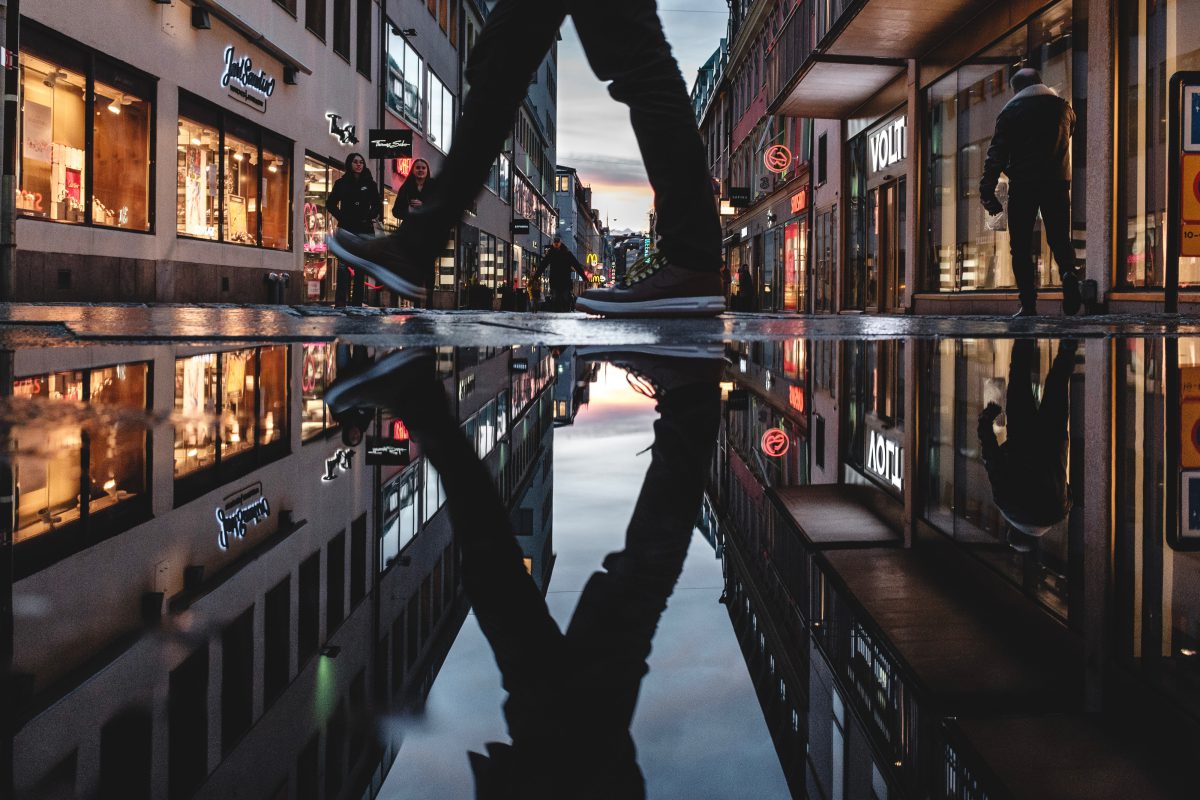

Sweden’s general elections will happen this weekend and the country is in political turmoil. The governing Social Democrats, the hegemonic force in Swedish politics for most of the past century, are facing their lowest resultssince the introduction of democracy. Only a few percentage points behind them in the polls are the Sweden Democrats (SD) – an anti-immigration and anti-EU party – which may become the country’s biggest political group.
The polls thus confirm a fundamental shift in Swedish politics: SD – which is shunned by the other parties, who refer to its roots in the far-right movement – only entered the Riksdag after the 2010 elections, to the astonishment of large parts of the political and media establishment.
Since 2014, SD forms a wedge in parliament, preventing both traditional blocs, led by the Social Democrats and the center-right Moderates respectively, from gaining a majority of seats. Both refuse to govern with each other, or with the support of SD. This is uncharted territory, and no one knows how, or by whom, the country will be governed after the elections.
The established parties tried to deal with the problem early on in 2014 by agreeing on a new principle: The largest of the two minority blocs, would get to form a government with the passive support of the opposition. SD would thus be kept from influence.
However, this alliance, initially dubbed the December agreement, has angered citizens on the right – who have watched in disbelief as the center-right opposition has passively accepted socialist policies – and driven new swaths of voters to SD.
Consequently, the opposition is unpopular, but so is the government. At the surface, public resentment and dissatisfaction may look perplexing: To be sure, Sweden is still among the richest countries in Europe. Its public finances are strong and it remains one of the wealthiest, most egalitarian and safest countries in the world.
Swedish voters, however, are not comparing themselves to just any other country, but to their own past. Sweden used to be at the top of many international rankings of equality and affluence, but has slipped in recent years. The welfare state and social services used to perform better.
Inequality has increased sharply. Income differences are at record levels, according to official statistics, and have kept rising on the watch of the center-left government. There is likewise great dissatisfaction with welfare services at the core of the country’s social contract. Sweden has higher numbers of poor pensioners, and more children at risk of poverty or social exclusion, than any other Nordic country. One in five Swedish women aged 65 or older are at risk of poverty.

 Magnus Henrekson
True, unemployment has fallen during the past four years, but from high levels, and recovery has been slower than in the rest of the EU. Sweden is now ranked 17th in the union, despite aggressive and costly government employment programs. Last year, Sweden’s per capita GDP growth was among the lowest in the EU.
In addition, crime has become a priority among voters. Social unrest, shootings and hand grenade attacks stand out, both from a historical perspective, and compared to the rest of Scandinavia. Only in the last month, the police reported two explosions. A number of attacks in the past years, including explosions, have been directed against police and other government agencies.
Keep reading
How France Lost Control of Its Streets
How to Suppress Men’s Writing
Back to the Dark Ages
Prison or Peer Review
France’s Imaginary Austerity