Art & Culture
Deliberation, Not Boundaries — A Reply to Wessie du Toit
The greatest threat to free speech today comes from free speech itself. In particular, it comes from the sheer volume and chaotic nature of that speech.

In a Quillette piece entitled “Does Free Speech Need Boundaries to Survive?”, writer Wessie du Toit presents a case against what might be called free speech absolutism; that is, the position that no boundaries should ever be imposed on expression. In what follows, I will make a radical case for free speech absolutism, that goes beyond merely defending the principle. Let’s begin with du Toit’s own arguments. He makes a compelling case as to why we might have reached, or at least be approaching, the point at which liberal institutions are threatened by free speech:
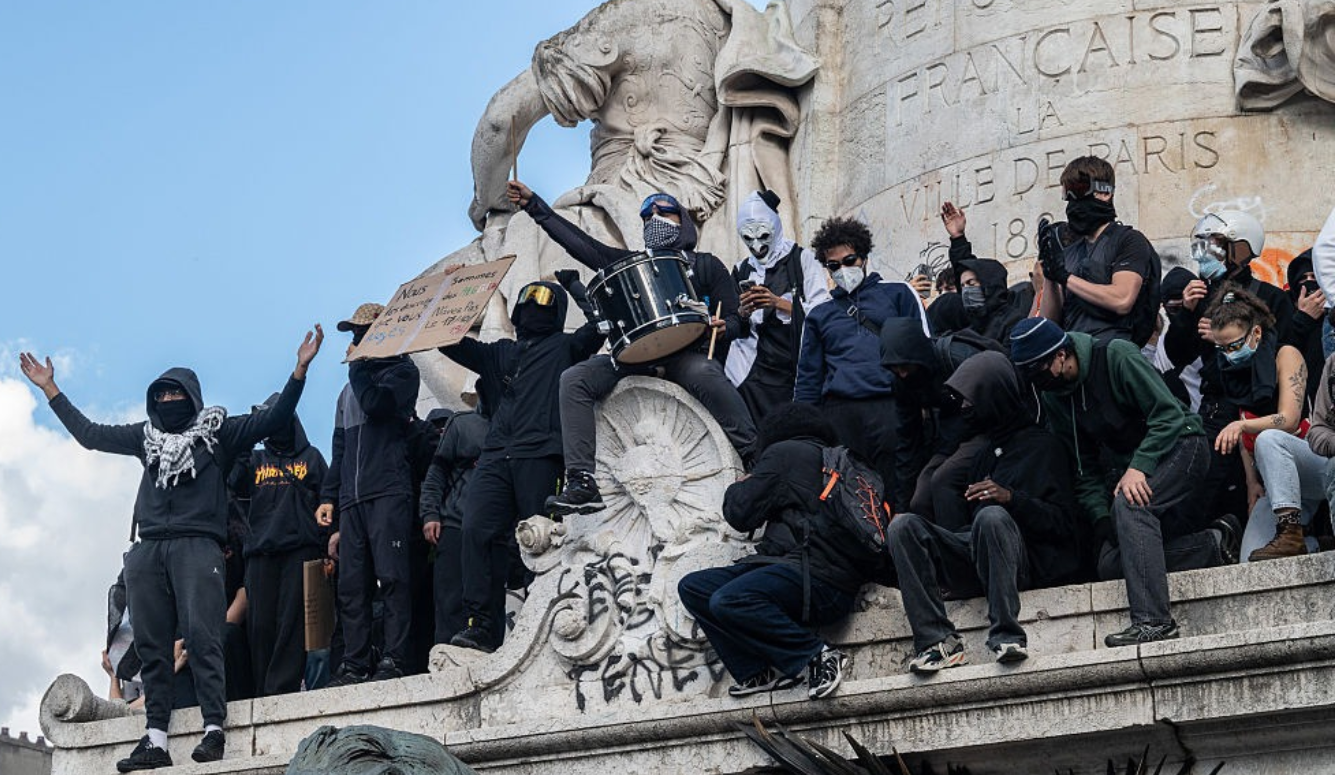
It wouldn’t be misleading to say that the greatest threat to free speech today comes from free speech itself. In particular, it comes from the sheer volume and chaotic nature of that speech. The current polarization of politics is rooted in an endless, sprawling argument about values taking place online – an argument that is now spilling over into demonstrations, acts of violence, and other culturally charged spectacles.
He further explains how this poses a problem for free speech absolutism:
Countering this need for order is the real challenge facing advocates of free speech, and their conventional manual isn’t offering much help. It demands that the right to express unpopular, or even anti-social opinions must be defended – but given the Internet’s steady drumbeat of racism and misogyny, this stance is easily portrayed as anti-social in itself
It would be misguided to simply brush this claim aside. There’s evidence, at least in Europe and the United States, that polarization is rising. At the same time, it’s clear that people are increasingly isolated from opposing views. We now know that liberals and conservatives get different pieces of information in their Facebook feeds. Online, the Left and the Right can form isolated communities with nothing but self-reinforcing worldviews. On the Right, there are message boards like 4chan and 8chan which have become breeding grounds for alt-right ideologues, as Angela Nagle described in a piece for Jacobin. For the Left, there are communities like Leftbook: a cluster of Facebook groups where the cultural Left (to borrow du Toit’s phrase) gather. This has led to further polarization, and there doesn’t seem to be a reversal in sight.
Du Toit views the boundaries imposed by rituals found in social gatherings, or the rules of print magazines as desirable kind of limits. But he doesn’t seem fully unsympathetic to State intervention, as he mentions the increasing appeal of “a Hobbesian authority to step in with a clearly defined notion of what is true and what is right.” This, in addition to the fact that he considers the rules of social media weak, suggests that some authority needs to be involved in regulating some kinds of speech.
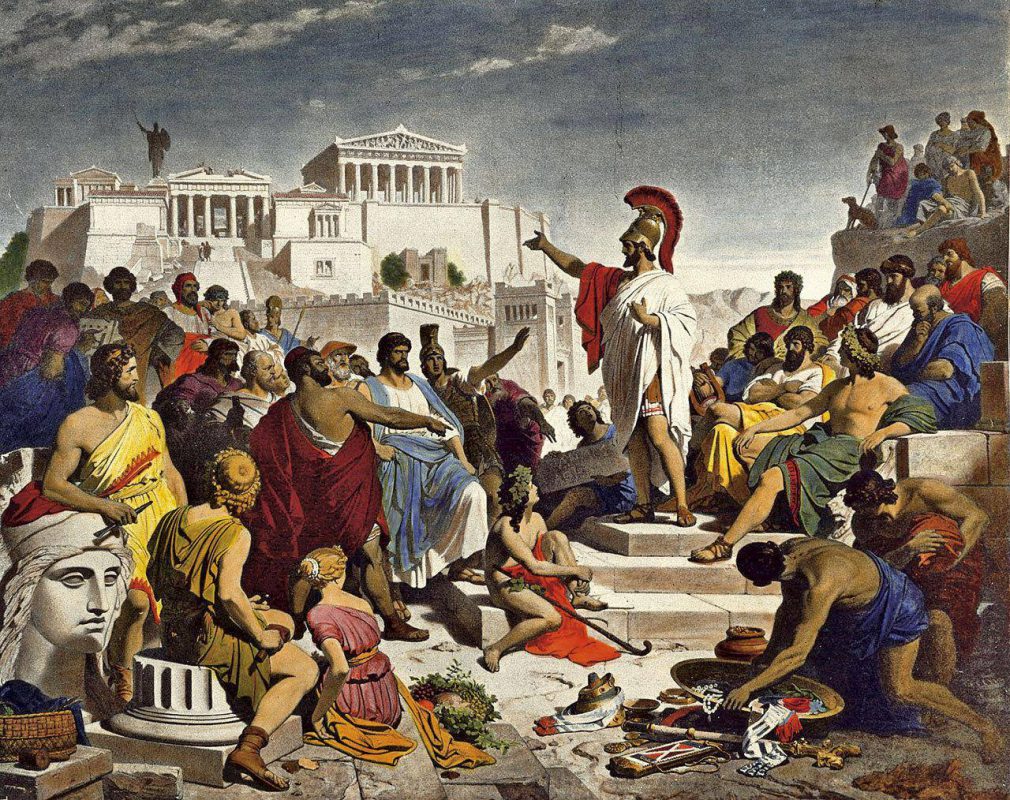
One might counter this with the civil libertarian argument of defending the principle of free speech as the only credible way of preventing progressive encroachments on our liberties. While I don’t disagree with this view, I wish instead to propose a more radical defense, founded on the principles of deliberative democracy. In his introduction to Deliberative Democracy, political theorist Jon Elster defines it as a form of democracy where our preferences aren’t simply aggregated by the ballot box and turned into policy, but one in which we constantly re-evaluate them and shape them by means of discussion with fellow citizens.1 As he points out, the idea of deliberative democracy is as old as the idea of democracy itself: discussion in public fora was the way in which Athenian democracy was conducted.2
The foremost contemporary proponent of this idea is philosopher Jürgen Habermas, who has devoted a considerable amount of his work to the theory of communicative rationality, which underlies his argument for deliberation. Habermas has specific conditions for what effective argumentative speech requires. Among these are basic requirements of logical reasoning, consistency of meaning, and that speakers state their beliefs clearly and exclusively, among others.3 These may seem like unrealistic conditions, but they are useful at least as parameters with which we can judge speech, and for which we should strive.
Speech on the internet, with its relative anonymity and multiple layers of irony, certainly isn’t close. But regulation would be prohibitively difficult. What if, instead of attempting to set boundaries, we actually removed the ones that we currently have? By this, I mean bring the most radical forms of speech down from the internet and into mainstream discourse. We would have to be prepared to accept the consequences. This would mean giving more of a voice to the racists and misogynists du Toit mentions. So how could we even consider something like this? We have to bear in mind that while speech may be completely unregulated, it is also extremely confined. Most people will live their lives blissfully unaware of what goes on in 4chan’s /pol/ board, and I don’t think it’s too controversial to say that, to a large extent, the lack of mainstream acceptance is a factor that pushes people into these chaotic echo chambers.
 Bo Winegard
Of course, bringing extremism into mainstream discourse doesn’t mean we have to endorse it or leave it uncontested, but I do think exposure is fundamental, and even socially beneficial. In trying to look more closely at Habermas’s arguments, Political Theorist Diana Mutz examined quantitative data which provides an insight into the effects of exposure to opposing views. Two findings from Mutz’s book are particularly striking. First, that political participation and activism are best fostered in a context where views are constantly reinforced by like-minded voices.4 Second, that exposure to opposing views does have an effect on people’s way of thinking. Exposure to opposing viewpoints, for example, can lead people to identify the reasons why someone else might hold such views.5
Let’s break down Mutz’s findings further. Her analysis of the data shows that awareness of legitimate reasons for opposing views nearly triples with exposure to contrary positions. Furthermore, people who were exposed to disagreement became aware of almost as many legitimate arguments against their own views, as they had for them.6 This is a crucial finding because it shows that people don’t simply ignore opposing arguments when confronted with them. It’s fundamental to stress that this effect is not applicable to any type of discussion – it must involve opposition. In fact, the data show that discussion with like-minded individuals actually reduces the awareness of legitimate reasons against one’s own views.7 This helps explain why isolation breeds polarization.
So, what would letting extreme voices into the mainstream actually mean in practical terms? The initial reaction of many, I suspect, will be to think that this will only make things worse. Why might we want people to identify reasons for holding racist or misogynist views? One answer is that identifying such reasons is the only way we can begin to produce persuasive counter-arguments. But the more important issue is that communication is a two-way street. No one has good reason to listen unless they are also given a voice.
However, availability is not the same as engagement, and it is the latter that we should aim for, if we take deliberation (and Mutz’s findings) seriously. So, giving someone a platform isn’t enough, it’s fundamental that such a platform will result in engagement, otherwise people with opposing viewpoints can simply choose to ignore it. We may, for example, learn from the ancient Athenians. Why not hold regular town hall meetings, on controversial issues facing the public, and make it clear that all views are welcome? This is just one option, and one that draws from the most traditional forms of deliberative democracy, but there’s no reason that we can come up with other types of deliberative spaces.
Keep reading

What the Navigators Knew

Gemma Tognini on Australia’s Political Revolt
Rubio in Athens

How France Lost Control of Its Streets