Art & Culture
How I Learned to Stop Worrying and Dismiss Radical Feminism
Don’t throw the word ‘misogyny’ at every man with an obtuse opinion. Do so, and you will denude the word of all its meaning and all its power.


My advice on feminist issues is seldom – oh, all right – never requested. The recent, shall we say, clusterfuck over at New Matilda has ended my usual reticence. Jack Kilbride, a Melbourne university student, offered a few tame and clumsily expressed opinions on feminism as it is currently practiced. To summarise: he considers himself a feminist; he thinks that the fight for gender equality is one of the defining issues of our time; he prefers the strategy of Emma Watson and the HeForShe campaign to Clementine Ford’s feminism of the gutter; he argues, rather cutely, I think, that people should try to be nicer to each other.
Only the last part really ought to be controversial, as it came gift-wrapped in a stupid and risible and perhaps even dangerous package: if feminists would stop being so nasty about online abuse, online abusers would stop being so nasty. Respectability, if it’s still a virtue, is overrated anyway. Kilbride’s argument was rightly called out for being wrong.
The commenters and responders went further, though. For them, Jack wasn’t just ill-informed, he was also a misogynist. So, here is my unsolicited advice: Don’t throw the word ‘misogyny’ at every man with an obtuse opinion. Do so, and you will denude the word of all its meaning and all its power. There are actual misogynists out there, and they work very hard at their craft. To put young Jack on a par with them is to rob those individuals of the very hard work they do. Jack Kilbride does not hate women. He is not an apologist for those who do. Language matters, as some of us still maintain. I say this, dear Reader, because if you happen to be a man, you are a misogynist too, according to the gaggle of radicals who prosecuted Jack Kilbride in New Matilda. To sum up: Kilbride is a misogynist, men are at fault by their mere existence, and they must be excluded from the struggle for women’s rights and gender equality (although the latter doesn’t count for anything in radical feminism, anyway).
To begin, then, with Ellena Savage, who thought it terribly clever to make an inexpensive and fatuous jibe about Jack’s surname. Yes, it’s Kilbride. Like kill bride. Hahaha. Not a good start. Things didn’t improve much, though. Kilbride had drawn a fairly reasonable distinction between himself and the men who prove their misogynist credentials every day. Savage will have none of this; there is no distinction:
“So why are cute, nice, educated guys chauvanists (sic)? What, with all their female friends and access to great troves of female thought from all social strata, could they possibly see in old-fashioned woman-hating? Like Kilbride, they simply don’t know that they are patriarchs, because they are the patriarchy. And the patriarchy is invisible.”
And, consequently, rather ill-defined. Savage boldly declares that all men are complicit in sexist culture, no matter what they do. One can’t win. Next, there is Xiaoran Shi, who proves, along with Jack Kilbride, that awful writing won’t prevent you from publishing with New Matilda. She also took issue with Kilbride’s insistence that he is not a male predator. Read the following, which I will charitably call a sentence:
“The outsourcing of blame entirely to this manufactured ‘other’ is an attempt to evade the trauma of confronting one’s own complicity with the patriarchal apparatus, which in turn, substantiates the circumvention of a progressive morality that would have otherwise prohibited one from exercising his gendered power.”
This translates, roughly I think, as fuck you, Kilbride, you misogynist bastard!
He isn’t the only target, though: “Simply put, no man can fully exculpate himself from the burden of institutionalised misogyny.”
Again, you are guilty, and you haven’t even done anything yet. Finally, and in unimprovably ridiculous fashion, there is Aicha Marhfour. She argues, contra Kilbride, that men can’t be feminists anyway, because “They do not experience the oppression and inequalities that women do, and so they are not allowed into the movement working to address them. It’s simple.”
 Claire Lehmann
It’s also impracticable, as well as insulting to any man who honestly engages in this struggle, and to any woman who finds this support even slightly agreeable. Mahrfour has access to information, though, that no one else has ever claimed. According to her:
Any man claiming to be a feminist is wanting one, or all of the following things:
1. To nudge women over and take things over For Himself
2. Praise and admiration for being such a good guy
3. To impress a woman so that she will sleep with him, provide emotional labour, date him, or do something without expecting reciprocation
4. To talk over a woman and invalidate her opinions
The arguments expressed above lend themselves to a single and depressing conclusion: the goal of gender equality is obsolete because the existence of men is unfortunate and undesirable. A male feminist is immediately a suspect, a tool of the patriarchy, or an example of a new and insidious misogyny. A plan for man’s extirpation is left unstated, although it’s nice to remember that Clementine Ford has endorsed it. #KillAllMen
This is creepy and fanatical. You’ll notice, I hope, that all these writers are proscribing debate, rather than endorsing it. They all prefer jaunty sneering to engagement with one of Kilbride’s main arguments: Emma Watson and the HeForShe campaign offer a more meaningful alternative to radical feminist ravings. He was concerned with tone and offence, which was a pity, because he should have been concerned with practical results.
HeForShe is undeniably bold. Elizabeth Nyamayaro, an advisor at UN Women, makes the case for the widest possible comradeship and compares the movement to some of history’s greatest and most important struggles:
“We were filled with trepidation that women would not understand why this new movement is important, why we need to include the rest of the population. But at its core, HeForShe is a solidarity movement . . . you really can’t argue with men and women working together for the betterment of all.
Things actually happen when people come together. The world came together in the 19th century and ended slavery. We came together in the 20th century and we ended colonialism and of course apartheid.”
Is there anything even mildly objectionable here? The brand of radicalism practiced by Savage et al can have its ‘likes’ on Facebook. Go ahead. Take them. The HeForShe campaign takes place at both the grassroots and the highest levels of global governance, governments and corporations. It makes practical demands and then demands that they are better achieved. It asserts that the membership among its ranks is never enough. What’s wrong with that?
I like best the implied commitment to internationalist solidarity; it used to mean something to the radical Left.
2015 saw the most significant setback in Afghan women’s rights, and the Taliban has proven, yet again, what it wants for its society: half of the population illiterate and uneducated and hidden and made victims of ghastly sexual violence. Violent machismo in Colombia has seen a resurgence, too, and men have taken to throwing acid in the faces of ex-girlfriends. Here are some misogynists worthy of the name. This week in Saudi Arabia, women were finally given the right to vote. Where is the demand that this is still not good enough? Depressingly, I could continue.
I can say this without diminishing at all the oppression of women in Australia, especially those who face online abuse. Women’s rights are either universal, or they are not. I can say this without demanding that anyone just be nice to each other, or adopting a kill ‘em with kindness philosophy. In fact, my own preference for those who practice misogyny in its theocratic and Islamist variants is that they actually be killed.
John Barry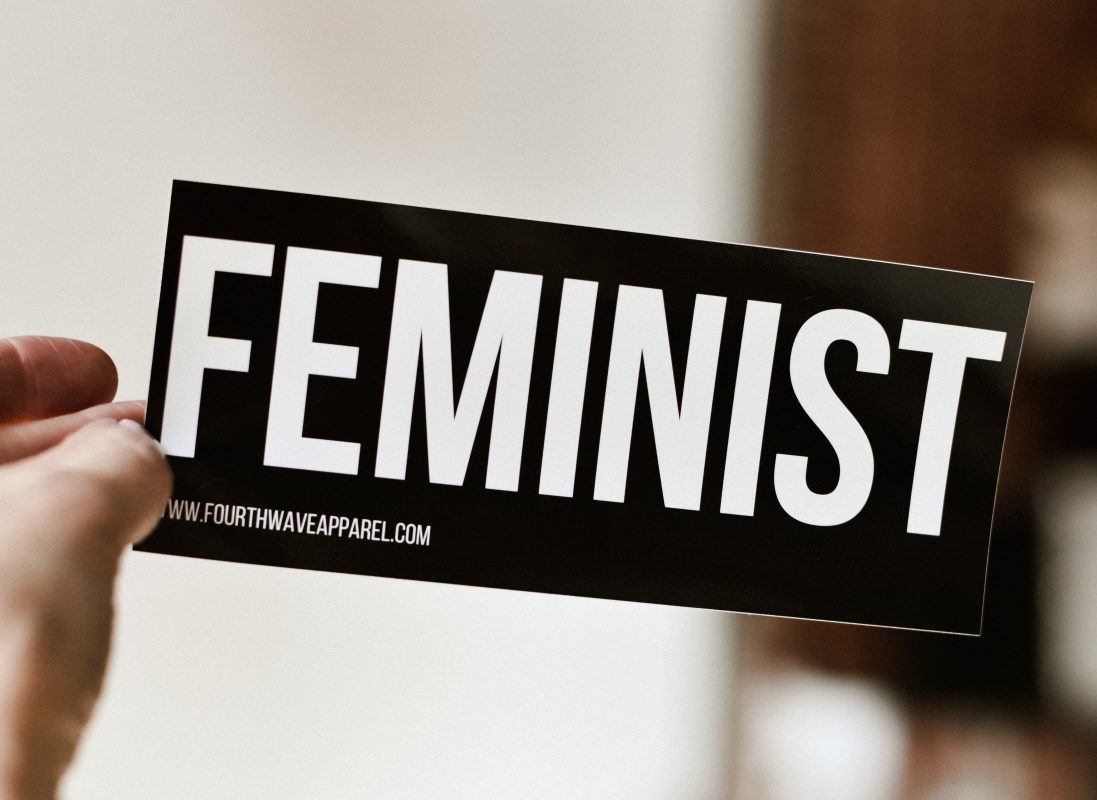
Keep reading
How France Lost Control of Its Streets

How to Suppress Men’s Writing
Back to the Dark Ages
Prison or Peer Review

France’s Imaginary Austerity