Israel
Israel’s New Kingmakers
After an inconclusive election, Israel’s Arab parties hold the balance of power—but a renewed war with Iran may yet hand Netanyahu another chance.
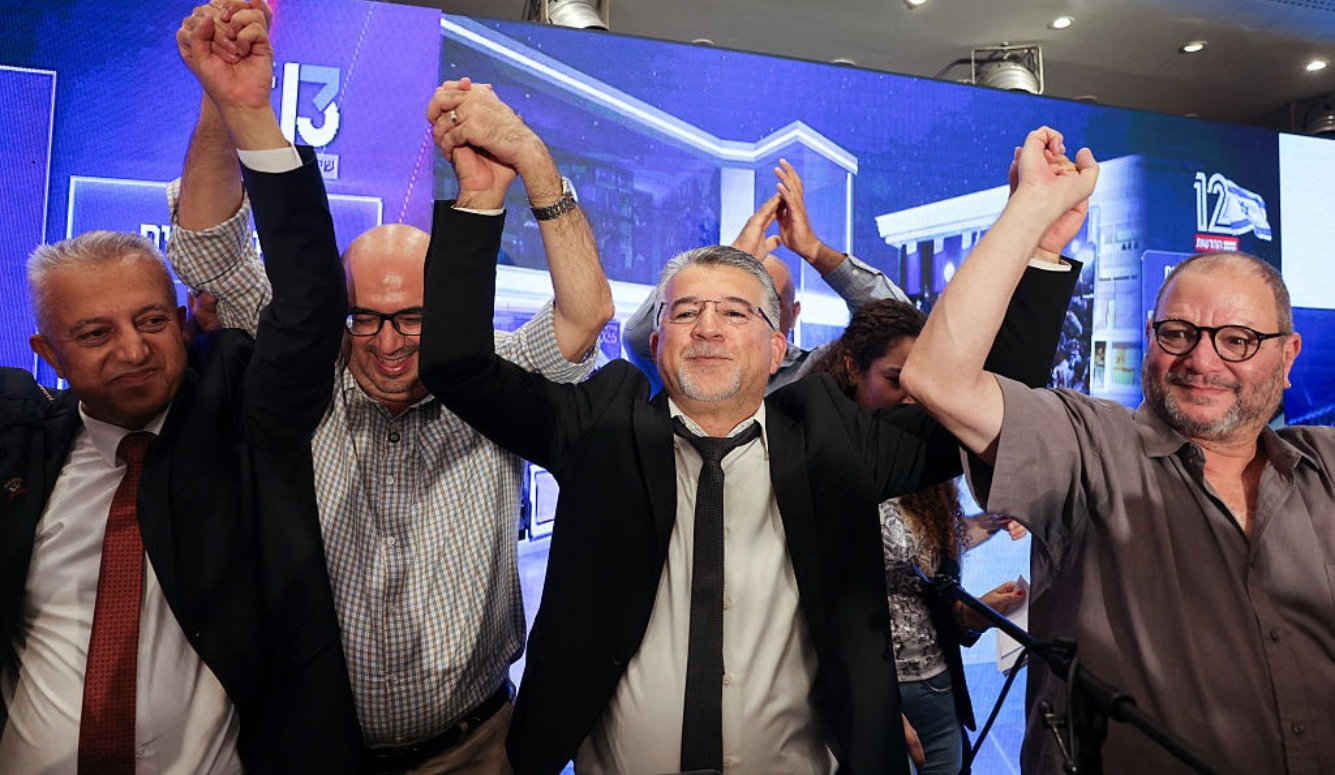

Given the electoral stalemate between Israel’s two contending political blocs—that led by right-wing Prime Minister Benjamin Netanyahu and its rival, the pro-change opposition bloc led by centrist Gadi Eisenkot—the most important long-term result of the Israeli general election last Tuesday (27 October) may turn out to be the 19 seats won in the 120-seat Knesset (parliament) by the country’s two Arab parties: Ra’am (the United Arab List), headed by the dentist Mansour Abbas, and the Joint List, led by law professor Yousef Jabareen. Ra’am has eight seats and the Joint List eleven.
During Israel’s 78-year history, the country’s Arab minority has been largely marginalised and has had virtually no say in the state’s governance (except occasionally at the municipal level). Now, with the near-doubling of their Knesset representation (in the outgoing Knesset the Arab parties had ten seats), whatever government takes office will need to take them, and the wishes of their Arab constituency, into account.
With 19 seats, they will exercise real influence on legislation and on other matters under the purview of the Knesset’s committees. For good or ill, Israel’s largely Muslim Arab minority has now emerged as a powerful force on the Israeli political landscape. In the immediate term, the two Arab parties may help determine which bloc will govern the country, and so help shape its trajectory for years to come.
The election’s outcome came as a real shock to the pro-change bloc, which opinion polls had predicted would win. But Netanyahu and his bloc of right-wing, ultra-right and ultra-Orthodox religious parties did not win either. Neither bloc emerged with the 61 seats needed to form a coalition government, or with a clear path to such a majority. Netanyahu’s bloc has 53 seats, with his Likud Party (27 seats) at its core; the pro-change bloc has 48, with Eisenkot’s Yashar (“Honest”) Party (21 seats) at its centre.
The two Arab parties will control the Knesset’s crucial swing votes, and neither will join Netanyahu’s bloc, given the government’s contemptuous, neglectful and often abusive behaviour towards the country’s Arab minority (and its oppression of that minority’s cousins living in the occupied West Bank) during the past four years. It was this marginalisation and abuse that fuelled the extraordinary, massive Arab turnout (over 70 percent) on election day that gave Ra’am and the Joint List their impressive victory. (Voter turnout among the country’s Jewish population also hit record highs. On both sides of the political divide there was an appreciation that the vote on 27 October was historic and would likely chart Israel’s course for years, if not decades, to come.)
Unlike Netanyahu’s bloc, Eisenkot’s has a fair chance of winning the support of the Arab parties, certainly in its expected bid, after Tuesday 10 November, to gain control of the Knesset, and possibly to form a viable coalition government. Ra’am’s leader Abbas has made clear his willingness to join a pro-change coalition government, and the Joint List’s leaders have announced their readiness to help the bloc oust Netanyahu. A possible scenario is that Ra’am will join the coalition and receive cabinet appointments while the Joint List tacitly supports the prospective coalition “from the outside,” giving it 67 Knesset seats (48 plus 19). At the moment Eisenkot appears bent on presenting a “minority” government, backed by his prospective 48-seat Knesset bloc, and then hoping for other parties, or turncoat Knesset members from Netanyahu’s bloc, to join him and defeat no-confidence motions.
Keep reading
Israel’s New Kingmakers
How Wikipedia Rewrote Zionism
The Wisdom of Charlemagne
Master of the Hunt


The Global Bellwether