Politics
The First Post-Ideological Bedouin State
Why the misunderstood sovereign UAE thrives, and why ideologues—from the Islamic Republic to the Muslim Brotherhood—are invested in its demise.
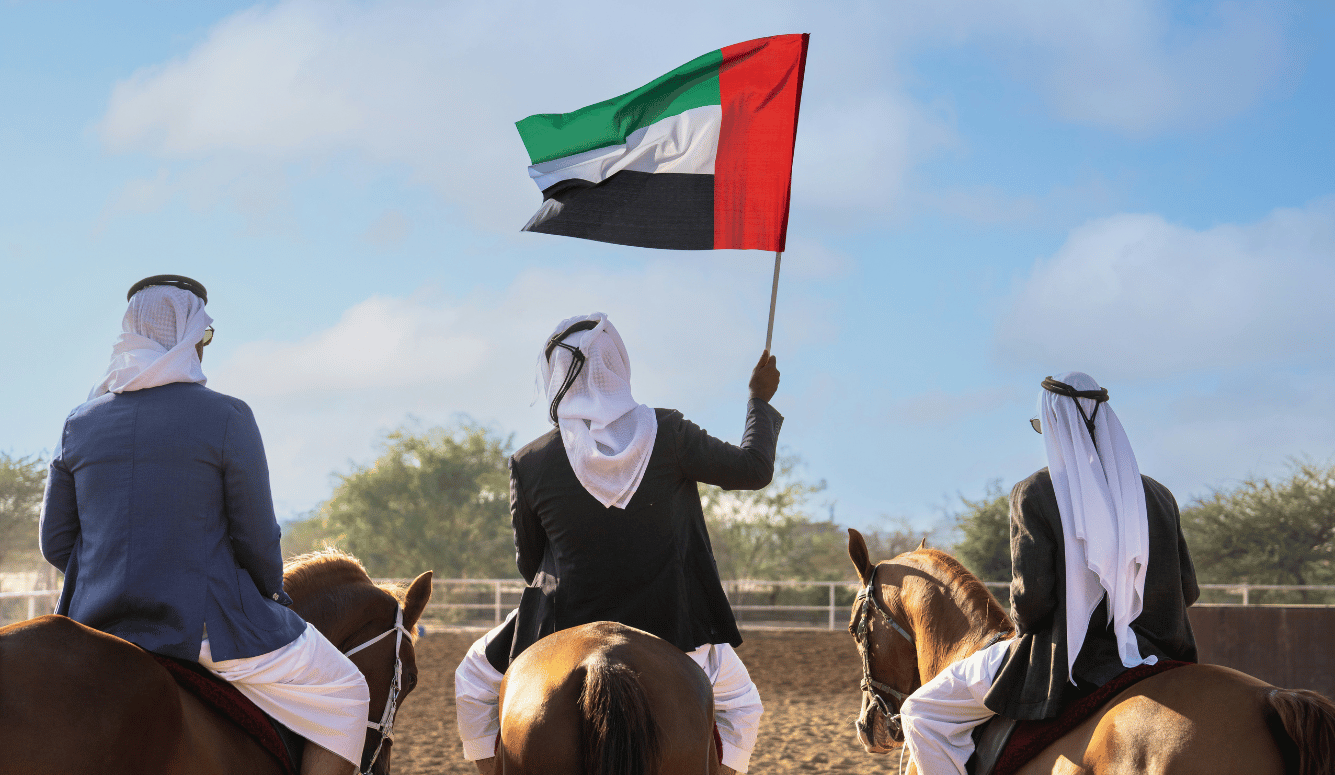

In 2016, I mistook a fortress for a prison. When I first moved to the United Arab Emirates, I believed I was arriving in a country that feared freedom. My suspicion felt principled. I had been shaped within American liberal-arts institutions that trained students to view the Middle East through a woke-progressive lens, where distrust of petro-states signalled intellectual sophistication. I had internalised the assumption that nationalism was always a façade, a polished surface concealing exploitation and the machinery of the military-industrial complex. Years later, I realised I had misunderstood something fundamental: the difference between regimes that censor to protect ideology and states that constrain ideology to protect the nation.
Several months before I relocated, one of my paintings was confiscated in Morocco. The artwork argued that the country’s national flag was incomplete without its Amazigh and Jewish components, and the Muslim Brotherhood–affiliated Party of Justice and Development, which rose to power during the Arab Spring, sent officials from the Ministry of the Interior to censor my exhibition and threaten me with jail. I had cited Morocco’s constitution, which explicitly affirms that Amazigh and Hebraic identities are integral to the national fabric. It did not matter. Ideology does not argue. It may perform concern for minority rights, only to weaponise them for identity politics, converting grievance into unrest and unrest into political power.
A few weeks after moving to Dubai in 2016, I watched a security officer remove an Egyptian piece of art that read, “Be with the Revolution,” from an exhibition before it opened. I instinctively interpreted the act through the Moroccan precedent and filed it under repression. It took years to understand that I had collapsed two fundamentally different political logics into one. What I had mistaken for state violence was, in fact, an exercise in sovereignty, and the latter is the precondition for pluralism. I had confused repression in the service of ideology with discipline in the service of statehood.
Keep reading
The Radicalisation of Tucker Carlson
A Pop Fiction Master and Monster

Australia’s Coming Censorship Machine
Anatomy of a Book Promotion
They Walked in Line