Evolutionary Biology
The Many Roots of Our Suffering: Reflections on Robert Trivers (1943–2026)
The contributions of Robert Trivers belong in the special category of ideas that are obvious once they are explained, yet eluded great minds for ages; simple enough to be stated in a few words, yet with implications that have busied scientists for decades.

)
In March 2026, three prominent thinkers died within a day of each other. Lavish obituaries immediately marked the deaths of the always-wrong environmentalist Paul Ehrlich and the often-obscure political philosopher Jürgen Habermas. But two weeks after the death of Robert Trivers, one of the greatest evolutionary biologists since Charles Darwin, not a single major news source has noticed his passing. This despite Trivers’s singular accomplishment of showing how the endlessly fascinating complexities of human relations are grounded in the wellsprings of complex life. And despite the fact that the man’s life was itself an object of fascination. Trivers was no ordinary academic. He was privileged in upbringing but louche in lifestyle, personally endearing but at times obstreperous and irresponsible, otherworldly brilliant but forehead-slappingly foolish.

Trivers’s contributions belong in the special category of ideas that are obvious once they are explained, yet eluded great minds for ages; simple enough to be stated in a few words, yet with implications that have busied scientists for decades. In an astonishing creative burst from 1971 to 1975, Trivers wrote five seminal essays that invoked patterns of genetic overlap to explain each of the major human relationships: male with female, parent with child, sibling with sibling, partner with partner, and a person with himself or herself.
The fallout for science was vast. The fields of sociobiology, evolutionary psychology, behavioural ecology, and Darwinian social science are largely projects that test Trivers’s hypotheses. The ideas took pride of place in E. O. Wilson’s Sociobiology in 1975, Richard Dawkins’s The Selfish Gene in 1976, and many other bestsellers in the next three decades such as Robert Wright’s The Moral Animal (1994) and my own How the Mind Works (1997) and The Blank Slate (2002). In 2007 the ideas earned Trivers the Crafoord Prize, the equivalent of a Nobel for fields not recognised by Nobels.
The fallout for our understanding of ourselves is also vast. The insight that partial genetic overlap among individuals leads to both confluences and conflicts of interests explains why human life is so intricate—why we love, and bicker with those we love; why we depend on one another, and mistrust those we depend on; why our emotions are powered by moral themes and not just physical threats; why deluded people are certain of their convictions and evil ones convinced of their rectitude. As Trivers put it,
Darwinian social theory gives us a glimpse of an underlying symmetry and logic in social relationships which, when more fully comprehended by ourselves, should revitalize our political understanding and provide the intellectual support for a science and medicine of psychology. In the process it should also give us a deeper understanding of the many roots of our suffering.
The ground for Trivers’s revolution had been laid in the 1960s by George Williams and William Hamilton, who reminded their fellow biologists that natural selection is driven by competition among replicators. This implies that the beneficiary of evolutionary adaptations—what an organ or an instinct is for—is not the group or even the individual, as folk understanding had it, but the gene. Hamilton drew out an implication: genes can perpetuate themselves by nurturing not only offspring but siblings and other kin, since any genes that benefit a blood relative would, with a certain probability, benefit copies of themselves in the bodies of those relatives.
Trivers’s innovation was to show how the partial overlap of genetic interests between individuals should put them in a partial conflict of psychological interest. The key resource is parental investment: the time, energy, and risk devoted to the fitness of a child. Parents have to apportion their investment across all their children, each equally valuable (all else the same). But although parents share half their genes with each child, the child shares all its genes with itself, so its interest in its own welfare will exceed that of its parents. What the parent tacitly wants—half for Jack, half for Jill—is not what Jack and Jill each want: two thirds for the self, one third for the sib. Trivers called the predicament parent-offspring conflict. Its corollary is sibling-sibling conflict: every offspring has an interest in its siblings’ welfare, since it shares half its genes with the sib, but that interest is outweighed by the twofold genetic interest it has in itself.
Jill may not even exist yet for Jack and his parents to differ over her welfare. Baby Jack may want to suck his mother dry, while Mom wants to keep part of herself in reserve for unborn Jill and other future offspring. The conflict is waged throughout the lifespan: in ailments of pregnancy (like preeclampsia and gestational diabetes), postpartum depression, infanticide, cuteness, weaning, brattiness, tantrums, rebelliousness, sibling rivalry, and struggles over parental attention, support, and inheritance. At least since Cain and Abel, family struggles have been a feedstock for fiction. Inventories of the plots that recur in stories worldwide invariably list “rivalry of kinsmen” or “enmity of kinsmen.”
Parental investment, Trivers explained, is also the ultimate casus belli in the battle of the sexes. When Darwin introduced the concept of sexual selection, he observed that in most species, males compete and females choose, but he had no idea why. Trivers explained the contrast by noting that in most species the minimal parental investments of males and females differ. Males can get away with a few seconds of copulation; females are on the hook for metabolically expensive egg-laying or pregnancy, and in mammals for years of nursing. The difference translates into differences in their ultimate evolutionary interests: males, but not females, can multiply their reproductive output with multiple partners. Darwin’s contrast can then be explained by simple market forces. And in species where the males invest more than the minimum (by feeding, protecting, or teaching their offspring), males are more vulnerable than females to infidelity (since they may be investing in another male’s child) and females are more vulnerable to desertion (since they may bear the costs of rearing their mutual offspring alone).
Men typically invest more in their children than the males of other species, making our sexual choice and competition less lopsided. But the remaining conflicts of interest, rooted in the minimum that each sex can get away with, mean that sex is not just a natural source of mutual pleasure but rather takes place in the shadow of exploitation, illegitimacy, jealousy, spousal abuse, cuckoldry, desertion, harassment, and rape. Even in a monogamous lifelong couple, whose reproductive fates are bound together in their common children, an ever-present potential for conflict exists in the tug of stepchildren and in-laws, in the temptations of adultery, and in the possibility that one will die first. This mixture of overlap and divergence leads to the endless passions explored in gossip, story, and song, and played out in life. George Bernard Shaw wrote, “When we want to read of the deeds done for love, whither do we turn? To the murder column.”
In another landmark, Trivers turned to relations among people who are not bound by blood. No one doubts that humans, more than any other species, make sacrifices for nonrelatives. But Trivers recoiled from the romantic notion that people are by nature indiscriminately communal and generous. It’s not true to life, nor is it expected: in evolution as in baseball, nice guys finish last. Instead, he noted, nature provides opportunities for a more discerning form of altruism in the positive-sum exchange of benefits. One animal can help another by grooming, feeding, protecting, or backing him, and is helped in turn when the needs reverse. Everybody wins.
Trivers called it reciprocal altruism, and noted that it can evolve only in a narrow envelope of circumstances. That is because it is vulnerable to cheaters who accept favours without returning them. The altruistic parties must recognise each other, interact repeatedly, be in a position to confer a large benefit on others at a small cost to themselves, keep a memory for favours offered or denied, and be impelled to reciprocate accordingly. Reciprocal altruism can evolve because cooperators do better than hermits or misanthropes. They enjoy the gains of trading surpluses of food, pulling ticks out of one another’s hair, saving each other from drowning or starvation, and babysitting each other’s children. Reciprocators can also do better over the long run than the cheaters who take favours without returning them, because the reciprocators will come to recognise the cheaters and shun or punish them.
 Steven Pinker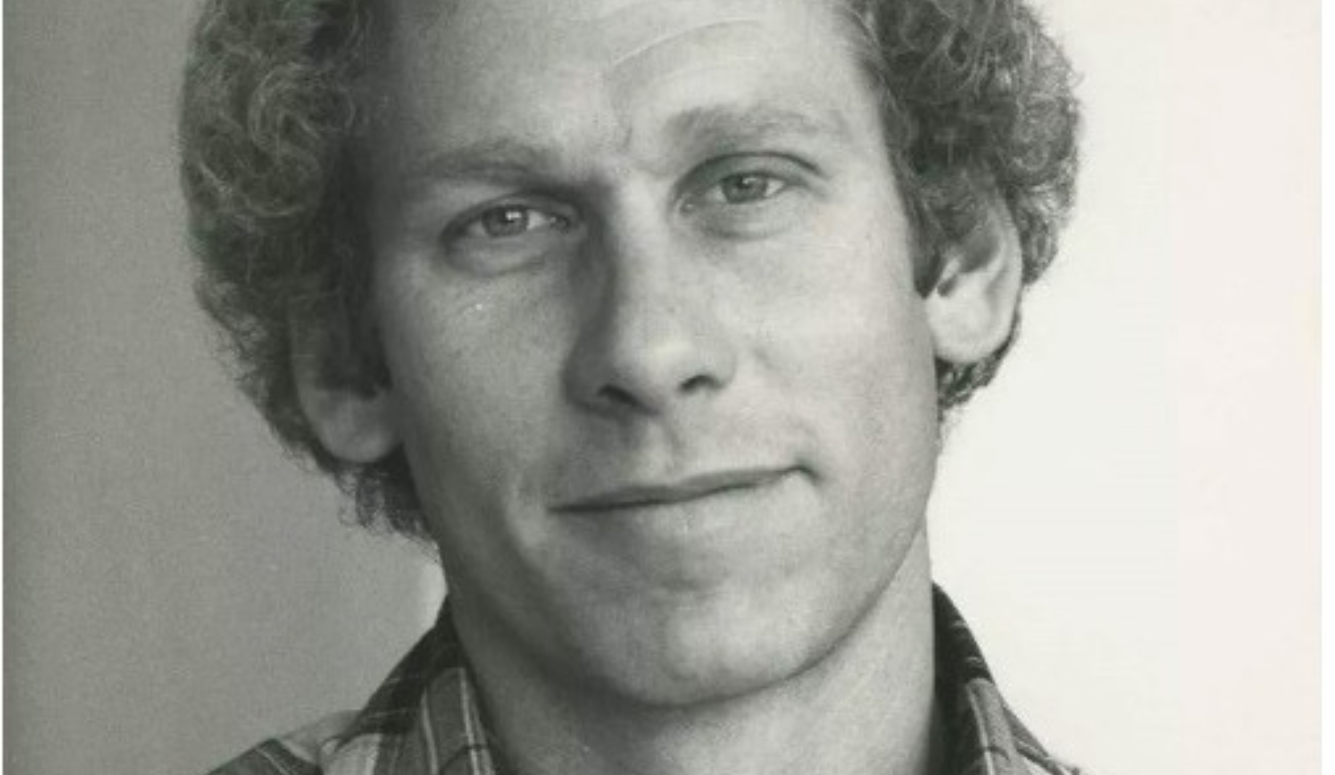
All this was quickly snapped up by game theorists, economists, and political scientists. But in a less-noticed passage, Trivers pointed out its implications for psychology. Reciprocal altruists must be equipped with cognitive faculties to recognise and remember individuals and what they have done. That helps explain why the most social species is also the smartest one; human intelligence evolved to deal with people, not just predators and tools. They also must be equipped with moral emotions that implement the tit-for-tat strategy necessary to stabilise cooperation. Sympathy and trust prompt people to extend the first favour. Gratitude and loyalty prompt them to repay favours. Guilt and shame deter them from hurting or failing to repay others. Anger and contempt prompt them to avoid or punish cheaters.
And in a passage that even fewer readers noticed, Trivers anticipated a major phenomenon later studied in the guise of “partner choice.” Though it pays both sides in a reciprocal partnership to trade favours as long as each one gains more than he loses, people differ in how much advantage they’ll try to squeeze out of an exchange while leaving it just profitable enough for the partner that he won’t walk away. That’s why not everyone evolves into a rapacious scalper: potential partners can shun them, preferring to deal with someone who offers more generous terms. Just as a store with a reputation for fair prices and good service can attract a loyal clientele and earn a bigger profit in the long run than a store that tries to wring every cent out of its customers only to drive them away, a person who is inherently generous can be a more attractive friend, ally, or teammate than one who dribbles out favours only to the extent he expects them to be repaid with a bonus. The advantage in attracting good partners makes up for the disadvantage in forgoing the biggest profit in each transaction.
And since humans are language users—indeed, reciprocity may be a big reason language evolved—any tendency of an individual to reciprocate or cheat, lavish or stint, does not have to be witnessed firsthand but can be passed through the grapevine. This leads to an interest in the reputation of others, and a concern with one’s own reputation.
As with sex and kinship, the treacheries of altruism are the raw material of gossip and fiction. In his The Origins of Virtue, another bestseller featuring Trivers’s ideas, Matt Ridley writes,
Reciprocity hangs, like a sword of Damocles, over every human head. He’s only asking me to his party so I’ll give his book a good review. They’ve been to dinner twice and never asked us back once. After all I did for him, how could he do that to me? If you do this for me, I promise I’ll make it up later. What did I do to deserve that? You owe it to me. Obligation; debt; favour; bargain; contract; exchange; deal. … Our language and our lives are permeated with ideas of reciprocity.
Trivers’s fifth blockbuster was laid out not in an academic paper but in a pair of sentences in his foreword to The Selfish Gene:
If (as Dawkins argues) deceit is fundamental to animal communication, then there must be strong selection to spot deception and this ought, in turn, to select for a degree of self-deception, rendering some facts and motives unconscious so as not to betray—by the subtle signs of self-knowledge—the deception being practiced. Thus, the conventional view that natural selection favors nervous systems which produce ever more accurate images of the world must be a very naïve view of mental evolution.
We lie to ourselves the better to lie to others, protecting compromising private knowledge from emotional tells or factual contradictions (as in the Yiddish saying, “A liar must have a good memory.”) In his book Social Evolution (1985), Trivers muses on how this can play out:
Consider an argument between two closely bound people, say, husband and wife. Both parties believe that one is an altruist of long standing, relatively pure in motive, and much abused, while the other is characterized by a pattern of selfishness spread over hundreds of incidents. They only disagree over who is altruistic and who selfish.
The theory of self-deception is deeper (and more enigmatic) than the commonplace that people’s views of themselves are mistuned in their favour. The self, Trivers implied, is divided: one part, seamless with the rest of consciousness, mounts a self-serving PR campaign; another, unconscious but objective, prevents the person from getting dangerously out of touch with reality. Trivers quotes Orwell: “The secret of rulership is to combine a belief in one’s own infallibility with the power to learn from past mistakes.”
The theory of self-deception makes sense of large swaths of the psychology curriculum, including Freud’s defence mechanisms of the ego (denial, repression, projection, displacement, reaction formation), cognitive dissonance reduction (which rationalises contradictions that would impugn the self), and the vast literature on self-serving biases summarised in Robert Kurzban’s Why Everyone (Else) Is a Hypocrite. It’s almost too obvious to mention that characters undone by self-deception are a staple of fiction. King Lear, Emma Bovary, Raskolnikov, Jay Gatsby, Willy Loman, Walter White, and Don Draper are a few examples that ChatGPT just coughed up for me.
Quillette
Trivers revelled in explaining the contradictions of the human condition, and he himself was a mess of them. Foremost is how he revolutionised the human sciences in a fusillade of ideas he had between the ages of 28 and 33 (I didn’t even mention a sixth one, on how parents should invest in sons versus daughters). But then he did nothing comparable for fifty years. He wrote some good books, but they were reviews of his and others’ contributions, breaking little new ground. How do we explain this shooting star?
Part of the answer is that, as with all intellectual revolutions, the right mind found itself in the right era. In 1971 the gene’s-eye view of evolution was new and counterintuitive, as it remains to this day. People, including scientists, project their moral and political convictions onto the things they study, and the ideal that we should love our neighbours, act for the good of the group, and strive for social betterment is easy to read into nature, even if it flouts the logic of natural selection. And whenever the word “gene” comes up, readers get distracted by hallucinations such as that humans are robots controlled by their genes, that each of their traits is determined by a single gene, that they may be morally excused for selfishness, that they try to have as many babies as possible, that they are impervious to culture, and other non sequiturs.
The young Trivers, mentored at Harvard by the biologists William Drury and Ernst Mayr, immediately grasped the new way of looking at evolution, and never got hung up by these misconceptions. A jaundiced view of animals, not excluding Homo sapiens, came naturally to his rebellious temperament, and many puzzles he observed in his field work (including on ants, lizards, gulls, songbirds, caribou, baboons, and chimps) fell into place when he considered their reproductive interests from their viewpoints.
Trivers loved to recount his time observing the pigeons who roosted along a gutter on a house he could see through the window of his Cambridge apartment. In those days, biologists thought that birds formed monogamous “pair-bonds.” (As a character in a Woody Allen movie quips, “I think people should mate for life, like pigeons and Catholics.”) Trivers expected that the males, always competitive, would keep a respectful distance from each other, so two couples should arrange themselves male-female-female-male. Instead, they lined up female-male-male-female. Trivers figured that each male was inserting himself between his mate and a rival: pigeons, like people, are tempted by infidelity but jealous about their mates’ infidelity. This was confirmed when a new couple arrived and the male, finding no solution to the geometry problem of inserting himself between his mate and the two resident males, forced her to sleep on the roof. As he noted, this “put the lie to the notion, so common in ornithology and evolutionary thinking at the time, that the monogamous relationship was one without internal conflict. Here was a male willing to force his own mate, mother of his offspring-to-be, up onto the sloping roof all night long because of his sexual insecurities. This suggested relatively strong selection pressures.”
In the early 1970s, then, Trivers was standing on the shoulders of giants, looking with a gimlet eye over a rich array of poorly explained animal behaviour (not excluding humans, since he had recently binged on novels). In this virgin landscape, the implications of the overlapping conflicts of genetic interests were waiting to be discovered, foreshadowed in scattered passages from Hamilton and Williams. Someone had to see them first, and Trivers was there.
But Trivers rapidly spotted what everyone else missed, and still misses, together with the less biologically obvious concept of self-deception, so there must be another piece to the puzzle. During his junior year at Harvard, Trivers suffered two weeks of mania and then a breakdown that hospitalised him for two months. Bipolar disorder afflicted him throughout his life. I can’t help but wonder whether Trivers’s fecund period was driven by episodes of hypomania, when ideas surge and insights suddenly emerge through clouds of bafflement. Gamers sometimes “overclock” their computers, running the CPU at a higher speed than the rated limit, which boosts performance but risks instability and crashes. Did Trivers experience bursts of overclocking in the early 1970s? It would explain another fact about the man that was obvious to anyone who met him later: Trivers reeked of marijuana. His heavy use may have had a source other than his Jamaicaphilia. One wonders whether Trivers was self-medicating, with long-term costs to his clock speed.
Trivers’s other contradictions could not be explained by any DSM diagnosis. Though his upbringing was patrician and cosmopolitan (son of a poet and a diplomat, schooled in Europe and then Andover and Harvard), he was afflicted with a strong nostalgie de la boue. This contributed to his adoption of Jamaica, originally the site of his research on lizards, as a second home. Trivers’s life in Jamaica was filled with boozing, brawling, whoring, and of course toking, together with a stint in jail and a narrow escape from death during an armed robbery. His memoir Wild Life is peppered with homicidal fantasies and expressions of admiration for thuggish vigilantes, including Huey Newton, co-founder of the radical Black Panther Party. Trivers befriended Newton, made him godfather of his daughter, coauthored a paper with him on the role of self-deception in a fatal plane crash, and became a white Black Panther himself before Newton ushered him out of the organisation for his own safety.
Trivers’s earthiness made him good company. He was generous in praise, and knew how to tell a good joke and a good story. I recall a conversation that ranged over why lizards have two penises and the relevance of that fact to the human member; his encounter with the men who had just come from assassinating the reggae musician Peter Tosh; and helpful tips on what to do if I ever found myself in a machete fight (“It’s all about right angles…”). He gave a profanity-laced lecture in my Harvard class on human nature, co-taught by the eminent legal theorist Roberto Mangabeira Unger, and I don’t think I have ever seen a human being laugh as hard as my co-instructor did that afternoon.
But Trivers’s neuroatypicality shaded into eccentricity and downright boorishness. He might try to drop off a passenger without stopping the car, or miscount the number of dinner guests and force two of them to share a chair. He repaid the colleagues who offered him professional lifelines at their universities with truancy, belligerence, and gross inappropriateness (greeting female students in his underwear when they had been sent to his apartment to fetch him to a late lecture; requesting that straitlaced academic hosts supply him with cannabis). His violent musings could make acquaintances genuinely fear for their safety. His last graduate student, Robert Lynch, spoke for many when he ended his affectionate obituary, “I’ll miss you, Robert. You asshole.”
In his later years Trivers attempted to apply his theory of self-deception to history, politics, and occasionally himself. The outcome was inadvertently fitting. Trivers’s politics were a sophomoric 1960s radicalism, and his analysis of self-deception in international relations was little more than a rant on the perfidies of America and Israel. As I noted in my comments on a draft of his book: “You have proposed a theory of self-deception which claims that human beings are apt to be opinionated, moralistic, certain of their own correctness, dismissive of counterarguments, and contemptuous of those who disagree with them. Then you write a section on contested issues in Middle East politics that is…well…um…gee…do you see where I’m going with this?”
As for himself, Trivers liked to poke fun at some of his eccentricities and indignities. But he never squarely faced his record of betrayals, hurts, and squandered talent. All this is exactly what Trivers’s greatest theoretical brainchild would predict.
Quillette invites thoughtful responses to its essays.
Selected responses are published once per week as part of a curated Letters to the Editor feature. If selected, letters appear under the contributor’s real name and may be edited for clarity and length.
To submit a letter for consideration, please email [email protected].
Keep reading
The Many Roots of Our Suffering: Reflections on Robert Trivers (1943–2026)
The First Post-Ideological Bedouin State

Trump, Tehran, and the China Calculus
Parallel Kingdom

Meanwhile, in Sudan

The Australian Way of Life