Australia
The Australian Way of Life
Politicians reach for “our way of life” to justify immigration restrictions—but the phrase may be too vague to bear that weight.

After winning the leadership of the Australian Liberal Party this month, Angus Taylor declared an intention to harden immigration policy, in particular to introduce measures to stop “people who hate our way of life” from moving to Australia.
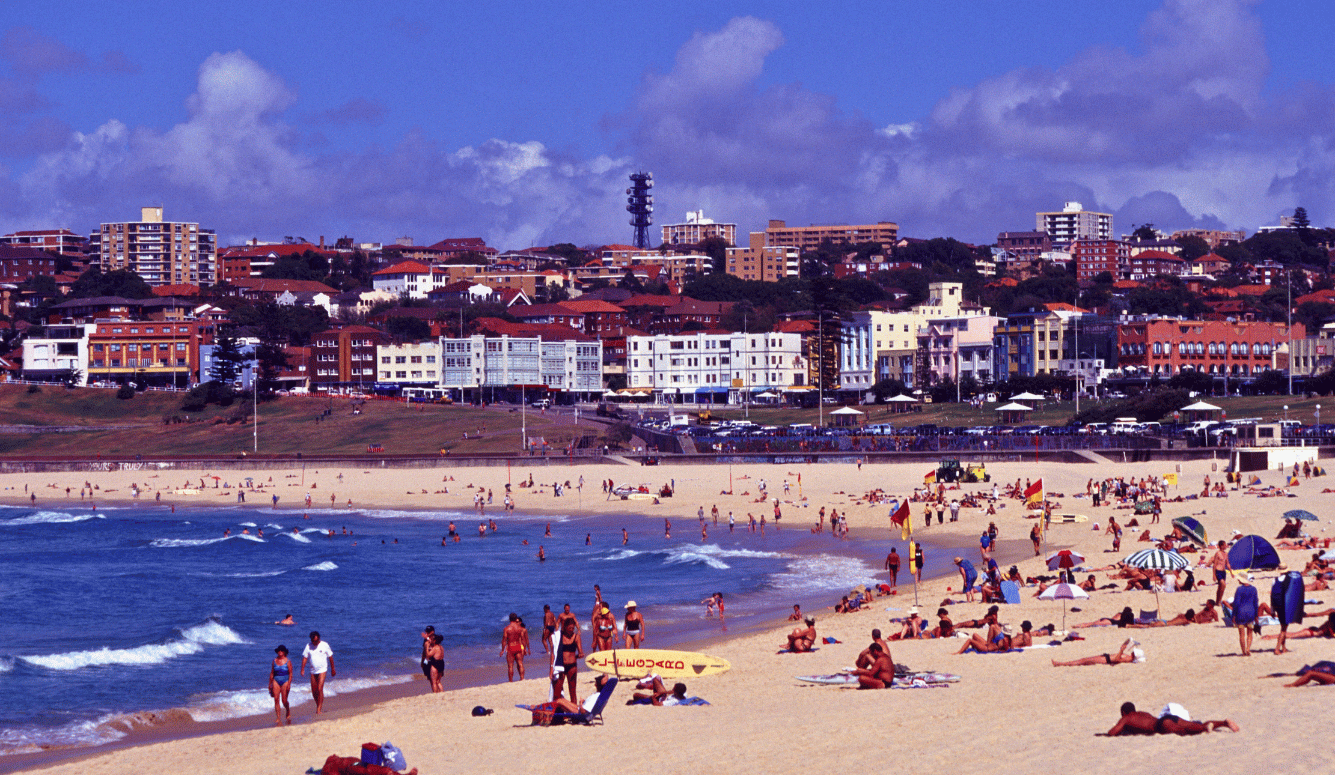
In the aftermath of the terrorist attack at Bondi in December, a multitude of opinion pieces have similarly invoked “our way of life.” One argues that in focusing on gun laws rather than addressing “radical political Islam,” Prime Minister Anthony Albanese will “hand further opportunity to those in our midst who hate our way of life.” Another argues against multiculturalism and in favour of Australia’s earlier “emphasis on integration, and on the duty of migrants to acculturate by adapting to the Australian way of life.” Several make the point that an attack on Jews is an attack on all Australians: “The terrorist atrocity at Bondi was just as much an attack on all Australia and its open way of life as on the Jewish citizens it targeted”; “This isn’t an attack on Jewish Australians; broadly, it is an attack on all of us. On our values and our way of life”; “Albanese… is right to say that an attack on Jewish Australians is an attack on all Australians and an attack on the Australian way of life.”
All this naturally leads to the question, what is the Australian way of life? Do we have a distinctive way of life compared to other countries, or do we have the same way of life as at least some others? If our way of life is distinctive, is the difference between our way and other countries’ ways of life important enough that we need immigration restrictions to protect it? If our way of life is not distinctive, is there any justification for restricting immigration from countries that share it—and does it matter if some such countries have greater numbers of citizens with illiberal attitudes than others? And what is the relation between terrorism and our way of life?
One of the more thoughtful articles written after Bondi makes the case that, while terrorism is compatible with our way of life, severe restrictions aimed at preventing it are not:
The harsh reality, though, is that terrorism itself is not an existential threat to a free, democratic society. On the other hand, authoritarian and intrusive steps in pursuit of the impossible goal of making ourselves perfectly safe from it—and from other nebulous threats—most certainly do constitute existential threats to our way of life. … Terrorism, like it or not, is here to stay.
While initially surprising, this does seem right. Terrorist attacks are tragedies, and tragedies are a part of life in every society. As a society, we could approach the “impossible goal” of fully eliminating terrorist attacks only by taking extreme measures. We could put CCTV cameras in people’s homes, ban all messaging apps with end-to-end encryption, and refuse immigration admission to anyone from a social group whose members have perpetrated terrorism globally—say Salafi jihadis and incels.
We don’t do this, not because we couldn’t, but because doing it would compromise other important values. Just as an individual might become terminally ill and have to make a decision about whether she wants fewer, higher quality months or more, lower quality months, societies have to make decisions about whether they want more lives with fewer freedoms, or fewer lives with more freedoms. That being said, if our way of life is non-violent, or non-discriminatory, that would help to explain why so many authors describe the Bondi massacre as an attack on it.
So, what is our way of life? It cannot be our history, because our way of life is the present and our history is the past (although of course our history may explain our way of life). Our way of life is surely not just our current politics, because so much of life happens outside of politics (although of course our politics may be a part of our way of life).
If our way of life is just the absolute basics of a liberal society—democracy, individualism, equality of opportunity, rule of law—then it is not distinctive; we share it with every other liberal society. If our way of life is filled out by Australiana—calling everyone ‘mate’, eating prawns at Christmas, risking jellyfish stings and shark attacks every time we swim—then it is distinctive, but it doesn’t seem important enough that we can restrict immigration in order to protect it. (Imagine trying to explain to a newly-arrived family of asylum-seekers that they can’t be granted refugee status because of prawns.) So, is there something that’s more important than Australiana and more distinctive than the absolute basics of a liberal society?
 Alan Davison
In a short piece published in the Wall Street Journal last year, Louise Perry writes about the place of Bondi Beach in Australian culture. Her analysis offers a way to start filling in the details of our way of life. Perry’s concern was not with the activities of the beach—where way of life might be equated with lifestyle and leisure activities like surfing, swimming, and sunbathing—but with the social norms that make those activities possible. She writes:
Keep reading
Robert Lynch on Status, Humour and the Apes We Pretend Not to Be | Quillette Cetera Episode 74

The Radicalisation of Tucker Carlson
A Pop Fiction Master and Monster

Australia’s Coming Censorship Machine

Anatomy of a Book Promotion