
With respect to sexuality, there is a female human nature and a male human nature, and these natures are extraordinarily different, though the differences are to some extent masked by the compromises heterosexual relations entail and by moral injunctions. Men and women differ in their sexual natures because throughout the immensely long hunting and gathering phase of human evolutionary history the sexual desires and dispositions that were adaptive for either sex were for the other tickets to reproductive oblivion.
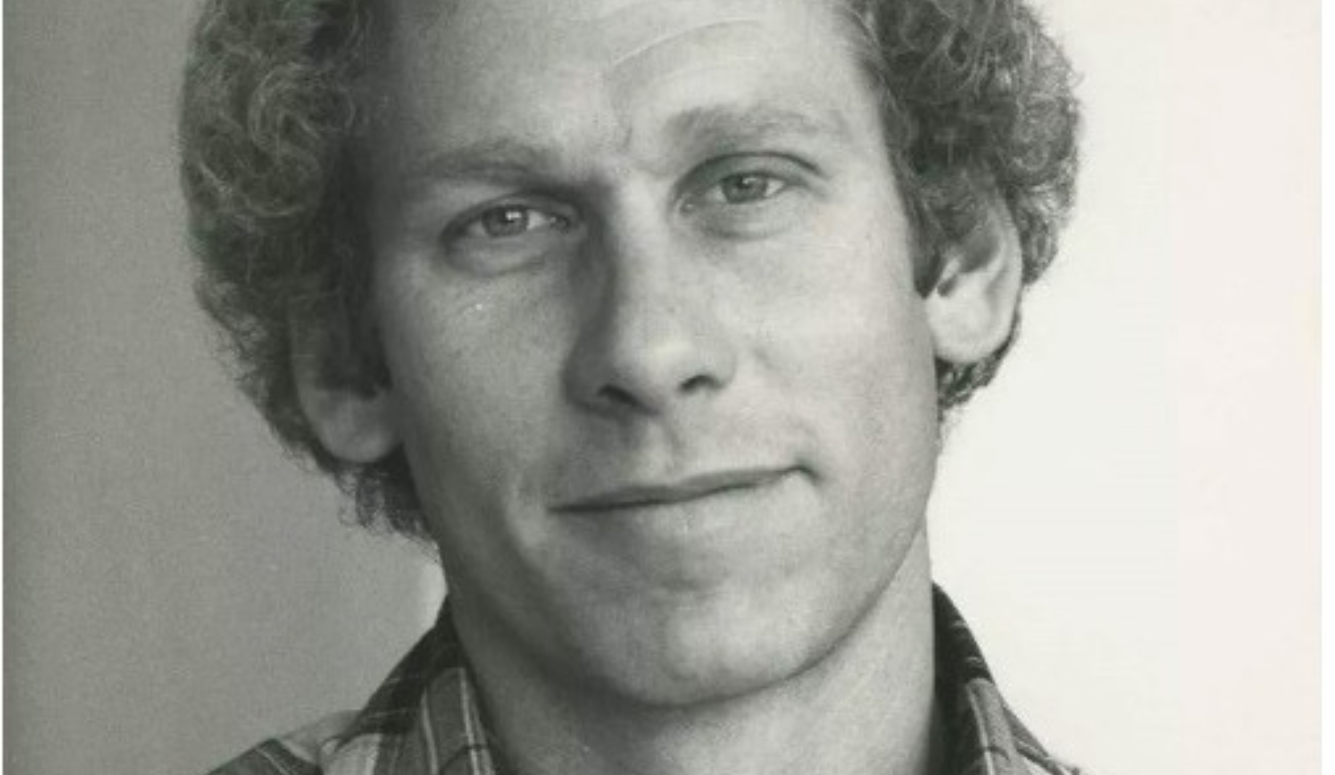
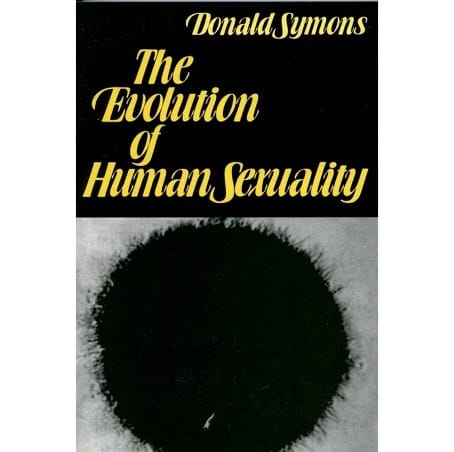
This bold yet qualified proclamation was how Donald Symons announced the theme of his epochal 1979 book The Evolution of Human Sexuality (EHS). Symons, who died of cancer last year at 82, is remembered with awe and affection by the legions of evolutionary psychologists and sexuality researchers he influenced. His extraordinary little book opened up vast new intellectual spaces, not just for an understanding of sexuality itself but for an understanding of the relevance of evolution to the human condition and of the nature of conscious experience.
Symons did not, of course, originate the idea that men and women have different sexual natures. According to the doggerel falsely attributed to William James, Dorothy Parker, and others, “Hoggamus higgamus, men are polygamous; Higgamus hoggamus, women monogamous.” Symons explained the grain of truth in the rhyme (and the grains of falsehood) in the teeth of intellectual complacency and sometimes fierce opposition from many sectors of the 1970s zeitgeist. It was the heyday of the doctrine that the human mind was a blank slate and that human nature was a dangerous idea. Second-wave feminism, recoiling from pseudoscientific stereotypes of women’s abilities, found it expedient to assert that the sexes were innately indistinguishable, with all differences coming from the “roles” that society assigned people, roles that could be rewritten in the name of equality.
The biology-friendly alternatives of the day were problematic for different reasons. The new approach called sociobiology often applied evolution to human behaviour in a patently implausible way, assuming that natural selection programmed us to maximise the number of babies we bring into the world. It sometimes made sweeping claims about the sexes that were barely more sophisticated than higgamus-hoggamus. Sex researchers, for their part, fell back on the folk theory that evolution works toward the greater good, and spun their research to valorise wholesome relationships and provide moralistic uplift. Many claimed that sex differences were complementary, and that human sexual desire was an adaptation for monogamous pair-bonding.
Symons’s education, filtered through a keen analytical mind and an unsentimental eye for human foibles, made him resistant to these facile notions. (“Talk of why… humans pair-bond like gibbons,” he wrote, “strikes me as belonging to the same realm of discourse as talk of why the sea is boiling hot and whether pigs have wings.”) As an undergraduate psychology major at UC Berkeley in the early 1960s, he was excited by the idea in Robert Ardrey’s 1961 bestseller African Genesis that humans evolved a nature adapted to a vanished world (while sceptical of some of the book’s fanciful specifics). Symons’s interest, at that time and throughout his career, was in the human psyche, but he was advised that academic psychology at the time had no room for evolutionary thinking and that he could pursue his interests only through biological anthropology.
Continuing at Berkeley, he did his thesis (later turned into a book) on rough-and-tumble play in rhesus macaques, which he argued was practice for fighting. Symons’s anthropological training equipped him with an understanding of primate behaviour, though he resisted extrapolating from any primate species to humans. (Using gibbons as a model to understand humans, he said, made as much sense as using humans as a model to understand gibbons.) It also prepared him to test theories of human sexuality against the ethnographic record rather than just convenience samples of university students or literate survey responders. This was decades before social scientists were sensitised to the pitfalls of generalising from WEIRD (Western, Educated, Industrialised, Rich, Democratic) societies.
During Symons’s graduate years, a young Richard Dawkins taught at Berkeley, and Symons learned from him the rigorous new understanding of evolution originating from George Williams and William Hamilton in which selection consists of competition among replicators (“selfish genes”). Symons also absorbed Robert Trivers’s insight that all social relationships—families, couples, cooperation partners—are both bound by overlapping genetic interests and riven by divergent ones.
 Tristan Flock
Symons’s analysis of human sexuality began with the fundamental distinction between the sexes (newly relevant in our era of confusion about the biological basis of sex): females are the sex that produces large, immobile gametes (eggs); males are the sex that produces many mobile ones (sperm). This contrast opens up selection pressures for the evolution of other sex differences, which multiply the asymmetry in many species, especially mammals, by selecting for greater investment in offspring by females than males. Trivers worked out the behavioural implications. The greater-investing sex, usually female, is the rate-limiting step in reproduction, so a male’s reproductive success depends on how many females he mates with, whereas a female’s reproductive success does not depend on how many males she mates with but on their genetic quality and ability and willingness to invest in their offspring. This in turn explains two phenomena of sexual selection which had fascinated Darwin in The Descent of Man and Selection in Relation to Sex: in many species, males compete and females choose.
This brings us to the grain of truth in higgamus-hoggamus. Polygyny is massively more common in traditional societies than polyandry, and even in nominally monogamous ones, female sexuality is treated by both sexes as a scarce resource: Symons noted:
Among all peoples it is primarily men who court, woo, proposition, seduce, employ love charms and love magic, give gifts in exchange for sex, and use the services of prostitutes. And only men rape. Everywhere sex is understood to be something females have that males want; it constitutes a service or favor that females in general can bestow on or withhold from males in general, although “favorless” intercourse also occurs, and the exchange may be reversed in certain circumstances.
(The bold generalisation “among all peoples” tells a story. Symons enjoyed a lifelong dialogue with his friend, UC Santa Barbara colleague, and sometimes landlord, the cultural anthropologist Donald Brown. Brown lost a bet with Symons that he could find exceptions in the ethnographic record to each of Symons’s claims about universals in human sexuality. Chastened, Brown rethought the anthropological dogma that cultures could vary without limit and went on to write the classic 1991 book Human Universals.)
But human sexuality defies the rhyme in important ways. Homo sapiens, Symons pointed out, is atypical among mammals in the degree to which fathers invest time, care, and resources into their children and the children’s mothers. But a man’s investment is optional—he can sire a child with a few minutes of copulation—whereas a woman’s is obligatory, committing her to nine months of pregnancy and, in traditional societies, years of lactation. This flexibility explains why human sex differences are found in tacit negotiations between men and women rather than in overt polygamy, as with harem-holding gorillas. It also opens up the temptations of illicit sex. A man can multiply the number of his descendants by sleeping with additional women, and a woman can enhance the fitness of hers by sleeping with the right man. The opportunities may be rare, but the reproductive consequences substantial, and the mind should be sensitive to the possibilities even if individual people rarely find themselves in a position to act on them.
Symons noted another reason that we should not expect the evolutionary economics of reproduction to determine behaviour. Natural selection is not a ghost in the machine that can pull the levers of behaviour in real time. It can only select genes that grow brains that have desires that, over the long run in the kinds of environments in which we evolved, resulted in more surviving offspring. We no longer live in those environments: the longstanding link between sex and offspring has been scrambled by contraception, adoption, artificial insemination, cow’s milk, the rule of law, the welfare state, equal opportunity, and other innovations of modernity. Natural selection has a speed limit in generations and could not possibly have remixed our genes to keep up. As a result we are turned on not by opportunities to make babies but by opportunities superficially resembling those that would have allowed our ancestors to make babies. It is not an embarrassment for evolutionary theory, then, but a necessary consequence that, for example, contraception is not a turnoff, and sperm banks are not plagued by reverse embezzlement.
For all these reasons, Symons insisted, the effects of evolution are manifested in psyche, not behaviour. Contrary to the behaviourism that is widespread among scientists, it is thoughts and feelings, not actions, that implement the metaphorical agenda of our genes. When we choose an action, we must compromise our wishes to accommodate those of other people and the constraints of the world. Our desires, by contrast, have the run of our imaginations. Consciousness, Symons noted, is designed to scope out unpredictable events and opportunities: “A human being is a feeler, an assessor, a planner, and a calculator… The proximate goal of mental activities always is the attainment of emotional states, and… mind is adapted to cope with the rare, the complex, and the future: what is ordinary, predictable, or simple ceases to take up valuable space in awareness.” So as we play the routine games of life, our imaginations seethe with wicked fantasies about sex, revenge, and leaps of status. The late Jimmy Carter was one of our more monogamous presidents, but as he confessed in his notorious 1976 Playboy interview, he had often committed adultery in his heart.
Symons’s insistence that natural selection left its fingerprints in consciousness rather than behaviour led to the idea that a new Darwinian science of humans should be an evolutionary psychology, with a focus on thought and feeling, distinct from the behaviourist approaches of sociobiology, behavioural ecology, and Darwinian anthropology. At UCSB he joined forces with Brown and with a third colleague, Napoleon Chagnon, to hire the brilliant young anthropologist John Tooby, who had had an epiphany that there could be a science of mental life, after taking a course on psycholinguistics as a Harvard undergraduate. Around that time UCSB also hired the cognitive psychologist Leda Cosmides (who was married to Tooby), and the trio, together with a small circle of visitors, plotted to make evolutionary psychology an academic reality at UCSB and beyond. (Symons, Brown, and Tooby died within a year of each other; Chagnon five years before.)
Symons’s psychological mindset allowed him to take on other obvious features of human sexuality that had been ignored by the prissy sex science of his day:
That individual reproductive “interests” must in some degree conflict with one another may account for the intensity of human sexual emotions, the pervasive interest in other people’s sex lives, the frequency with which sex is a subject of gossip, the universal seeking of privacy for sexual intercourse, the secrecy and deception that surround sexual activities and make the scientific study of sex so difficult, the universal existence of sexual laws or rules, and the fact that in our own society “morals” has come to refer almost exclusively to sexual matters.
It also led him to take the advice of an anonymous reviewer of an early draft of EHS that he fortify his claims with observations from novelists and memoirists who had noticed the same foibles in human sexuality. And so EHS is salted with mordant aperçus from Michel de Montaigne, Marcel Proust, Mark Twain, Gustave Flaubert, Dorothy Parker, Saul Bellow, and other sages.
Symons explicitly confronted the standard alternative to his theory in which human sexuality consists in learning roles arbitrarily assigned by the surrounding culture. He argued that this consensus had been given a free pass in intellectual life and did not stand up to empirical reality:
In fact, human males appear to be so constituted that they resist learning not to desire variety despite impediments such as Christianity and the doctrine of sin; Judaism and the doctrine of mensch; social science and the doctrines of repressed homosexuality and psychosexual immaturity; evolutionary theories of monogamous pair-bonding; cultural and legal traditions that support and glorify monogamy; the fact that the desire for variety is virtually impossible to satisfy; the time and energy, and the innumerable kinds of risk—physical and emotional—that variety-seeking entails; and the obvious potential rewards of learning to be sexually satisfied with one woman.
Keep reading
They Walked in Line

Anti-Catholic Social Panics, Then and Now
A Dishonest (and Dangerous) Nobel Laureate
Common People
How Genetics Rewrote History