History
What Makes the West Western?
Naoíse Mac Sweeney’s new book tries to convince readers that Western civilisation doesn’t exist.

A review of The West: A New History in Fourteen Lives by Naoíse Mac Sweeney, 448 pages, Dutton (May 2023).
At the 2019 Annual Meeting of the Society for Classical Studies in San Diego, California, independent scholar Mary Frances Williams stood up at the end of a panel on “the future of classics,” and suggested that classicists should view their field as the study of the foundations of Western civilisation. Classics “matters,” she went on, “because it’s the West.” Sarah Bond, a professor at the University of Iowa, cut in, declaring that ‘‘Western civilisation is a construct—a complete construction.”
Since then, how one views “Western civilisation” (a phrase now almost invariably accompanied by scare quotes in academic prose) has become a shibboleth for professional classicists, especially at the more prestigious institutions. Defending the record, or even simply the existence, of Western civilisation, is liable to get you tarred with the white supremacism brush, as I discovered after my four-part series on Western civilisation and the classics appeared here in Quillette in early 2019. (“This is how white supremacism perpetuates itself,” Rebecca Futo Kennedy, a professor at Denison University in Ohio, said of my arguments.)
 James Kierstead
Denouncing Western civilisation as the root of all historical evils will likely stand you in good stead on the job market. If you really want to rise to the upper echelons of the field, though, you will have to adopt a more extreme view—one that most people outside of academia would likely dismiss as absurd. This is essentially the view expressed by Sarah Bond above—that Western civilisation is nothing more than “a social construct,” or, to quote the title of a lecture by Kwame Anthony Appiah, that “there is no such thing as Western civilization” and never has been. Every time we talk about “the West” or “Western heritage,” that is, we are behaving like those deluded eighteenth-century scientists who kept banging on about phlogiston.
The hegemonic status that this view has acquired within the upper reaches of academic classics is all the more striking considering that almost all university classics departments, until very recently, advertised themselves as providing a grounding in the foundations of Western civilisation. These days, departments are more likely to post on their websites some version of the Society for Classical Studies’ 2016 statement condemning “the use of the texts, ideals, and images of the Greek and Roman world to promote racism or a view of the Classical world as the unique inheritance of a falsely-imagined and narrowly-conceived western civilization.”
Naoíse Mac Sweeney’s 2023 book The West: A New History in Fourteen Lives, is essentially a re-statement of the new orthodoxy that (to quote David Graeber) “there never was a West.” Instead, Western civilisation is “an invented social construct, one that is extremely powerful and has far-reaching consequences in the real world, but a construct nonetheless.” Mac Sweeney supports this contention through vivid chapter-length pen-portraits of fourteen historical figures.
The points Mac Sweeney calls on her cast of historical characters to make are as different as the characters themselves. Some are called in to undermine the idea of a “Greco-Roman civilization” as the foundation of the West. Herodotus and Livilla (Augustus’s grand-daughter) provide examples of ancient thinkers who did not perceive themselves as part of a specifically Western tradition, while the chronicler Godfrey of Viterbo and the Byzantine emperor Theodore Laskaris call into question the idea that Greece and Rome form a natural pair.
Others illustrate the porousness of the boundaries between the West and the rest. This is the role of the Abbasid polymath al-Kindi, the Renaissance woman Tullia d’Aragona, Safiye Sultan (chief consort to the Ottoman sultan Murad III), and the English philosopher Francis Bacon, each of whom straddle and hence (for Mac Sweeney) unsettle East–West boundaries.
A third category of historical figures teaches us about what Mac Sweeney sees as the “construction” of Western civilisation. The lives of Queen Njinga of Angola and the American slave Phillis Wheatley illustrate the shift from a colourblind to a racist conception of the West, while Joseph Warren shows us how the US founding fathers conceived of their nascent republic as part of a Western cultural narrative stretching back to Greece and Rome. William Gladstone, for his part, shows us how a British prime minister could turn narratives of the West to antisemitic ends.
Mac Sweeney’s final two figures symbolise more recent intellectual trends. Edward Said is Mac Sweeney’s standard-bearer for the contemporary turn against the grand narrative of the West. Carrie Lam, the former chief executive of Hong Kong, serves as a warning about the new brand of “civilizational essentialism” promoted by the Chinese Communist Party.
On one level, then, Mac Sweeney’s book is about what she calls the “grand narrative of the West,” in which Western civilisation began in a hybrid “Greco-Roman antiquity,” was transmitted almost uniquely to Europe, and made the modern West superior to the rest of the world.
But the book also constructs a new narrative of its own, a metanarrative about how this more familiar story was constructed. In this new metanarrative, not everyone thought of Greece and Rome as proto-Western, or of the West as in any sense superior—least of all racially—until very recently. What created the “social construct” of the West was European colonialism, and its need to justify its oppression and dispossession of non-Western “others.” “The West” is thus nothing more than a creation of modern imperial rhetoric.
Helen Pluckrose
There is much to admire in this book. Mac Sweeney’s writing is vivid and accessible. Chapters begin with arresting anecdotes, and then skilfully interleave biography, close reading, and reflections. I enjoyed being introduced to characters like Njinga and Safiye Sultan, and I found Mac Sweeney’s readings of more familiar figures like Bacon and Gladstone stimulating. Mac Sweeney has an impressive grip on her wide-ranging material, and her overall argument carries the reader along nicely.
Inevitably, there are a few little slips. The lusus Troiae—the “Troy game” revived by Julius Caesar—consisted of mounted drills, not “horse races.” The Declaration of Independence was not adopted “in July 1977”—an unfortunate typo. And in Joseph Warren’s poem in memory of his wife, the phrase quisnam novit eam gemitusque negare profundos/ posset? doesn’t mean “Who can know this and not sigh deeply?” but “Who has known her and can hold off deep sighs?” (The feminine eam must refer to Warren’s wife.)
Mac Sweeney is also fond of the euphemism “enslaved people.” The politically correct rationale for the term—that nobody is naturally a slave—makes no sense. Should we call academics “academicised people” because nobody is naturally an academic? It also obscures an important difference between people who were born into slavery and those who who enslaved at some point during their lives. Mac Sweeney’s claims that Jefferson and Washington owned “hundreds of enslaved people” is thus inaccurate, as the vast majority were likely born slaves. It may seem a small point, but it suggests a troubling willingness to sacrifice historical accuracy on the altar of political fashion. This brings us to some deeper problems.
Let’s work through Mac Sweeney’s narrative chronologically, beginning with Greco-Roman antiquity. Mac Sweeney calls this an “uneasy hybrid” that would have seemed “bizarre” and even “downright objectionable” to ancient thinkers. “It was only the Renaissance,” she tells us, that twinned Greece and Rome, “splicing the two together to form a coherent ‘Greco-Roman’ past.”
Of course, it was never foreordained that Rome would absorb the rich, sophisticated world of the Greek city-states, or that Greek culture would carry out (as Horace saw it) an audacious counter-conquest of the Roman mind. There were always significant differences between the political, intellectual, and material cultures of these two ancient Mediterranean societies.
But there were significant commonalities, too, as the Romans themselves acknowledged. Poets like Horace and Vergil spent much of their careers trying to do in Latin what the Greek epic, pastoral, and lyric poets had done in Greek. Roman sculpture largely followed Greek models, as did Roman philosophy. The greatest Roman orators, like Cicero, studied Greek rhetoric in Greece and modelled their speeches on those of great Athenian orators like Demosthenes. In addition, the Roman Empire was bilingual, with Greek more common in the East and Latin in the West. When Christianity developed, its nascent theology was also divided between a Greek East and a Latin West. The idea of a Greco-Roman civilisation, in other words, reflects historic fact; it is not simply a ‘construct’ retrojected onto the past.
Let’s move on now to the Middle Ages. Mac Sweeney is keen to remind us that “the [medieval] monks and nuns of western Europe were not singlehandedly responsible for preserving the cultures of ancient Greece and Rome.”
This is true: the contribution of Muslim scholars to preserving Greek culture has long been recognised, even if it has been exaggerated in recent times. A number of scientific texts (including some of the works of Galen) survived exclusively through Arabic translations, but this mode of transmission of ancient texts is the exception rather than the rule. Most of Aristotle’s works, for example, were transmitted to us independently, even though Muslim scholars did preserve several important commentaries on the philosopher.
We do not have a single complete medieval Arabic translation of a Greek literary or historical work. Almost all the ancient Greek classics that are still studied today were transmitted through either the Latin West or the Greek “East” (the Byzantines). So although the West wasn’t “singlehandedly” responsible for preserving the legacies of Greece and Rome, it was mainly responsible for preserving them.
Mac Sweeney shares Kwame Anthony Appiah’s distaste for the idea that Western civilisation was passed down, as he puts it, “like a precious golden nugget.” Indeed, the idea that Greco-Roman culture as a whole was handed down unchanged like an heirloom is absurd. Mac Sweeney is right when she says that “the bloodline that we think of as Western Civilisation did not flow in a single channel from Greece to Rome and from there to western Europe.” History is more complicated than that.
But she is wrong to assert that instead, it “sprayed rather chaotically in all directions, carrying the cultural inheritance of Greek and Roman antiquity to all four points of the compass.” Greek and Roman influence is pervasive in European societies—including the former European colonies in the Americas and Australasia—where it can be detected in those cultures’ languages and their predominant religion, as well as in their literature, philosophy, theatre, architecture, law, and politics. We can detect some Greco-Roman influence on Muslim societies, but it had far less impact there—and almost no impact on a whole range of other societies, from China, the Aztecs, and the Khmer to the Polynesians and the Inuit.
Greco-Roman influence, far from “spraying chaotically,” took a largely predictable course from the Greek city-states, through the cosmopolitan Roman empire, and on to medieval, early modern, and modern Europe, largely via what had become the state religon of the Roman Empire, Christianity—though a lot of things were lost, misunderstood, or distorted along the way. There have been some fascinating instances of Greek or Roman influence on other cultures, from the strikingly Apollonian sculptures of the Buddha from Gandhara to modern Japanese anime about Roman baths. But the main course of Greco-Roman influence flowed through Europe.
In late antiquity and the Middle Ages, Christianity was one of the main markers of Westernness. Mac Sweeney appeals to Tullia d’Aragona’s sixteenth-century epic Il Meschino to remind us that “Christianity is not the preserve of Europeans.” Guerrino, the hero of d’Aragona’s poem, “encounters Christians regularly during his journeys in Asia,” Mac Sweeney points out, and “Ethiopia is the location of the exemplary Christian realm of Prester John.” Hence d’Aragona “does not present us with a vision of the world divided into a civilised European Christendom on the one hand and the pagan barbarians of Asia and Africa on the other.”
But few people believe that Christianity has always been exclusively professed by Europeans—and this would be an odd belief given the hundreds of millions of Christians in Asia and Africa. However, for centuries Christianity was mainly European and from there it spread first to Europe’s colonies and then to other countries around the world.
Ben Bassett
This brings us to the European colonial period, in which, Mac Sweeney argues, the grand narrative of the West was forged as a “tool of empire.” It was, she suggests, only in early modernity that improvements in maritime technology made imperialism “feasible,” while “[i]nnovations in economic systems and structures made [colonial projects] desirable.” “All that was needed,” she writes, “was … a civilizational grand narrative to make Western imperialism morally and socially acceptable.”
The idea that imperialism had to wait for the advent of modern technology would have been news to the Akkadians, Achaemenid Persians, Inca, Khmer, Umayyads, Carthaginians, Assyrians, Han Chinese, Romans, Aztecs, Macedonians, Mongols, and a host of other premodern empires. More seriously, though, the idea that Western civilisation was not “constructed” until the early modern period is contradicted by a whole litany of facts that show that medieval Europe was suffused by a Western tradition that began in Greece and Rome.
Medieval Europe was overwhelmingly Christian—and Christianity is a Judaeo-Greek religion with origins in the first-century Roman Empire. The main language of that religion, of learning, and of the courts was Latin, the language of the ancient Romans. Europeans largely practised a form of “socially-imposed universal monogamy”—universal in that it applied to elites as well ordinary people—that was pioneered in classical Athens and reinforced by Christianity. The most influential medieval philosophers, like Thomas Aquinas, wrote in Latin and looked to Aristotle as an authority. All of these things already made the West distinct long before any Western country had a sizeable overseas empire.
James Kierstead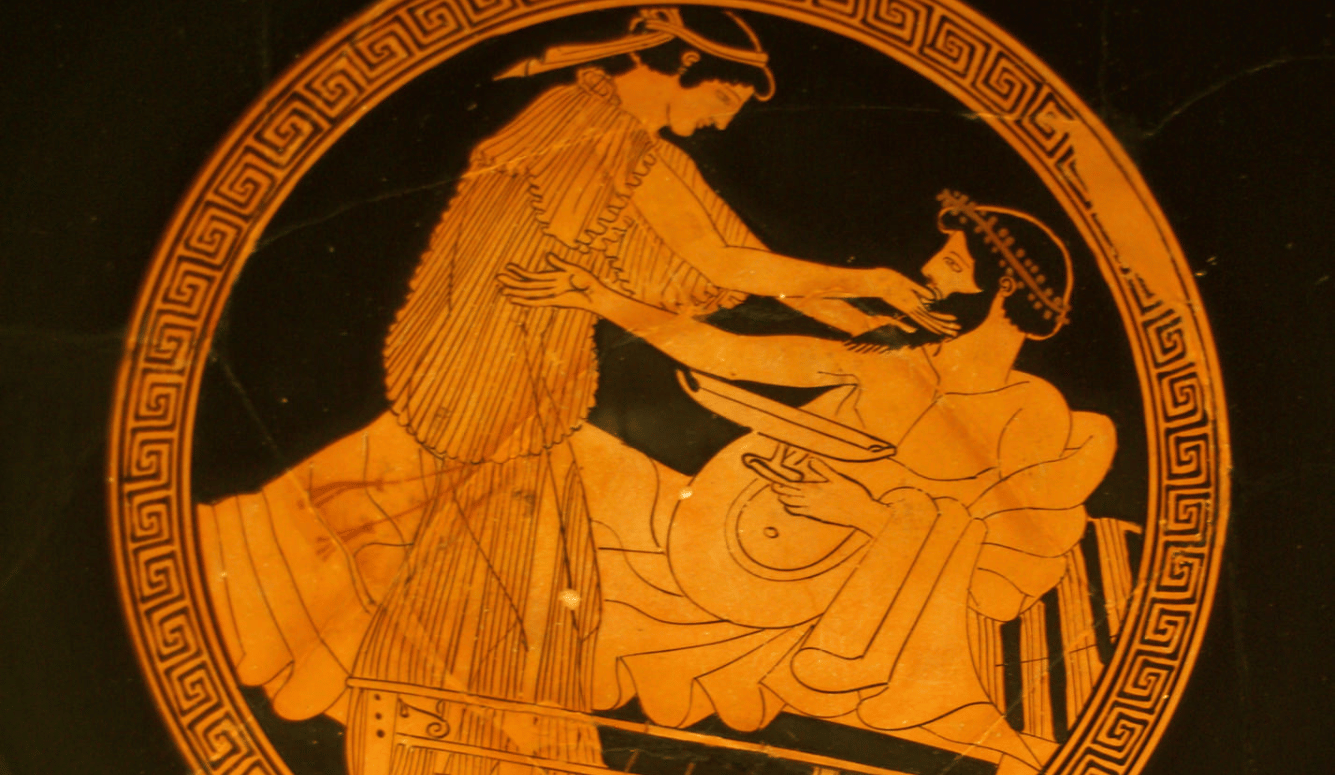
The American Revolution also plays a crucial role in Mac Sweeney’s book. In this period, according to her, race became central to the concept of Western civilisation. “The leaders of the North American revolutionary movement suffered from a stark ideological disjoint,” she argues. They were opposed to the “slavery” of taxation against representation but more comfortable with the chattel slavery that many colonists still practised; opposed to the British Empire while practising imperialism themselves in North America. To reconcile the cognitive dissonance of being “anti-slavery while remaining enslavers” and “anti-empire whilst remaining imperialists,” the colonists chose to “agitate for their own freedom on the basis of their Western heritage.” The colonists, Mac Sweeney writes, emphasised their Westernness and contrasted it with the non-Westernness of the people they were subjugating.
It’s a fascinating theory. The problem is that there’s little evidence to support it. James Madison and Alexander Hamilton do indeed appeal to classical authors like Plutarch and Polybius in the Federalist Papers—but not to justify slavery but to find models for a new republican constitution. And those eighteenth-century Americans who tried to justify slavery tended to argue that black people are racially inferior to white people—not that they deserved to be enslaved because they were not part of a Western tradition. There were, of course, individual slave-holding Americans who drew on ancient texts to justify slavery. But that is hardly enough to support Mac Sweeney’s ambitious claim that colonial Americans constructed a racialised narrative of the West in order to mollify their cognitive dissonance.
Towards the end of her book, Mac Sweeney writes:
From the middle of the twentieth century onwards, there have been an increasing number of people within the West who have begun to question the fundamental ideologies on which the West was traditionally based and to challenge the narrative of Western Civilisation… (Many of the loudest voices warning against attacks on the West come from the same camp that is also fundamentally threatening Western values and principles.)
The central thesis of the book is that the West is just a social construct. And yet here she appeals to “the fundamental ideologies on which the West was traditionally based” and to “Western values and principles” (my emphasis).
In fact, far from treating Western civilisation as merely a fiction, Mac Sweeney has her own definition of it. “The West in the twenty-first century,” she writes, “is a large-scale, supernational power bloc, containing within it many states that do not always see eye-to-eye and may on occasion be competitors, but that nonetheless share a broad overall global outlook and conscious sense of identity.” She adds, “if we were to think of Western Civilisation as a ‘golden nugget’… then the nugget would be the principle of cultural transmissibility and mobility.” Shortly afterwards, Mac Sweeney asks rhetorically
What could be more Western than questioning, critiquing and disputing received wisdom? What could be more Western than engaging in dialogue? And what could be more Western than reimagining the shape of history?
These aren’t the worst definitions of the West I’ve ever come across. Western cultures probably have been more self-critical and more open to cultural change than non-Western cultures for most of the past five centuries at least. But such assertions contradict Mac Sweeney’s central thesis that the West simply has no essence, no “golden nugget” of any kind.
The radical thesis of this book, then—that the West never existed at all—can’t be sustained. The counter-narrative of Western history that Mac Sweeney constructs presents a host of problems. The biggest issue with this book, though, is not what it contains, but what it leaves out.
Over the past couple of decades, a number of scholars have examined how Western societies are distinctive and what the historical roots of this distinctiveness are. Initially, this work focused mainly on the question of why the modern West became so much richer and more powerful than other societies—and why the Industrial Revolution happened in England and not elsewhere—but has now moved on to investigating the deep roots of distinctively Western institutions such as democracy, liberalism, and monogamy. A lot of this work is empirical and quantitative and has been produced by economic historians, political scientists, and anthropologists.
Mac Sweeney has almost nothing to say about any of this research. Instead, her book applies an old-fashioned humanistic approach—discussing a few historical figures who struck her as interesting in this connection—to big questions about society as a whole—questions that are the domain of social science, not biography. And the reasons why she took that course of action may ultimately have as much to do with politics—and with the state of the field of classics at this historical moment—than with more scholarly considerations.
That 2019 meeting of the Society for Classical Studies at which Sarah Bond dismissed Western civilisation as “a complete construction” took place only about eighteen months after the Unite the Right rally in Charlottesville, Virginia, at which protestor Heather Heyer was killed by a white supremacist who rammed his car into the crowd. The revisionist view of Western civilisation that has swept many classics departments in the past few years may well have been motivated by an understandable desire to counter the resurgence of the far Right that led to events like Charlottesville.
Mac Sweeney warns us against people who “would prefer to turn back the clock on the West, to undo much of the last century of social change, and to restore the West to its supposed glory days of world domination.” Her attempt to deconstruct the traditional narrative of the West and replace it with a new counter-narrative of her own seems designed to combat these reactionaries’ efforts to promote “the out-dated principles of a West that belongs firmly in the past.”
She is right that some of those who champion the West today are obsessed with race and have replaced historical accuracy with flagwaving triumphalism about the past and resentment about the present. Some genuinely extreme individuals are obsessed with Western civilisation and these people can be dangerous—as we saw in Charlottesville.
But very few of those who believe in the development of Western civilisation as an important phenomenon in the cultural history of the world can be placed in this extremist camp. Most people still believe that the West is more than just a construct—and only a tiny minority of them can fairly be described as alt Right or white supremacist.
In the final article in my 2019 series for Quillette on classics and Western civilisation, I warn that failing to engage with ordinary people who come to classics departments wanting to learn about Western civilisation may drive some of them into the arms of the online far Right. Judging by some of the accounts that now dominate classical and Western civ content on X, I was dead right.
James Kierstead
But the fact that there are extreme views about Western civilisation on the far right is no reason to take up an equally extreme position in the opposite direction. What we need is a middle way for classics: open to comparative work on other ancient societies and their textual canons while continuing to value what turns out to be true about the time-honoured way of looking at the Western tradition. That will require careful testing of each assertion about Western history in the light of the best evidence and most up-to-date methods.
In the meantime, the academic Left’s response to the hard Right may be understandable, but it has also led them to embrace some very peculiar positions of their own. This is the tragedy of Mac Sweeney’s book—that someone so learned and eloquent should find herself trying to convince her readers of the implausible idea that the entire Western tradition has never really existed.
Quillette invites thoughtful responses to its essays.
Selected responses are published once per week as part of a curated Letters to the Editor feature. If selected, letters appear under the contributor’s real name and may be edited for clarity and length.
To submit a letter for consideration, please email [email protected].
Keep reading
Foreign Power, Local Politics
Podcast #333: The Search for Truth
A Costly Misconception

Addressing the Academic Skew
Letters to the Editor