Cinema
James Cameron Goes Native
‘Avatar: Fire and Ash’ is a Rousseau-esque oikophobic fantasy of evil humans and noble savage aliens.


In 2022, James Cameron brought audiences the sequel to his 2009 sci-fi epic Avatar. In Avatar: The Way of Water, Cameron continues the story of protagonist Jake Sully (Sam Worthington). In the first film, Sully is a crippled marine living on a dying future Earth. He travels to the alien world of Pandora to help the militaristic Colonel Miles Quaritch (Stephen Lang) and corporate overseer Parker Selfridge (Giovanni Ribisi) move the natives, the Na’vi, off their land so the humans can mine it. But then he falls in love with a native woman, her people, and their world, helps them successfully fight back, and ultimately becomes one of them by transferring his human brain into a Na’vi body. Way of Water takes place sixteen years later when the humans return to Pandora.
The sequel has none of the first movie’s high-action drama despite going even heavier than the first film on CGI-created alien flora and fauna. Spectacular graphics and world-building can rarely if ever make up for dull plotting. Way of Water seemed to signal Avatar’s future as yet another franchise where the brand is milked for profit while the story is neglected.
 Allan Stratton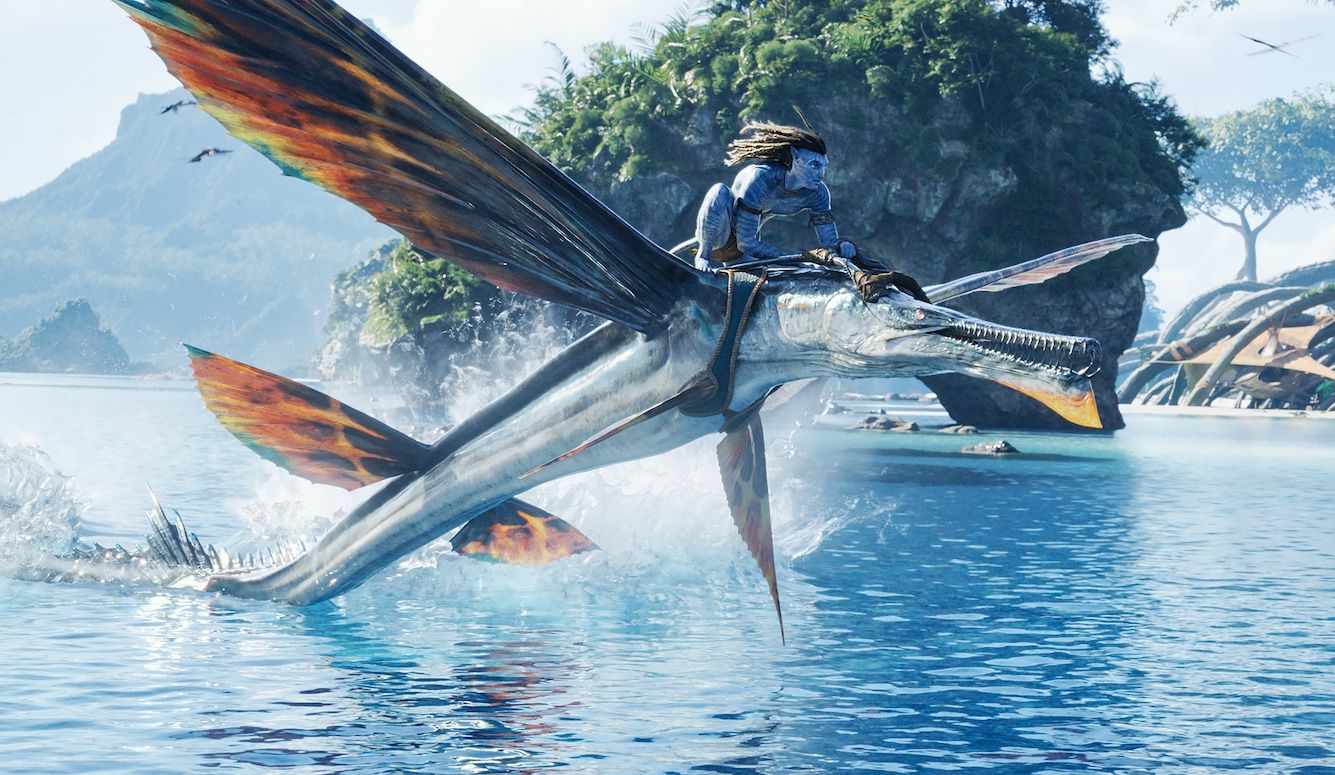
Given all this, it’s surprising that audiences have turned up for the series’ third film, Avatar: Fire and Ash, in the numbers they have. Since its release in December 2025, the film has earned over a billion US dollars—profits that far surpass its production budget of around $400 million and marketing budget of $150 million. Given this, it’s likely the series will continue for Cameron’s planned fourth and fifth films, despite the fact that Fire and Ash suffers from the same uneven and overcrowded plotting that weighed down Way of Water. James Cameron is clearly still a goose who lays golden eggs.
Fantasy is part of the appeal, of course. Audiences may be returning to the cinema for the Avatar films despite Cameron’s deteriorating writing because they like the trips to Pandora. Exploring strange and wondrous worlds is part of the fantasy genre’s charm.
In addition, audiences can derive a great deal of schadenfreude from the unhappy endings Cameron metes out to the majority of the series’ human characters. Cameron, who has described himself as a “child of the 60s,” has written Avatar through a sixties-inspired view of colonial history that casts the colonised as peaceful, tree-hugging underdogs and the coloniser as predatory giants. The Na’vi are noble savages who live in harmony with nature, while the humans are greedy, gun-toting colonisers who will slash, burn, and shoot anything or anyone to make a profit or to plant their flag on a new patch of dirt. The humans in Avatar are, in fact, stupidly evil. Their greed, blind obedience to hierarchical authority, and racism are so predictable, and so unaccompanied by any honourable motives, that they are mere clichés. Each film ends with the Na’vi defeating them in the most humiliating fashion, despite the humans’ aggressive arrogance and superior technology. The Na’vi ride pterodactyl-like creatures called Banshees and shoot bows and arrows, while the humans have helicopters and gargantuan warships equipped with machine guns. Yet, at the climax of each film, the Na’vi knock the helicopters out of the sky and send the warships to the bottom of the sea. Many viewers must want to cheer as they do. There’s great pleasure in seeing these stupid and nasty colonisers get their butts kicked.
At least in the first film, a few of the human characters are not all bad. There’s the protagonist Jake Sully, as well as the scientists, Dr Grace Augustine (Sigourney Weaver), Dr Norm Spellman (Joel David Moore), and Dr Max Patel (Dileep Rao), who have travelled to Pandora to study, not exploit it. There’s also Captain Trudy Chacón (Michelle Rodriguez) who defies her superiors when ordered to fire on the Na’vi and instead joins Sully in defecting to their side.
However, the number of sympathetic human characters has grown smaller with each new film. In Way of Water, the humans have changed their goal from mining to full-scale colonisation of Pandora. Quaritch dies in the first film but Cameron resurrects him in Way of Water, where he is joined by his new superior General Frances Ardmore (Edie Falco) and Captain Mick Scoresby (Brendan Cowell). Ardmore is a left-wing caricature of a military commander: unapologetically bullish and myopic in pursuit of her mission to secure Pandora as a human colony. She calls Na’vi “savages” to their faces, leading even Quaritch to remark, “Don’t be an ass, general.” Scoresby hunts Pandora’s sea creatures to extract valuable minerals from their bodies, killing one alien whale after another and dumping their carcases back into the water. His thick, oily Australian accent creates the impression that he is an uncultured bogan. By Fire and Ash, Quaritch, Ardmore, and Scoresby are the only human characters with meaningful amounts of dialogue and screen time. The rest of the humans are mere extras. When Quaritch captures Sully in Fire and Ash, all the humans respond by gathering around Sully’s cage and taking cell phone snaps. This is now Cameron’s view of humanity. Even in the future, when we’ve reached outer space, he expects we’ll still be taking pictures of everything with our mobile phones.
Keep reading

Anti-Catholic Social Panics, Then and Now
A Dishonest (and Dangerous) Nobel Laureate

Common People

How Genetics Rewrote History

Equal Pay, Unequal Work