Books
God of the Yawning Gaps
It’s hard to believe in God when even very bright, thoughtful people can’t come up with good reasons why you should.
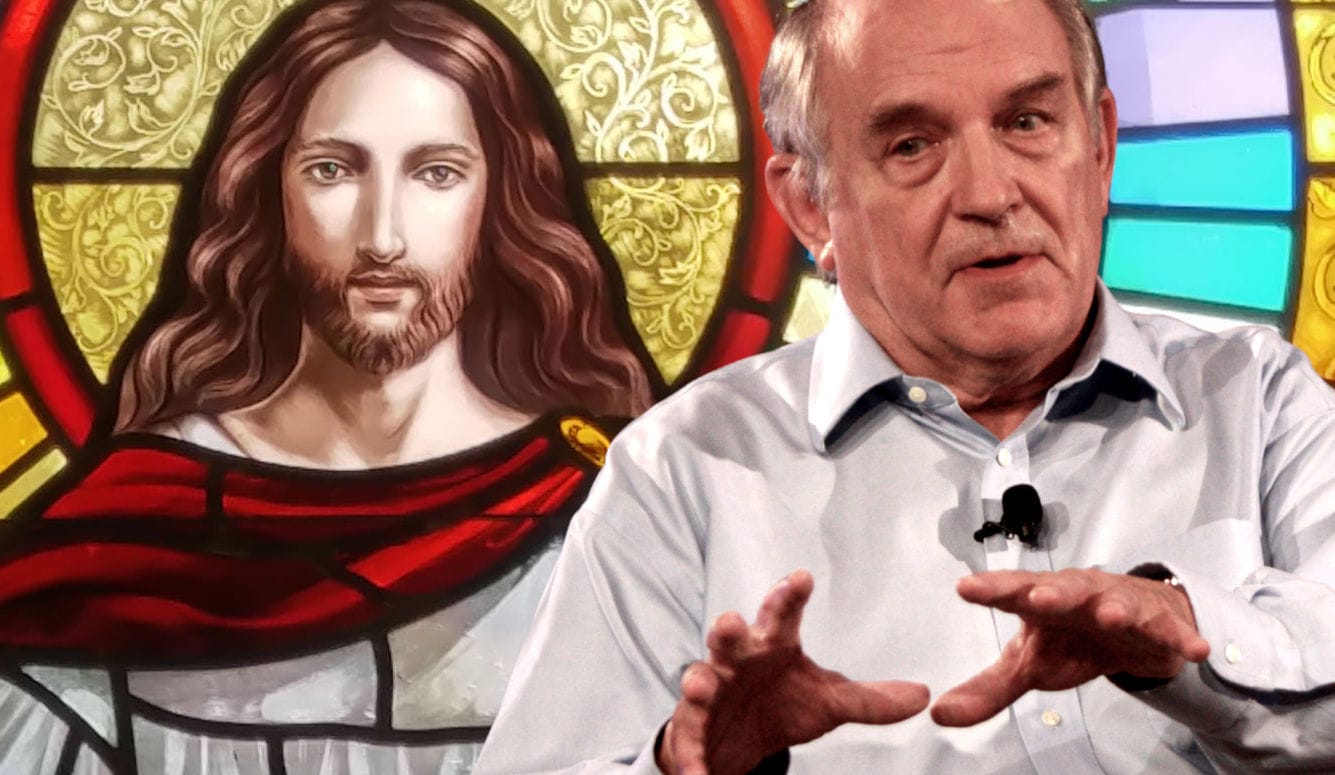

A review of Taking Religion Seriously by Charles Murray, 185 pages, Encounter Books (October 2025)
In his book Believe, published last February, the New York Times columnist Ross Douthat offered readers “a blueprint for thinking [their] way from secularism into religion,” not through semantic sleight of hand, like Saint Anselm’s ontological “proof” of God’s existence, coined nearly a thousand years ago, but through contemporary science and historiography. I didn’t find Douthat’s case very convincing and I explained why in Quillette. However, I clearly erred when I wrote, “You can reason yourself out of religion, as many people have done over the centuries, but reasoning yourself into it is a much more difficult task.” In his new book, Taking Religion Seriously, Charles Murray describes how he did exactly that, chronicling his decade-long journey from agnosticism to Quakerism via astrophysics, biblical history, and C.S. Lewis.
 Graham Daseler
Some people will undoubtedly avoid picking up Murray’s book simply because of the name beneath the title. For the past thirty years, Murray has been something of an outcast from bien pensant society, thanks to The Bell Curve, the 1994 bestseller about cognitive stratification he co-wrote with Richard Herrnstein, a chapter of which discussed racial disparities in IQ scores. In 2017, Murray was physically attacked by a mob of students at Middlebury College in Vermont, the vast majority of whom, it’s safe to say, had never read a word he’d written. If they had, they would have discovered that Murray is no bigot, he’s just a right-leaning political scientist willing to touch topics that his leftwing colleagues fear to broach. His books, The Bell Curve included, don’t drip with bile, they bulge with datasets. And to my (admittedly untrained) eye, they look like solid works of scholarship—clear, cogent, and fair-minded.
I can’t say the same of Taking Religion Seriously, which feels underdeveloped despite its lengthy gestation period. At 185 pages, it’s barely a fifth the size of The Bell Curve and reeks of confirmation bias. Consider, for instance, Murray’s chapter on the Shroud of Turin, the cloth that allegedly covered Christ’s corpse after his crucifixion. “Early church tradition,” Murray writes, “puts the shroud in Edessa and later in Constantinople during the first millennium CE.” The words “early church tradition” are doing a lot of heavy lifting in that sentence—as Murray is surely aware, there are no records of the shroud before the 14th century, when it first appeared in Lirey, France. As Andrea Nicolotti explains in his comprehensive history of the shroud, published in 2015:
The manufacture of a fabric like that of the Shroud required the use of a horizontal treadle loom with four shafts. Knowledge of treadle looms came, perhaps from China, in the eleventh century AD. ... This explains why up to the present time no fabric similar in technique to the Shroud has ever been found in all of antiquity.
That anyone in the 21st century is still fooled by this forgery is, for lack of a better word, miraculous. Four hundred years ago, the physician Jean-Jacques Chifflet observed that the image of a man’s face on the cloth is geometrically inconsistent. If it had really been draped over a corpse, the face would have been much wider, since Jesus’s head presumably existed in three dimensions, not two. Moreover, it would have been drenched in blood, which—as anyone who’s ever sliced his thumb on a paring knife knows—spreads unevenly on fabric, not tidily, the way it appears on the shroud. Murray claims that a 1978 study of the relic, conducted by the Shroud of Turin Research Project (STURP), found no paint or pigment on the linen. Not true. Walter McCrone, a Chicago microscopist, concluded that the figure on the shroud was painted with red ochre in a diluted animal-collagen tempera. McCrone and the other scientists who questioned the authenticity of the shroud were either ignored or kicked out of STURP, which was run by two priests. In 1988, three samples, each approximately two centimetres squared, were taken from the sheet and given to three separate laboratories—at the University of Arizona in Tucson, the University of Oxford, and Zurich Polytechnic—for radiocarbon dating. All three labs determined that the shroud was created in the Medieval period, sometime between 1260 and 1390 CE.
None of this convinces Murray. He quotes Raymond Rogers, one of the more zealous members of STURP:
The combined evidence from chemical kinetics, analytical chemistry, cotton content, and pyrolysis/ms proves that the material from the radiocarbon area of the shroud is significantly different from that of the main cloth. The radiocarbon sample was thus not part of the original cloth and is invalid for determining the age of the shroud.
This is absurd. As Nicolotti points out, “[I]t would be useless to take samples from different parts of the fabric because the Shroud was woven together on the same loom and therefore every part is representative of the whole.” Rogers’s notion that the relic was, at some unspecified date, invisibly patched with a much newer piece of fabric was cooked up in the early 2000s by Joseph Marino and Sue Benford, a husband-and-wife team who specialise in pyramids, crop circles, and alternative medicine.
Nevertheless, Murray does, on occasion, manage to strike a blow for the Lord, if only a glancing one. Like Douthat, he leans heavily on the anthropic principle, which proposes that the universe has been deliberately fine-tuned for life. “If the electrical forces that hold atoms together were only 1030 times stronger than gravity [rather than 1036 times as strong],” Murray observes:
then galaxies would form much more quickly and would be so densely packed that close encounters would be frequent, precluding stable planetary systems. ... The fusion process converts a tiny portion of hydrogen’s mass—to be specific, 0.007 of its mass—into energy. Life could not exist if that figure were much weaker or stronger. If the value were 0.006, a proton could not bond to a neutron, helium could not be formed, and the entire process that produces the periodic table of elements would be foreclosed.
Keep reading
A Paradoxical War

Hearts of Darkness

A New World Order in the Making

Podcast #328: The Extraordinary Exploits of Agent Zo

On Truth and Beauty
Why Populism is Rising in Australia: Immigration and One Nation Surge
