Skip to content

Genetics

Bodies of Evidence

When combined thoughtfully with traditional historical methods, analysis of ancient DNA can illuminate the lives, characters, and motivations of people long dead. 
· 11 min read
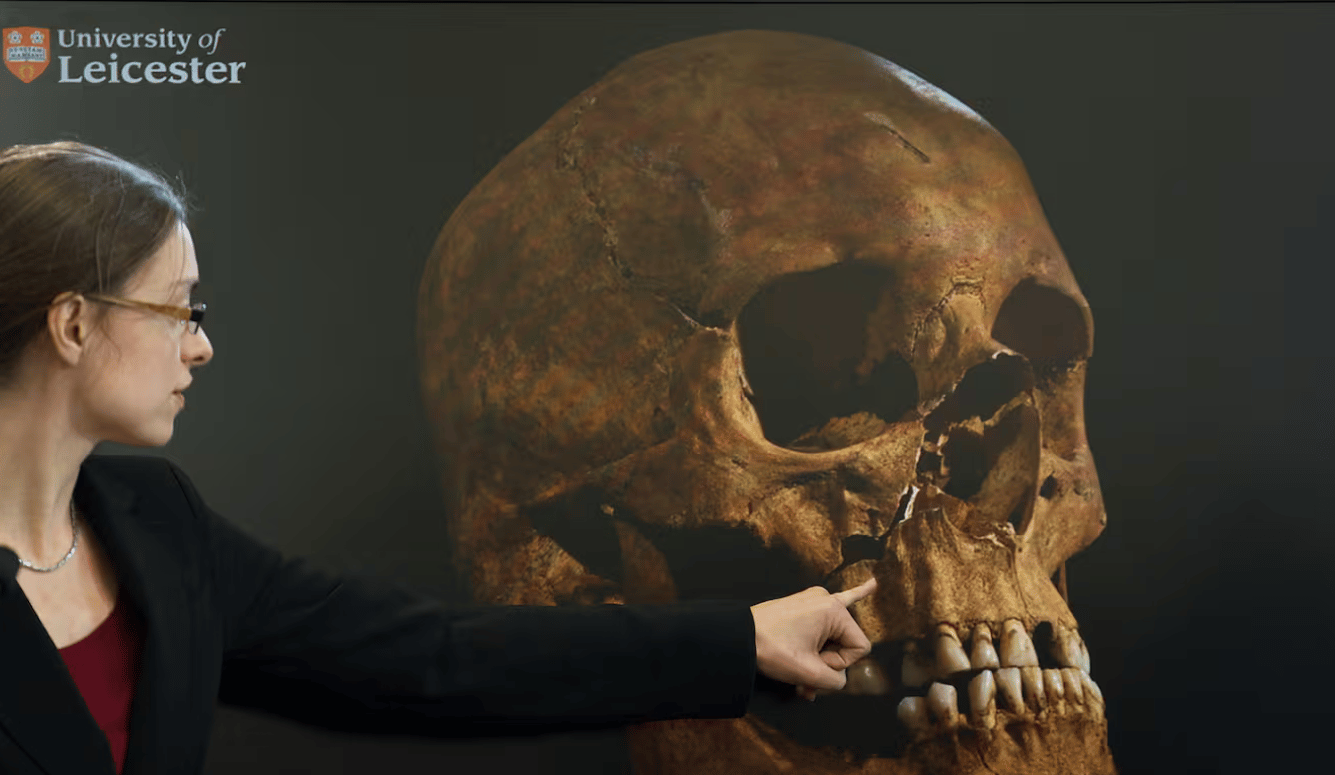
Academic wearing glasses points to the teeth of a large reconstructed human skull beside a University of Leicester logo.
University of Leicester osteologist Jo Appleby discusses the skull of Richard III.

Hitler left blood. Richard III left bones. Lenin left an entire body, preserved like a specimen.

For centuries, historians and biographers have understood the powerful by scrutinising their words and letters, dissecting their decisions, and weighing the testimony of those they governed. But the recent rise of ancient DNA research has opened unsettling possibilities for analysing the actions of our rulers both past and present on the basis of their biology. This new perspective complicates but does not replace traditional interpretation; it could challenge old assumptions or further reinforce them. More significantly, however, genetics offers a tantalising—and possibly distorting—shortcut to understanding the minds that have shaped, or are now shaping, our world. 

Ancient DNA (aDNA) analysis has moved far beyond tracing human ancestry and patterns of migration. Over the last decade, it has become a tool for detailed personal reconstruction, revealing previously impossible information about past individuals, including their health, diet, relationships, and physical appearance. And aDNA can now increasingly provide clues—sometimes surprising ones—not just about the bodies of the long-dead, but also about traits linked to neurological or behavioural tendencies.

One of the first cases to fully capture the public imagination involved human remains unearthed beneath a car park in Leicester, England, in 2012. Standard forensic examination revealed that the individual had suffered “multiple blows to the head,” including a “massive, fatal blow to the base of the skull.” The historical and archaeological context suggested that the skeleton could be that of Richard III, England’s last Plantagenet king, deposed by Henry Tudor at the Battle of Bosworth in 1485. Radiocarbon dating further strengthened this possibility—yet only aDNA analysis could conclusively confirm it.

And the aDNA also revealed further intriguing details. It indicated that Richard likely had blond hair and blue eyes—details at odds with the dark-visaged villain of Tudor propaganda depicted in Shakespeare’s eponymous play as a “deformed, unfinish’d” hunchback (although severe scoliosis had indeed caused curvature of the king’s spine). Such findings demonstrate how genetics can undercut centuries-old caricatures—and also hint at deeper possibilities. Shakespeare’s play has been described as “an intense exploration of the psychology of evil, centered on Richard’s mind.” Modern genetic techniques could potentially probe for the markers of such ‘evil’—or at least those genetic variants associated with sociopathic tendencies. Although such markers are probabilistic and still scientifically contentious, their presence or absence could add a critical new dimension to Richard’s long-standing reputation, shifting the focus further towards or away from personal pathology or historical bias. Integrating genetic insights with traditional analysis, therefore, promises a richer, more nuanced understanding of the man and the myth of this long-despised king.

Why There Will Not Be a Beige Future
Skin colour, genetics, race, and racism.

The recent identification and analysis of Adolf Hitler’s DNA marks one of the most troubling yet illuminating applications of modern genetic science. Long thought irretrievable—his body having been burned in 1945 on his own orders—the Nazi dictator’s genetic profile was reconstructed from a bloodstain preserved on a fragment of his (literal) deathbed, the sofa on which he killed himself. Once a DNA match with an Austrian male-line relative had been confirmed, researchers were able to calculate polygenic scores—statistical estimates of genetic predisposition to various conditions. Some of the results quickly became clickbait headlines. A deletion in the PROK2 gene, for example, associated with Kallmann syndrome, lends plausibility to the old rumour that the Führer had an undescended testicle—or, as the British wartime song put it, that “Hitler has only got one ball” (though it is doubtful that “the other is in the Albert Hall”). At the same time, the study helped refute another persistent rumour, that Hitler had Jewish ancestry on his father’s side; the genetic analysis shows this is unfounded.

What, though, does the DNA suggest about the psychology of one of history’s most reviled figures? The findings certainly indicate an elevated genetic propensity for ADHD and autism and place his score for antisocial traits—a proxy for psychopathy—within the top ten percent of the population. Yet as the researchers are at pains to point out, these are probabilities, not diagnoses; they do not capture the environmental influences on Hitler’s psyche, which included the trauma of losing four siblings and both parents before he turned eighteen. DNA does not determine destiny, and Hitler’s genetic profile in no way implies that he was somehow “born” to turn into the monster he became. Instead, it adds another layer—disturbing, fascinating yet incomplete—to the portrait already drawn by history.


If Hitler’s genome represents the latest (if grimmest) triumph of aDNA analysis, Vladimir Ilyich Ulyanov—better known to history as Lenin—presents almost the opposite case: a body fully preserved yet genetically unread. Lenin’s corpse was meticulously embalmed after his death in 1924, both as an act of Bolshevik reverence designed to “freeze his ideals in time” and as a theatrical display of Soviet scientific prowess (conceivably with the intention of one day bringing him back to life). The body remains on public display in a purpose-built mausoleum in Moscow’s Red Square and is still maintained by a dedicated scientific team, who administer weekly bleach treatments to prevent fungus and mould. Despite a century of near-religious attention, however, mystery still surrounds Lenin’s fatal illness. What killed this relatively fit, teetotal 53-year-old? The official cause of death was severe atherosclerosis or hardening of the arteries, which would be consistent with the nausea, seizures, and partial paralysis that afflicted him before his death. Yet there have long been suspicions that Lenin succumbed instead to sexually transmitted neurosyphilis, a late-stage complication of syphilis that attacks the brain and nervous system and presents with similar symptoms.

Although, as far as we know, Lenin’s DNA has never been analysed, such a study could help resolve this long-standing question—though success would be uncertain, given the body’s age and the chemical preservation techniques it has been subjected. Traces of the bacterium that causes syphilis might still be detectable in tissue samples; similarly, while a definitive diagnosis of atherosclerosis is not possible, a congenital predisposition for the disease might be revealed by mutation in the NT5E gene. And as with Richard III or Hitler, sequencing Lenin’s DNA might also reveal markers linked to behavioural traits—risk-taking, aggression, or single-mindedness—that marked both his leadership and the violent revolution he devoted his life to unleashing.

Nor is Lenin the only Communist leader whose preserved flesh is open to such potential analysis. Mao Zedong, Ho Chi Minh, and Kim Jong-Il were all embalmed by the same Russian team—as was Lenin’s eventual successor, Iosif Vissarionovich Dzhugashvili, known to the world as Joseph Stalin. Historians have long attempted to reconstruct the totalitarian dictator’s inner world, sifting through the “psychological indicators” in his writings, decisions, and personal habits to explain his extraordinary capacity for suspicion, cruelty, and control, and diagnosing everything from pathological paranoia to malignant narcissism. Genomic analysis could, in theory (although this would be beyond the capabilities of current behavioural genetics) cut through some of this pop-psychology—revealing whether or not he was predisposed toward traits such as extreme vigilance, emotional detachment, or heightened sensitivity to threat. Again, with the crucial caveat that DNA is not destiny, such findings could add a biological dimension to already existing interpretations of a man whose behaviour determined the lives and deaths of millions.

The Mismeasurements of Stephen Jay Gould
Gould believed this bias was rampant in particular scholarly fields, and the most prominent target for his criticism in The Mismeasure of Man was the study of intelligence, especially IQ testing and the genetics of mental ability.

Yet this kind of analysis raises genuine ethical and methodological concerns. Few would object in principle to genetic findings that confirm or clarify physical conditions—Richard III’s scoliosis, say, or the Romanovs’ haemophilia, or the likely medical cause of Lenin’s death. But using genetics to widen the historical lens to psychological traits—Hitler’s possible predisposition to psychopathy or Stalin’s paranoia—would provoke far more resistance. Generations of social scientists have rejected any “biological turn” that tries to explain social or cultural behaviour in purely biological terms, deeming it politically dangerous, methodologically dubious, or a trespass across disciplinary boundaries. Biologists and activists like Stephen Jay Gould, Richard Lewontin, and Steven Rose have warned against reducing human complexity to genes alone. Historians may be similarly suspicious of methods that appear to bypass the interpretive, contextual work of traditional historical research or that offer shallow yet definitive-seeming answers to phenomena shaped by culture, contingency, and politics. Their serious and legitimate concern is that genetic evidence could be misunderstood as destiny, reducing the rich complexity of human motivation to a handful of risk scores, especially given the grim reminders of where crude biological explanations can lead (Nazi racial ‘science,’ for instance).

But such pushback could also run the other way. In practice, historians often accept speculative psychological interpretation when it arises from diaries, letters, or political decisions, yet would recoil if similar inferences emerged from genomic data. Such knee-jerk suspicion of biology is not necessarily because the methods are unsound, but simply because it is not how history is traditionally done. Yet the distinction between what is “legitimate” historical interpretation and what is biologically intrusive is far murkier than critics admit. Consider Hitler’s probable Kallmann syndrome, associated not only with undescended testes (and possible micropenis) but also with reduced libido. Prurient fascination with Hitler’s sex life is hardly new, but genetics raises a legitimate question: might aspects of his physiology have shaped aspects of his psychology—his asceticism, his obsessive focus, his apparent disinterest in intimate relationships? Even if such links remain conjectural and scientifically uncertain, they illustrate the difficulty of drawing a clean line between physical and behavioural traits. Hormones influence mood, impulse control, and social interaction; genes influence aggression and stress response. Biology does affect behaviour—and pretending otherwise often reflects disciplinary defensiveness rather than analytical rigour.

These dramatic cases—embalmed revolutionaries, battlefield kings, genocidal dictators—naturally attract the greatest controversy. But the real promise of genomic analysis may lie in illuminating the inner worlds of people whose lives were less infamous. Take creative geniuses, for example. The “tortured artist” is a familiar motif. Art and literary critics have long speculated—perfectly comfortably—about the psychological roots of Van Gogh’s instability and Hemingway’s depression. It is not difficult to imagine how genetic evidence might add to such discussions, offering new insights on the temperaments or creative impulses of those whose inner lives shaped their art. 

Take the American poet Sylvia Plath, who committed suicide in 1963 after a long struggle with depression. Literary scholars have inferred Plath’s personality traits, motives, and psychological states through letters, journals, and medical notes, and the recollections of those close to her. This approach has resulted in decades of debate about the nature of her illness, its triggers, and how it influenced her writing and relationships—especially during her turbulent marriage to British poet laureate Ted Hughes. Yet as our understanding of the genetic underpinnings of mood disorders and cognitive traits grows, DNA evidence could, in principle, add further layers of insight. Genetic markers associated with mood instability, heightened stress reactivity, or unusual levels of emotional sensitivity might hypothetically provide different perspectives on Plath’s inner life and on her responses to both domestic strain and creative pressure. Such clues would not replace traditional interpretation, nor reduce the poet’s life to a bald biological script; instead they could deepen our understanding of the forces—psychological, relational, and possibly genetic—that shaped both the tortured tragedy and the brilliance of her life and art.

Plath is buried in the small churchyard at Heptonstall, high on the West Yorkshire moors—an isolated spot she shares with another suicide whose life forms a stark contrast with her own. Whereas Plath’s life is preserved in written records and shared memories, her gravemate—an eighteenth-century miller—is commemorated only briefly, in local legend. According to this tale, the miller, having taken his own life, was first buried in unconsecrated ground on the edge of the moors. But the presence of a sinner “who had laid violent hands upon himself” soon cast an “irresistible dread” over the neighbourhood. One night a crowd gathered to exhume the corpse, stoning anyone who tried to intervene, before hurrying the body to an ancient cairn higher in the hills to be “hastily interred.” Even this did not quiet the villagers’ “insupportable terror”: “the unquiet ghost of the suicide” was now said to brood much further over the district. The miller’s body was therefore moved once more. Finally, it was reburied in sacred ground at Heptonstall. Beyond this haunting tradition, nothing of the man survives: neither his name, nor his family, nor any further details of his life.

And it is precisely here, where the documentary record collapses into myth, that genomic analysis promises to enrich our understanding of history. If anything of the miller’s much abused body still survives, genetics could at least sketch the outlines of his ancestry and appearance, and perhaps even point to the predispositions that may have shaped his fate—humanising a once-living individual whose real personality and life history have been obscured by gossip, fear, and legend. 


The lonely cairn in which the miller’s restless body was briefly deposited, now known as Miller’s Grave, is, in fact, a Bronze Age burial mound—raised to mark a very different death nearly four thousand years before Plath or the miller were laid to rest nearby. The cairn, now badly eroded, is one of countless monuments left by the first communities in Britain to work metal and introduce new farming methods and burial rites. Until recently, archaeologists assumed these innovations spread mainly through cultural borrowing, with little population movement. But genomic research has overturned that view. It shows that the Bronze Age in Britain began with a substantial influx of newcomers from continental Europe whose genetic descendants rapidly replaced the earlier Neolithic inhabitants.

Who, then, was originally buried in this cairn? No name, no folklore, no half-remembered tradition survives—save, perhaps, on winter solstice, when the cairn and another nearby stone site align with the rising sun. Yet if any aDNA remains, it could yield glimpses of the ancestry, appearance, and even behavioural traits of individuals who are otherwise barely imaginable. Genetics cannot recover their thoughts or beliefs, but—as with the tormented miller—it could flesh out something of their humanity. Used this way, genomic evidence is a powerful complement to archaeology and history, capable of confirming old suspicions, challenging familiar narratives, and illuminating, however faintly, lives that seemed irretrievable.

Whoever lay in Miller’s Grave was almost certainly a person of high status, likely a leader. Shelley’s poem Ozymandias imagines such figures as ultimately unknowable, their monuments reduced to shattered stone: “Nothing beside remains.” Power and identity alike “decay” into dust, the poem implies, leaving only broken fragments to hint at the person at whose behest they were constructed. Genomics disrupts that stark vision. It cannot resurrect inner lives or ambitions, but it might recover traces of ancestry, appearance, and temperament. Did this Bronze Age figure share the traits that continue to shape leaders today—charisma, determination, impulsiveness, dominance? Or did the cairn’s occupant exhibit Ozymandias’ “sneer of cold command”? Was he as vainglorious as the poem’s speaker: “Look on my Works, ye Mighty, and despair!”


Used carefully, genetic evidence could deepen our understanding of human lives across the whole sweep of history: from those who shaped nations to those commemorated only by a weathered cairn on a windswept hill.

The fear of genetic determinism—that biology will be mistaken for destiny—must be taken seriously. But we should be equally wary of the reflex that genetic input is always suspect. Nor do these tensions apply only to the long dead. Could we—indeed should we—extend genetic analysis to living political leaders? The misuse of biology in the past should make us cautious—yet if we reject genetic insights outright, we cede the field to a battle between its worst abusers and its most fearful critics. Assessing Hitler’s DNA will not revive Hitler’s racial science; his “odious misapplication” of biology was a choice, not an inevitability. What is needed are guidelines and guardrails—transparency, methodological rigour, and ethical restraint—to keep genetic information, ancient or modern, from collapsing human complexity into a simplistic script.

Genomics does not offer a shortcut to understanding history, nor does it replace the careful interpretation on which the humanities depend. But it could, if used honestly and modestly, add new life—and new lives—to the stories we tell. The poet, the miller, the Bronze Age figure beneath the broken cairn: each lived a life as tangible as our own, shaped by forces both shared and individual. If the humanities weave the dense and intricate tapestry of human experience, genetics can perhaps sew new threads into the fabric. Together, they could allow us to see historical figures not as symbols or mysteries but as people whose bodies, choices, and circumstances left traces we are only now learning to read.