housing
The Housing Crisis
Soaring housing costs are driving young people towards socialism—only dispersed development and expanded property ownership can preserve liberal democracy.
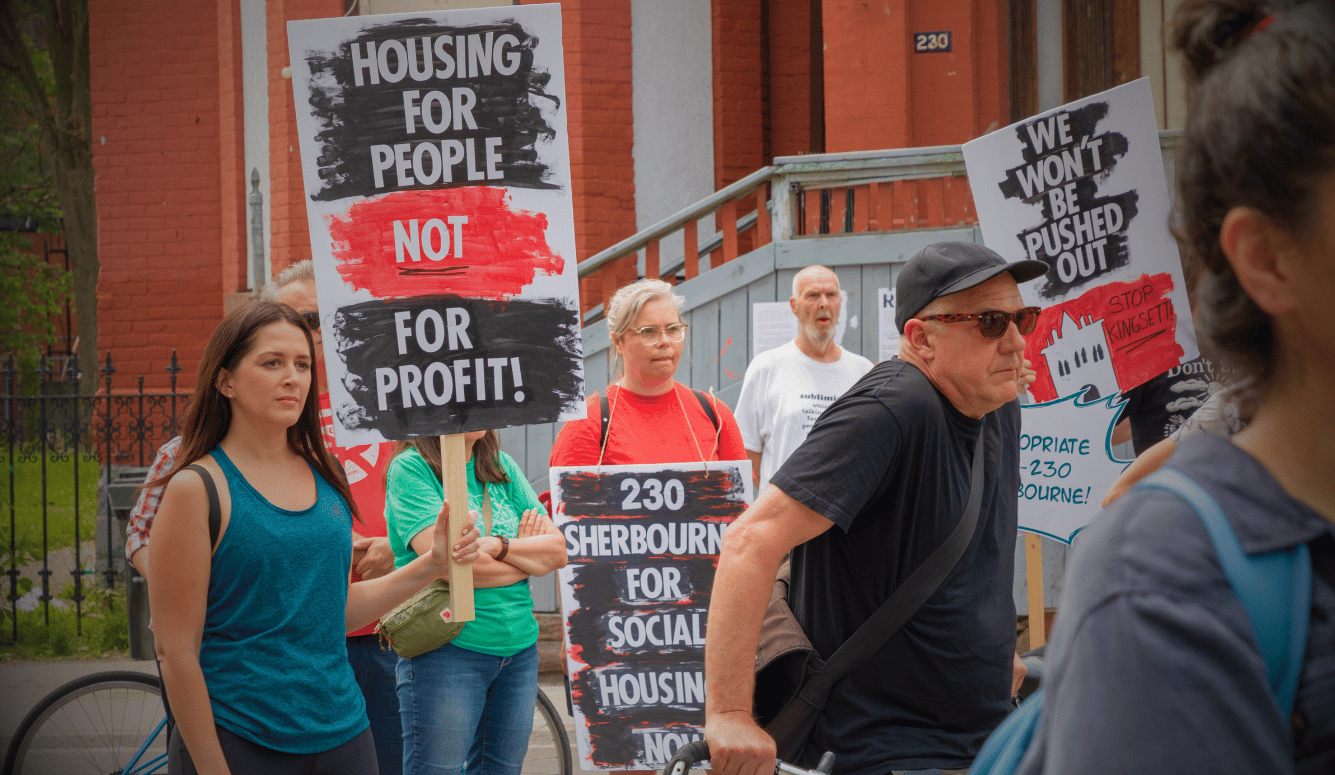

Amid the growing cost of living crisis, Marxist firebrand Zohran Mamdani has been elected to the position of Mayor of New York. Mamdani’s popularity, which is based largely on unease about prices, most notably rents, augurs a possible American turn towards radical collectivism.
Mamdani’s brand of leftist politics is not socialism as practised, for example, in Sweden, which never nationalised its main industries, embraced home ownership and whose welfare state was financed by a dynamic export-oriented economy. The founder of the Democratic Socialists of America (DSA), the late Michael Harrington, would barely recognise his offspring. He warned against Leninist control of the “commanding heights” of the economy, detested communism and its Third World offshoots, and supported Israel’s right to exist. The current DSA and its supporters, as writer Pamela Paul points out, believe that “capitalism isn’t something to be regulated or balanced, but is itself the problem.”
So, how did leftist socialism become a force in the politics of the capitalist heartland? Housing is the key, which is by far the biggest contributor to inflationary concerns. Overall, young Americans rank housing as their top financial concern, and they worry that they may not attain the foundations of middle-class life, most notably, spacious and affordable housing. This concern is rooted in reality. An Institute for Family Studies report published in March 2025, found that since 1970, the share of young adults who own the home they live in has declined from fifty percent to around 25–30 percent.
Housing concerns are not restricted to America. In Ireland, only a third of millennials own a home, compared with homeownership rates of almost two-thirds for baby boomers at the same age. At least a third of British millennials are likely to remain renters permanently; only a third of millennials own a home, compared with almost two-thirds of baby boomers at the same age.
Even countries with huge land masses are experiencing the same trends. In Australia, homeownership among 25–34-year-olds dropped from more than sixty percent in 1981 to only 45 percent in 2016. The proportion of owner-occupied housing has dropped by ten percent in the last 25 years. In Canada, home to two of the world’s most unaffordable cities, Toronto and Vancouver, the number of people aged between 18 and 34 (a demographic that is also suffering from declining incomes) who own a home has declined from 47 percent in 2021 to 26 percent today, according to a 2024 Scotiabank housing poll. The persistent rise in housing prices, notes the OECD in a 2019 report, means that “the middle class faces ever-rising costs relative to incomes and that its survival is threatened.” Owned housing prices, it notes, “have been [rising] three times faster than household median income over the last two decades.”
This is a crisis that our capitalist elites seem ill-equipped to address. Bill Pulte, Donald Trump’s Federal Housing Finance Agency director, has tried to respond by offering such tricks as the widely debunked idea of fifty-year mortgages. Placing future generations on the line for loans incurred by their parents seems both palpably unfair and likely to be impracticable and it would force owners and their offspring to pay even more in interest. Even the usually MAGA-friendly Breitbart has suggested that such an approach “offers not so much affordability as illusion.”
Some libertarians offer a solution of sorts, which is to end zoning, thus giving developers free rein in historically lower-density neighbourhoods. This is unpopular even in California, where, according to a poll by former Obama campaign pollster David Binder, a large majority opposed legislation signed by Governor Newsom in 2021 that, in effect, banned single-family zoning in much of the state. Some libertarians also openly support the movement of Wall Street firms such as Blackstone and the UK’s Lloyds Bank into buying homes in hot markets to turn them into rentals, thus boosting home prices and laying the foundations for what they claim will be a future “rentership” society.
Market Consolidation and Socialist Opportunity
The problems relating to housing and the cost of living provide unique opportunities for the socialist Left. According to one poll, 62 percent of Americans under thirty have a positive view of socialism, while a full third now even back the more authoritarian communist alternative.
In a perverse sense, Marxists cannot be displeased with the fact that real estate, as the old German theorist predicted, is in danger, in many markets, of becoming a luxury good out of reach of the vast majority. In the United States over the past decade, the proportion of real estate wealth held by middle- and working-class owners fell substantially, while that controlled by the wealthy grew from under twenty percent to over 28 percent. In the last decade, high-income households enjoyed 71 percent of all housing gains, while the shares of middle- and lower-income families declined precipitously.
 Tim Blomfield
This contrasts dramatically with the decades after the Second World War, an era of massive democratisation of land ownership. Even in the United States, a country that never experienced feudalism, the proportion of land owned by the nation’s 100 largest private landowners grew by nearly fifty percent between 2007 and 2017. In England, which was a feudal society in the past, land prices have risen dramatically over the past decade. Less than one percent of the population owns half of all the land.
The socialist economist Thomas Piketty has identified property as a key factor in the widening of inequality around the world over recent decades, an assertion that is backed up by research by Matthew Rognlie at Northwestern University. For the next generation, those who are able to purchase houses will do so through what one writer calls “the funnel of privilege.” Piketty suggests that inherited wealth, the key to a feudal economy, is making a comeback. Inheritance as a share of GDP in France grew from roughly four percent in 1950 to fifteen percent in 2010. The growing importance of inherited assets is even more pronounced in Germany, the United Kingdom, and the United States. US millennials are three times as likely as boomers to count on receiving an inheritance to support their retirement. Over sixty percent of Gen Z over the age of eighteen look to inheritance to pay for their first house.
Although himself a nepo baby, Zohran Mamdani’s cost of living campaign—based on rent control, free buses and childcare, and city-owned supermarkets—could prove a road to expand the far Left's power. In New York, the emergence of an expanding class of highly educated permanent renters is ideal for fomenting a kind of class warfare against landlords, and promoting leftist policies such as rent control, protections against eviction, and housing subsidies. Many on the reinvigorated Left see the emphasis on cost of living as a promising strategy for progressives who have found themselves on the wrong side of many cultural issues.
Keep reading
Podcast #331: The Ayatollahs’ Assassins

The Disgrace of Tariq Ramadan

Apocalypse ’92


Love and Theft

AI Is Not About To Become Sentient