Venezuela
Reclaiming Venezuela
The tactical brilliance of the US operation in Caracas sends a message to the world: American power is back.
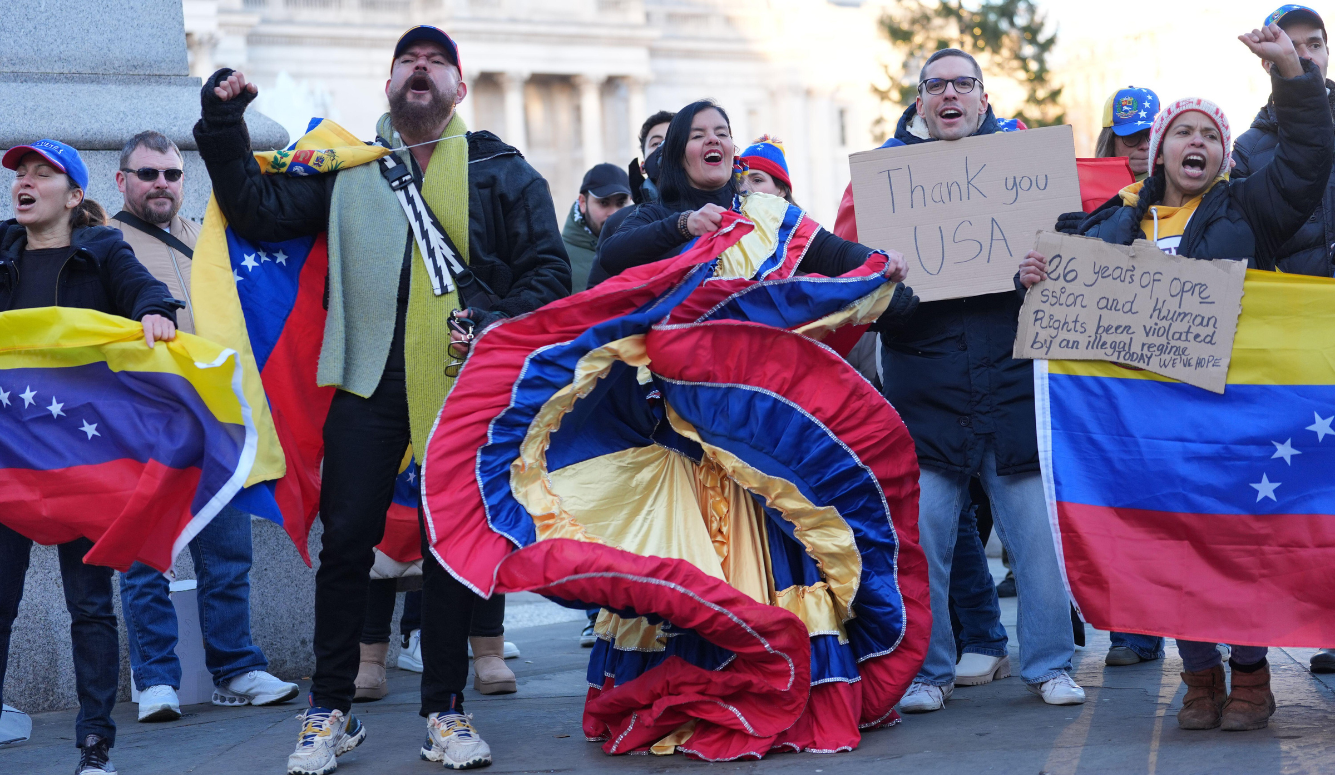
I was in Miami when it began. I had extended my stay in South Florida to help my younger brother move north to Tallahassee. Before we left, he hosted a noisy, affectionate, unmistakably South Florida goodbye at our house—with Americans, Colombians, and Venezuelans in attendance. Exiled Venezuelans are a familiar fixture in places like Doral and Weston, towns that have increasingly functioned as forward operating bases for a diaspora that never truly unpacks its bags, living in a state of permanent, high-alert nostalgia. Westonzuela and Doralzuela, some jovially call them.
It was late, convivial, and fratty—until videos began playing and phones ringing. Around 2am, one of the Venezuelans at the party stopped smiling. He checked his phone again and again. He called his mother. Bombs, he said, were exploding in Caracas.
La Carlota had been hit—not far away from where his mother lives. She picked up, she was fine. But even in his fear at the moment, his happiness was also tangible: an emotional mess that, in a way, encapsulates the feeling of a nation. Hundreds of thousands of displaced Venezuelan citizens feared a bombing but longed for change. La Carlota is not some distant military outpost. It sits in the middle of Caracas, a base embedded in civilian life, pressed into a valley and ringed by mountains. Imagine an airfield planted in the centre of Manhattan; that is La Carlota. That is where the night broke open.
The calls followed immediately. Some from my policy wonk buds in DC, but dozens from sources inside Venezuela itself. One told me he could hear jets flying over his house. Another described an explosion near El Volcán, where communication antennas are carved into the southeastern hills. Within minutes, the reports had multiplied. There had been detonations at Maiquetía, the main international airport in La Guaira—the one every Venezuelan knows, with its Cruz-Diez colours underfoot. That airport is not merely infrastructure; it is memory. It is where hundreds of thousands left from. Bombs fell in the Nueva Esparta archipelago and in Fuerte Tiuna, the Venezuelan equivalent of the Pentagon. There were bombs everywhere, like fireworks on the Fourth of July.
By this stage, it was clear that whatever was happening had transcended mere improvisation; it smelled like the clinical application of an Anti-Access/Area-Denial (A2AD) framework. The objective: total systemic paralysis. The goal was to dismantle communication nodes and neutralise response capabilities to render the battlespace—both physical and electromagnetic—entirely uncontested. In plain terms, the enemy was being blinded. Something major was clearly imminent.
 Clifton Ross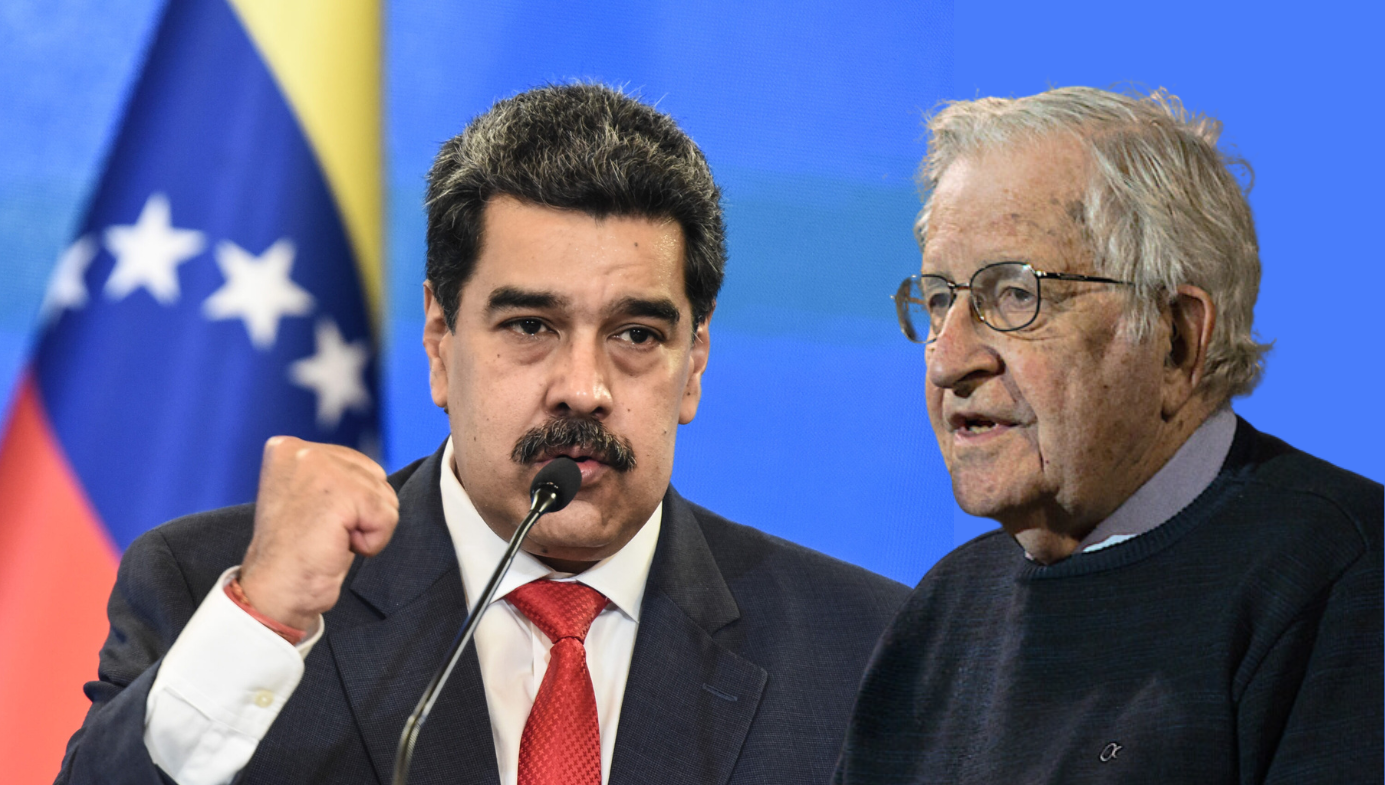
The US operation was a strategic gambit predicated on the collapse of the adversary’s command-and-control architecture before it could even mount a defence. The goal was clear: a total win without a single drop of American blood. Such a sophisticated operation is not undertaken if one expects the status quo to survive the night. It didn’t. Within only two and a half hours, the country’s autocrat, Nicolás Maduro, and his wife had been taken. President Donald Trump announced it.
What unfolded that night was among the most tactically impressive large-scale operations ever conducted. One hundred and fifty US aircraft coordinated with a Delta Force team on the ground to do in a few hours what speculators had thought would be impossible to achieve in years.
The lazy consensus broke: the one that had taken hold, that suggested Venezuela was untouchable—that the casualties would be catastrophic, that the US would just perpetually bomb dinghies, that the regime’s supposed millions of “militiamen” would turn any military operation into a slaughter. Anyone with even a cursory understanding of Venezuela knew that this was nonsense. Militiamen in this context often meant little more than disorganised, scrawny teenagers in red berets—but why would an adversarial media care to unpack the reality? It is always easier to fear a phantom army. Yet the truth lay right in front of us: with prudence, not perfidy, concrete goals can be achieved.
Reporting remains incomplete, but what is clear is that this was a targeted, disciplined operation—quirúrgica (“surgical”), as Venezuelans themselves describe it. Rumours of some isolated civilian deaths exist, as well as reporting from Venezuelan reporters like Carla Angola that indicate that soldiers were gunned down as Maduro ran into a safe room.
Topping it all, because humiliation is still part of the strategy after all, in a moment heavy with symbolism, strikes hit the mausoleum of Hugo Chávez—the des-Chávezification I wrote about in these pages two years ago has reached another level, from defacing statues to exploding his tomb. It was not a military target; it was designed to send a clear signal that this is the end of an era.
So, what happens next? Removing an autocrat does not automatically produce democracy or stability. Venezuela is more socially cohesive than many countries that have fractured after a decapitation; the country lacks the ethnic and religious factionalism of the Middle East. Still, citizenry-level cohesion does not eliminate uncertainty.