History
The Nazi in My Family
Evil pollutes everything it touches; for a long time I wrestled with my own shame, as though I bore some guilt by association.

The last time I saw my stepmother’s father was in the mid-1980s, in a long-term care facility in Ithaca, New York. I was with my older brother, and we were both in our mid-twenties. The old man lay supine on a medical bed, gripping our hands, urgently trying to tell us something. His pale blue eyes rolled wildly, and his high cheekbones were wet with tears. This was a shocking transformation: he’d always been fully in command of himself and his family. Few words had ever passed his thin lips, at least in my hearing; but now that he had something to say, a stroke had robbed him of speech. We tried to comfort him, to no avail. He died within a year.
Almost a decade later, my father, in a characteristic eruption of honesty, revealed a dark secret about the old man. Since then, I’ve often pondered the meaning of that pathetic bedside scene, and how one’s settled understanding of things can melt at the touch of truth. For more than thirty years, I’ve shared this secret with very few people. But now that there’s little chance of upsetting my stepmother or her sister, neither of whom reads or remembers much of anything these days, it’s time to tell our story.
Mathias Findeis was born in 1913 in Gakowa—known today as Gakovo—a town then populated by ethnic German farmers in the Batschka region of what is now Serbia. He married Juliana Elmer in 1935, when she was just fifteen (some say she was fourteen). After Hitler conquered Yugoslavia in April 1941, the Batschka was annexed by Hungary. My stepmother Monica and her older sister Trudy were born in the same house: Trudy in Yugoslavia, in 1938; Monica in Hungary, in 1942.

Sometime after the annexation, Mathias left to fight for the Reich; he would not reconnect with his family until he joined them in Bavaria in the spring of 1946. In October 1944, half the Batschka’s ethnic Germans fled from advancing Soviet and Yugoslav armies, seeking safety north and west as they raced back to the ancestral homeland. Among them were Juliana, her mother and mother-in-law, and her daughters, who were then two and six years old. The arduous voyage of these women and girls through Hungary and Czechoslovakia into Germany probably saved their lives. Eager to avenge the Nazi slaughter of Yugoslavian civilians and partisans, the communists plundered and arrested the Germans they didn’t kill outright, imprisoning them in slave-labour camps—including a notorious one in Gakowa—where at least 50,000 people perished.
At some point, Juliana was separated from the older women. She and her two little girls travelled on foot and by cart through the wastelands of central Europe, finally, according to Trudy, seeing “the defeat of Germany, the rubble, hunger and desperation.” Along the way, Juliana laboured for farmers in exchange for food and shelter. The fact that she was unaccompanied by a man may have helped her, because the three of them could hardly have been less threatening. But it also made her a particularly vulnerable target. God only knows what she had to endure, but we may guess. After the war, she visited a German family that had taken them in. The women were glad to see her, but the man of the house would not come out of his room. What could have prevented him from greeting her, other than some deep shame? But then, why did she visit them? Had she been happier living with this family than she was with Mathias?
Living in Vilsbiburg, a town near Munich, Juliana and Mathias swore affidavits in 1949 that allowed them to emigrate to the United States. These documents are incomplete and inconsistent. Mathias fails to mention his military service, and although both he and Juliana claim to have fled Gakowa in 1944, they describe two entirely different routes of escape. “Regarding my time outside Germany and my reputation during that time,” Mathias maintained, “I possess no documentary proof at present; I am currently unable to obtain such proof.” He stated that “he wishe[d] to submit an affidavit in lieu of providing documents to authorities and courts,” and his attestations were supported only by the notary’s assertion that he was “personally known and credible.” (One wonders if he was bribed.) Juliana swore that “I have been without any criminal offence, nor have I acted in a way that would have given cause for prosecution”; Mathias swore only that he’d “never been convicted in court or subjected to any criminal proceedings.”
Once in the United States, they set up a successful business on Long Island that specialised in growing chrysanthemums for the New York City market. Juliana toiled to build and sustain this enterprise, staying up until midnight every day to pack the flowers so they would be ready to ship at dawn. Mathias evidently worked his daughters almost as hard. I got to know Mr and Mrs Findeis (as Monica instructed us to call them) after my brother and I moved in with her and our father in 1969. We lived upstate, in Ithaca, and they often drove up to visit; after they retired in 1977, they bought a home and some land in Moravia, about twenty miles away. Mathias chain-smoked unfiltered Kents in soft packs, fishing them out of the breast pocket of his short-sleeved, polyester button-down shirts—they liked to visit in the summer—as he observed life with studied cynicism. When I was a boy, I cut myself badly with a knife, and he reprimanded me; besides his “I told you so,” I can recall nothing in particular he ever said to me.
Juliana was as warm as Mathias was cold. She had lived for some years in Chicago as a child, and unlike her husband, she spoke English without an accent. She grew magnificent vegetables; she cooked delicious strudel, goulash, and schnitzel; she remembered everyone’s birthday with cards and gifts; she knitted multicoloured blankets for every baby born in the whole extended family; and she loaded her pantry’s shelves with jars of pickled vegetables and preserved fruits and jams, like someone preparing for a famine. She never complained about anything, even as a very old woman. Around Mathias, she was quiet and submissive. When he died, she threw out all his oil paintings—a significant gesture of rejection, I thought—and began to travel. But her voice never lost its meek, apologetic tone.
The people of Germany have played no small role in my life. I lived in Bavaria for a year as a very young child, and I spent the 1972–73 school year at a gymnasium in Starnberg, Germany, in an eighth-grade class consisting solely of boys. Herr Beer, our homeroom and mathematics teacher, used to tell us stories about the miseries of the war, during which he served in Italy as a medic. One day he drew a square on the blackboard, which he divided into four smaller squares. He then erased portions of the big square, slowly and somewhat sheepishly, until all that was left was a swastika. This felt to me like a schoolboy prank, the mischievous and ironic acknowledgment of a past that needed to be buried but also remembered. Herr Beer treated me well, and I felt affection for him when I saw him grieving for his mother. The other boys once asked me if I was Jewish, a vaguely threatening but possibly innocent question that I had the good sense to deny. But I got along well with most of them.
 Ron Capshaw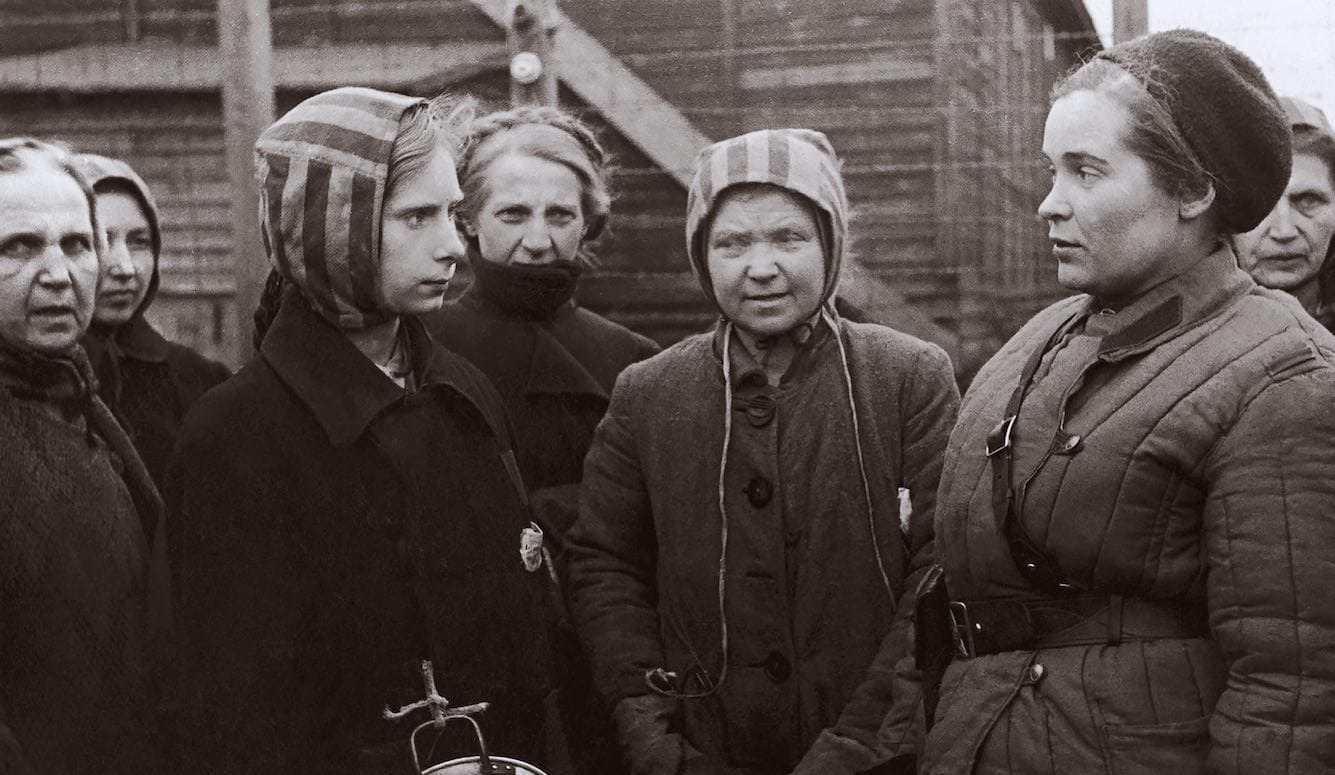
My brother and I are the products of an ethnically and religiously mixed marriage, one that lasted only a few years before it ended in divorce. On our father’s side, we are descended from a Puritan who came over on the Mayflower, while our mother comes from a blue-collar family of Russian and Romanian Jews. Her father was the first in his family born in the United States; as a child, an uncle of hers lost an eye in a pogrom. Culturally speaking, my brother and I took after our mother. I studied rabbinic texts at a synagogue in Oklahoma. At the University of Tulsa, I taught courses and published articles on Jewish philosophy and philosophical, literary, and theological responses to the Holocaust, as well as a book on the Talmud.
In 1993, my father and stepmother took me, my wife, and our two sons on a vacation to Greece. We flew from New York, and we all spent the night before we left at the home of my wife’s parents in Westchester. At dinner, as the wine flowed freely, my (French) father-in-law asked Monica what her father had done during the war. She said what she always did: that he’d been drafted into the army and served as a private until the end of the war. “Bullshit!” my father blurted out. “He was Waffen-SS!” Monica’s face flushed; I’m told I went pale with shock. My father explained that he’d been drinking with Mathias one night, and Mathias told him that he’d volunteered for the Waffen-SS in 1941. Mathias added that, when the division disbanded, he and some other men had convinced a mayor—of what town, and whether through threats or bribery or both, he didn’t say—to give them papers certifying that they were in the resistance. These papers helped him to avoid capture by the Allies, just as his Vilsbiburg affidavit allowed him to enter the US, where membership in the SS disqualified one from obtaining a visa.
The more I thought about this stunning revelation, the more questions I had. Why did Mathias volunteer for the Waffen-SS? Which division did he join? Did he commit war crimes? Why—even allowing for the tongue-loosening effect of alcohol—did he confess to my father, and why did my father disclose his secret?
Following Hitler’s seizure of power, the Nazis realised that the roughly 600,000 Germans in Yugoslavia, who generally lived in ethnically homogeneous towns like Gakowa, could be a major asset in any war. (This is, after all, the region that gave us the adjective balkanised.) According to the historian Caroline Mezger, the Reich began a deliberate process of Nazification among the proud German communities of the Batschka, which were composed of transplanted Bavarians and other overwhelmingly Catholic southern Germans. By late 1940, 98 percent of Yugoslavia’s German population had become members of the Swabian-German Cultural Association, which led the Nazi propaganda effort. Reich statistics showed that the Batschka supplied soldiers more enthusiastically than any other region in Hungary. (Monica has a book somewhere with photographs of smiling Gakowans in Waffen-SS uniforms drinking beer.)
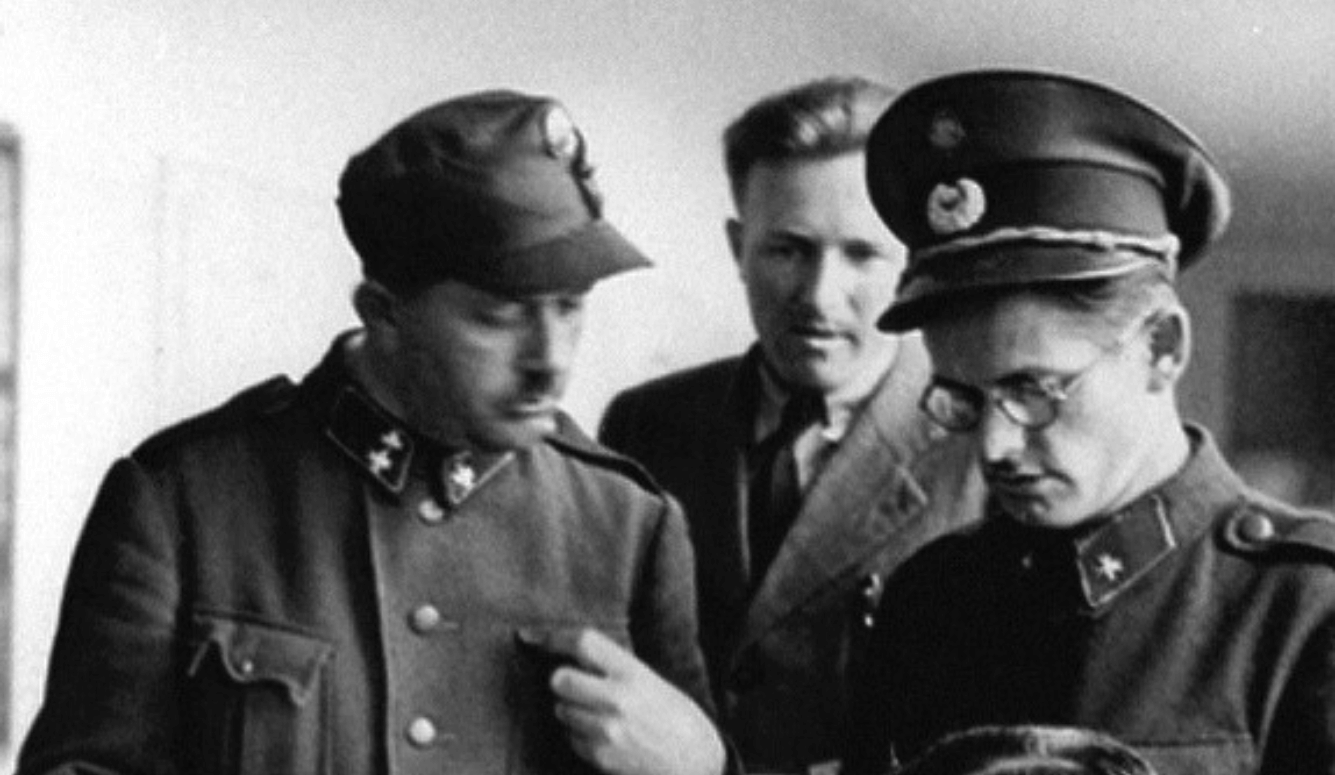
Mathias was twenty years old when Hitler became Chancellor, and the Aryan propaganda that thereafter flooded the Batschka had a strong formative influence on young German men like him. Roughly 2,000 of them had joined the Waffen-SS by October 1941; by the spring of 1942, at least 10,000 had. If Mathias and my father were both telling the truth (and I believe they were), Mathias must have joined the 7th SS Volunteer Mountain Division Prinz Eugen, formed of ethnic Germans and supplemented as needed by Reich Germans. That’s because Prinz Eugen—named for a commander who, under the flag of the Holy Roman Emperor, fought off the Ottoman Turks at Vienna in 1683—was the only Waffen-SS division recruiting in the Batschka in 1941 and ’42.
I did not welcome this news. The men of Prinz Eugen—who spent the war hunting partisans and engaging in ethnic cleansing in Nazi-occupied Yugoslavia and the Balkans—were notorious for their war crimes. A document produced for a Yugoslav State Commission and quoted at the Nuremberg Trials of 1945–46 states:
The 7th SS Division, Prinz Eugen, is famed for its cruelty. … Wherever it passed—through Serbia, through Bosnia and Herzegovina, through Lika and Banija or through Dalmatia—everywhere it left behind scenes of conflagration and devastation and the bodies of innocent men, women, and children who had been burned in the houses.
In Montenegro, for example, the division “commenced to commit outrageous crimes on the peaceful villages for no reason at all.” Villagers “were shot, slaughtered, and tortured, or burned to death in burning houses. … Infants with their mothers, pregnant women, and frail old people were also murdered. In short, every civilian met with by these troops in these villages was murdered.” What’s more, “the German soldiers drove all the cattle away from the villages and plundered jewels and money before burning these villages.” Besides counterinsurgency, they engaged in ethnic purification, including the elimination and subjugation of Slavs; according to SS-General Otto Kumm, who commanded the division, their objectives included “outright elimination of Jews.”
In the end, a modicum of justice was meted out to the men of Prinz Eugen. Those who had not abandoned the division by 11 May 1945 surrendered to the Yugoslav People’s Army, which promptly executed all of them. Of the division’s four commanders, one was killed in battle, two were hanged for war crimes in Belgrade in 1947, and one escaped before he could be extradited to Yugoslavia. That was Kumm, the author of a history called Forward, Prinz Eugen! and an enthusiastic Nazi until his death at 94.
But what do we know—what can we know—about Mathias in particular? We know he was a survivor, clever enough to get away before the division’s catastrophic ending, and steely enough to break multiple laws in order to avoid punishment and gain entry to the US. Can we be certain that he slaughtered civilians during his three or more years in the 7th? He must have. And it is likely that he engaged in looting, if only because he knew portable valuables would come in handy. (After the war, Mathias collected gold coins; Juliana hated that gold, and gave it to her daughters after he died.) Did he rape women, as the 7th’s men are said to have done en masse in Montenegro and elsewhere? Did he use plunder to secure safe passage into and out of Germany, and to establish his flower business on Long Island? These questions are now unanswerable.
Yet there can be little doubt about Mathias’s wholehearted commitment to Nazism during the war, when it counted (and I have no reason to believe he ever changed his views). At any rate, he could not so easily stop being a Nazi: a hard and pitiless man, used to issuing orders and being obeyed. Some years before Juliana died, Monica bought her a copy of Guido Knopp’s Hitler’s Women. The book profiles six famous women, all of whom, with the exception of Marlene Dietrich, let themselves be controlled by the likes of Hitler and Goebbels. I think Monica wanted her mother to know that she wasn’t the only German woman who obeyed her domineering husband.
Was Mathias bragging when he shared his secret with my father? I doubt it, since my father was a left-wing professor who’d married a Jewish woman. Was he overcome, if only momentarily, by the enormity of the truth he’d kept hidden for decades? We will never know if these things moved him to confess his Nazi past. As for my father, I am certain that he revealed Mathias’s secret because he had to. It was just too big—too radioactive—to keep inside. I don’t blame Monica for wanting to bury her father’s past, to put him behind her. She took after her mother, and loved and cared for her to the very end. Juliana taught her every practical skill she knew, from skinning and butchering deer to knitting, sewing, and finding edible mushrooms. She also imbued her with sound judgment and a tough, no-nonsense attitude to life’s slings and arrows. And after all these years, I suspect Monica is relieved that my father revealed the truth about Mathias.
What about me? Why do I feel compelled to write about these matters? Evil pollutes everything it touches; for a long time I wrestled with my own shame, as though I bore some guilt by association with Mathias. But he alone is responsible for his actions, and to allow shame to conceal those actions would be to give Hitler a posthumous victory.
What was Mathias trying to say to me and my brother the last time we saw him? Did his agitation reflect a fear of death? Did it spring from repentance, and an inability to communicate his change of heart? I’ve come to understand that it doesn’t matter. Whatever he was thinking and feeling in that moment, it made no difference to the people who suffered and died by his hand—many of whom were mourned by no one, because all who knew them perished at their side. Perhaps some distant echo of their screams may still reach the ears of the living.
Keep reading
AI Is Not About To Become Sentient

The Innovation Trap

Treating Myths as Science

The Edifice Complex

Letters to the Editor

Criminal Research