Civil Liberties
Liberalism’s Lonely-Hearts Club
Standing up for due process, free speech, civil liberties, intellectual pluralism, and scientific rigour doesn’t win you many friends these days.


Over the past week, the following things happened in Canada.
- On 2 December, a dissident academic named Frances Widdowson travelled to the University of Victoria, where she tried to give a speech about false 2021-era claims that the “unmarked graves” of 215 Indigenous children had been discovered in Kamloops, British Columbia. The university denied Widdowson permission to speak, and she was arrested as a trespasser. Qwul’sih’yah’maht (aka Dr Robina Thomas), the university’s Acting President and Vice-Chancellor, then put out a message titled, Healing from Harms Caused, denouncing Widdowson (who was not named, but whose identity was clear from context) as “hurtful and divisive.” In an Orwellian flourish, she added that Widdowson’s refusal to acknowledge the 215 (non-existent) graves at Kamloops comprised a threat to “truth, critical inquiry, and knowledge dissemination.”
The first step in reform is awareness. Canadians need to understand that their universities have become taxpayer-subsidized 24-hour hate rallies that increasingly contribute nothing to society except dysfunction. https://t.co/ohiwhGSoc0
— Tristin Hopper (@TristinHopper) December 3, 2025
- On 4 December, the World desk of CBC News reported a story titled, “Pantone’s 2026 Colour of the Year is White. Some Critics Say the Optics Aren’t Great.” The colour in question is actually “Cloud Dancer,” officially classified as “PANTONE 11-4201.” But yes, it’s white-ish—a fact bemoaned at considerable length by Senior CBC Editor Natalie Stechysoin. Cloud Dancer, Stechysoin lamented, is a “loaded choice” due to the “current political climate”—specifically, “U.S. anti-immigration policy and border patrol[s].” She quoted commentators who deemed the decision “apocalyptic” and an emblem for “klansmen.”

- On December 5, Statistics Canada, Canada’s national statistical agency, emailed transgender activist groups a solicitation for “targeted consultations,” as part of the agency’s plan to disseminate data regarding “transgender and non-binary populations aged 0 to 14 years old.” The message—a copy of which was obtained by Quillette—stated that “while academic and non-profit research on the transgender and non-binary child and youth populations has explored…concepts of gender fluidity, cisnormativity, and transnormativity,” mere laypeople engaged in “public discourse” do not always exhibit “the same understanding.” In this regard, StatsCan officials wanted the groups’ insights into how the gender identity of toddlers could best be reported without incurring a “negative reaction” from unenlightened Canadians.
I could provide many more examples in the same vein. (This is Canada, after all.) But these will do as representative examples of O’Sullivan’s Law—named after my former National Post editorial-board boss, John O’Sullivan, who came up with it in 1989: “All organizations that are not actually right-wing will, over time, become left-wing.”
Neither the University of Victoria, nor the CBC, nor Statistics Canada operate on political mandates. Just the opposite: Every one of these institutions claims to rigorously eschew political bias. Yet they all have clearly enlisted themselves in progressive activist campaigns regarding race and gender.
The idea here is one of slow drift and upper-class white-collar groupthink. No one in the corner offices of these institutions explicitly ordered colleagues to, say, proselytise a debunked Kamloops-based child-martyrdom cult; or compel belief in the idea that toddlers possess soul-like gender spirits that supersede scientific principles of biology; or cast Western democracies as white supremacist dystopias where the wrong home-decoration choice can unleash racist violence. But within the professional and social-media cocoons they inhabit, such instructions are unnecessary. Everyone already believes these ideas (or at least pretends to believe them) of their own accord.
Regular Quillette readers know all this, of course. Since this publication was created a decade ago, it has been a hub for disaffected progressives, centrists, feminists, gay-rights advocates, and assorted intellectual sceptics who came to reject the radicalised dogmas that began pervading academic and cultural institutions during the so-called Great Awokening of the mid-2010s. While these political orphans came together from many directions, most can be described in general terms as liberals—which is to say, believers in individual rights (versus group rights), free speech, due process, and the rule of law.
While Quillette’s liberal editorial mission has never really changed, executing it became more complicated during the COVID pandemic—especially once vaccines became available. When heated and pressurised under lockdown, the same sort of free-thinking scepticism that fuels heterodox political thought, it turns out, can readily blur into conspiracism and junk science. A prominent example is Bret Weinstein, the one-time Quillette academic darling who began telling Americans that COVID vaccines had, according to one “credible estimate,” caused “something like 17 million deaths globally.” (In fact, the figure represents a passable ballpark estimate of the number of lives that such vaccines have saved.)
Even in ultra-progressive Canada, where this sort of conspiracism is less common, I’ve seen a number of prominent anti-wokesters go down similar rabbit holes. And though it’s been years since the pandemic ended, not all of them have found their way back to the surface.
Following a recent speech I gave to a free-thinking Toronto crowd, the organiser felt moved to explain to attendees that it was important to hear “diverse views.” This was a diplomatic reference to my (poorly received) observation that many self-described heterodox intellectuals who cheer on my opposition to trans-activist pseudoscience will also insist (falsely) that COVID vaccines don’t work and (also falsely) that anthropogenic global warming is a myth. Science isn’t a buffet where you get to pick and choose what proven truths to accept, I told them. Few in the crowd looked convinced.
Another major schism within our liberal movement has centred on Donald Trump and conservative populism more generally. Trump’s second presidency, in particular, has accelerated the ongoing process by which critics of progressive illiberalism have been self-organising into two separate camps—(1) one that continues to oppose illiberalism of all flavours (that’s us), and (2) another that’s just fine with authoritarian political creeds, so long as the authoritarians come from the conservative side of the aisle.
If the goal is to get rid of DEI and throw men off women’s college sports teams, members of this latter Trump-friendly faction reason, why bother with the hard intellectual slog of staging “heterodox” academic conferences and writing long essays about Martin Luther King Jr., Areopagitica, and the nature of human sexual biology? Just elect a strongman who tells university presidents and athletic directors what to do, on pain of losing their government cash. Problem solved.
To adapt O’Sullivan’s Law: anti-woke factions that do not remain explicitly committed to liberal principles eventually succumb to the lure of populist conservatism
It’s a seductive approach that has snared not a few former Quillette writers. (No, I will not be naming names.) To adapt O’Sullivan’s Law: anti-woke factions that do not remain explicitly committed to liberal principles eventually succumb to the lure of populist conservatism. (I will call this “Quillette’s Law,” on the long-shot hope that the term somehow catches on.)
The central case study here is the University of Austin, which, as Quillette publisher Claire Lehmann reminded us earlier this week, was founded in 2021 with the goal of “promoting intellectual pluralism” and preparing students “to be responsible, active, and informed citizens in a liberal, democratic polity.”
 Claire Lehmann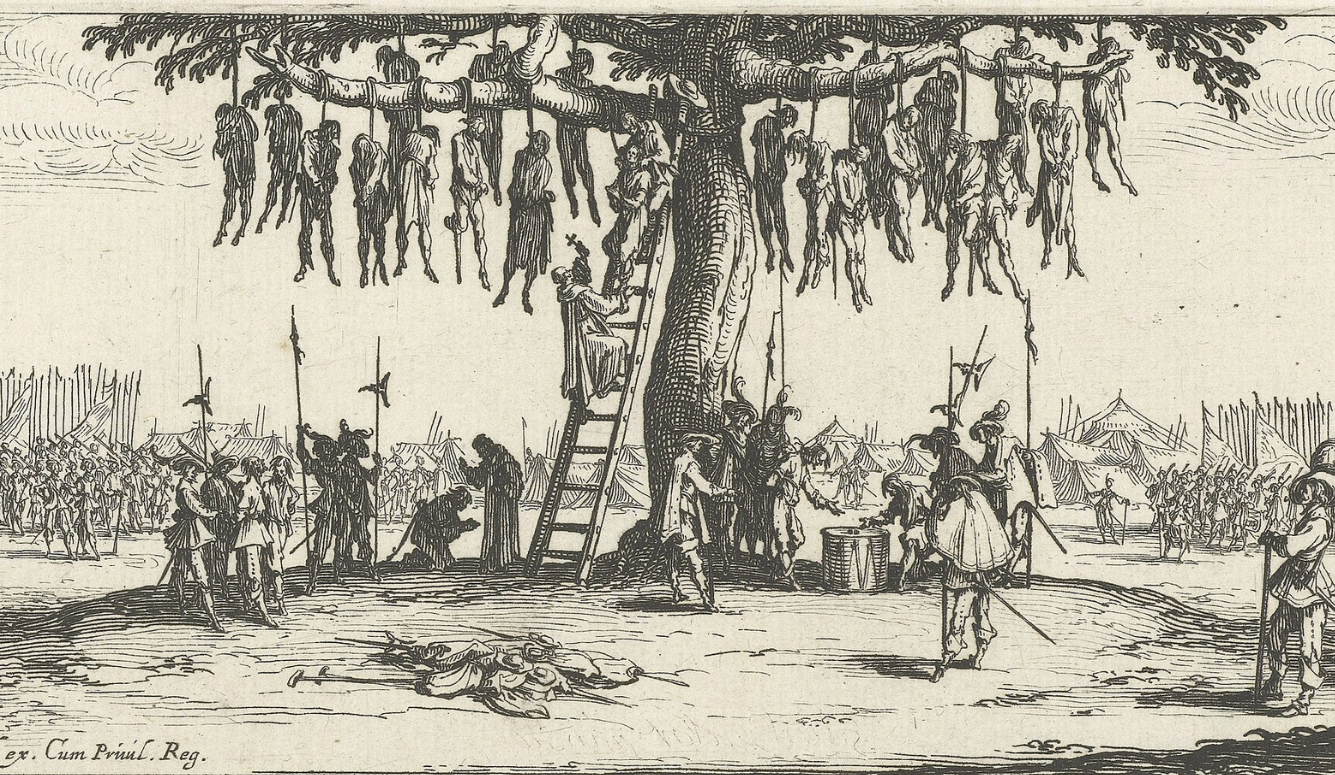
Venture capitalist Joe Lonsdale, one of the project’s co-founders and major funders, conceived of the new school as a “classically liberal university” that would spread “enlightenment values.” As education specialist Ellie Avishai wrote in Quillette earlier this year, the school initially attracted numerous intellectuals who took Lonsdale at his word. But many became troubled when the school’s communications team started broadcasting Trump-style culture-war slogans. And Avishai herself had her University of Austin contract terminated shortly after she authored a LinkedIn post about DEI that the school’s administrators deemed to be ideologically off-brand.
On 5 December, Lonsdale, who sits on the university’s Board of Trustees, applauded the Trump administration’s policy of “sinking narco boats”—by which he means summarily executing suspected drug traffickers on the high seas. Of Peter Hesgeth, the US Secretary of Defence, he wrote, “killing bad guys is [his] job. He should brag more. Masculine truth: bold, virtuous men deter evil.”
Lonsdale also advocated public hangings, which he associates with “masculine leadership.” He further added that America has too much “feminine energy running our cities and our courts.” The whole thread reads like something one might hear on one of those low-end bro podcasts that peddle muscle-building diet supplements and terrible dating advice.
She’s just wrong. Leftist schoolmarm leaders cause violence and evil in our civilization.
— Joe Lonsdale (@JTLonsdale) December 5, 2025
Sinking narco boats publicly helps deter others. As does hanging repeat violent criminals.
Killing bad guys is DoW job. He should brag more. Masculine truth: bold, virtuous men deter evil. https://t.co/BZfB7lLJQc
As for the idea that what ails America is the prevalence of an ethereal malevolent force known as “feminine energy”—which square-jawed Jack D. Ripper types apparently must excise by missile and noose—it sounds rather a lot like a culture-war inversion of “whiteness,” “cisnormativity,” “racial capitalism,” and all the other phantasms that campus progressives blame for society’s evils.
Meanwhile, the University of Austin itself just announced that its freshmen are in Budapest, studying whether “the rejection of God [is] to blame for today’s crises.” This sounds more like a Sunday sermon than an academic course. And it’s unsettling that those studying the question would be sent to Hungary, whose quasi-authoritarian leader, Viktor Orbán, believes that a “Christian Europe” is the continent’s “only way forward.”
While the University of Austin is just one institution, it serves as a bellwether of the whole anti-woke project more generally—having been conceived as a sort of model liberal project by some of the leading lights of this movement. Its board of trustees includes historian Niall Ferguson and journalist Bari Weiss, while the board of advisors boasts Eric Kaufmann, economists Glenn Loury and Tyler Cowen, and famed evolutionary biologist Richard Dawkins. Harvard professor Steven Pinker was also an early advisor; as was social scientist Jonathan Haidt (a founder of the staunchly liberal-minded Heterodox Academy)—though both have since departed. Every one of these people has been featured by Quillette at one time or another, either as author or podcast guest. It says a lot about the stormy seas that liberals now face that even a once-impeccably liberal organisation such as this can begin listing to starboard just four years out of the shipyard.
I find these developments not just politically disturbing, but also personally disappointing. Not so long ago, I imagined that the coalition of plucky liberal gadflies that began countering illiberal progressivism at around the time I began working for Quillette could be sustained indefinitely—and perhaps even solidify into a durable movement that would become my long-term political home. (I’ve never had one, and it would be nice if I finally did.) But that’s now been exposed as an exercise in wishful thinking.
O’Sullivan’s Law and Quillette’s Law (I promise that’s the last time I’ll use the phrase) both describe ideologically centrifugal forces—driving people away, in opposite directions, from the liberal democratic baseline that I’d always taken for granted as the natural resting point for mainstream intellectual life. Battling against illiberalism from both sides at the same time can feel like a lonely and hopeless intellectual project. But absent the emergence of some third law that will deliver me from my labours, I see no principled alternative.
Keep reading
AI Is Not About To Become Sentient

The Innovation Trap

Treating Myths as Science

The Edifice Complex
Letters to the Editor

Criminal Research